FamousArtist

Artists / The Baroque & Rococo Wing

Caravaggio

Darkness as a weapon, light as a verdict

Lived
1571–1610
Nationality
Italian
Movement
Baroque
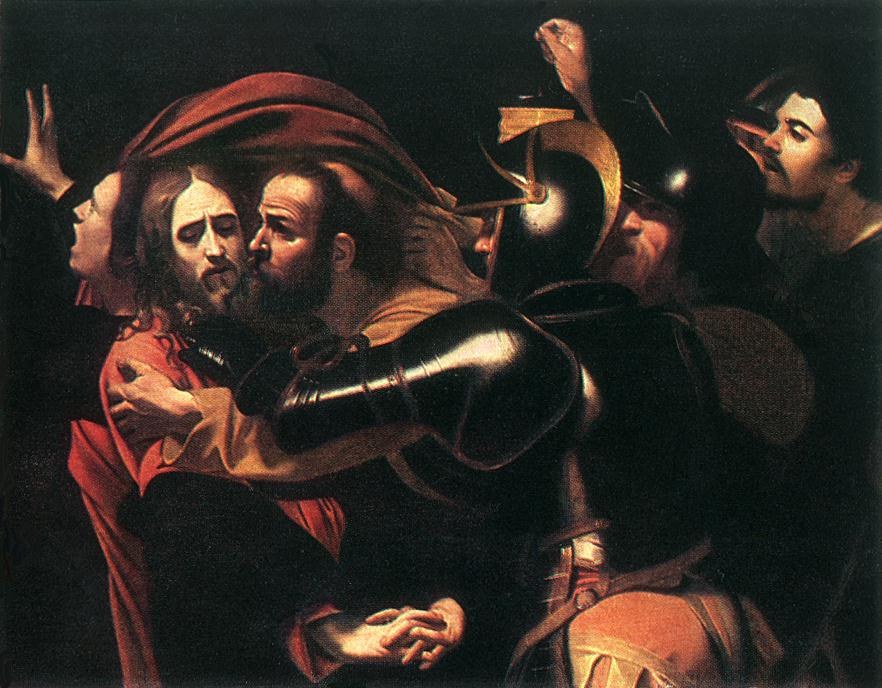
The Taking of Christ — Caravaggio
The Taking of Christ, circa 1598date QS:P571,+1598-00-00T00:00:00Z/9,P1480,Q5727902 · Wikimedia Commons (Public domain)
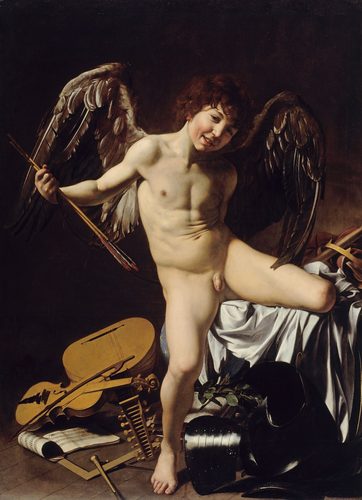
German:  Amor als Sieger Amor Vincit Omniatitle QS:P1476,de:"Amor als Sieger "label QS:Lde,"Amor als Sieger "label QS:Les,"El amor victorioso"label QS:Leu,"Maitasuna Denaren Garaile"label QS:Lru,"Любовь побеждает всё"label QS:Lfa,"کوپید فاتح (تابلو نقاشی)"label QS:Lda,"Amor vincit omnia"label QS:Ltr,"Muzaffer Aşk"label QS:Lja,"愛の勝利"label QS:Lsk,"Víťazný Amor"label QS:Lhe,"אהבה מנצחת הכל"label QS:Lla,"Amor vincit omnia"label QS:Lavk,"Amor vincit omnia (trutca ke Caravaggio)"label QS:Lko,"승리자 아모르"label QS:Leo,"La venka amo"label QS:Lit,"Amor vincit omnia"label QS:Lbn,"অ্যামর ভিঞ্চিট অমনিয়া"label QS:Lfr,"L'Amour victorieux"label QS:Let,"Amor võitjana"label QS:Lvi,"Amor Vincit Omnia"label QS:Lsl,"Ljubezen premaga vse"label QS:Lpt-br,"O Amor Conquista Tudo"label QS:Luk,"Амур-Переможець"label QS:Lpl,"Amor Zwycięski"label QS:Lmk,"Љубовта победува сè"label QS:Lnl,"Amor Vincit Omnia"label QS:Lpt,"Amor Vincit Omnia"label QS:Lcs,"Vítězný Amor"label QS:Lsv,"Kärleken övervinner allt"label QS:Lca,"Amor victoriós"label QS:Len,"Amor Vincit Omnia"label QS:Lar,"الحب المنتصر (لوحة)"label QS:Lbr,"Amor Vincit Omnia"label QS:Larz,"امور فينسيت امنيه" — Caravaggio
German: Amor als Sieger Amor Vincit Omniatitle QS:P1476,de:"Amor als Sieger "label QS:Lde,"Amor als Sieger "label QS:Les,"El amor victorioso"label QS:Leu,"Maitasuna Denaren Garaile"label QS:Lru,"Любовь побеждает всё"label QS:Lfa,"کوپید فاتح (تابلو نقاشی)"label QS:Lda,"Amor vincit omnia"label QS:Ltr,"Muzaffer Aşk"label QS:Lja,"愛の勝利"label QS:Lsk,"Víťazný Amor"label QS:Lhe,"אהבה מנצחת הכל"label QS:Lla,"Amor vincit omnia"label QS:Lavk,"Amor vincit omnia (trutca ke Caravaggio)"label QS:Lko,"승리자 아모르"label QS:Leo,"La venka amo"label QS:Lit,"Amor vincit omnia"label QS:Lbn,"অ্যামর ভিঞ্চিট অমনিয়া"label QS:Lfr,"L'Amour victorieux"label QS:Let,"Amor võitjana"label QS:Lvi,"Amor Vincit Omnia"label QS:Lsl,"Ljubezen premaga vse"label QS:Lpt-br,"O Amor Conquista Tudo"label QS:Luk,"Амур-Переможець"label QS:Lpl,"Amor Zwycięski"label QS:Lmk,"Љубовта победува сè"label QS:Lnl,"Amor Vincit Omnia"label QS:Lpt,"Amor Vincit Omnia"label QS:Lcs,"Vítězný Amor"label QS:Lsv,"Kärleken övervinner allt"label QS:Lca,"Amor victoriós"label QS:Len,"Amor Vincit Omnia"label QS:Lar,"الحب المنتصر (لوحة)"label QS:Lbr,"Amor Vincit Omnia"label QS:Larz,"امور فينسيت امنيه", between 1601 and 1602date QS:P,+1601-00-00T00:00:00Z/8,P1319,+1601-00-00T00:00:0 · Wikimedia Commons (Public domain)
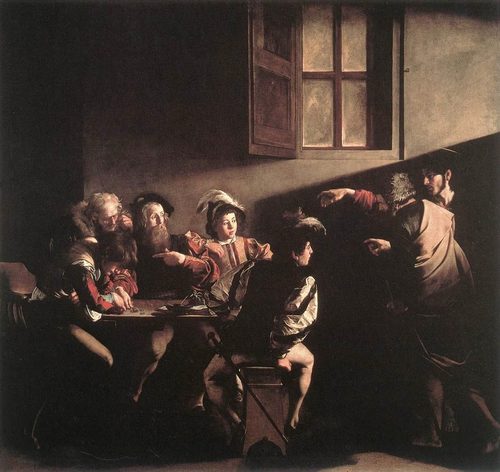
The Calling of Saint Matthew label QS:Len,"The Calling of Saint Matthew"label QS:Lnl,"De roeping van Matteüs" — Caravaggio
The Calling of Saint Matthew label QS:Len,"The Calling of Saint Matthew"label QS:Lnl,"De roeping van Matteüs", 1599 or 1600date QS:P571,+1500-00-00T00:00:00Z/6,P1319,+1599-00-00T00:00:00Z/9,P · Wikimedia Commons (Public domain)
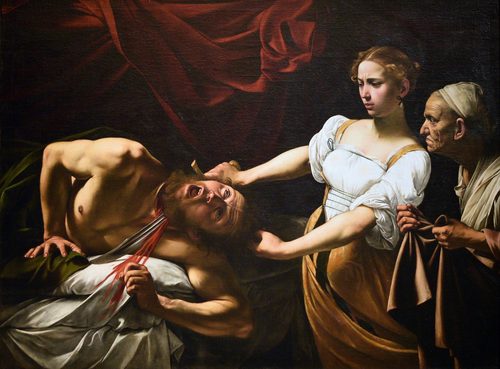
Italian:  Giuditta e Oloferne Judith Beheading Holofernestitle QS:P1476,it:"Giuditta e Oloferne "label QS:Lit,"Giuditta e Oloferne "label QS:Les,"Judit decapitando a Holofernes"label QS:Leu,"Judith eta Holofernes"label QS:Lca,"Judit decapitant Holofernes"label QS:Lde,"Judith enthauptet Holofernes"label QS:Llmo,"Sgiuditta e Oloferen"label QS:Lhy,"Հուդիթ և Հողոփեռնես"label QS:Lzh,"猶迪割下赫羅弗尼斯的頭顱"label QS:Ltr,"Holofernes'in Boynunun Yudit Tarafından Vurulması"label QS:Lja,"ホロフェルネスの首を斬るユーディット"label QS:Larz,"جوديث بقطع هولوفرنيس"label QS:Lhe,"יהודית והולופרנס"label QS:Lavk,"Giuditta is Oloferne (trutca ke Caravaggio)"label QS:Lfi,"Judit leikkaa Holoferneen pään irti"label QS:Leo,"Judit Senkapiganta Holofernon"label QS:Lfr,"Judith décapitant Holopherne"label QS:Lhr,"Judita odrubljuje glavu Holofernu"label QS:Lpt,"Judite decapitando Holofernes"label QS:Lsl,"Judita obglavi Holoferna"label QS:Lmk,"Јудита го обезглавува Холоферн (Караваџо)"label QS:Lth,"ยูดิธตัดศีรษะโฮโลเฟอร์เนส (การาวัจโจ)"label QS:Lpl,"Judyta odcinająca głowę Holofernesowi"label QS:Luk,"Юдита й Олоферн"label QS:Lnl,"Judith onthoofdt Holofernes"label QS:Lru,"Юдифь, обезглавливающая Олоферна"label QS:Lfa,"جودیت سر بریدن هولوفرنس (کاراواجو)"label QS:Lsv,"Judit och Holofernes"label QS:Lsh,"Judita odrubljuje glavu Holofernu"label QS:Len,"Judith Beheading Holofernes"label QS:Lar,"يهوديت تقطع رأس هولوفيرنوس (كارافاجيو)"label QS:Lbr,"Judit ha Holofern"label QS:Lcs,"Judita a Holofernes" — Caravaggio
Italian: Giuditta e Oloferne Judith Beheading Holofernestitle QS:P1476,it:"Giuditta e Oloferne "label QS:Lit,"Giuditta e Oloferne "label QS:Les,"Judit decapitando a Holofernes"label QS:Leu,"Judith eta Holofernes"label QS:Lca,"Judit decapitant Holofernes"label QS:Lde,"Judith enthauptet Holofernes"label QS:Llmo,"Sgiuditta e Oloferen"label QS:Lhy,"Հուդիթ և Հողոփեռնես"label QS:Lzh,"猶迪割下赫羅弗尼斯的頭顱"label QS:Ltr,"Holofernes'in Boynunun Yudit Tarafından Vurulması"label QS:Lja,"ホロフェルネスの首を斬るユーディット"label QS:Larz,"جوديث بقطع هولوفرنيس"label QS:Lhe,"יהודית והולופרנס"label QS:Lavk,"Giuditta is Oloferne (trutca ke Caravaggio)"label QS:Lfi,"Judit leikkaa Holoferneen pään irti"label QS:Leo,"Judit Senkapiganta Holofernon"label QS:Lfr,"Judith décapitant Holopherne"label QS:Lhr,"Judita odrubljuje glavu Holofernu"label QS:Lpt,"Judite decapitando Holofernes"label QS:Lsl,"Judita obglavi Holoferna"label QS:Lmk,"Јудита го обезглавува Холоферн (Караваџо)"label QS:Lth,"ยูดิธตัดศีรษะโฮโลเฟอร์เนส (การาวัจโจ)"label QS:Lpl,"Judyta odcinająca głowę Holofernesowi"label QS:Luk,"Юдита й Олоферн"label QS:Lnl,"Judith onthoofdt Holofernes"label QS:Lru,"Юдифь, обезглавливающая Олоферна"label QS:Lfa,"جودیت سر بریدن هولوفرنس (کاراواجو)"label QS:Lsv,"Judit och Holofernes"label QS:Lsh,"Judita odrubljuje glavu Holofernu"label QS:Len,"Judith Beheading Holofernes"label QS:Lar,"يهوديت تقطع رأس هولوفيرنوس (كارافاجيو)"label QS:Lbr,"Judit ha Holofern"label QS:Lcs,"Judita a Holofernes", 1599 · Wikimedia Commons (CC BY-SA 4.0)
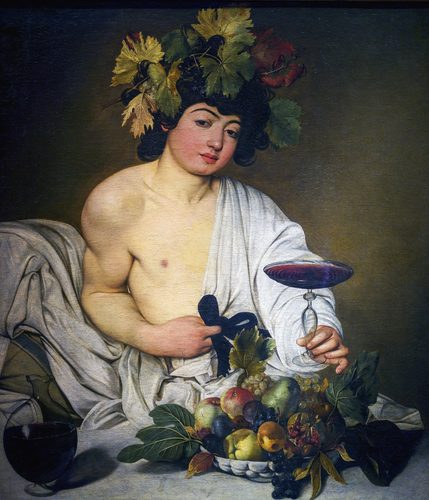
Italian:  Bacco Bacchustitle QS:P1476,it:"Bacco "label QS:Lit,"Bacco "label QS:Les,"Baco"label QS:Lfr,"Bacchus"label QS:Lhy,"Բաքոս"label QS:Lmk,"Бахус (Караваџо)"label QS:Lml,"ബാച്ചസ്"label QS:Lbr,"Bacchus"label QS:Lro,"Bacchus"label QS:Lca,"Bacus"label QS:Lth,"บาคคัส"label QS:Lde,"Bacchus"label QS:Lpt,"Baco"label QS:Lsl,"Bakh"label QS:Lfa,"باکوس (کاراواجو)"label QS:Lzh,"酒神巴克斯 (卡拉瓦喬)"label QS:Lda,"Bacchus"label QS:Ltr,"Bacchus"label QS:Lja,"バッカス"label QS:Lru,"Вакх (картина Караваджо)"label QS:Luk,"Вакх"label QS:Larz,"باخوس (لوحه 2)"label QS:Lpl,"Bachus"label QS:Lhe,"בכחוס"label QS:Lnl,"Bacchus"label QS:Lsv,"Bacchus"label QS:Lavk,"Bacchus (trutca ke Caravaggio)"label QS:Lfi,"Bacchus"label QS:Len,"Bacchus"label QS:Lcs,"Bakchus" — Caravaggio
Italian: Bacco Bacchustitle QS:P1476,it:"Bacco "label QS:Lit,"Bacco "label QS:Les,"Baco"label QS:Lfr,"Bacchus"label QS:Lhy,"Բաքոս"label QS:Lmk,"Бахус (Караваџо)"label QS:Lml,"ബാച്ചസ്"label QS:Lbr,"Bacchus"label QS:Lro,"Bacchus"label QS:Lca,"Bacus"label QS:Lth,"บาคคัส"label QS:Lde,"Bacchus"label QS:Lpt,"Baco"label QS:Lsl,"Bakh"label QS:Lfa,"باکوس (کاراواجو)"label QS:Lzh,"酒神巴克斯 (卡拉瓦喬)"label QS:Lda,"Bacchus"label QS:Ltr,"Bacchus"label QS:Lja,"バッカス"label QS:Lru,"Вакх (картина Караваджо)"label QS:Luk,"Вакх"label QS:Larz,"باخوس (لوحه 2)"label QS:Lpl,"Bachus"label QS:Lhe,"בכחוס"label QS:Lnl,"Bacchus"label QS:Lsv,"Bacchus"label QS:Lavk,"Bacchus (trutca ke Caravaggio)"label QS:Lfi,"Bacchus"label QS:Len,"Bacchus"label QS:Lcs,"Bakchus", Original: circa 1598date QS:P571,+1598-00-00T00:00:00Z/9,P1480,Q5727902; This · Wikimedia Commons (Public domain)

Caravaggio (Michelangelo Merisi, 1571–1610) was the Italian painter who invented the visual language of the Baroque by staging biblical drama as raw, unflattering street life lit by a single, merciless light source. Trained in Milan before arriving in Rome in the 1590s, he abandoned the graceful idealism of the High Renaissance for models pulled from taverns and alleys: dirty feet, weathered hands, real fear on real faces.

His technique, tenebrism, plunged backgrounds into near-total black so that bodies seemed to lunge out of the canvas toward the viewer. Commissions for Roman churches — The Calling of Saint Matthew, The Crucifixion of Saint Peter — startled patrons with their bluntness and their genius in equal measure. Caravaggio's own life ran just as hot: tavern brawls, arrests, and in 1606 a killing that sent him fleeing Rome for Naples, Malta, and Sicily, still painting altarpieces between exiles. He died at thirty-eight near Porto Ercole, his return pardon arriving too late. Within a generation his lighting had remade painting across Europe, copied and argued with from Utrecht to Seville.

How to recognize a Caravaggio

01

Knife-edge chiaroscuro

A single raking light source carves figures from near-total black, leaving backgrounds void and faces caught mid-gesture. The effect turns ordinary rooms into stages, every form modeled by contrast rather than line, shadow doing as much storytelling as flesh.

02

Street-cast saints

Caravaggio hired real Romans — laborers, courtesans, beggars — to pose as apostles and martyrs, keeping their dirty fingernails, sunburnt necks, and creased brows. Sanctity looks lived-in and physical, never idealized, which is exactly what scandalized and electrified his first viewers.

03

Foreshortened, close-cropped bodies

Figures crowd right up against the picture plane, limbs foreshortened so an outstretched arm or a raised blade seems to breach the frame. There is no distant landscape to retreat into — the drama happens inches from the viewer's face.

04

Frozen, mid-action gesture

He favored the instant before or after violence: a hand recoiling from a candle flame, a blade about to fall, a doubting finger pressed into a wound. The narrative hinges on a single suspended second rather than a full unfolding scene.

05

Still-life precision amid chaos

Even in his most turbulent compositions, a basket of fruit or a rumpled tablecloth is rendered with exacting, almost cold observation — bruised pears, wilting leaves. This forensic attention grounds his high drama in tangible, perishable reality.

06

Unmodulated, saturated color

Rather than blending tones softly, Caravaggio laid down passages of pure red, ochre, and flesh tone that hold their intensity even in deep shadow, so a robe or a pool of blood reads as a single unbroken note of color.

The life

Michelangelo Merisi was born in Milan in 1571 and took his name from Caravaggio, the Lombard town where his family had roots. Apprenticed to a Milanese painter in his teens, he arrived in Rome around 1592 with little money and, by contemporary accounts, a fast temper. Early still lifes and genre scenes — boys with fruit, cardsharps, fortune tellers — caught the eye of Cardinal Francesco Del Monte, who became his first major patron.

The 1600 unveiling of the Contarelli Chapel paintings, including The Calling of Saint Matthew, made him Rome's most sought-after religious painter almost overnight. Through the early 1600s he produced altarpieces for major churches while living a turbulent public life of brawls and court appearances. In May 1606 he killed a man, Ranuccio Tomassoni, in a street fight and fled Rome, a capital sentence hanging over him.

He spent his final four years on the run — Naples, then Malta, where he was briefly knighted before a violent falling-out led to imprisonment and flight, then Sicily and Naples again. He kept painting throughout, his late works darker and starker still. In July 1610, while traveling north in hope of a pardon, he died near Porto Ercole under circumstances that remain only partly documented, likely from fever.

Timeline

  1. 1571
    Born in Milan
  2. 1592
    Arrives in Rome
  3. 1599
    Begins the Contarelli Chapel commission
  4. 1600
    The Calling of Saint Matthew unveiled
  5. 1606
    Kills Ranuccio Tomassoni, flees Rome
  6. 1608
    Knighted in Malta, then imprisoned
  7. 1609
    Wounded in an attack in Naples
  8. 1610
    Dies near Porto Ercole

Most famous works

WorkDateWhy it matters
The Calling of Saint Matthew1599–1600The moment of divine summons rendered as a dim tavern scene, its single shaft of light launching his Roman fame.
Judith Beheading Holofernesc. 1599An unflinching depiction of violence and resolve that set the template for the era's most dramatic biblical subjects.
The Supper at Emmaus1601A moment of recognition captured with startling immediacy, foreshortened hands and a basket of fruit balanced at the table's edge.
The Death of the Virgin1606Rejected by its patrons for its unidealized, working-class model, now considered one of his most affecting late works.
David with the Head of Goliathc. 1610A late, haunted self-reckoning believed to include Caravaggio's own features in the severed head.
The Crucifixion of Saint Peter1601A brutally physical staging of martyrdom, the saint's weight and strain rendered with unflinching honesty.
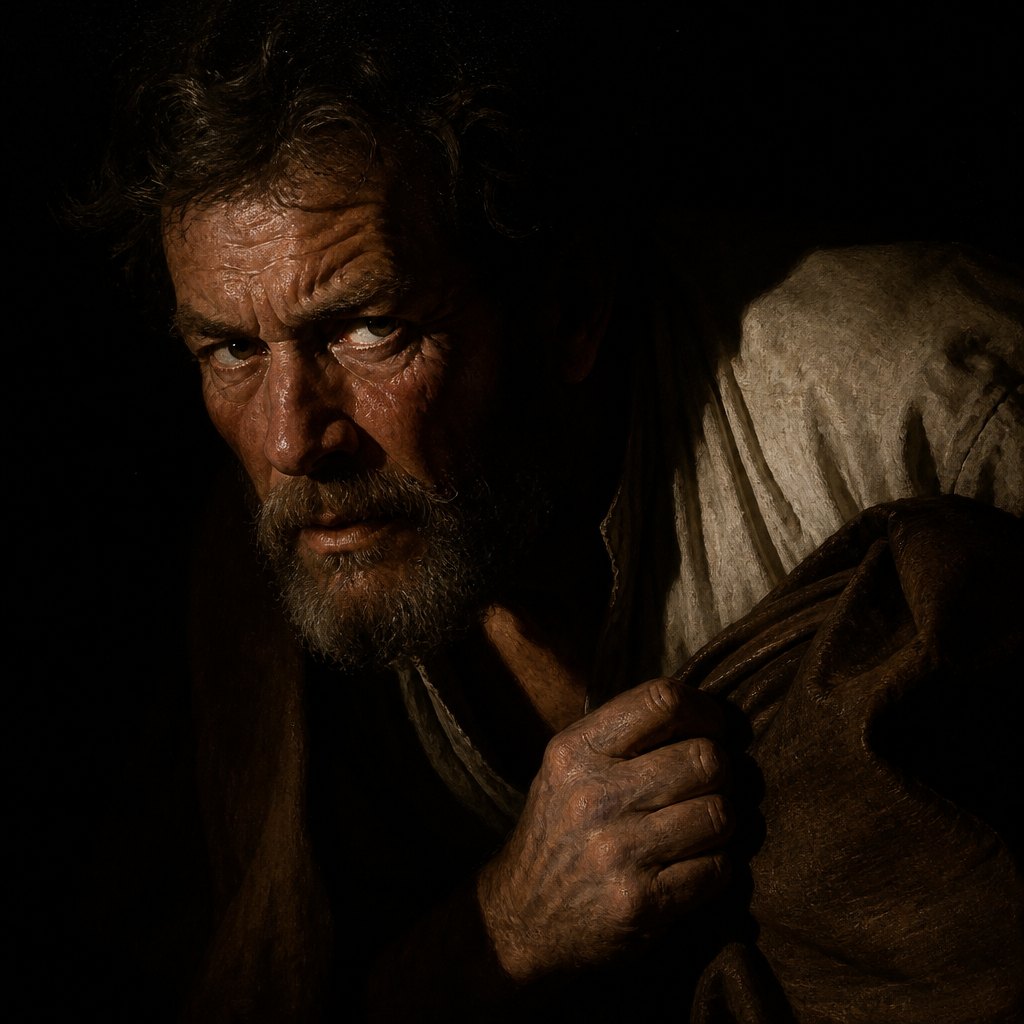
AI-generated interpretationAI-generated

Create in the same spirit

Make Baroque art of your own

This AI interpretation echoes the aesthetic world Caravaggio worked in — it depicts no real artwork. Generate your own with the Baroque Art Style generator.

Open the Baroque Art Style generator →

Legacy

Caravaggio's dramatic lighting and unidealized realism spread across Europe within a generation, inspiring an international group of followers known as the Caravaggisti in Rome, Naples, Utrecht, and Spain. Artists including Artemisia Gentileschi, Jusepe de Ribera, and Georges de La Tour absorbed his tenebrism directly; its influence threads through Rembrandt's shadow and on to the high-contrast lighting of later photography and film. He effectively invented a visual grammar for turning ordinary bodies into dramatic subjects, still visible whenever a single hard light source is used to make a scene feel urgent, immediate, and physically real.

Frequently asked questions

What is Caravaggio famous for?

Caravaggio is famous for inventing a dramatic style of extreme light and shadow, called tenebrism, and for painting biblical scenes with unidealized, street-cast models, work that launched the visual language of Baroque painting.

Where can you see Caravaggio's paintings?

Major works hang in Rome's churches, including San Luigi dei Francesi and Santa Maria del Popolo, plus the Galleria Borghese, Naples's Capodimonte, and museums including London's National Gallery and the Metropolitan Museum.

How many paintings did Caravaggio make?

Around sixty paintings are securely attributed to him today, a relatively small output for his short, turbulent career, with a handful of additional works still debated by scholars.

What artistic movement was Caravaggio part of?

Caravaggio is considered the founder of Baroque painting, and his dramatic lighting technique, tenebrism, launched an international following of imitators known as the Caravaggisti across Italy and Europe.