 Famous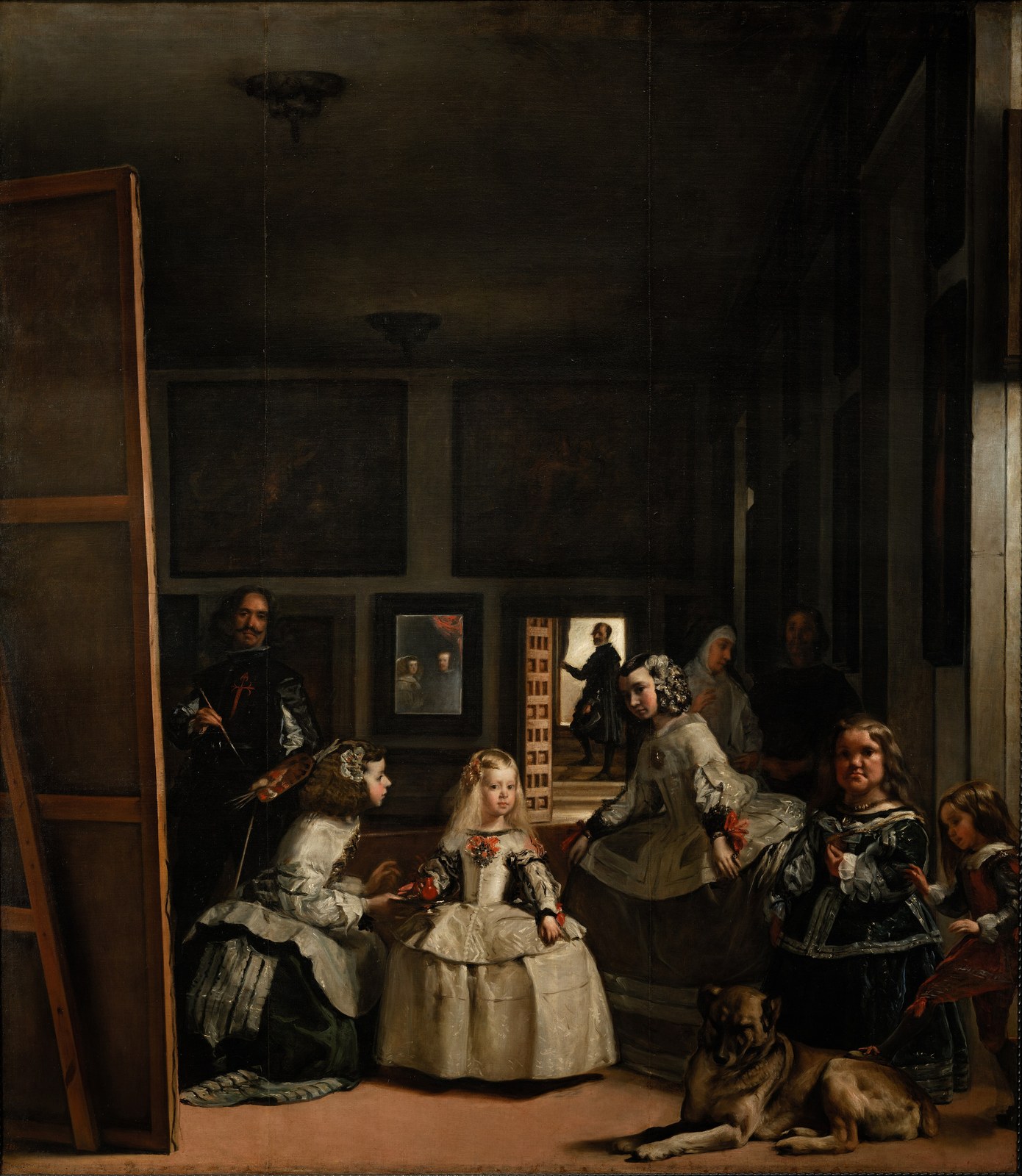
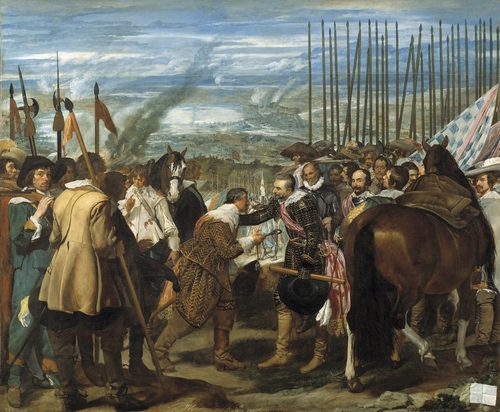
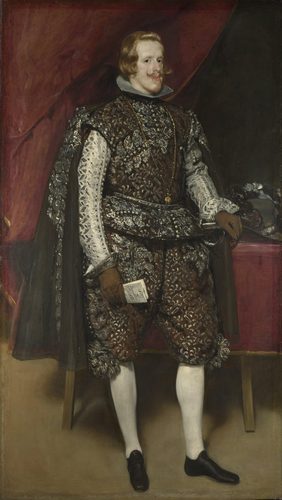
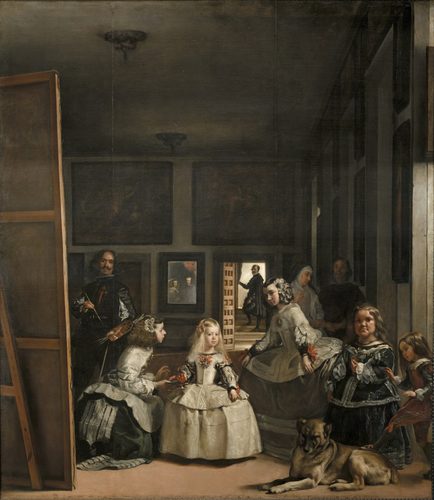
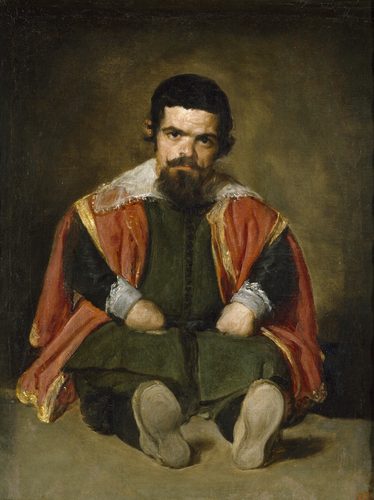
Diego Velázquez (1599–1660) was court painter to King Philip IV of Spain and the central figure of the Spanish Golden Age, celebrated for portraits and scenes so exact in their observation of light and presence that later painters treated him as a founder of modern painting. Born in Seville, he trained under Francisco Pacheco, mastering the dark, sculptural realism of early Spanish art in kitchen scenes and religious pictures before moving to Madrid in 1623 to paint the young king. Two journeys to Italy exposed him to Titian and Venetian color, and his brushwork loosened over decades into something almost weather-like — solid at a distance, dissolving up close into flecks of paint. He painted princesses, dwarfs, philosophers, and popes with the same unblinking attention, refusing to soften or flatter. His late masterpiece Las Meninas turns the royal portrait into a meditation on who is watching whom. Édouard Manet later called him simply the painter of painters.
How to recognize a Velázquez
Atmospheric loose brushwork
In his late Madrid years Velázquez abandoned tight outlines for broken, rapid strokes that read as solid form only from a distance — a technique so advanced for its time that it anticipated Impressionist handling by two centuries.
Silvery, smoke-grey palette
Velázquez favored subdued grays, blacks, and silvers threaded with warm flesh tones, letting a single note of red or gold carry a whole composition rather than filling the canvas with color.
Unflattering psychological honesty
He painted kings, dwarfs, and servants with the same steady, appraising eye, never smoothing a jowl or softening a stare, so his sitters register as specific people rather than idealized types.
Deep, ambiguous pictorial space
Rooms in his pictures open backward through doorways, mirrors, and painted canvases within canvases, so the viewer's own position in the scene becomes part of the picture's subject, as in Las Meninas.
Everyday subjects elevated
Early bodegones — kitchen maids, water sellers, egg fryers — treat humble Seville life with the same gravity later reserved for royalty, dignifying ordinary labor through careful light and composition.
Restrained, economical detail
Velázquez suggested lace, armor, or fur with a few decisive strokes rather than exhaustive rendering, trusting the eye to complete the illusion — an economy later painters studied as a lesson in painterly confidence.
The life
Velázquez was born in Seville in 1599 and apprenticed at age eleven to the painter and theorist Francisco Pacheco, whose daughter Juana he married in 1618. His earliest independent work belongs to the Seville years: dark, closely observed kitchen scenes and religious paintings built from ordinary people posed with unusual gravity.
In 1623 a portrait of the young King Philip IV won him a permanent post at the Madrid court, where he remained for the rest of his career. A first trip to Italy in 1629–1631 brought him into contact with Venetian color and Roman antiquity; a second, in 1649–1651, produced his devastating portrait of Pope Innocent X and the sole surviving nude in his output, the Rokeby Venus.
Velázquez's duties expanded well beyond painting — he served as a palace usher and eventually as chief steward, overseeing royal ceremonies and even the king's travel. Painting increasingly happened around these responsibilities, yet his late works, above all Las Meninas of 1656, are his most daring. In 1659 he was knighted into the Order of Santiago. He died in Madrid in August 1660, worn out by preparations for a royal wedding at the French border, having reshaped what a painted likeness could do.
Timeline
- 1599Born in Seville, Spain
- 1610Begins apprenticeship under painter Francisco Pacheco
- 1618Marries Juana Pacheco; paints early Seville kitchen scenes
- 1623Becomes court painter to King Philip IV in Madrid
- 1629Travels to Italy, studying Titian and Roman antiquity
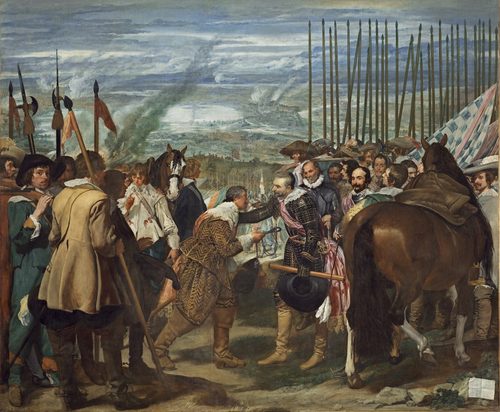
- 1634Paints The Surrender of Breda for the Hall of Realms
- 1649Returns to Italy, paints Portrait of Pope Innocent X
- 1656Paints Las Meninas, his most celebrated work
- 1660Dies in Madrid shortly after royal wedding festivities
Most famous works
| Work | Date | Why it matters |
|---|---|---|
| Las Meninas | 1656 | A group portrait of the royal family that folds the painter, a mirror, and the viewer into one unresolved scene of looking. |
| The Surrender of Breda | 1634–35 | A history painting of a military handover staged with unusual grace and mutual respect between victor and vanquished. |
| Portrait of Pope Innocent X | 1650 | A famously severe likeness the pope is said to have called 'too true,' painted in Rome during Velázquez's second Italian journey. |
| The Waterseller of Seville | c. 1620 | An early bodegón treating a humble street vendor with the solemnity of a religious painting, built from stark light and careful surfaces. |
| Portrait of Juan de Pareja | 1650 | A portrait of Velázquez's enslaved studio assistant, painted with such force it won instant acclaim in Rome; Velázquez freed him soon after. |
| Las Hilanderas (The Spinners) | c. 1657 | A workshop scene of Madrid's royal tapestry factory that doubles as a meditation on myth, craft, and artistic creation itself. |
 AI-generated
Create in the same spirit
Make Baroque art of your own
This AI interpretation echoes the aesthetic world Diego Velázquez worked in — it depicts no real artwork. Generate your own with the Baroque Art Style generator.
Open the Baroque Art Style generator →Legacy
Velázquez's reputation grew slowly outside Spain until the nineteenth century, when Realist and Impressionist painters rediscovered him as a modern master. Édouard Manet, who studied his work in Madrid, called him simply 'the painter of painters' and modeled his own loose, direct brushwork on Velázquez's example. John Singer Sargent and Francis Bacon each returned to him across the centuries, Bacon obsessively reworking Innocent X. What later artists prized was not subject matter but method: paint that describes light and form through suggestion rather than description, up close nearly abstract. Museums in Madrid, London, and New York hold his key works, and his questions about observation and representation still shape how painters think about seeing.
Frequently asked questions
What is Diego Velázquez famous for?
Velázquez is famous for Las Meninas and for his penetrating, unflattering portraits of the Spanish royal court, painted with a loose, atmospheric brushwork that later influenced Manet and the Impressionists.
Where can I see Velázquez's paintings today?
The Museo del Prado in Madrid holds the largest collection, including Las Meninas. Other major works are in London's National Gallery, Rome's Galleria Doria Pamphilj, and New York's Frick Collection and Metropolitan Museum.
How many paintings by Velázquez survive?
Roughly 120 paintings are widely accepted as autograph Velázquez works, a relatively small output reflecting his demanding court duties, which left comparatively little time purely for painting.
What art movement was Velázquez part of?
Velázquez worked within the Spanish Baroque, developing a personal style within the broader European Baroque emphasis on drama, naturalism, and strong light, distinct from the more theatrical Italian Baroque.