 Famous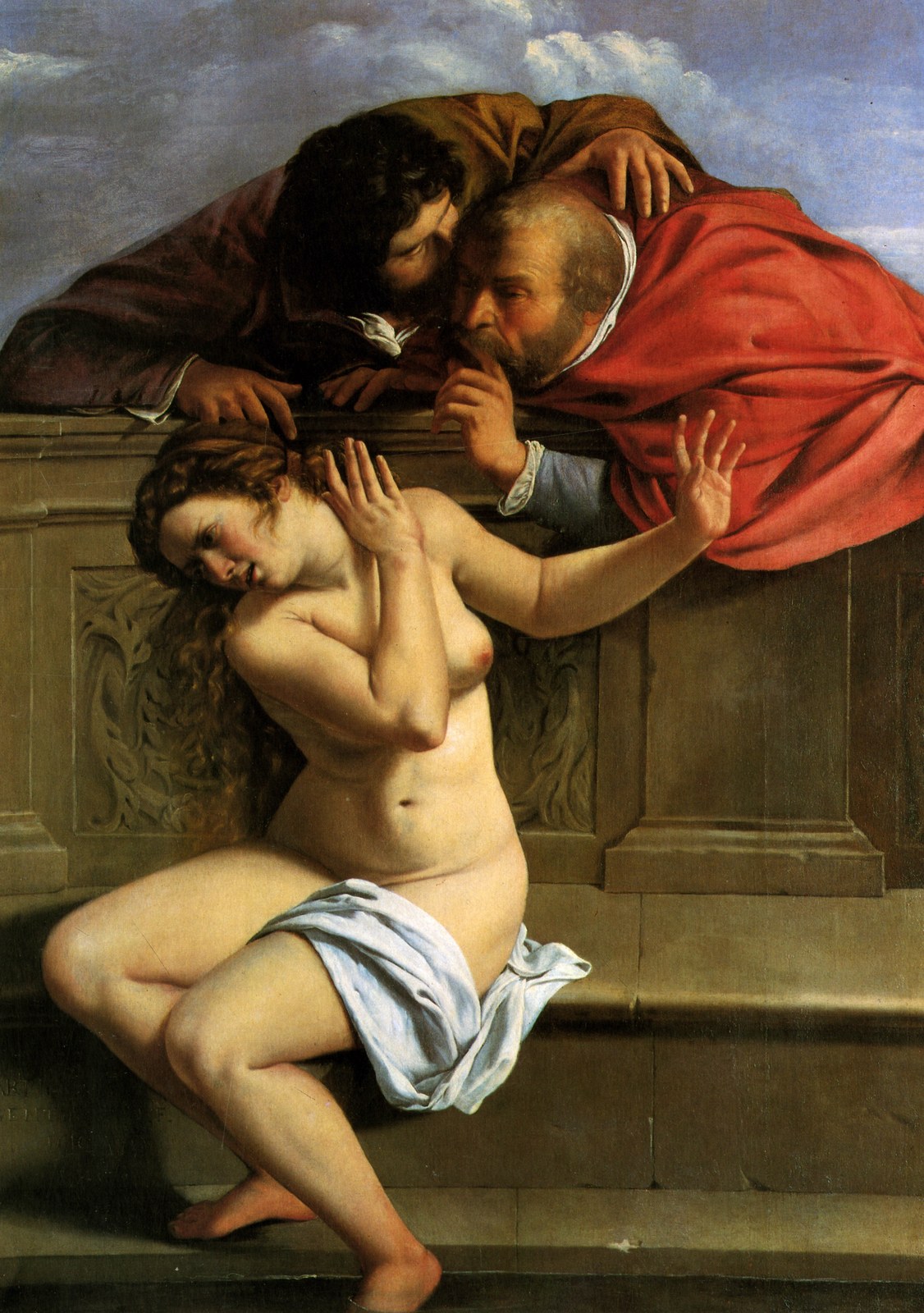
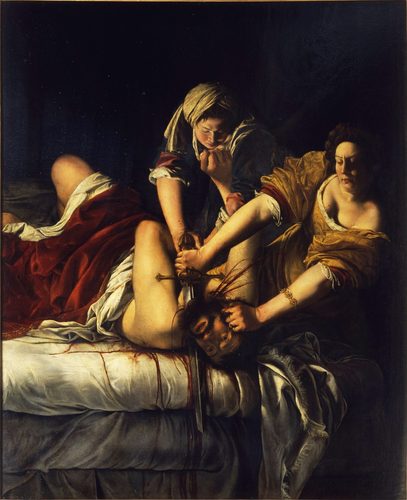
Artemisia Gentileschi (1593–1656) was the Italian Baroque painter who made herself one of the era's most sought-after artists by giving biblical and mythological heroines unprecedented physical force and psychological presence. Trained by her father Orazio Gentileschi in Rome, she absorbed Caravaggio's dramatic light and translated it into scenes of women acting rather than merely suffering — Judith beheading Holofernes with braced, working muscles rather than dainty restraint.
Her early life was marked by a 1612 rape trial against the painter Agostino Tassi, a public ordeal that has often overshadowed her work but did not define her career, which spanned four more decades across Florence, Rome, Venice, and Naples. In Florence she became the first woman admitted to the city's Accademia del Disegno. She built a substantial international clientele, including patrons in England, and ran her own independent workshop, unusual for a woman of her time.
She died in Naples in 1656, leaving one of the Baroque's most distinctive and physically forceful bodies of work, and a career built on skill rather than the ordeal that once overshadowed it.
How to recognize a Gentileschi
Physically forceful heroines
Her women grip swords, brace knees against struggling bodies, and strain with visible muscular effort rather than posing decoratively. Action reads as real labor, showing the resistance and force required rather than a bloodless gesture.
Caravaggesque tenebrism
Deep, near-black backgrounds isolate her figures under a single strong light, inherited from her early training but pushed toward even tighter, more claustrophobic staging. Shadow concentrates attention entirely on faces and hands mid-action.
Richly textured fabric
Heavy silks, brocades, and linens are rendered with dense, tactile brushwork, folds catching light in thick ridges. Costume becomes almost architectural, framing and grounding her figures within the compressed, shallow space of the canvas.
Alert, self-possessed women
Her biblical and mythological women are painted with attention to their interior alertness and self-possession rather than as passive objects of display, a marked departure from many contemporaries' treatment of the same subjects.
Compressed, close-up staging
Figures crowd close to the picture plane in tight, almost claustrophobic arrangements, with little background to distract from the central confrontation. The viewer is placed uncomfortably near the action, heightening its immediacy.
Warm, earthy color harmonies
Deep reds, ochres, and warm flesh tones dominate her palette, set against dark grounds for maximum contrast. Color is used sparingly but decisively, concentrated on the emotional focal point of each composition.
The life
Artemisia Gentileschi was born in Rome in 1593, the daughter of painter Orazio Gentileschi, who trained her from childhood alongside her brothers in a household immersed in Caravaggio's new naturalism. She showed exceptional talent early, producing her first major independent work, Susanna and the Elders, at seventeen, a striking debut for so young an artist.
In 1611 she was raped by Agostino Tassi, a colleague of her father's, and the resulting 1612 trial ended in Tassi's conviction, though the sentence was never enforced. Soon after, she married and moved to Florence, where she worked for the Medici court and, in 1616, became the first woman elected to the city's Accademia del Disegno, a formal honor that gave her legal standing to run an independent workshop.
Over the following decades she worked in Rome, Venice, and finally Naples, building a self-supporting career and a substantial clientele across Italy and abroad, including commissions for Spain's King Philip IV and a period working in London alongside her father for the English court in the late 1630s. She returned to Naples, where she continued receiving major commissions into the 1650s. She died there in 1656.
Timeline
- 1593Born in Rome
- 1610Paints Susanna and the Elders at seventeen
- 1612Tassi trial concludes
- 1614Moves to Florence, joins the Medici court
- 1616First woman admitted to Florence's Accademia del Disegno
- 1630Settles in Naples
- 1638Joins her father at the English court in London
- 1656Dies in Naples
Most famous works
| Work | Date | Why it matters |
|---|---|---|
| Susanna and the Elders | 1610 | Painted at seventeen, it reframes a familiar biblical subject around Susanna's visible distress rather than the elders' desire. |
| Judith Slaying Holofernes | c. 1614–1620 | Her most famous canvas, showing Judith and her maid overpowering Holofernes with visible physical effort and resolve. |
| Judith and Her Maidservant | c. 1623–1625 | A tense aftermath scene, the two women alert in torchlight moments after the act depicted in her earlier canvas. |
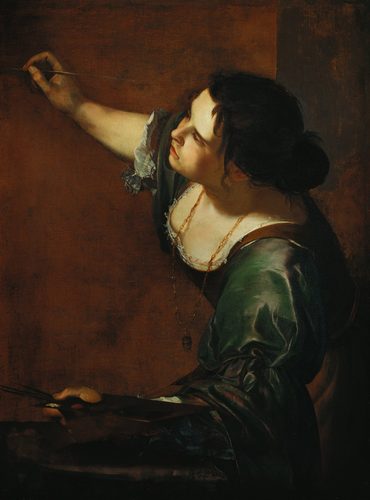
| Self-Portrait as the Allegory of Painting | c. 1638–1639 | A bold self-portrait merging her own likeness with the personification of the art of painting itself. |
| Esther Before Ahasuerus | c. 1628–1635 | A large-scale biblical scene showcasing her handling of rich fabric and multi-figure court drama. |
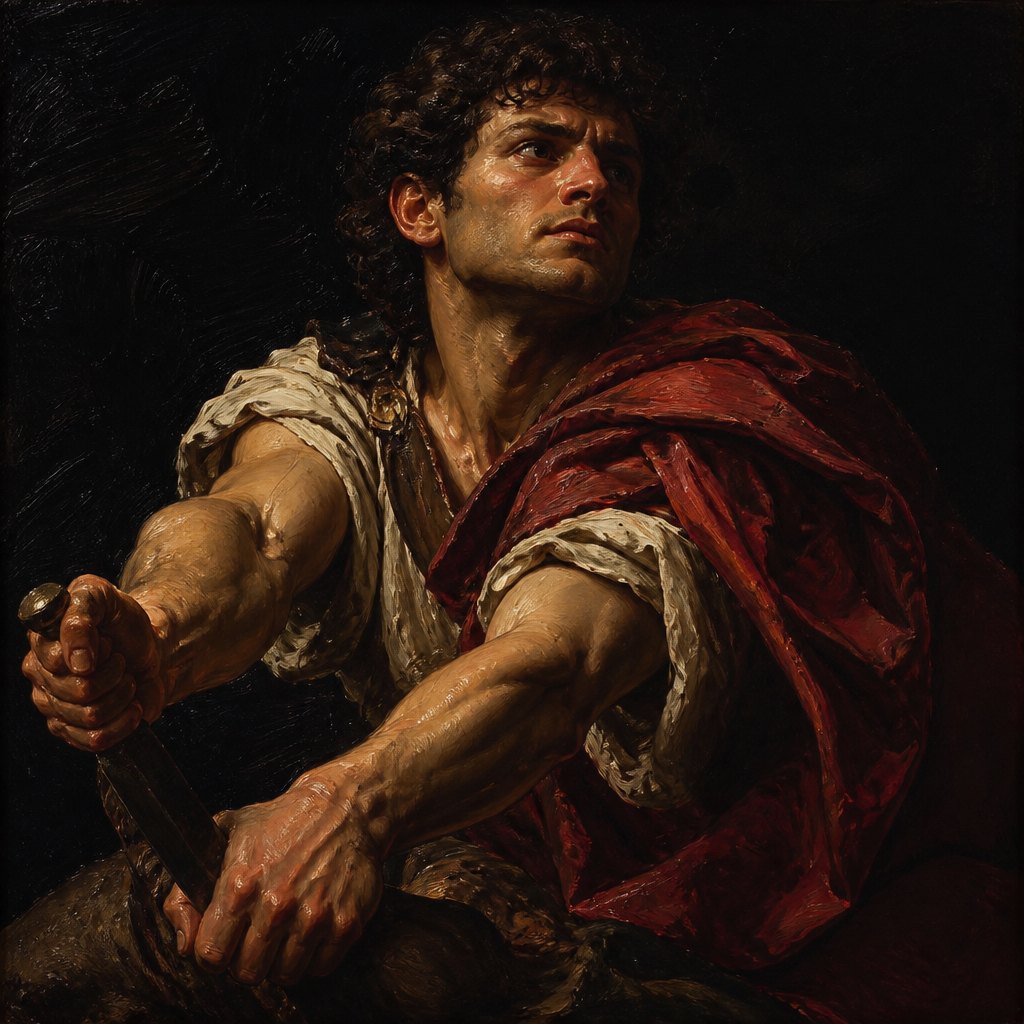 AI-generated
Create in the same spirit
Make Baroque art of your own
This AI interpretation echoes the aesthetic world Artemisia Gentileschi worked in — it depicts no real artwork. Generate your own with the Baroque Art Style generator.
Open the Baroque Art Style generator →Legacy
Gentileschi's forceful, psychologically alert heroines reshaped how women could be depicted in Baroque art, moving them from passive icons to active agents of their own stories. Long overshadowed by her father and by the retelling of her assault, she has been reclaimed since the late twentieth century as one of the era's most technically accomplished painters, her Judiths now among the Baroque's most recognized images. She remains a touchstone for anyone examining how women artists worked within, and against, the constraints of their time, and her example continues to inform contemporary art history and museum programming.
Frequently asked questions
What is Artemisia Gentileschi famous for?
Gentileschi is famous for forceful, dramatically lit paintings of biblical heroines like Judith and Susanna, rendered with unusual physical and psychological realism, and for becoming a leading professional painter in a field dominated by men.
Where can you see Artemisia Gentileschi's paintings?
Her work hangs in Florence's Uffizi, Naples's Capodimonte, London's National Gallery, Rome's Palazzo Barberini, and various American museums, including the Detroit Institute of Arts and the Getty.
How many paintings did Artemisia Gentileschi make?
Roughly sixty paintings are securely attributed to her today, though scholars believe she produced more; ongoing research continues to reattribute works previously credited to male contemporaries.
What artistic movement was Artemisia Gentileschi part of?
She worked within the Italian Baroque, developing directly from Caravaggio's dramatic lighting and naturalism, which she absorbed through her father's workshop and pushed toward greater physical and emotional intensity.