 Famous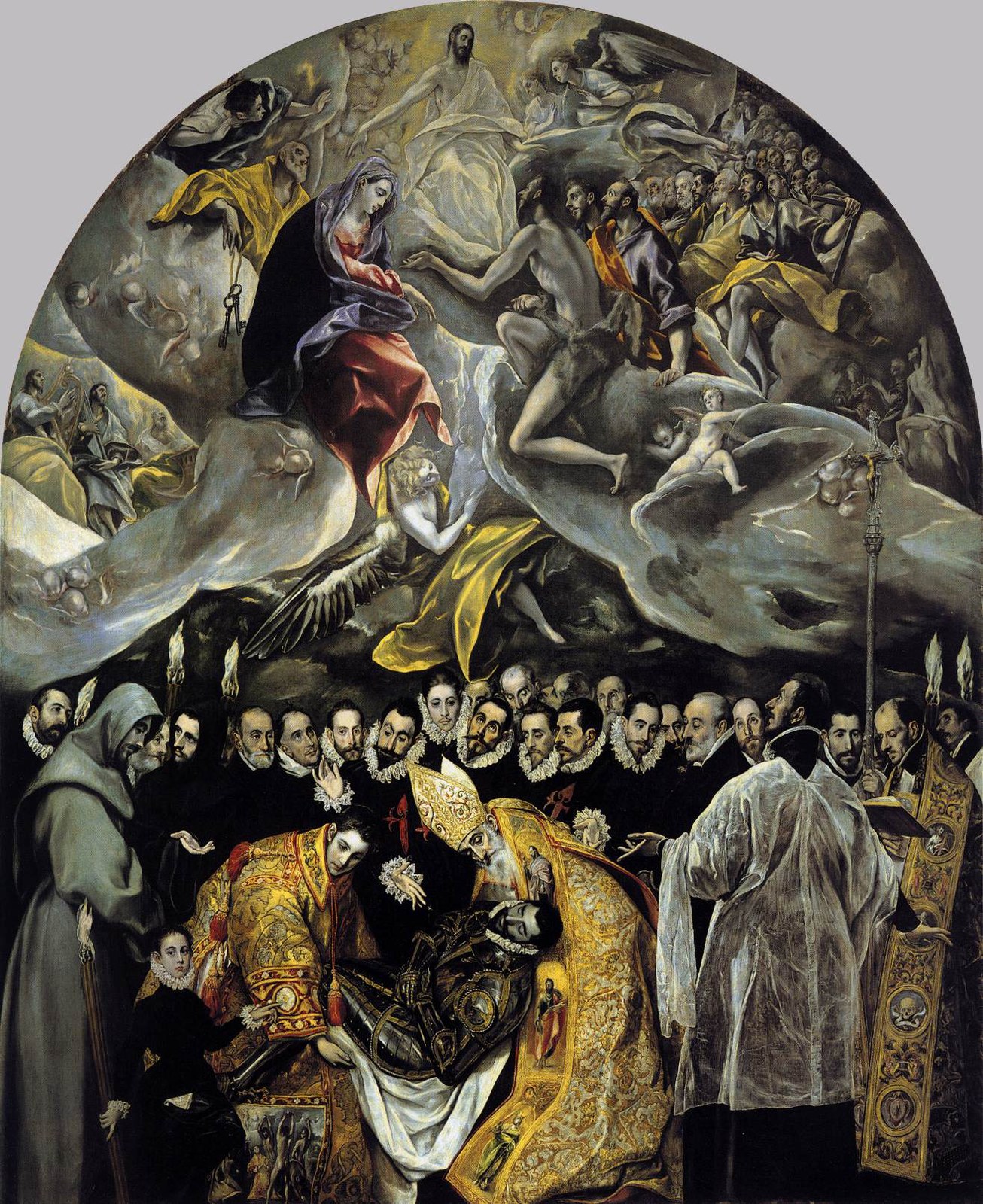
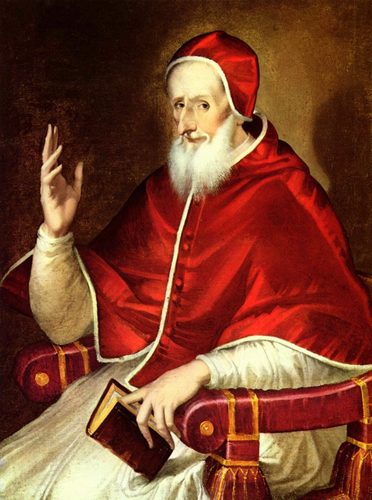
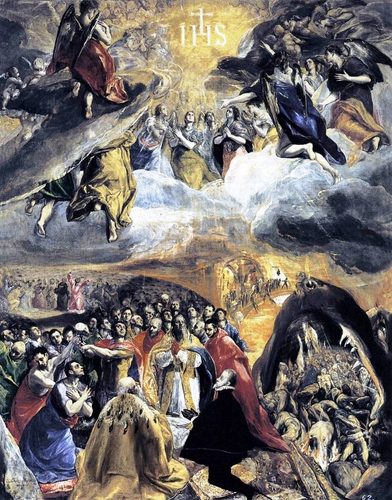
El Greco (1541–1614), born Domenikos Theotokopoulos on the Venetian-ruled island of Crete, trained first as an icon painter in the Byzantine tradition before reinventing himself as one of European painting's most singular visionaries. He moved to Venice around 1567 to absorb the color and technique of Titian's circle, then to Rome around 1570, where Michelangelo's sculptural power and the elongations of Roman Mannerism left a lasting mark.
Failing to secure steady patronage in Italy, he settled in Toledo, Spain, in 1577 and remained there for the rest of his life. Though passed over for a major royal commission by Philip II, he found deep local patronage among Toledo's churches and clergy, producing altarpieces marked by cold, acidic color, flame-like elongated figures, and restless, storm-lit skies.
His masterpiece, The Burial of the Count of Orgaz (1586), fuses earthly and heavenly realms in a single composition. In his final years he worked on the unfinished Opening of the Fifth Seal, a painting later admired by twentieth-century modernists. He died in Toledo in 1614, leaving a body of work so individual it defies easy classification.
How to recognize a Greco
Elongated, flame-like figures
Bodies stretch far beyond natural proportion, tapering upward like candle flames, a distortion that gives even static poses a sense of spiritual ascent and restless, unresolved energy running through the entire composition.
Cold, acidic color
Sharp greens, icy greys, and sulfurous yellows dominate over warmer Renaissance palettes, giving scenes an unsettled, almost visionary temperature distinct from the warmer color habits of his Venetian and Roman training.
Turbulent, storm-lit skies
Backgrounds churn with dark clouds broken by sudden flashes of pale light, treating weather as an active, almost emotional presence rather than a passive setting behind the main subject of a scene.
Compressed, stacked space
Figures and architecture crowd close together with little conventional depth, layering scenes vertically rather than receding naturally into the distance, so compositions feel dense, airless, and upward-thrusting rather than calmly spacious.
Byzantine-rooted flatness
Beneath the Mannerist distortion sits a residue of his early icon-painting training: schematic drapery folds and stylized faces that owe as much to Cretan tradition as to Italian naturalism and modeling.
Visionary, non-naturalistic light
Light falls unevenly and without a single logical source, flaring on some figures while others sit in shadow, prioritizing emotional and spiritual emphasis over ordinary optical accuracy, consistency, or a fixed point of origin.
The life
Domenikos Theotokopoulos was born in 1541 on the Venetian-ruled island of Crete, where he trained as an icon painter in the post-Byzantine tradition and was recorded as a master by 1566. Seeking wider opportunities, he moved to Venice around 1567, absorbing the color and brushwork of Titian's circle, then continued to Rome around 1570, entering the household of Cardinal Alessandro Farnese and studying the sculptural power of Michelangelo's work.
Italy never gave him the standing he sought. In 1577 he moved to Toledo, Spain, intending it as a stopover on the way to the royal court, but he remained there the rest of his life after failing to win favor with King Philip II, who rejected a major commission intended for the royal monastery of El Escorial.
In Toledo he found steady patronage among the city's churches, monasteries, and educated clergy, and developed the fully personal style for which he is remembered: elongated figures, acidic color, and turbulent, visionary light. His 1586 masterpiece, The Burial of the Count of Orgaz, remains in the Toledo church for which it was painted.
He continued working into his final years, leaving The Opening of the Fifth Seal unfinished at his death in Toledo in 1614.
Timeline
- 1541Born Domenikos Theotokopoulos in Candia, Crete
- 1566Recorded as a master icon painter in Candia
- 1567Moves to Venice, absorbs Venetian color and technique
- 1570Moves to Rome, joins the circle of Cardinal Farnese
- 1577Settles permanently in Toledo, Spain
- 1586Paints The Burial of the Count of Orgaz
- 1608Begins The Opening of the Fifth Seal, left unfinished
- 1614Dies in Toledo
Most famous works
| Work | Date | Why it matters |
|---|---|---|
| The Disrobing of Christ | 1579 | An early Toledo commission notable for its compressed, crowded composition. |
| The Burial of the Count of Orgaz | 1586 | His acknowledged masterpiece, joining an earthly funeral to a heavenly vision above. |
| View of Toledo | c. 1599 | A visionary, storm-lit landscape of his adopted city, unusual for its period. |
| Christ Driving the Traders from the Temple | c. 1600 | A dynamic composition he returned to several times across his career. |
| The Opening of the Fifth Seal | c. 1608–14 | An unfinished late work later admired by early twentieth-century modernists. |
| Laocoon | c. 1610–14 | His only surviving mythological subject, set against a view of Toledo. |
 AI-generated
Create in the same spirit
Make Mannerism art of your own
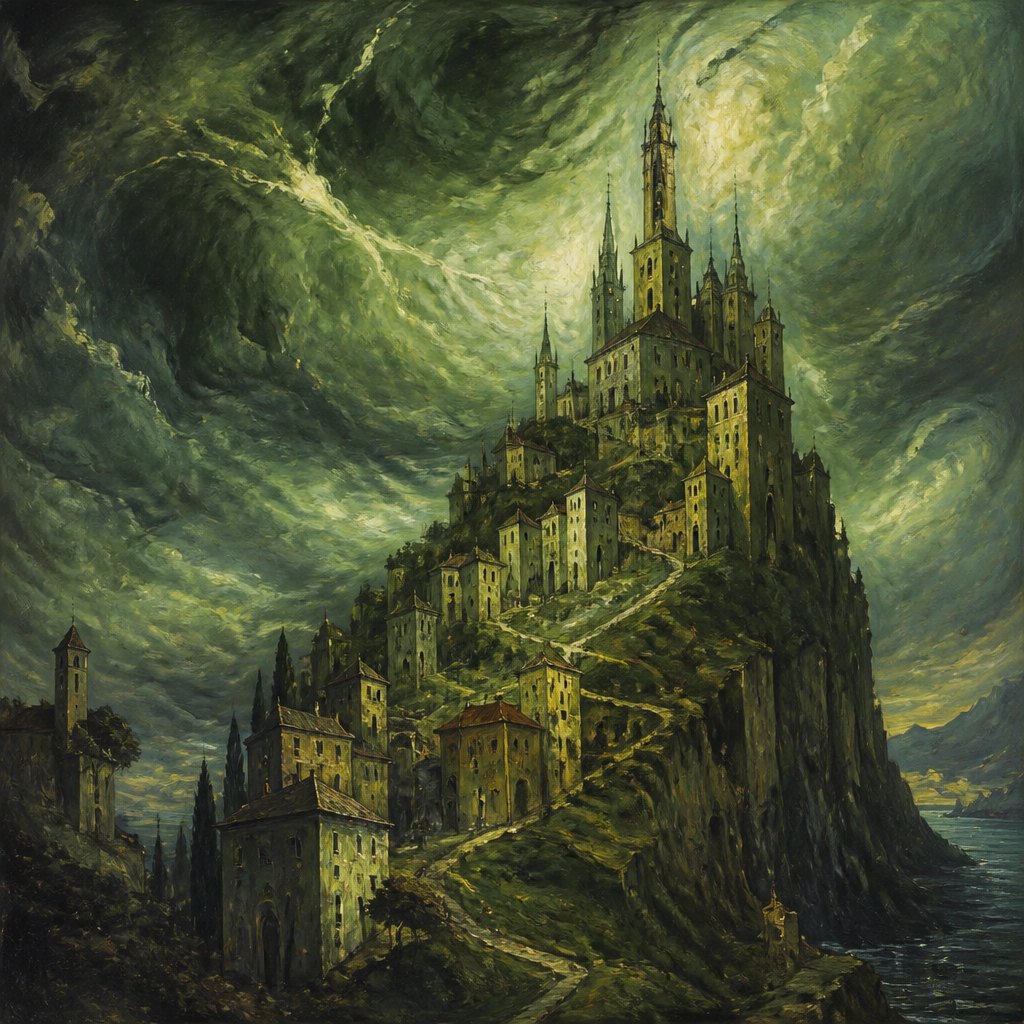
This AI interpretation echoes the aesthetic world El Greco worked in — it depicts no real artwork. Generate your own with the Mannerism Art Style generator.
Open the Mannerism Art Style generator →Legacy
El Greco worked in near isolation in Toledo, and for centuries after his death he was treated as a strange outlier rather than a central figure of Spanish painting. That changed at the turn of the twentieth century, when artists including Cézanne and Picasso, who studied his elongated, fractured figures while developing early Cubism, rediscovered him as a precursor to modern distortion and expressive color. Today he is recognized as one of the most original painters of the sixteenth century, a bridge between Byzantine tradition, Italian Mannerism, and a visionary intensity that would not find real successors until modern art caught up with him three centuries later.
Frequently asked questions
What is El Greco famous for?
El Greco is famous for elongated, flame-like figures painted in cold, acidic color under turbulent skies, especially in The Burial of the Count of Orgaz. His visionary style, formed from Byzantine, Venetian, and Roman training, remains unlike any other Renaissance painter's.
Where can you see El Greco's paintings today?
Toledo holds the largest concentration of his work, including The Burial of the Count of Orgaz at the church of Santo Tomé and the dedicated El Greco Museum. Further major paintings hang in Madrid's Prado and New York's Metropolitan Museum of Art.
What artistic movement did El Greco belong to?
El Greco is usually classified within Mannerism, though his style is distinctive enough that art historians often treat him as a category of his own, blending Byzantine icon painting, Venetian color, and Roman figural distortion into something singular.
Why did El Greco settle in Toledo, Spain?
After failing to establish himself in Rome, El Greco moved to Toledo in 1577, where the city's churches and clergy offered steady patronage. He remained there for the rest of his life, producing his most visionary religious paintings.