 Famous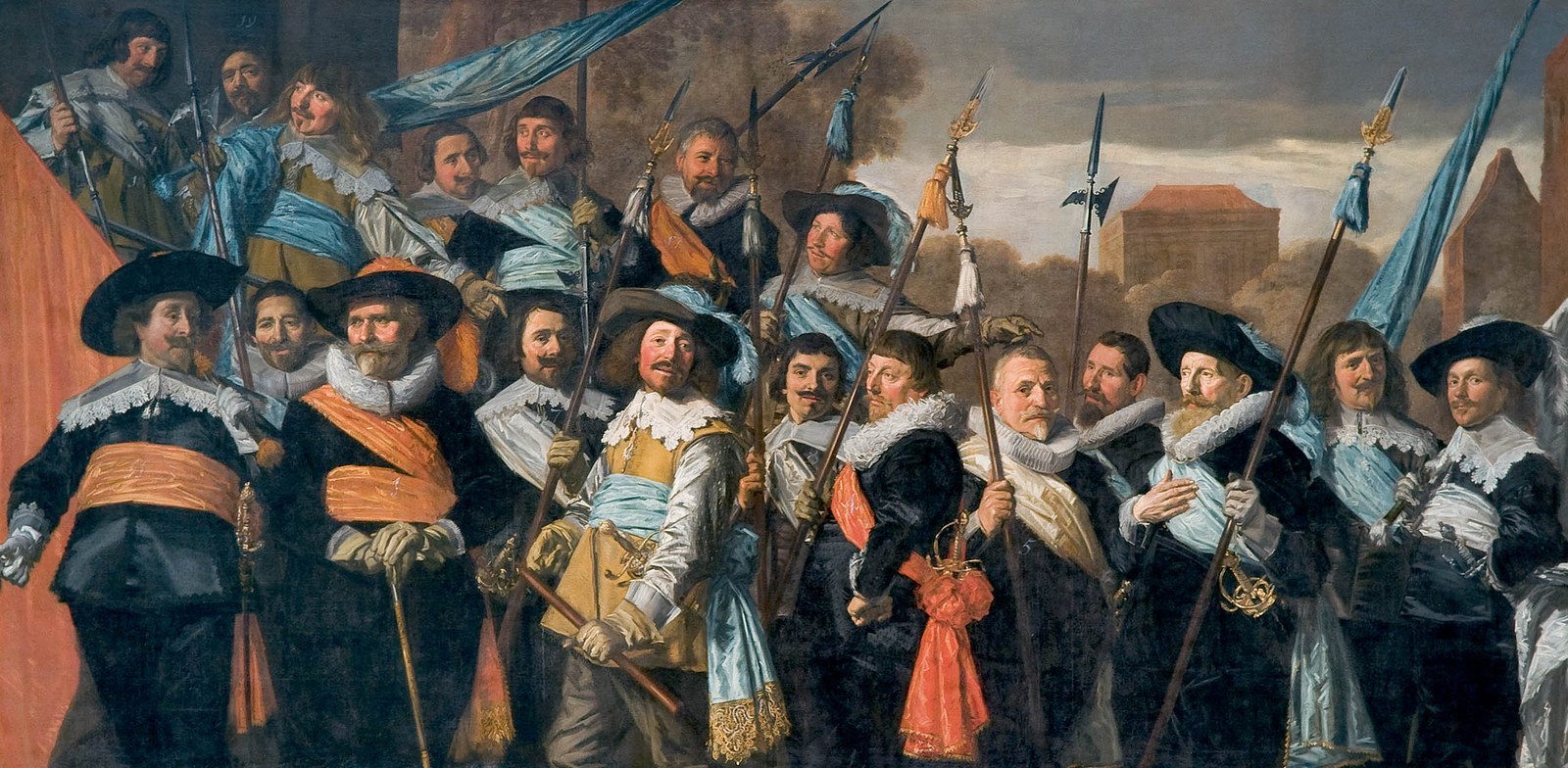
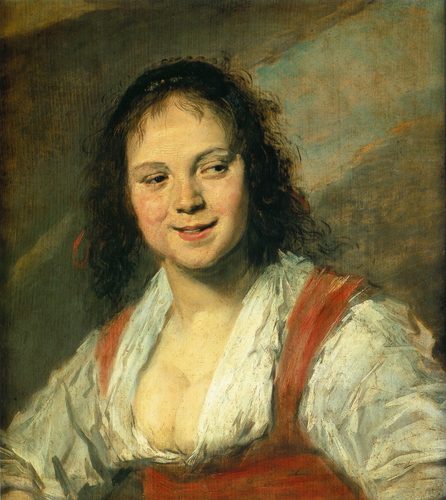
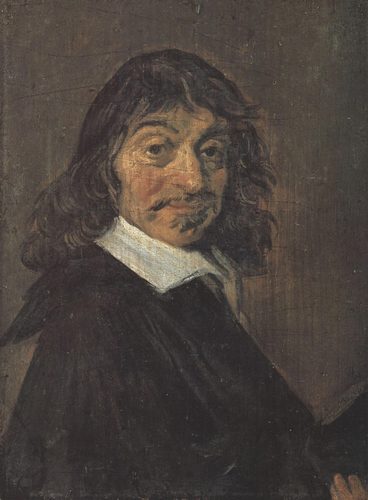
Frans Hals (1582–1666) was the Dutch Golden Age painter whose loose, rapid brushwork brought an unprecedented sense of spontaneity to portraiture, catching sitters mid-laugh or mid-gesture rather than posed in stiff formality. Born in Antwerp to Flemish parents who fled to Haarlem, he spent his entire working life in that city, becoming its leading portraitist for both individual patrons and Haarlem's civic militia companies and charitable boards.
Where most contemporaries built forms through careful, blended modeling, Hals worked with visible, slashing strokes that seem improvised even though they were calculated to capture exactly the right fleeting expression. His group portraits of militia banquets and regent boards animate what could have been static lineups into scenes of genuine social interaction. Despite steady acclaim, he struggled financially in his later years and received municipal support in old age.
He continued painting into his eighties, his late portraits growing starker and more somber, built almost entirely from black, white, and gray. He died in Haarlem in 1666, having influenced generations of painters who prized painterly freedom over polish.
How to recognize a Hals
Visible, slashing brushwork
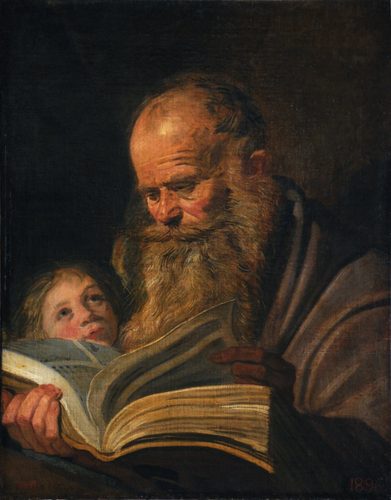
Hals built faces and costume from rapid, distinct strokes left unblended on the canvas, each one placed with precision despite its loose, spontaneous look. Up close the surface reads as near-abstract marks; at a distance they snap into a living likeness.
Caught mid-expression
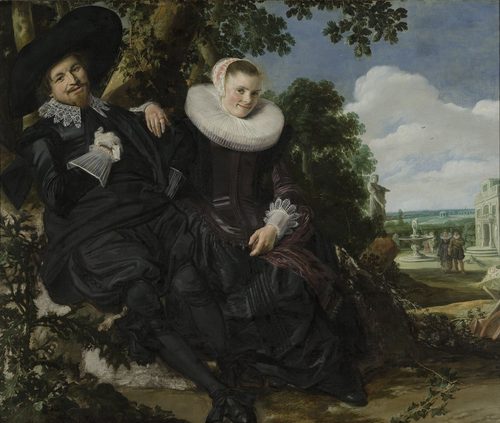
Sitters are painted laughing, smirking, or turning as if just addressed, lips parted and eyes bright, rather than composed into a formal, static pose. This sense of an interrupted moment was unusual for portraiture of his era.
Animated militia group portraits
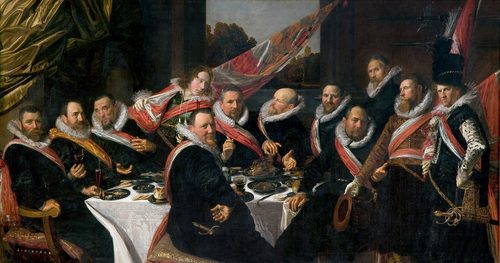
Civic guard and regent groups are arranged in overlapping, conversational clusters rather than static rows, with figures gesturing, drinking, and glancing toward one another. The compositions turn ceremonial lineups into scenes of real social exchange.
Restrained, mostly monochrome palette
Black costume, white ruffs, and pale flesh dominate most canvases, Hals extracting remarkable variety of texture and light from a narrow tonal range. Occasional flashes of color — a sash, a glove — carry outsized visual weight.
Confident, economical modeling
Rather than smoothing transitions, Hals let single bold strokes describe a cheekbone, a knuckle, or a fold of lace, trusting the viewer's eye to complete the form. The economy of means gives his surfaces exceptional energy.
Informal genre subjects
Beyond formal portraits, he painted tavern drinkers, musicians, and street children with the same loose vivacity, treating everyday Haarlem life as worthy of the same skill applied to his wealthy patrons.
The life
Frans Hals was born around 1582 in Antwerp to Flemish parents who relocated to Haarlem in the northern Netherlands during the religious upheavals of the 1580s. He trained there under Karel van Mander and joined Haarlem's Guild of Saint Luke in 1610, beginning a career that would keep him in that city for the rest of his life.
Through the 1610s and 1620s Hals built his reputation with lively individual portraits and, increasingly, large group commissions for Haarlem's civic guard companies, whose banquet scenes he transformed from static lineups into animated social gatherings. His fast, visible brushwork set him apart from the smoother finish favored by contemporaries and drew steady patronage from Haarlem's merchant class.
Hals married twice and fathered many children, several of whom became painters themselves. Despite decades of celebrated work, he faced increasing financial hardship in old age, receiving support from the city of Haarlem in his final years. His late portraits of regents and regentesses, painted in his eighties, are strikingly somber and reduced almost entirely to black, white, and gray, yet remain among his most admired works. He died in Haarlem in 1666.
Timeline
- 1582Born in Antwerp
- 1610Joins Haarlem's Guild of Saint Luke
- 1616Paints The Banquet of the Officers of the St. George Civic Guard
- 1624Paints The Laughing Cavalier
- 1633Paints The Militia Company of District XI
- 1654Faces debt and financial hardship
- 1664Paints the Regents and Regentesses almshouse portraits
- 1666Dies in Haarlem
Most famous works
| Work | Date | Why it matters |
|---|---|---|
| The Banquet of the Officers of the St. George Civic Guard | 1616 | An early triumph animating a formal militia lineup into a lively, conversational gathering. |
| The Laughing Cavalier | 1624 | His best-known portrait, an ornately dressed man caught in a sly half-smile rendered with virtuoso brushwork. |
| The Militia Company of District XI | 1633–1637 | Also called The Meagre Company, a large civic guard portrait notable for its unusually cool, restrained palette. |
| Malle Babbe | c. 1633–1635 | A vivid character study of a well-known Haarlem woman, painted with unusually loose, rapid strokes. |
| Regents of the Old Men's Almshouse | 1664 | A somber late group portrait reduced to near-monochrome, painted when Hals himself depended on civic charity. |
| Regentesses of the Old Men's Almshouse | 1664 | The companion piece to the men's portrait, equally stark and psychologically penetrating in his final years. |
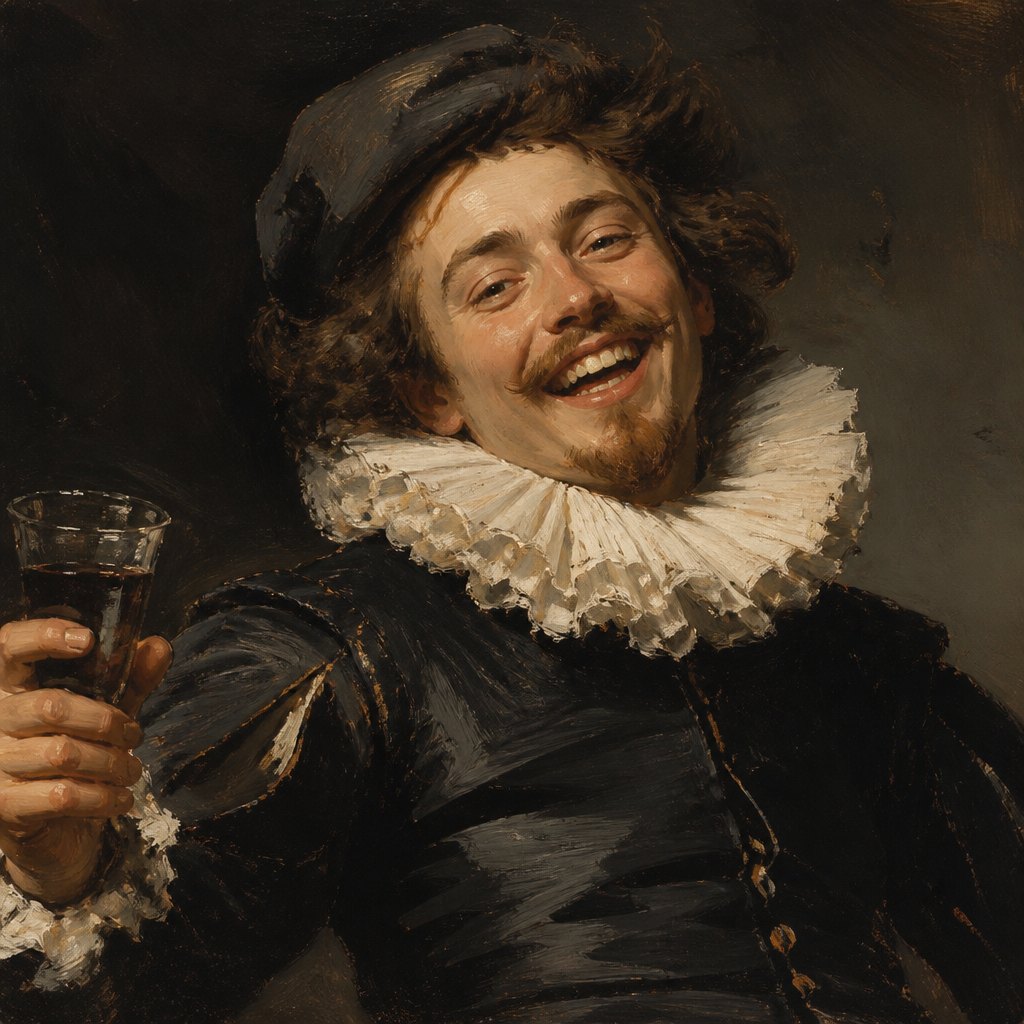 AI-generated
Create in the same spirit
Make Dutch Golden Age art of your own
This AI interpretation echoes the aesthetic world Frans Hals worked in — it depicts no real artwork. Generate your own with the Dutch Golden Age Still Life Art Style generator.
Open the Dutch Golden Age Still Life Art Style generator →Legacy
Hals's loose, visible brushwork was largely out of fashion by the eighteenth century but was rediscovered and championed in the nineteenth by Realist and Impressionist painters, who saw in his rapid strokes a precedent for their own broken, gestural technique. Manet studied his portraits directly; later critics traced a line from Hals through Impressionism's interest in capturing a fleeting moment rather than a composed ideal. His militia and regent group portraits also set a standard for making formal commissions feel alive. Today his influence surfaces wherever a painter chooses visible, confident marks over smooth finish.
Frequently asked questions
What is Frans Hals famous for?
Hals is famous for lively, loosely brushed portraits, most famously The Laughing Cavalier, and for large Dutch civic guard group portraits that turned formal commissions into scenes of genuine social interaction.
Where can you see Frans Hals's paintings?
The Frans Hals Museum in Haarlem holds his major group portraits; further works are in Amsterdam's Rijksmuseum, London's Wallace Collection and National Gallery, and the Metropolitan Museum in New York.
How many paintings did Frans Hals make?
Around 220 paintings are currently attributed to Hals, mostly portraits, though attribution remains debated for some works given his large workshop and many imitators.
What artistic movement was Frans Hals part of?
Hals worked within the Dutch Golden Age, the seventeenth-century flowering of Dutch painting driven by a prosperous merchant class eager for portraits, genre scenes, and civic group commissions.