 Famous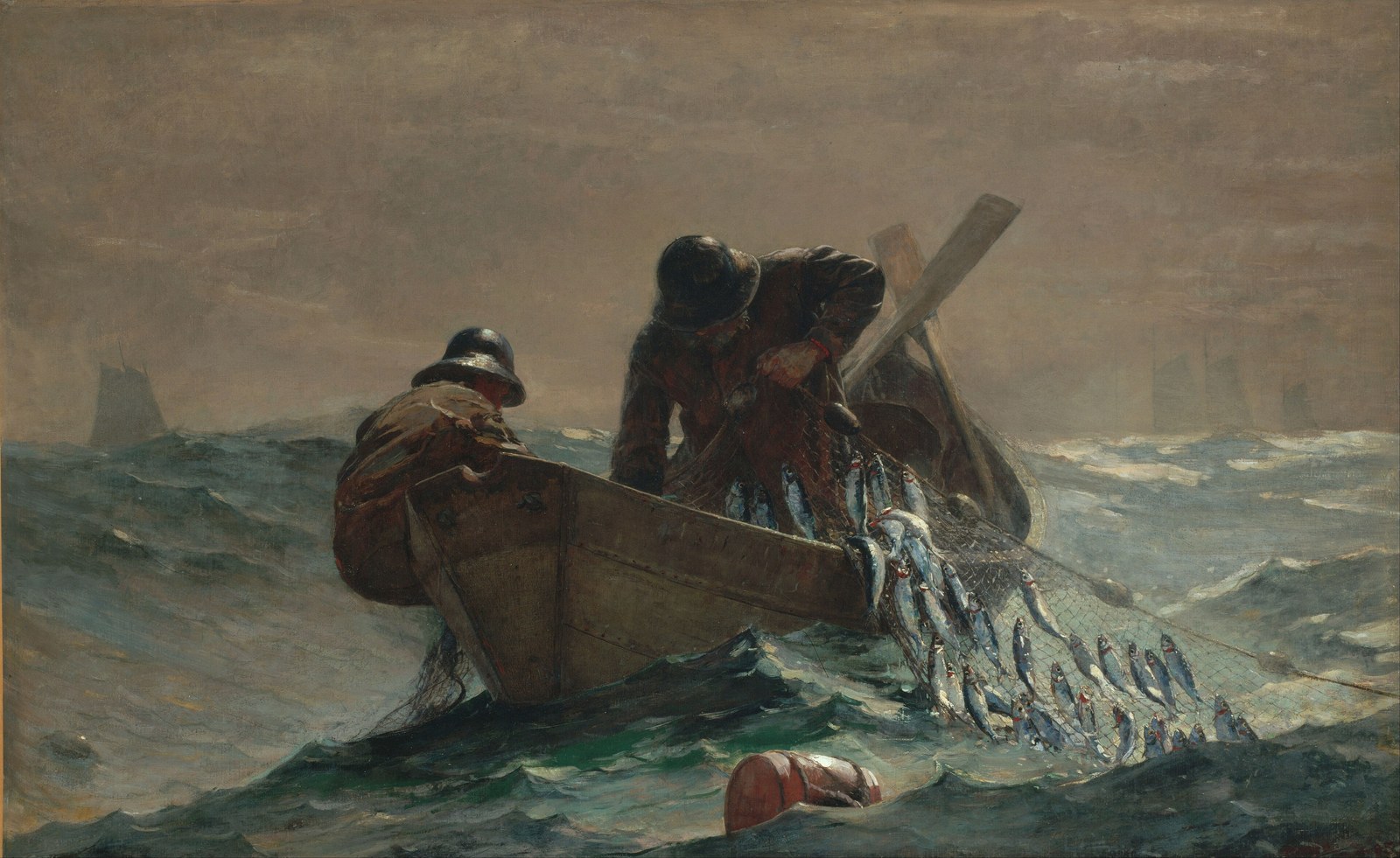
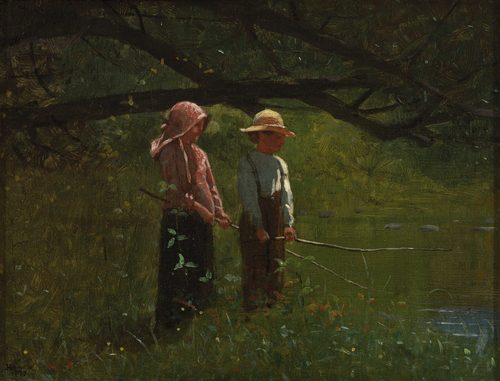
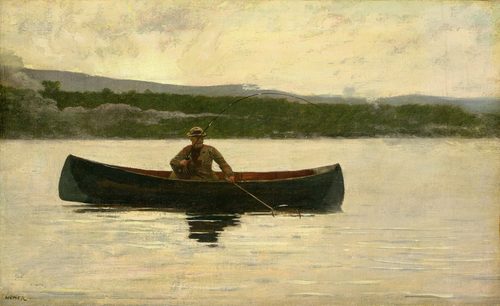
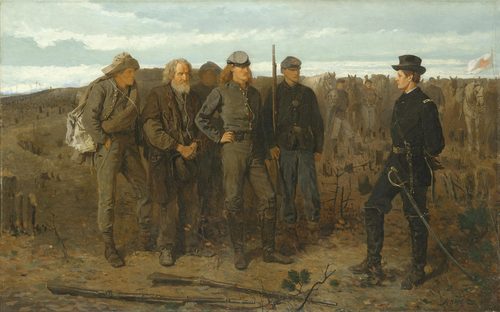
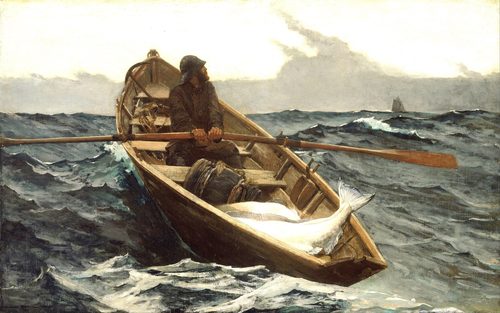
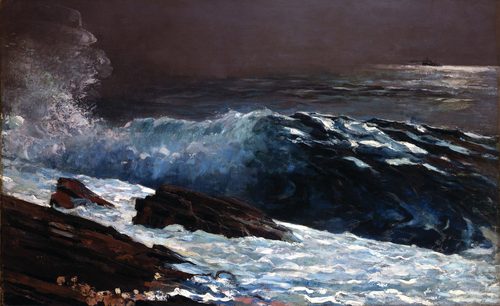
Winslow Homer (1836–1910) was an American painter who began as a commercial illustrator and became one of the great chroniclers of nature's indifference to human effort. Trained not in an academy but in a Boston print shop, he worked for years as a magazine illustrator, sketching Union soldiers at the front for Harper's Weekly during the Civil War. His 1866 painting Prisoners from the Front, a spare, unsentimental scene of captured Confederates, established him as a serious painter almost overnight. Through the 1870s he painted rural genre scenes — children at play, farm laborers, one-room schoolhouses — with a directness that avoided nostalgia. A stay among the fishing communities of Cullercoats, England, in the early 1880s pushed his subject toward the sea, and after 1883 he settled at Prout's Neck, Maine, painting the Atlantic in oil and watercolor for the rest of his life. His late seascapes, stripped of incident and sentiment, treat storms and tides as subjects worthy of the same seriousness as human drama.
How to recognize a Homer
Unsentimental realism
Homer painted hardship and danger without melodrama, showing storms, shipwrecks, and labor plainly, trusting the facts of a scene to carry their own weight rather than dramatizing them for effect.
Mastery of watercolor
From the 1870s onward he used watercolor not as a sketching tool but as a finished medium, laying in broad washes of luminous color to capture tropical light in the Bahamas and Bermuda.
The sea as subject
After 1883 the Atlantic became his central subject, painted from his studio at Prout's Neck in nearly every mood, from dead calm to breaking storm, almost always without a human figure for scale.
Figures against nature
When people do appear, they are usually engaged in work or struggle — hauling nets, watching for a signal, adrift in a boat — set against a natural world indifferent to their fate.
Civil War reportage
His early training as a magazine illustrator gave him a documentary eye; his wartime sketches and paintings avoid heroics, showing soldiers waiting, marching, and resting rather than in staged battle scenes.
Muted, weathered palette
Homer favored the grays, blues, and browns of coast and field, rarely reaching for saturated color, which gives even his sunniest rural scenes and brightest tropical watercolors a slightly weathered, salt-worn, elemental quality.
The life
Homer was born in Boston in 1836 and grew up in nearby Cambridge. He apprenticed at a commercial lithography firm as a teenager, then worked as a freelance illustrator for magazines including Harper's Weekly, which sent him to document the Union Army during the Civil War. Those years sharpened an eye for plain, unglamorized fact that never left his painting.
After the war he turned increasingly to oil and watercolor, painting rural New England genre scenes that made him a well-regarded, commercially successful painter by his thirties. A formative stretch in Paris in 1866 and 1867 exposed him to French painting, though he absorbed little of it directly.
The turning point came in 1881, when he spent nearly two years in the fishing village of Cullercoats on the English coast, watching the wives and daughters of fishermen wait out storms. He returned to America with a new subject and a new gravity, and in 1883 settled permanently at Prout's Neck on the Maine coast, where his studio looked directly onto the Atlantic.
For his last three decades Homer painted the sea in nearly all its moods — becalmed, raging, indifferent to the human figures caught in it — becoming, by his death in 1910, the most respected American painter of his generation.
Timeline
- 1836Born in Boston, Massachusetts
- 1859Moves to New York as a freelance illustrator
- 1861Sent by Harper's Weekly to sketch the Civil War front
- 1866Prisoners from the Front establishes his reputation as a painter
- 1881Settles among fishing families in Cullercoats, England
- 1883Moves to Prout's Neck, Maine, his home for life
- 1899Paints The Gulf Stream
- 1910Dies at Prout's Neck
Most famous works
| Work | Date | Why it matters |
|---|---|---|
| Prisoners from the Front | 1866 | A spare, unsentimental Civil War scene that established Homer as a major painter almost overnight. |
| Snap the Whip | 1872 | A sunlit scene of barefoot boys at play, among his best-loved images of postwar rural childhood. |
| The Life Line | 1884 | A dramatic rescue at sea, painted soon after his move toward marine subjects at Cullercoats. |
| Eight Bells | 1886 | Two sailors taking a navigational reading, a quiet study of skill and concentration against the sea. |
| The Gulf Stream | 1899 | A man adrift in a damaged boat amid sharks and a coming storm, one of his starkest late statements. |
 AI-generated
Create in the same spirit
Make Realism art of your own
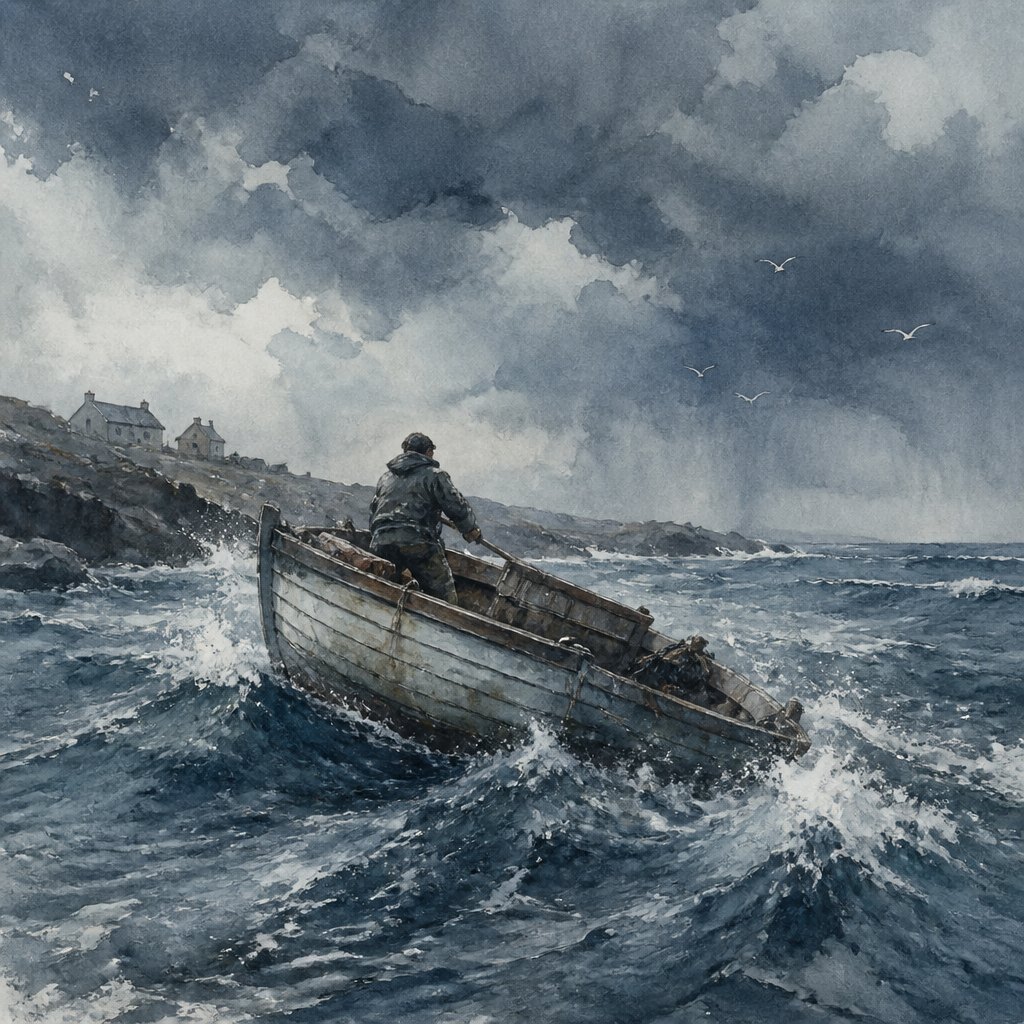
This AI interpretation echoes the aesthetic world Winslow Homer worked in — it depicts no real artwork. Generate your own with the Realism Art Style generator.
Open the Realism Art Style generator →Legacy
Homer is now regarded as the most important American painter of the second half of the nineteenth century, admired for treating ordinary labor and the natural world with a seriousness once reserved for history painting. His watercolors reset expectations for the medium, showing it could carry the same ambition as oil. Painters from Edward Hopper to the American realists of the twentieth century inherited his plain, unsentimental eye and his willingness to let a scene's danger or beauty speak without commentary. His Prout's Neck studio is preserved as a National Historic Landmark, and his marine paintings remain touchstones for how American art depicts the sea.
Frequently asked questions
What is Winslow Homer famous for?
Homer is best known for powerful paintings and watercolors of the sea and rural American life, especially late works like The Gulf Stream that show people or boats set against nature's indifference.
Where can I see Winslow Homer's paintings?
Major holdings are at the Metropolitan Museum of Art and the Museum of Fine Arts, Boston. His studio at Prout's Neck, Maine, is preserved and open to visitors by the Portland Museum of Art.
Was Winslow Homer part of an art movement?
He is generally classified as an American Realist. He trained outside the academic system, worked independently of European movements, and developed his mature style largely through direct observation rather than formal schooling.
Did Winslow Homer paint in watercolor or oil?
Both. He painted in oil throughout his career but became equally celebrated for his watercolors, which he treated as fully finished works rather than preparatory studies, especially in his later coastal scenes.