 Famous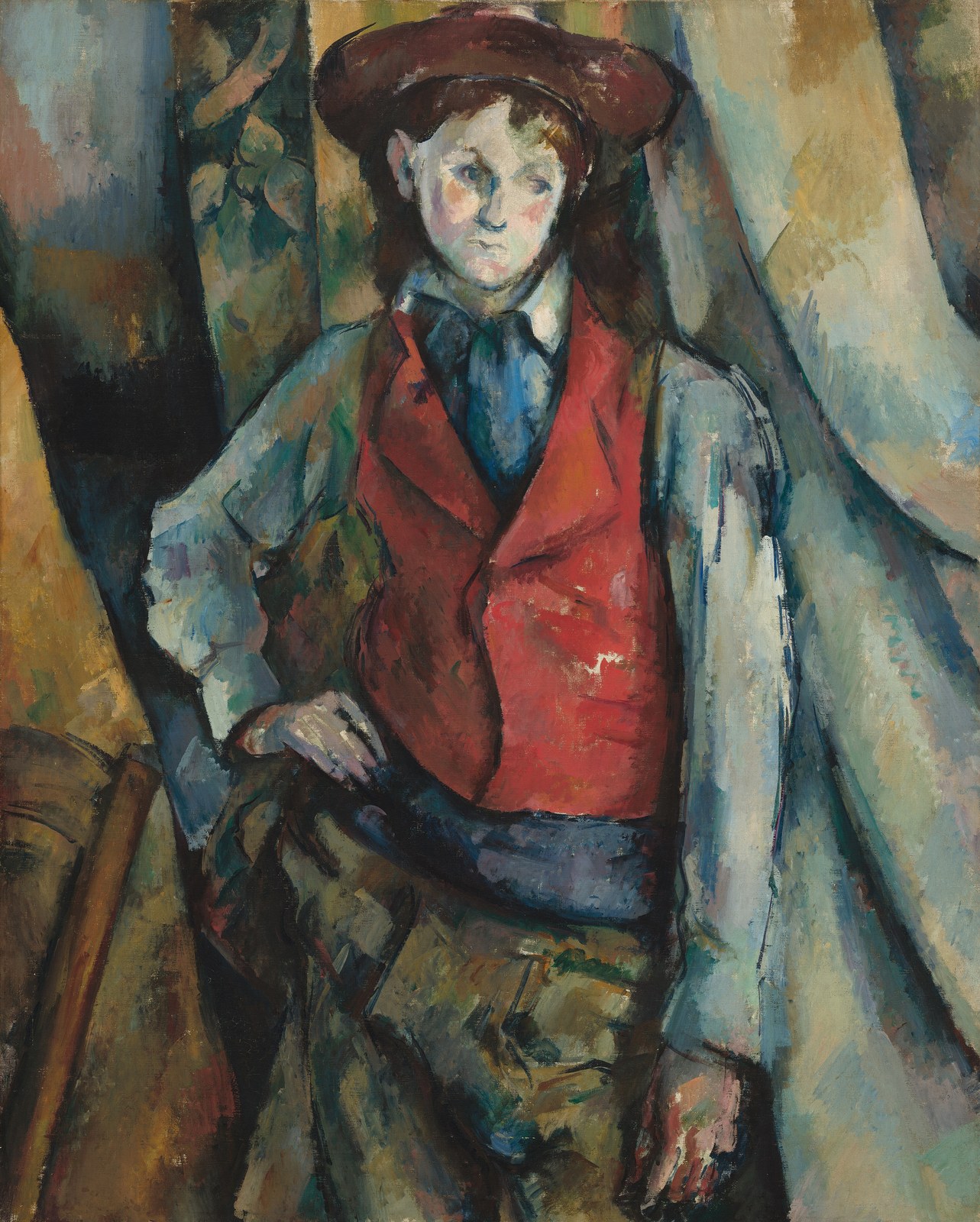
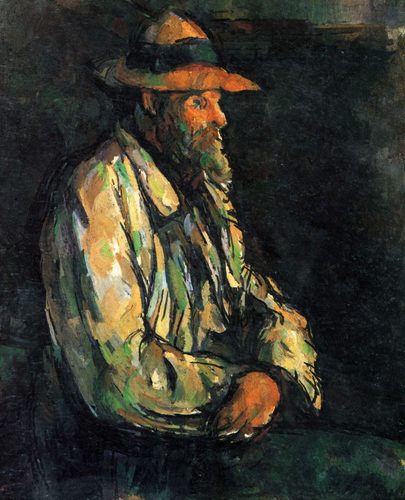
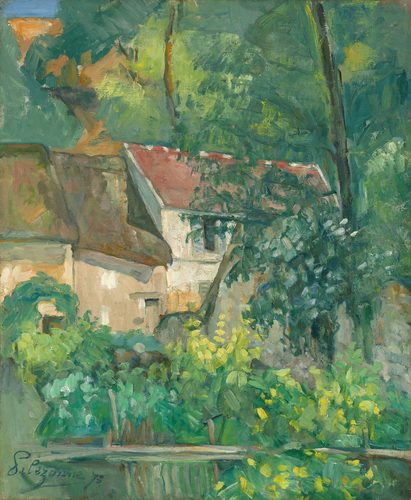
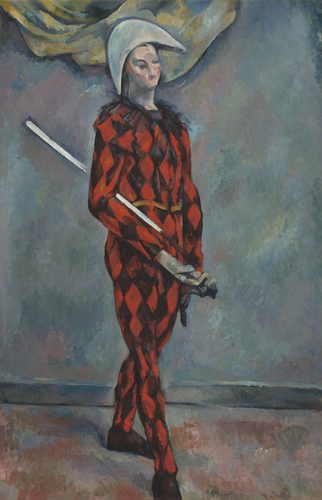
Paul Cézanne (1839–1906) was a French painter whose obsessive studies of apples, card players, and the mountain outside Aix-en-Provence broke landscape and still life into faceted planes of color, laying groundwork for Cubism and much of twentieth-century painting.
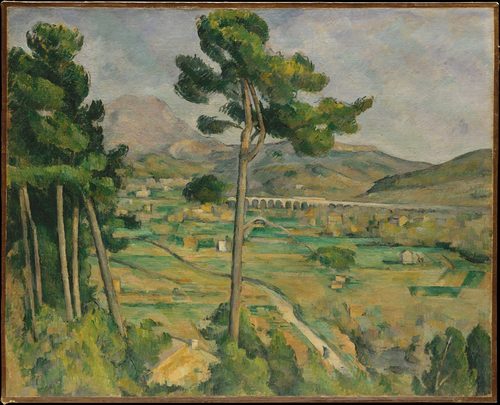
Born into a banker's family in Aix-en-Provence, Cézanne trained in Paris and showed with the Impressionists in 1874 and 1877, but found their fleeting light too thin for what he wanted: painting that held its structure like Poussin while keeping the color of nature seen outdoors. He withdrew from Paris in his later decades, working in near isolation in Provence, repainting Mont Sainte-Victoire dozens of times and building still lifes from fruit, drapery, and skulls arranged like small architecture.
His brushwork—small, parallel, constructive strokes he called his "little sensations"—turned surfaces into a grid of color patches that read as both flat pattern and solid form. Younger painters, especially Matisse and Picasso, treated him as the essential modern master. He died in Aix in 1906, having caught a chill painting outdoors in a storm.
How to recognize a Cézanne
Constructive brushstroke
Cézanne laid paint in short, parallel strokes set at consistent angles, building surfaces the way a mason builds a wall. Each patch of color sits beside its neighbor rather than blending into it, so forms feel assembled rather than rendered.
Faceted, tilted perspective
Tabletops and mountainsides both seem to lean toward the viewer, tilted slightly out of true. Cézanne adjusted perspective to keep every part of a composition equally present, sacrificing single-point accuracy for a more complete, all-over sense of form.
Earthy, mineral palette
Ochres, sage greens, slate blues, and brick reds dominate his canvases, echoing the limestone and pine of Provence. He rarely reached for the bright synthetic colors his Impressionist peers favored, preferring tones that felt quarried rather than mixed.
Repeated single subjects
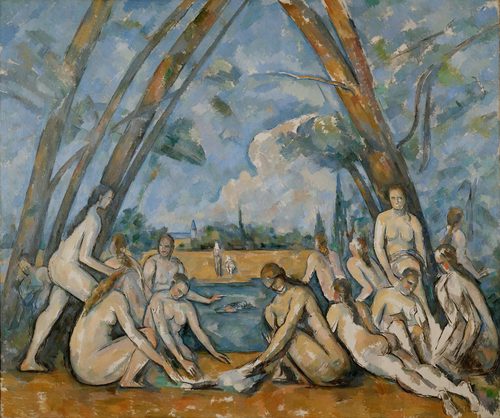
He returned to the same motifs again and again—Mont Sainte-Victoire, a bowl of apples, bathers by a river—treating each repetition as a fresh problem of structure rather than a finished statement, more research than record.
Visible, unfinished passages
Cézanne often left patches of bare canvas showing through, especially at the edges of a form, letting the white ground breathe between strokes. The unfinished look was deliberate, a record of the painting act itself.
Geometric simplification of form
He famously advised treating nature by the cylinder, the sphere, and the cone. Tree trunks, fruit, and human torsos alike get reduced toward these basic volumes, a habit of seeing that later Cubist painters pushed even further.
The life
Paul Cézanne was born in 1839 in Aix-en-Provence, the son of a prosperous hat-maker turned banker who wanted him to study law. He persisted toward painting instead, moving to Paris in 1861 and falling in with the circle around Camille Pissarro, who became his closest mentor and taught him to work directly from nature.
His early paintings were dark, thickly worked, and often violent in subject. Contact with Pissarro and the Impressionists lightened his palette and loosened his handling; he showed with the group in 1874 and 1877, though critics mocked his canvases as crude. Around this time he began pulling away from pure Impressionism, searching for a way to keep the solidity of form that quick, atmospheric brushwork tended to dissolve.
After inheriting his father's fortune in 1886, Cézanne settled largely in Aix, working in relative solitude on the subjects that would define his late style: the quarry at Bibémus, card players from the local village, and Mont Sainte-Victoire, painted from dozens of vantage points over two decades. Recognition came late, through a one-man show organized by dealer Ambroise Vollard in 1895, which drew younger Paris painters to see what he was doing.
He died in Aix on October 22, 1906, of pneumonia brought on after he was caught in a storm while painting outdoors just days before.
Timeline
- 1839Born in Aix-en-Provence, France
- 1861Moves to Paris to pursue painting
- 1874Shows in the first Impressionist exhibition
- 1877Exhibits with the Impressionists for the last time
- 1886Inherits his father's estate; marries Hortense Fiquet
- 1895Vollard's one-man show introduces him to Paris
- 1904Given a room of his own at the Salon d'Automne
- 1906Dies in Aix after painting outdoors in a storm
Most famous works
| Work | Date | Why it matters |
|---|---|---|
| The Card Players | 1890–1895 | A series of stoic peasant portraits reduced to geometric calm, among the most expensive paintings ever sold. |
| Mont Sainte-Victoire (series) | 1882–1906 | Painted dozens of times, this limestone ridge became Cézanne's lifelong proving ground for structure and color. |
| The Basket of Apples | c. 1893 | A tabletop still life with deliberately mismatched perspective lines, showing form built from multiple viewpoints at once. |
| The Large Bathers | 1900–1906 | A monumental late canvas of bathers arranged into a triangular composition, pointing directly toward twentieth-century abstraction. |
| Still Life with a Curtain and Flowered Pitcher | 1899 | A dense, tilted arrangement of fruit and drapery that treats a tabletop like an architectural elevation. |
| Self-Portrait with Bowler Hat | c. 1885–1886 | One of many searching self-portraits, painted with the same constructive brushwork he used on mountains and fruit. |
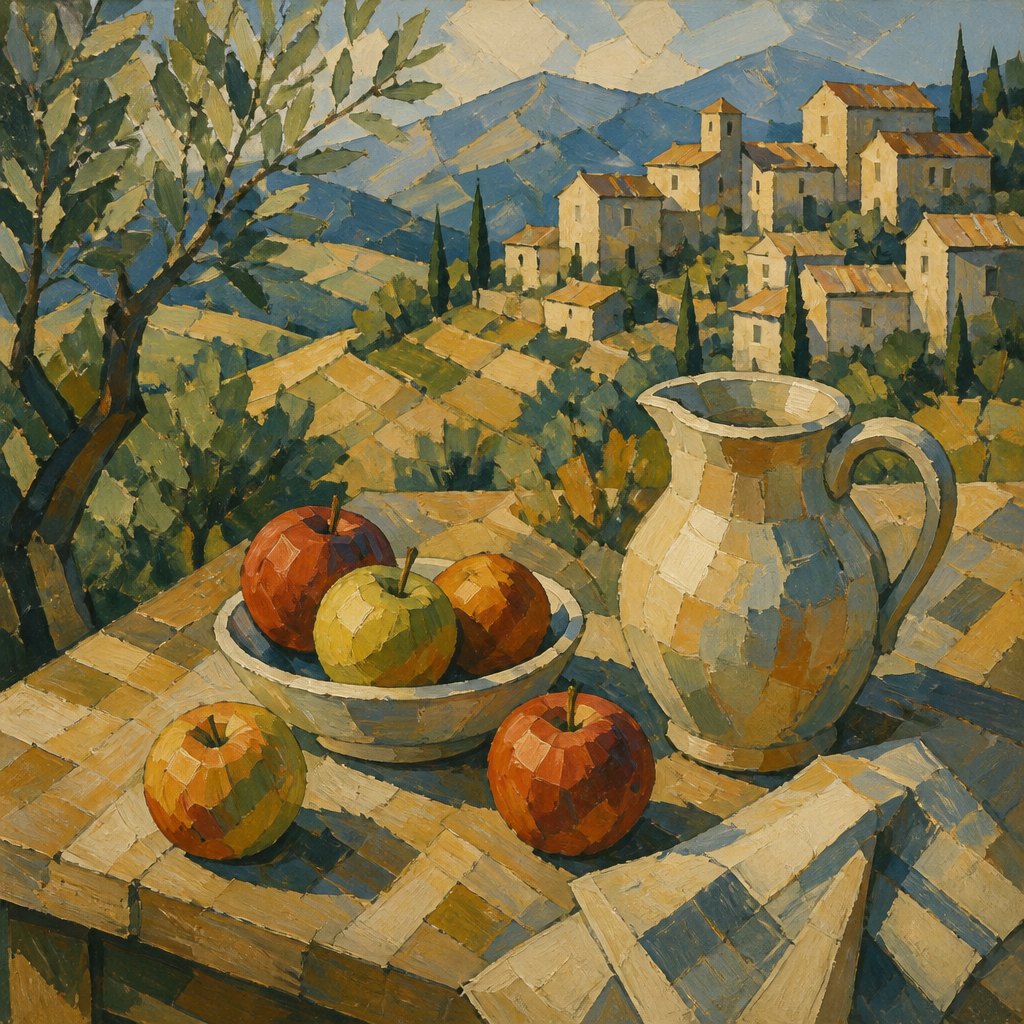 AI-generated
Create in the same spirit
Make Post Impressionism art of your own
This AI interpretation echoes the aesthetic world Paul Cézanne worked in — it depicts no real artwork. Generate your own with the Post-Impressionism Art Style generator.
Open the Post-Impressionism Art Style generator →Legacy
Cézanne gave twentieth-century painting its central problem: how to reconcile the flat truth of the canvas with the solid truth of the world it depicts. Picasso and Braque took his faceted planes and broken perspective as the starting point for Cubism; both Picasso and Matisse have been credited with calling him "the father of us all." His insistence on structure over surface prestige reshaped how painters thought about composition long after Impressionism's soft light had gone out of fashion. Visit the Musée d'Orsay, the Barnes Foundation, or the Courtauld Gallery and you can trace, in gallery after gallery of his followers, how thoroughly one quiet, stubborn painter in Provence rewired how the West sees form.
Frequently asked questions
What is Paul Cézanne famous for?
Cézanne is famous for reshaping still life and landscape into structured arrangements of color and geometric form, especially his repeated paintings of Mont Sainte-Victoire and tabletop still lifes with fruit. His approach directly influenced Cubism and much of early modern painting.
Where can I see Paul Cézanne's paintings?
Major holdings are at the Musée d'Orsay and Musée de l'Orangerie in Paris, the Barnes Foundation near Philadelphia, the Courtauld Gallery in London, and the Metropolitan Museum of Art in New York.
What art movement was Cézanne part of?
Cézanne exhibited with the Impressionists in the 1870s but is usually classified as a Post-Impressionist, since his mature work moved away from fleeting light toward structural form, becoming a direct forerunner of Cubism.
How many paintings did Cézanne make of Mont Sainte-Victoire?
He painted the mountain more than thirty times in oil, plus numerous watercolors, returning to it obsessively across the final decades of his life as a testing ground for color and structure.