 Famous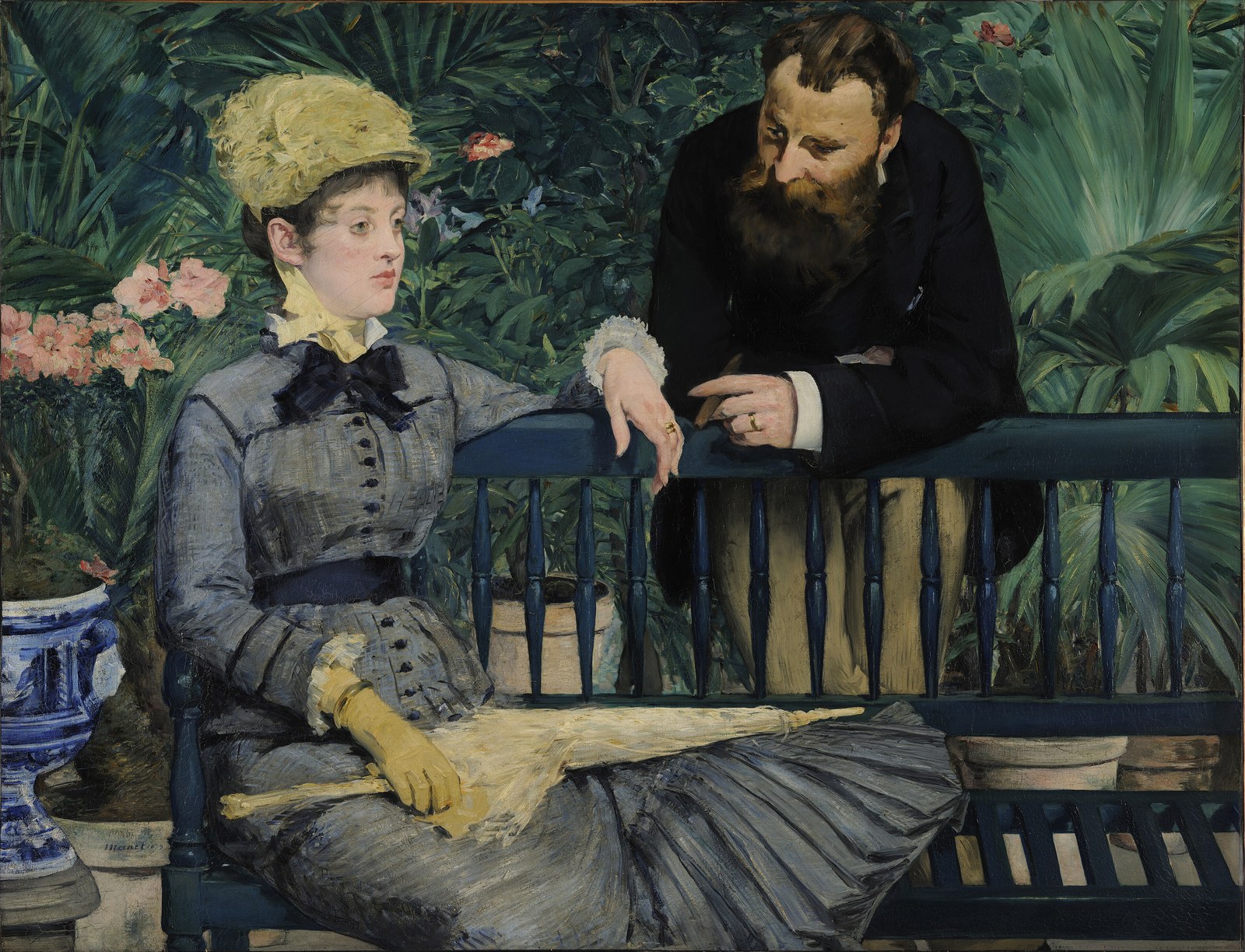
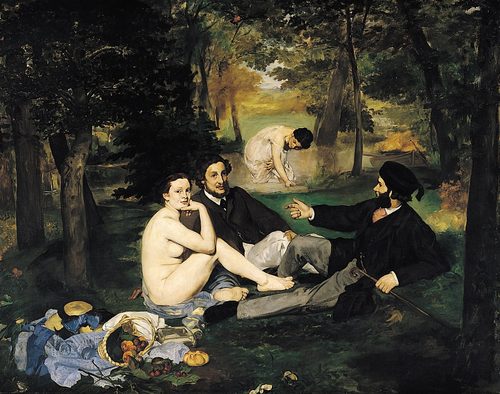
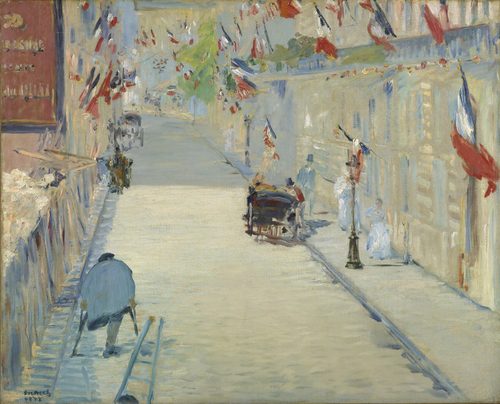
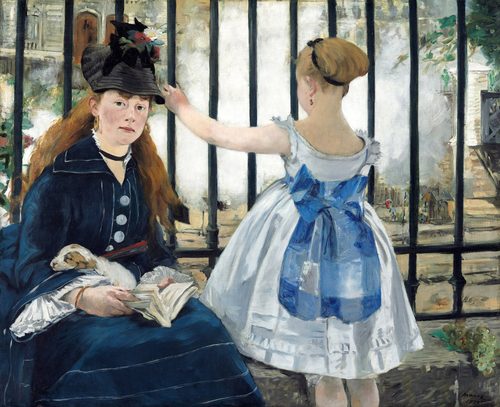
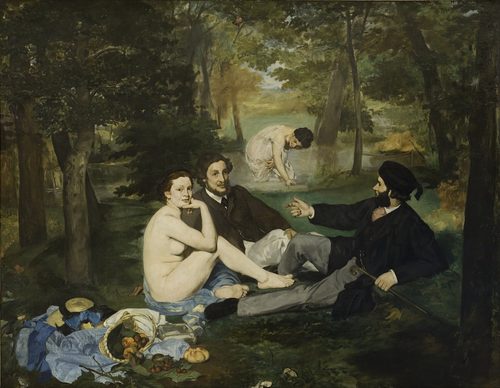
Édouard Manet (1832–1883) was a French painter whose confrontational reworkings of Old Master compositions in modern dress made him the pivotal figure between Realism and Impressionism. Born to a well-off Parisian family, he trained under the academic painter Thomas Couture but rejected polished finish in favor of bold contrasts of light and dark and flat, assertive brushwork. His 1863 painting Le Déjeuner sur l'herbe, showing a nude woman picnicking with clothed men, was rejected by the official Salon and shown instead at the improvised Salon des Refusés, where it caused an uproar. Two years later Olympia, a reclining nude courtesan who returns the viewer's gaze without apology, provoked an even louder scandal when it finally reached the Salon. Manet befriended and influenced the younger Impressionist painters — Monet, Renoir, Degas, and Berthe Morisot, who became his sister-in-law — but he never exhibited alongside them, preferring the prestige and larger audience of the official Salon. His late masterpiece, A Bar at the Folies-Bergère, painted the year before his death, remains one of the most analyzed paintings of the nineteenth century.
How to recognize a Manet
Flat black outlines
Manet often bounded his figures with strong dark contours and reduced tonal gradation, borrowing from Spanish painters like Velázquez to give even complex figures a sense of graphic, poster-like immediacy on the canvas.
Old Masters in modern dress
He frequently reworked compositions borrowed from Titian, Raphael, or Giorgione, replacing gods and allegorical figures with recognizable Parisians in ordinary contemporary clothes, forcing centuries-old pictorial formulas to confront the discomforts of modern city life directly.
Everyday Parisian subjects
Cafés, barmaids, flâneurs, and courtesans replace history and mythology as serious subject matter, treated by Manet with the same scale, care, and ambition previously reserved only for grand historical or religious scenes.
Confrontational gazes
Manet's female subjects, especially in Olympia, look directly and unapologetically at the viewer rather than averting their eyes as convention demanded, turning the act of looking into part of the painting's subject.
Bold alla prima brushwork
He painted quickly and directly, leaving visible, confident strokes rather than smoothing them into academic finish, a technique that scandalized traditional critics but electrified the younger Impressionist painters around him.
Ambiguous spatial tricks
Mirrors, reflections, and flattened perspective recur throughout his work, most famously in A Bar at the Folies-Bergère, where the reflected scene does not logically match the barmaid's position, unsettling the viewer's sense of space.
The life
Manet was born in Paris in 1832 to a prosperous family who expected him to pursue law; he chose painting instead, entering the studio of Thomas Couture in 1850 and spending six years absorbing and then resisting academic training. Trips to study the Old Masters in Italy, the Netherlands, and Spain, especially the work of Velázquez, shaped a style built on stark contrast and flat, unmodulated color rather than smooth academic finish.
His Salon debut in 1861 won an honorable mention, but the following years brought open hostility. Le Déjeuner sur l'herbe in 1863 and Olympia in 1865 were both attacked for their frank treatment of the nude female body in contemporary, rather than mythological, terms, and critics accused Manet of crudeness and indecency.
Despite the scandals, he became a central figure for the younger Impressionist generation, meeting regularly with Monet, Degas, and Renoir at the Café Guerbois, though he consistently declined to join their independent exhibitions, believing the Salon was the only stage worth fighting for.
In his final years, increasingly ill and in pain, he continued painting scenes of Parisian leisure, producing A Bar at the Folies-Bergère in 1882. He died in Paris in 1883 after a long illness.
Timeline
- 1832Born in Paris
- 1850Begins training under Thomas Couture
- 1861Wins honorable mention at the Paris Salon
- 1863Le Déjeuner sur l'herbe shown at the Salon des Refusés
- 1865Olympia exhibited at the Salon, causing an uproar
- 1874Declines to join the first Impressionist exhibition
- 1882Paints A Bar at the Folies-Bergère
- 1883Dies in Paris
Most famous works
| Work | Date | Why it matters |
|---|---|---|
| Le Déjeuner sur l'herbe | 1863 | A nude woman picnicking with two clothed men, rejected by the Salon and shown at the Salon des Refusés amid public outrage. |
| Olympia | 1863 | A reclining courtesan who meets the viewer's eye without apology, one of the most scandalous paintings of its century. |
| A Bar at the Folies-Bergère | 1882 | A barmaid framed by a mirrored reflection that defies simple spatial logic, painted the year before Manet's death. |
| The Fifer | 1866 | A young military musician set flatly against a plain background, showing Manet's debt to Spanish painting and his rejection of illusionistic depth. |
| The Balcony | 1868–69 | A group portrait including Berthe Morisot, framed by a strikingly modern green railing and stark contrasts of black and white. |
 AI-generated
Create in the same spirit
Make Realism art of your own
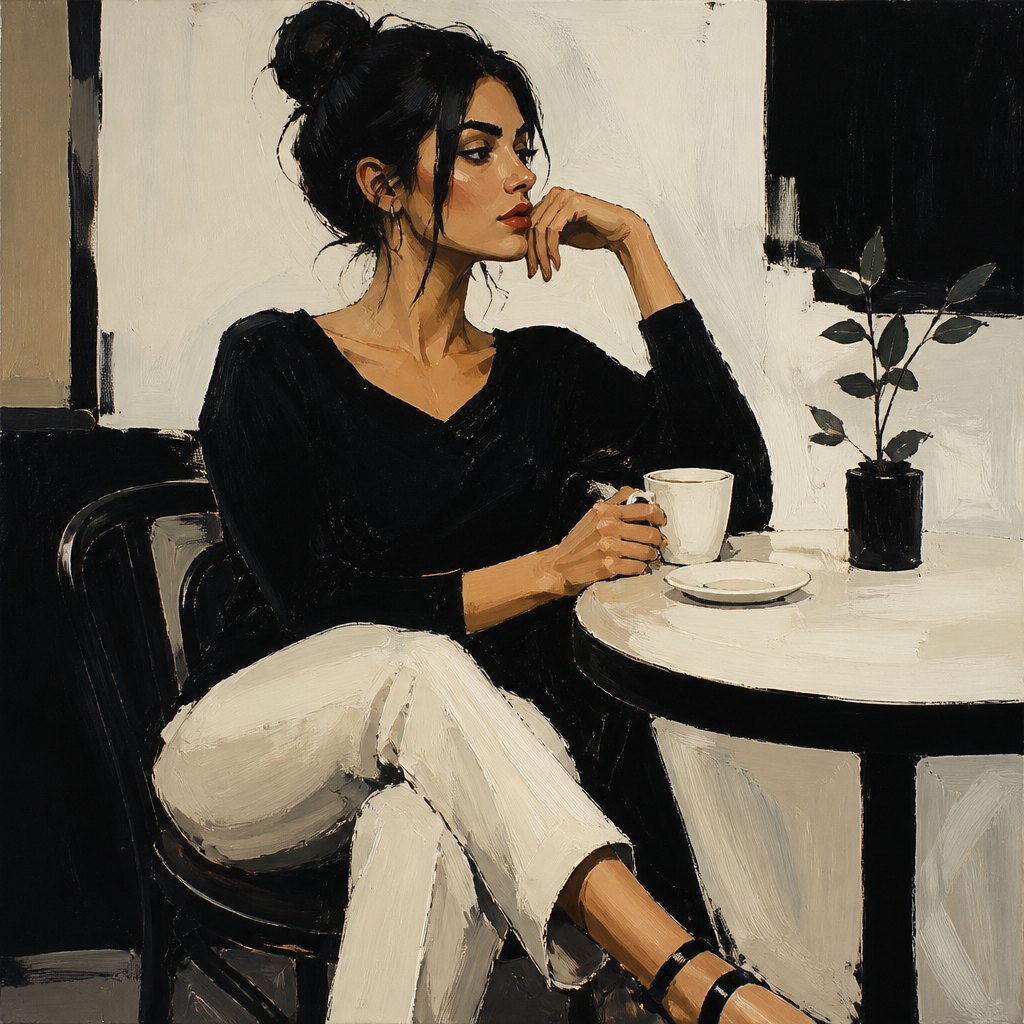
This AI interpretation echoes the aesthetic world Édouard Manet worked in — it depicts no real artwork. Generate your own with the Realism Art Style generator.
Open the Realism Art Style generator →Legacy
Manet is generally credited as the painter who made Impressionism possible without ever formally joining it. His insistence on modern subjects, painted with visible brushwork and stark tonal contrast rather than polished illusionism, gave the younger generation around him — Monet, Degas, Renoir, Morisot — both technical permission and a model of defiance toward the official Salon. His confrontation of the viewer through direct gaze and frank subject matter also anticipated concerns that would occupy painters well into the twentieth century. Olympia and A Bar at the Folies-Bergère remain fixtures of survey courses on modern art, and the Musée d'Orsay in Paris treats his rooms as a hinge point in its collection.
Frequently asked questions
What is Édouard Manet famous for?
Manet is best known for Olympia and Le Déjeuner sur l'herbe, paintings that scandalized 1860s Paris with frank nudity and modern settings, and for bridging Realism and the Impressionist movement that followed.
Where can I see Manet's paintings?
The Musée d'Orsay in Paris holds his major works, including Olympia and Le Déjeuner sur l'herbe. The Courtauld Gallery in London displays A Bar at the Folies-Bergère.
Was Manet an Impressionist?
Not officially. He influenced and befriended the Impressionists and shared their interest in modern life, but he never exhibited in their independent group shows, preferring to fight for recognition at the official Salon.
Why did Olympia cause a scandal?
The painting showed a reclining nude courtesan gazing directly at the viewer, styled as a contemporary Parisian rather than a mythological goddess, which 1865 Salon audiences read as shockingly indecent and confrontational.