 Famous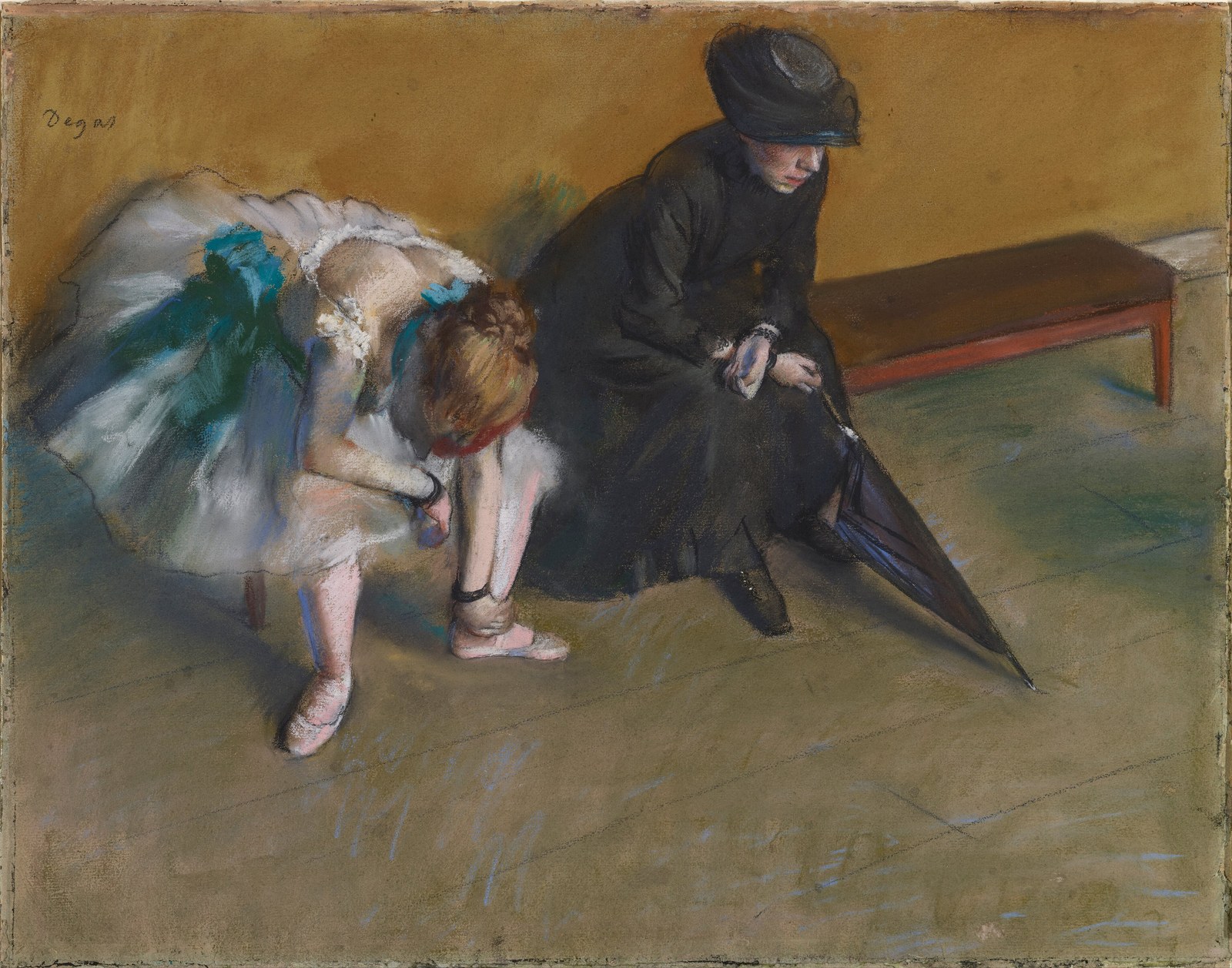
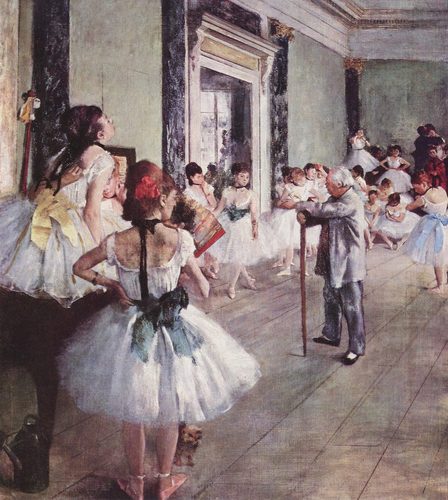
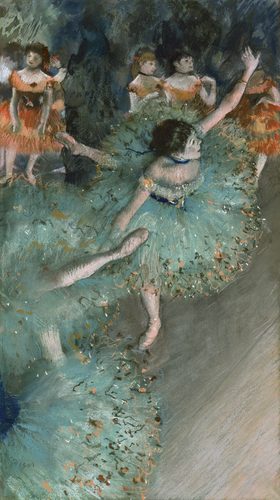
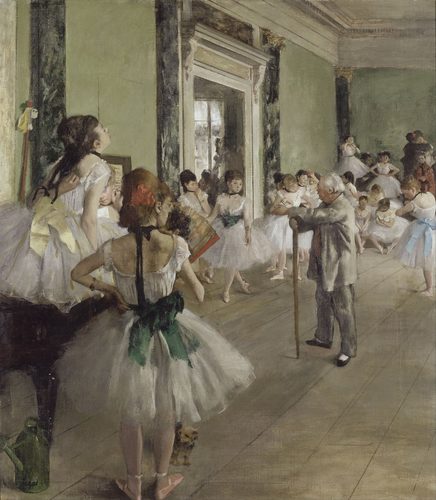
Edgar Degas (1834–1917) was a French painter, printmaker, and sculptor who exhibited with the Impressionists yet preferred to call himself a Realist, and who is best remembered for his unposed, off-balance views of ballet dancers, racehorses, and working women. Born to a banking family and trained in the rigorous academic tradition, he studied the Old Masters closely, especially Ingres, before turning that draftsmanship toward strikingly modern subjects. He took part in most of the eight Impressionist group exhibitions between 1874 and 1886, though his interest lay less in outdoor light than in artificial interiors — the rehearsal room, the theater wing, the milliner's shop. Influenced by photography and Japanese prints, he composed scenes as though glimpsed mid-motion, cropping figures at the edge of the canvas and viewing dancers from unexpected angles, often from above or from the wings. As his eyesight failed in later decades, he turned increasingly to pastel, working its color in bold, visible strokes, and to sculpture, modeling dancers and horses in wax that were cast in bronze only after his death. He died in Paris in 1917, nearly blind.
How to recognize a Degas
Cropped, off-center framing
Degas composed as though catching a scene mid-glance, cutting figures at the canvas edge and pushing the main subject off-center, a debt to snapshot photography and Japanese woodblock prints he collected and admired.
Backstage ballet
Rather than performances, he painted rehearsals and waiting rooms, exhausted dancers stretching, adjusting a slipper, or resting against a wall, treating ballet as demanding physical labor rather than glamorous public spectacle.
Unusual viewpoints
He frequently painted from above, below, or at a sharp angle rather than straight on, flattening space and creating a sense of accidental, voyeuristic observation rather than a formally arranged scene.
Precise, unsparing draftsmanship
Trained rigorously in academic drawing, Degas never abandoned careful contour and structure even as his subjects grew modern, giving his loosest pastels an underlying sense of anatomical and compositional control.
Late pastel technique
As his eyesight declined he worked pastel in bold, visible hatching and layered color, often over a monotype base, achieving richer, more saturated effects than his earlier oil paintings allowed.
Wax sculpture
Working privately, he modeled dancers, bathers, and horses in wax and clay to study movement in three dimensions, a working method later revealed when his studio's models were cast in bronze after his death.
The life
Degas was born in Paris in 1834 into a banking family of some means, which allowed him to abandon law studies for painting without financial pressure. He trained in the tradition of Ingres, copying Old Masters in the Louvre and later in Italy, where he spent several years in the late 1850s absorbing Renaissance draftsmanship.
Back in Paris, he moved from history painting toward contemporary subjects, drawn to the theater, the racetrack, and eventually the ballet, which would occupy him for the rest of his career. He joined the circle of painters who would become known as the Impressionists and showed in seven of their eight group exhibitions, though he resisted the label, insisting on his identification with Realism and his continued reliance on drawing over spontaneous outdoor color.
Military service during the Franco-Prussian War in 1870 revealed a weakness in his eyesight that worsened steadily for the rest of his life, eventually pushing him from oil toward pastel and sculpture, media that let him work with bolder marks and by touch. He also modeled dancers and horses in wax, though he exhibited only one sculpture, Little Dancer Aged Fourteen, in his lifetime.
Increasingly reclusive and nearly blind, he continued working into his final years and died in Paris in 1917.
Timeline
- 1834Born in Paris
- 1855Enters the École des Beaux-Arts
- 1856Travels to Italy to study Renaissance masters
- 1870Serves in the Franco-Prussian War; eyesight begins to fail
- 1874Takes part in the first Impressionist exhibition
- 1881Exhibits the sculpture Little Dancer Aged Fourteen
- 1886Shows in the eighth and final Impressionist exhibition
- 1917Dies in Paris, nearly blind
Most famous works
| Work | Date | Why it matters |
|---|---|---|
| The Dance Class | 1874 | A rehearsal room full of young dancers caught in unposed, overlapping moments, exemplifying his signature off-center compositions. |
| L'Absinthe | 1875–76 | Two isolated Parisian café patrons framed by empty table space, a bleak study in urban alienation. |
| Little Dancer Aged Fourteen | 1878–81 | A wax sculpture dressed in real fabric and hair, his only sculpture shown publicly during his lifetime. |
| The Bellelli Family | 1858–67 | An early, psychologically tense portrait of his aunt's family, revealing his academic training and sharp eye for domestic strain. |
| Rehearsal on Stage | 1874 | Dancers viewed from an elevated angle, showing the influence of photography and Japanese prints on his compositions. |
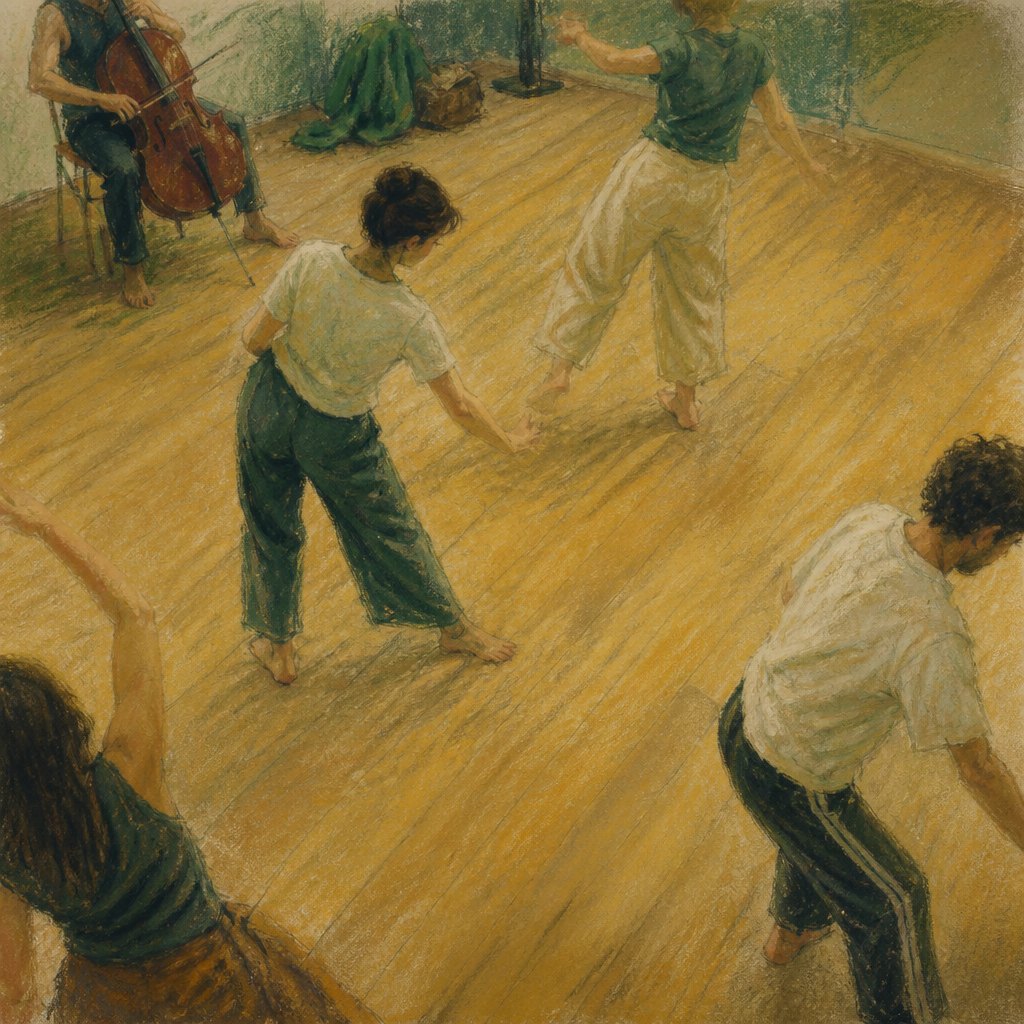 AI-generated
Create in the same spirit
Make Impressionism art of your own
This AI interpretation echoes the aesthetic world Edgar Degas worked in — it depicts no real artwork. Generate your own with the Impressionism Art Style generator.
Open the Impressionism Art Style generator →Legacy
Degas expanded what counted as a serious subject for painting, elevating rehearsal rooms, laundries, and racetracks to the scale once reserved for history painting, and his cropped, camera-like compositions changed how artists thought about framing a scene. His fusion of rigorous academic drawing with modern subject matter influenced painters from Toulouse-Lautrec to twentieth-century figurative artists who admired his refusal to prettify labor or movement. The bronze casts of his wax sculptures, made after his death, introduced Little Dancer Aged Fourteen to a wide public and remain among the most reproduced sculptures of the modern era. Museums from the Musée d'Orsay to the Metropolitan Museum treat his ballet scenes as anchor works in their nineteenth-century collections.
Frequently asked questions
What is Edgar Degas famous for?
Degas is best known for paintings and pastels of ballet dancers, especially rehearsals and backstage moments, along with racehorses, laundresses, and the sculpture Little Dancer Aged Fourteen, all shown from unusual, candid angles.
Where can I see Degas's work?
The Musée d'Orsay in Paris holds the largest collection of his paintings and pastels, including many ballet scenes. The Metropolitan Museum of Art in New York also holds major paintings and bronze casts.
Was Degas an Impressionist?
He showed in seven of the eight Impressionist group exhibitions but rejected the label, preferring 'Realist' or 'Independent,' since he favored careful drawing and artificial interior light over the group's outdoor color studies.
Did Degas make sculptures as well as paintings?
Yes. He modeled dancers, bathers, and horses in wax, but showed only one publicly in his lifetime, Little Dancer Aged Fourteen. The rest were cast in bronze after his death in 1917.