 Famous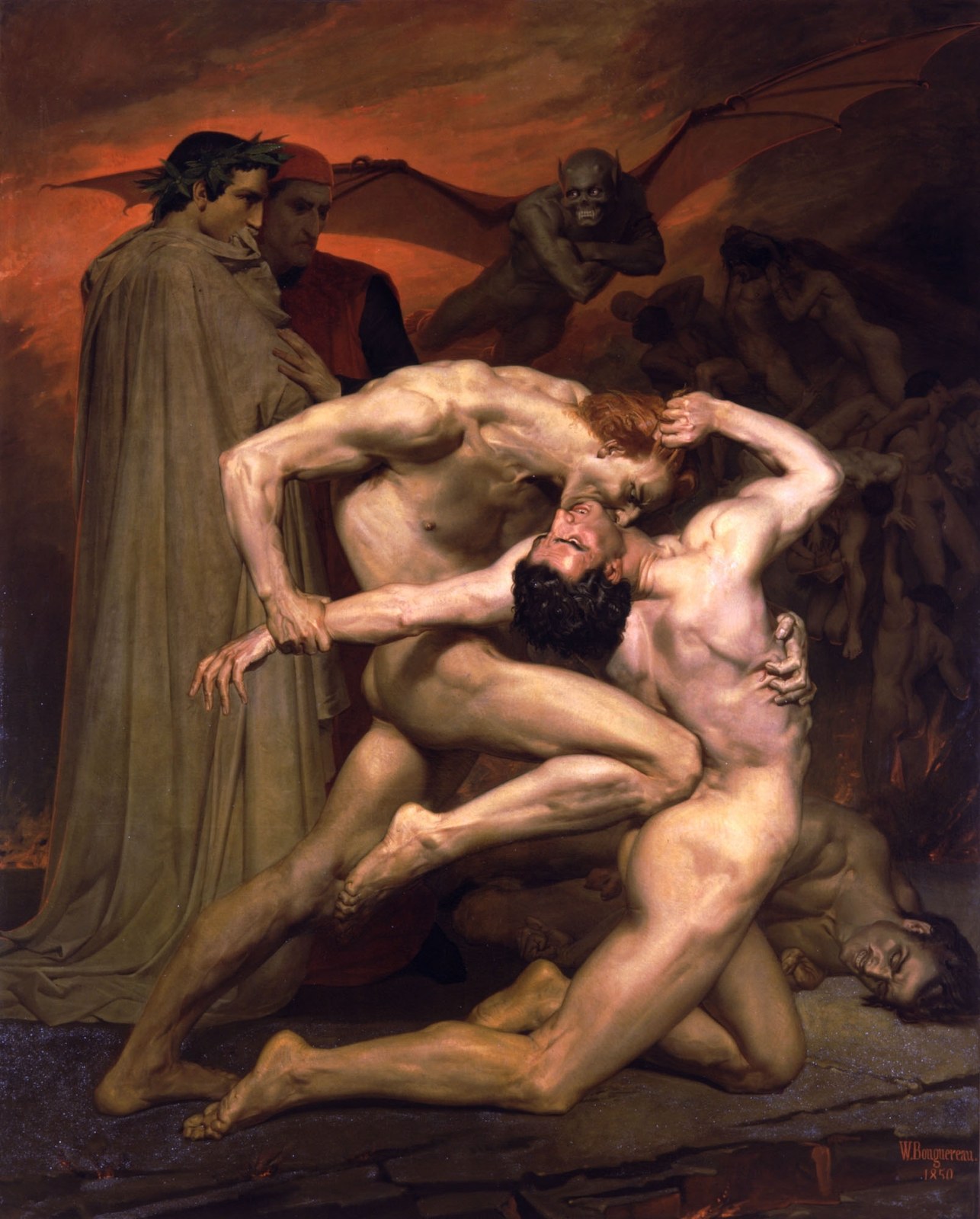
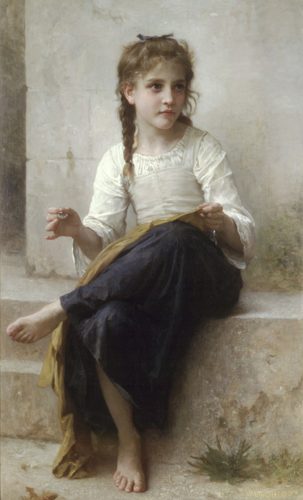
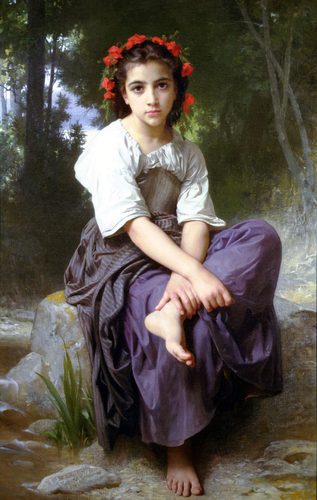
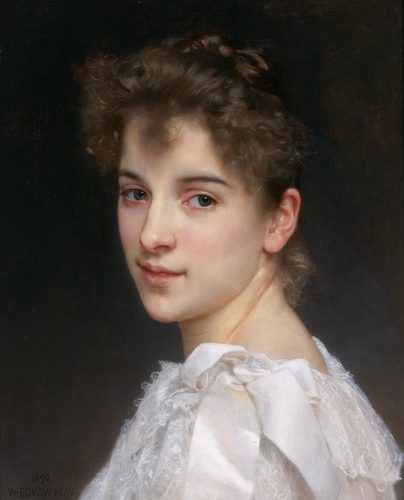
William-Adolphe Bouguereau (1825–1905) was a French academic painter whose flawless, highly finished technique and idealized figures made him the most commercially successful and critically honored painter of his era, even as later movements dismissed the very polish that had made him famous.
Born in La Rochelle, Bouguereau trained at the École des Beaux-Arts in Paris under François-Édouard Picot and won the Prix de Rome in 1850, which funded years of study in Italy absorbing Raphael and antique sculpture. He returned to Paris and built a career on mythological scenes, religious subjects, and above all sentimental depictions of peasant children and idealized female figures, exhibited nearly every year at the Paris Salon.
Bouguereau's technique — smooth, nearly invisible brushwork, anatomically precise figures, and glowing, even light — made him enormously wealthy and influential as a teacher at the Académie Julian, where he championed rigorous drawing and taught women students at a time when the state École des Beaux-Arts still barred them, a change he later supported. Dismissed by early modernists as the embodiment of stale academicism, his reputation was rehabilitated in the late twentieth century as collectors and scholars reassessed his technical mastery on its own terms.
How to recognize a Bouguereau
Porcelain-smooth finish
Bouguereau eliminated visible brushstrokes almost entirely, blending paint until surfaces read as flawless as porcelain. Skin, fabric, and sky share the same glassy polish, a hallmark of academic technique pushed to its limit.
Idealized, flawless anatomy
Figures follow classical proportion with no blemish, asymmetry, or visible effort — a deliberately perfected human form drawn from years studying antique sculpture and Renaissance masters rather than any one live model.
Peasant and child subjects
Barefoot peasant children and young women in simple dress recur constantly, posed with wistful, gentle expressions that turned rural poverty into sentimental, saleable beauty for wealthy Salon audiences.
Mythological figures
Venus, nymphs, and bathers appear in idealized, softly lit form, staged with academic decorum rather than eroticism, following a long tradition of using myth to justify the painted figure.
Warm, even studio light
Bouguereau lit his scenes with a soft, diffused glow that falls evenly across the whole composition, avoiding harsh shadow so that every detail — hair, drapery, skin — stays crisply legible.
Tight, classical composition
Figures are arranged in stable, often pyramidal groupings within a shallow, controlled space, echoing Renaissance compositional formulas rather than the loose, cropped framing that Impressionist contemporaries were exploring at the same time.
The life
Bouguereau grew up in La Rochelle, the son of a wine and olive oil merchant, and showed early drawing talent encouraged by an uncle who was a priest. He moved to Paris in 1846 to study at the École des Beaux-Arts under Picot, immersing himself in the rigorous academic system of drawing from casts and live models.
Winning the Prix de Rome in 1850 sent him to Italy for four years, where he studied Raphael, Michelangelo, and ancient sculpture, absorbing the classical ideal that would define his mature style. Back in Paris, he exhibited at the Salon almost every year for decades, becoming one of the era's best-paid painters through sales to French and American collectors alike.
Bouguereau also taught extensively at the Académie Julian, mentoring hundreds of students and supporting the admission of women, a rarity in French art education at the time. He served on Salon juries and helped define official academic taste through the 1870s and 1880s, even as Impressionism rose around him. He continued painting into his final years, dying in La Rochelle in 1905, his reputation already eclipsed by the modernist movements he had resisted.
Timeline
- 1825Born in La Rochelle, France
- 1846Enters the École des Beaux-Arts in Paris
- 1850Wins the Prix de Rome
- 1854Returns to Paris after years studying in Italy
- 1875Begins teaching at the Académie Julian
- 1876Elected to the Académie des Beaux-Arts
- 1905Dies in La Rochelle
Most famous works
| Work | Date | Why it matters |
|---|---|---|
| The Elder Sister | 1869 | An older girl cradling her sleeping infant sibling, one of his best-known peasant-child compositions. |
| Nymphs and Satyr | 1873 | Nymphs pulling a startled satyr toward water, a technical showpiece of academic finish. |
| Homer and His Guide | 1874 | Blind Homer led across a landscape, showing his range beyond nudes and children. |
| Charity | 1878 | A mother with children in a classical, secular grouping recalling Madonna imagery. |
| The Birth of Venus | 1879 | A luminous, classically posed Venus adrift on a shell, among his most reproduced works. |
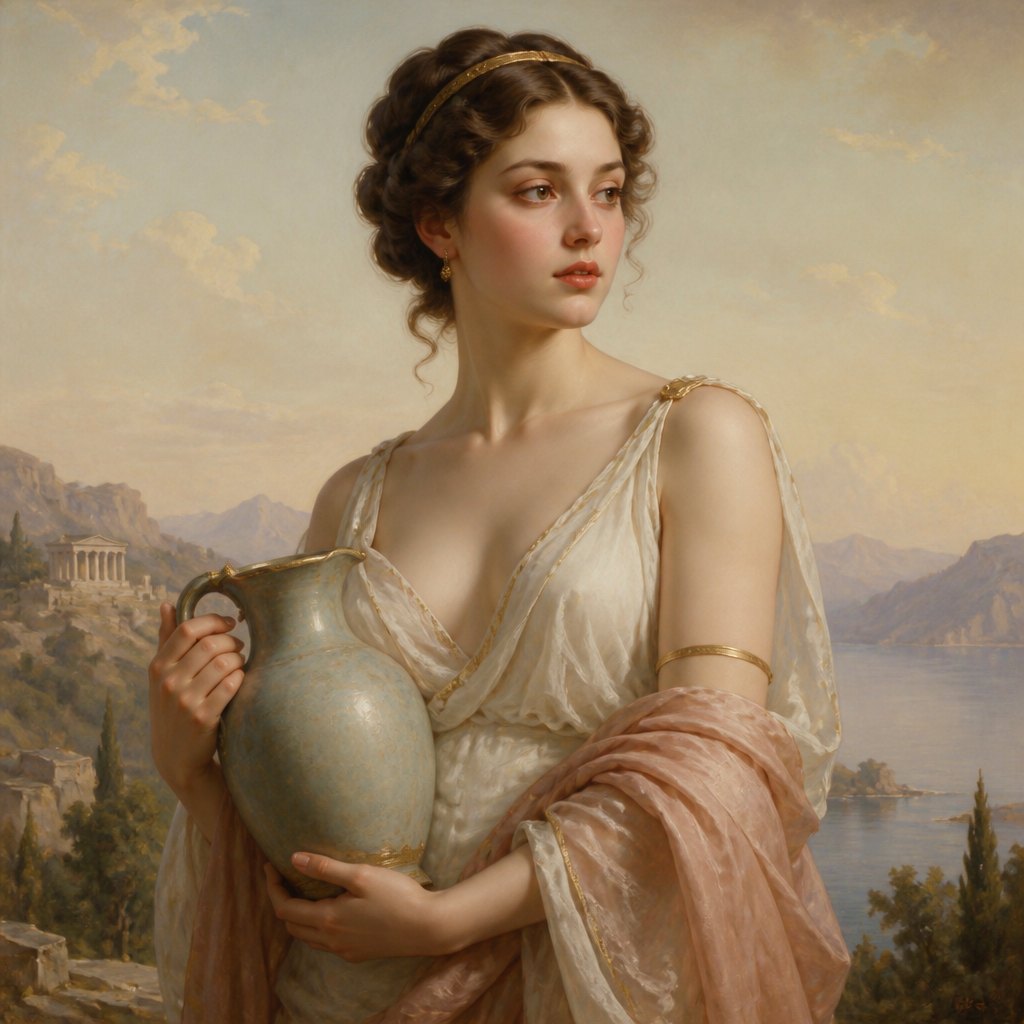 AI-generated
Create in the same spirit
Make Academic Art art of your own
This AI interpretation echoes the aesthetic world William-Adolphe Bouguereau worked in — it depicts no real artwork. Generate your own with the Academic Classical Art Style generator.
Open the Academic Classical Art Style generator →Legacy
For decades after his death, Bouguereau stood as everything modernism rejected — polished, sentimental, academic — and his prices collapsed as Impressionism and later movements took hold. Late-twentieth-century collectors and scholars reversed that verdict, prizing his technical control as a benchmark for figurative painting, and today his work commands major prices again. His influence survives most directly in academic ateliers that still teach cast drawing and anatomical precision, and in the broader tradition of hyperrealist and classical-revival painting. Museums including the Musée d'Orsay and the Getty hold his major works as centerpieces of Salon-era French art.
Frequently asked questions
What is William-Adolphe Bouguereau famous for?
Bouguereau is famous for flawlessly finished academic paintings of mythological figures and idealized peasant children, exhibited at the Paris Salon, that made him one of the wealthiest and most honored painters of nineteenth-century France.
Where can I see Bouguereau's paintings today?
The Musée d'Orsay in Paris and the Getty Museum in Los Angeles hold major Bouguereau works; many American museums, including the New Orleans Museum of Art, also have significant holdings.
What art movement did Bouguereau belong to?
Bouguereau was a leading figure of French academic art, the officially sanctioned Salon style built on classical technique and idealized form, which Impressionism and later modernism defined itself against.
Why was Bouguereau's reputation dismissed after his death?
Early modernists saw his polished, sentimental style as the outdated establishment art they were rebelling against. His reputation recovered from the late twentieth century onward as his technical mastery was reassessed.