 Famous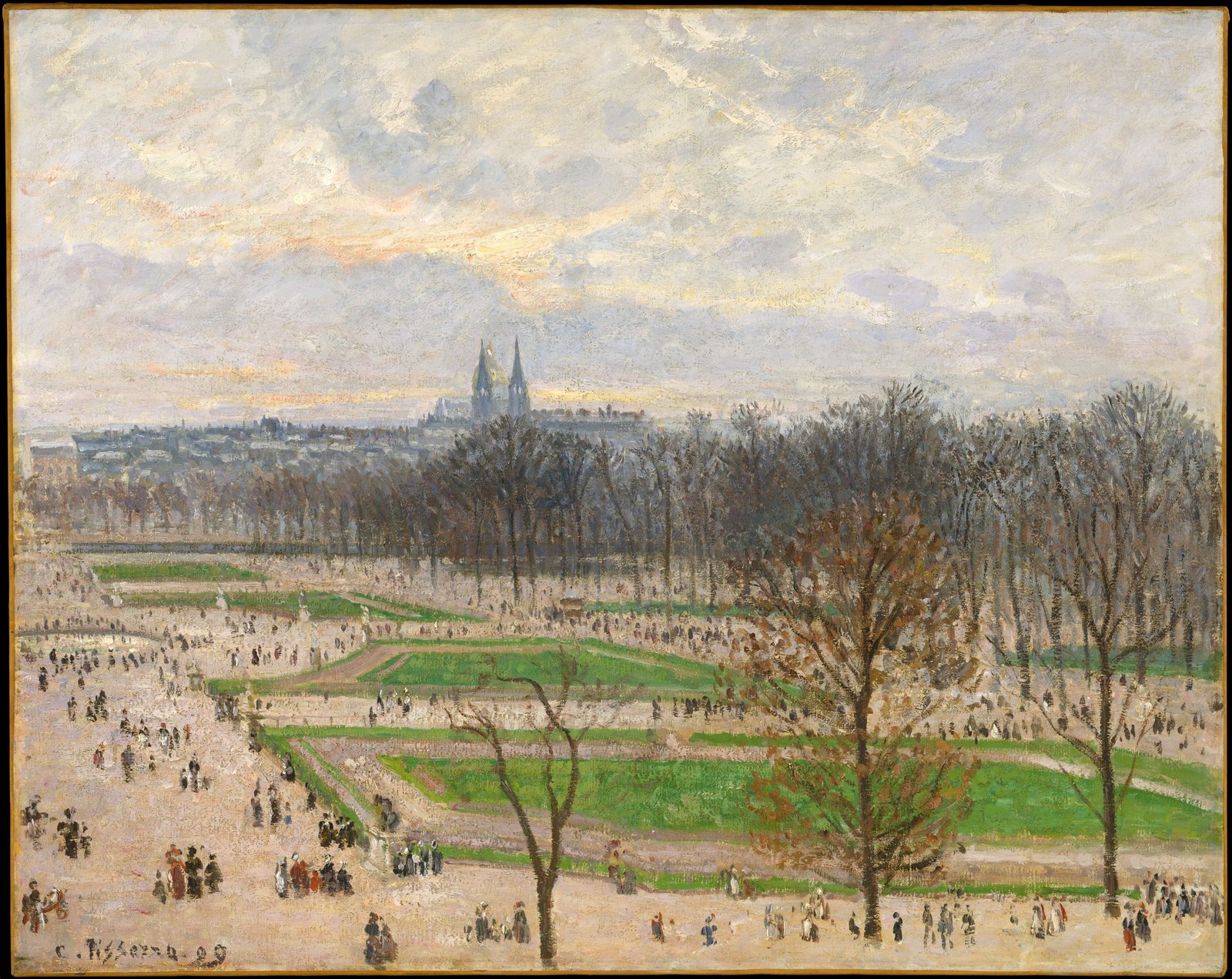
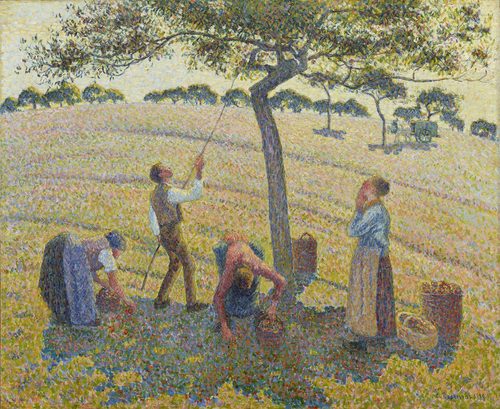
Camille Pissarro (1830–1903) was a French painter, born on the Caribbean island of St. Thomas, who became the steadying elder of the Impressionist movement and the only artist to show in all eight of its group exhibitions. He moved to Paris permanently in 1855, studied under Camille Corot, and spent the following decades painting the villages, orchards, and farm laborers around Pontoise and Louveciennes in loose, dappled brushwork built from close observation of changing light. Older and more patient than most of his colleagues, he mentored younger painters, including Paul Cézanne and, later, Paul Gauguin, both of whom credited him as a formative teacher. In the mid-1880s he adopted the disciplined dot-by-dot technique of Neo-Impressionism under the influence of Georges Seurat, before returning to a looser Impressionist manner when the method proved too slow and constraining. An eye infection that made painting outdoors difficult led him, in his final years, to work instead from hotel windows above the boulevards of Paris and Rouen, producing luminous series of the modern city in motion. He died in Paris in 1903.
How to recognize a Pissarro
Dappled broken brushwork
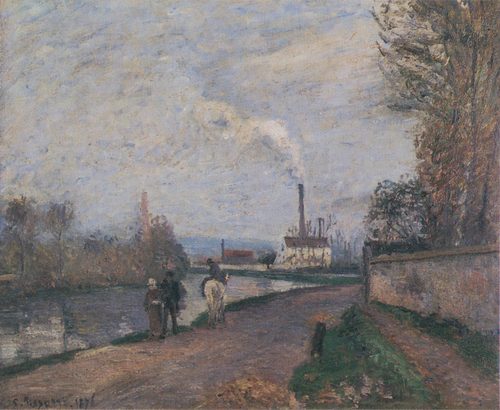
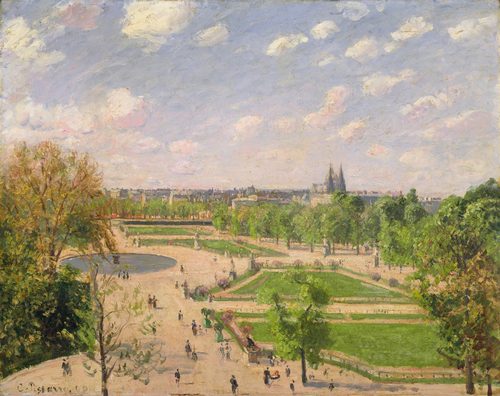
Pissarro built his rural scenes from short, varied strokes of color that read as foliage, soil, and sky only from a slight distance, a technique that helped define the core Impressionist look.
Rural labor as subject
Farm workers, orchards, and market gardens recur throughout his career, treated with quiet, unforced respect rather than picturesque sentimentality, reflecting his lifelong sympathy for peasant life and, in later years, anarchist politics.
Pointillist interlude
For several years in the mid-1880s he adopted Georges Seurat's method of applying small, distinct dots of pure color, before abandoning it as too slow for his instinctive, responsive way of working.
Late Parisian window series
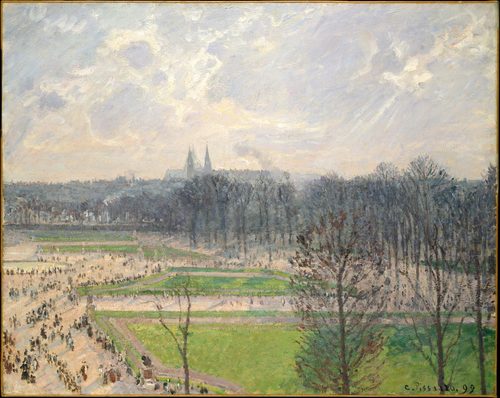
In his final decade, unable to work outdoors easily, he painted repeated views of Paris and Rouen boulevards from hotel rooms, tracking the same street through different light, weather, and season.
Muted, earthy palette
Greens, ochres, and soft violets dominate his rural work, a gentler, more restrained range than some Impressionist colleagues favored, reflecting his patient, observational temperament and preference for accuracy over dramatic, showy effect.
Mentoring eye
Though not a formal teacher, his generous, exacting feedback shaped younger painters who worked alongside him in the field, most notably Cézanne, who credited him as a foundational influence on his own development.
The life
Pissarro was born in 1830 on the Danish colonial island of St. Thomas to a merchant family of Portuguese-Jewish descent. Sent to boarding school in France as a boy, he returned to the Caribbean as a young man before deciding, against his family's wishes, to commit himself fully to painting, and he settled in Paris for good in 1855.
He studied informally with Camille Corot and, through the 1860s, developed a landscape practice centered on the villages west of Paris, painting orchards, roads, and rural laborers with an increasingly loose, broken brushstroke. The Franco-Prussian War forced him to flee to London in 1870 and 1871; Prussian soldiers occupying his house at Louveciennes destroyed or damaged most of the paintings he had left behind.
Back in France, Pissarro became the organizational backbone of the emerging Impressionist group, helping arrange their independent exhibitions and showing in all eight, from 1874 to 1886 — a record no other member matched. He also mentored younger painters who passed through his circle, notably Cézanne and Gauguin.
In his final fifteen years he experimented with Seurat's Pointillist technique, then eased back toward a freer Impressionism, and, as an eye ailment made outdoor painting difficult, turned to panoramic views of Paris and Rouen painted from upper-story windows. He died in Paris in 1903.
Timeline
- 1830Born on St. Thomas, Danish West Indies
- 1855Settles permanently in Paris
- 1859Makes his Paris Salon debut
- 1870Flees to London during the Franco-Prussian War
- 1874Helps organize the first Impressionist exhibition
- 1886Adopts Seurat's Pointillist technique
- 1897Begins painting Paris boulevard series from hotel windows
- 1903Dies in Paris
Most famous works
| Work | Date | Why it matters |
|---|---|---|
| Jalais Hill, Pontoise | 1867 | An early landscape masterpiece praised by Émile Zola, showing his command of rural light and structured composition. |
| The Boulevard Montmartre at Night | 1897 | One of a celebrated series painted from a hotel window, capturing the modern city's lamplight and movement. |
| Red Roofs | 1877 | A tightly organized village scene, its dappled brushwork of foliage and rooftops among his finest Impressionist landscapes. |
| Hoarfrost | 1873 | A frost-covered rural road rendered in cool violet and white tones, admired for its unusual winter light. |
| The Harvest at Montfoucault | 1876 | Farm laborers gathering hay, reflecting his enduring interest in the dignity of rural work. |
 AI-generated
Create in the same spirit
Make Impressionism art of your own
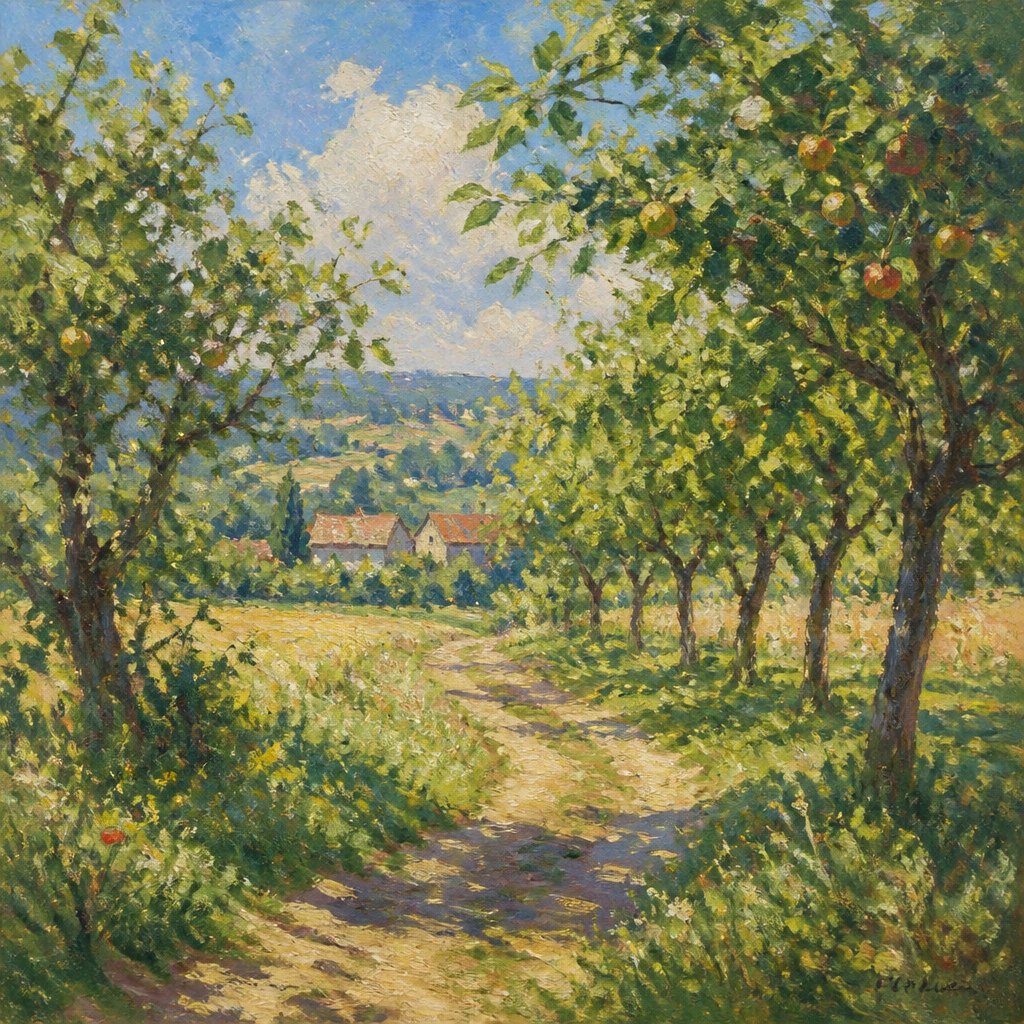
This AI interpretation echoes the aesthetic world Camille Pissarro worked in — it depicts no real artwork. Generate your own with the Impressionism Art Style generator.
Open the Impressionism Art Style generator →Legacy
Pissarro's steady presence held the Impressionist group together through a decade of ridicule and financial hardship, and his willingness to keep experimenting — moving between Impressionism, Pointillism, and back again — modeled an openness that shaped painters around him more than any single stylistic innovation. Cézanne and Gauguin both credited him directly as a teacher, and through them his influence reaches into Post-Impressionism and beyond. His late Paris and Rouen boulevard series anticipated twentieth-century interest in serial painting of the same motif under changing conditions. Today his landscapes anchor Impressionist rooms at the Musée d'Orsay and major American museums, valued as the movement's most patient and generous chronicler.
Frequently asked questions
What is Camille Pissarro famous for?
Pissarro is best known as the only artist to exhibit in all eight Impressionist group shows, celebrated for dappled rural landscapes around Pontoise and, late in life, panoramic views of Paris boulevards.
Where can I see Pissarro's paintings?
The Musée d'Orsay in Paris holds a major collection of his landscapes and boulevard scenes. The Ashmolean Museum in Oxford and the Metropolitan Museum of Art also hold significant works.
What art movement was Pissarro part of?
He was a founding member of Impressionism and later experimented with Neo-Impressionism, or Pointillism, under Georges Seurat's influence in the 1880s, before returning to a freer Impressionist technique in his final years.
Did Pissarro teach other famous painters?
Yes. He mentored Paul Cézanne, who painted alongside him and credited him as a formative influence, and later gave guidance to Paul Gauguin, both of whom carried his lessons into Post-Impressionism.