 Famous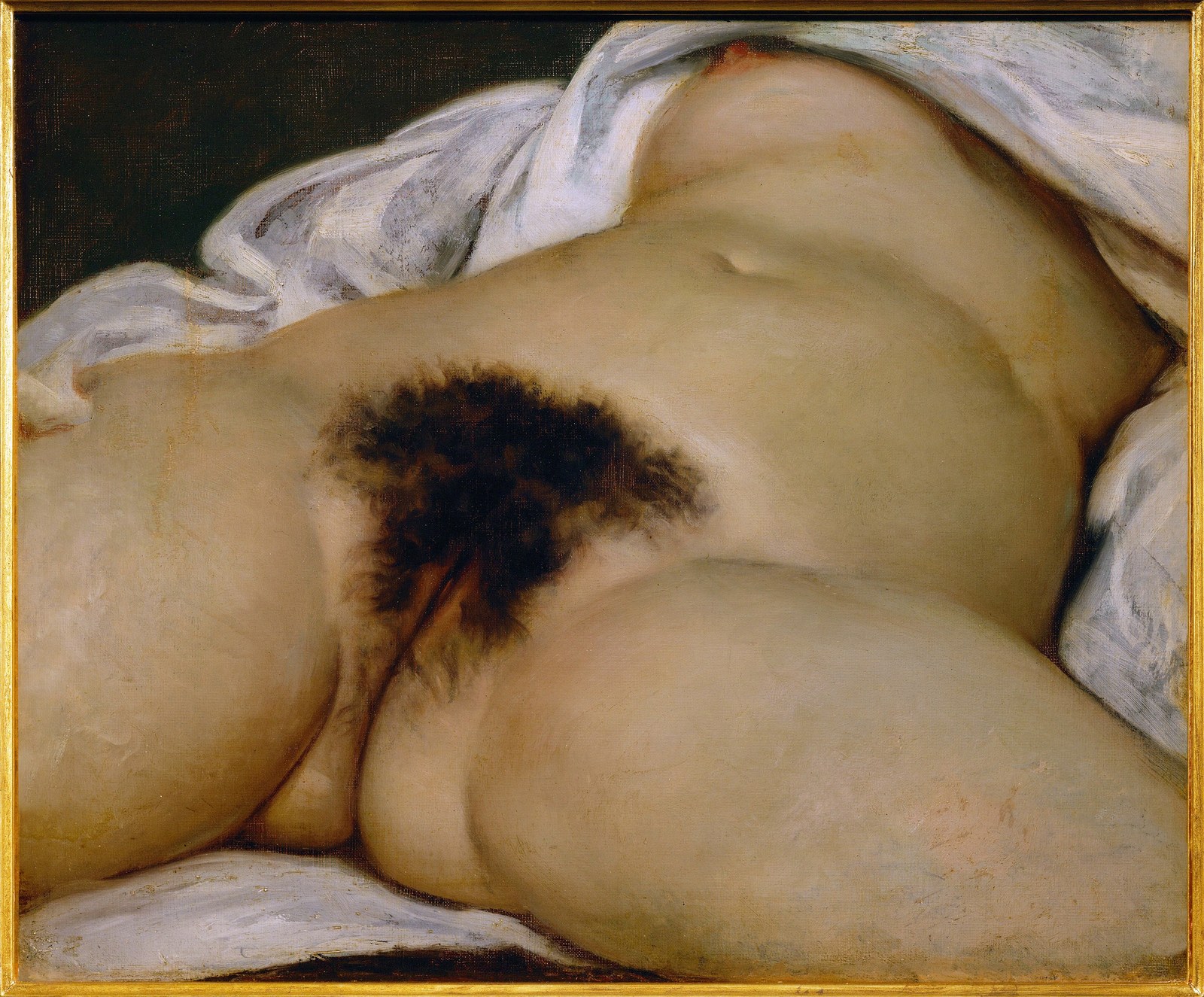
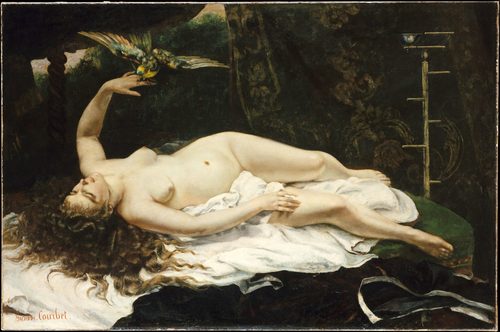
Gustave Courbet (1819–1877) was a French painter and the leading champion of Realism, a movement he defined by a blunt personal rule: paint only what exists in front of you. Born in Ornans, a small town in the Franche-Comté region, he arrived in Paris around 1840 largely self-taught, studying old masters in the Louvre rather than submitting to academic instruction.
His breakthrough came with A Burial at Ornans (1849–50) and The Stone Breakers (1849), enormous canvases that gave anonymous villagers and laborers the scale and gravity long reserved for history painting. Critics were scandalized by the sheer ordinariness of his subjects rendered so large and so plainly. When the 1855 Exposition Universelle jury rejected several of his works, Courbet built his own exhibition pavilion nearby, defiantly titled the "Pavilion of Realism" — an act of artistic independence that anticipated the Salon des Refusés.
A committed political radical, Courbet took part in the Paris Commune of 1871 and was later blamed for the destruction of the Vendôme Column, a monument to Napoleonic glory. Convicted and financially ruined by reconstruction costs, he fled to Switzerland, where he died in exile in 1877, having permanently widened what painting was allowed to take seriously.
How to recognize a Courbet
history-painting scale for ordinary people
Courbet paints stonebreakers, funeral crowds, and village laborers on canvases as large as those once reserved for kings and battles, forcing viewers to grant ordinary lives the same visual weight.
thick, unidealized paint handling
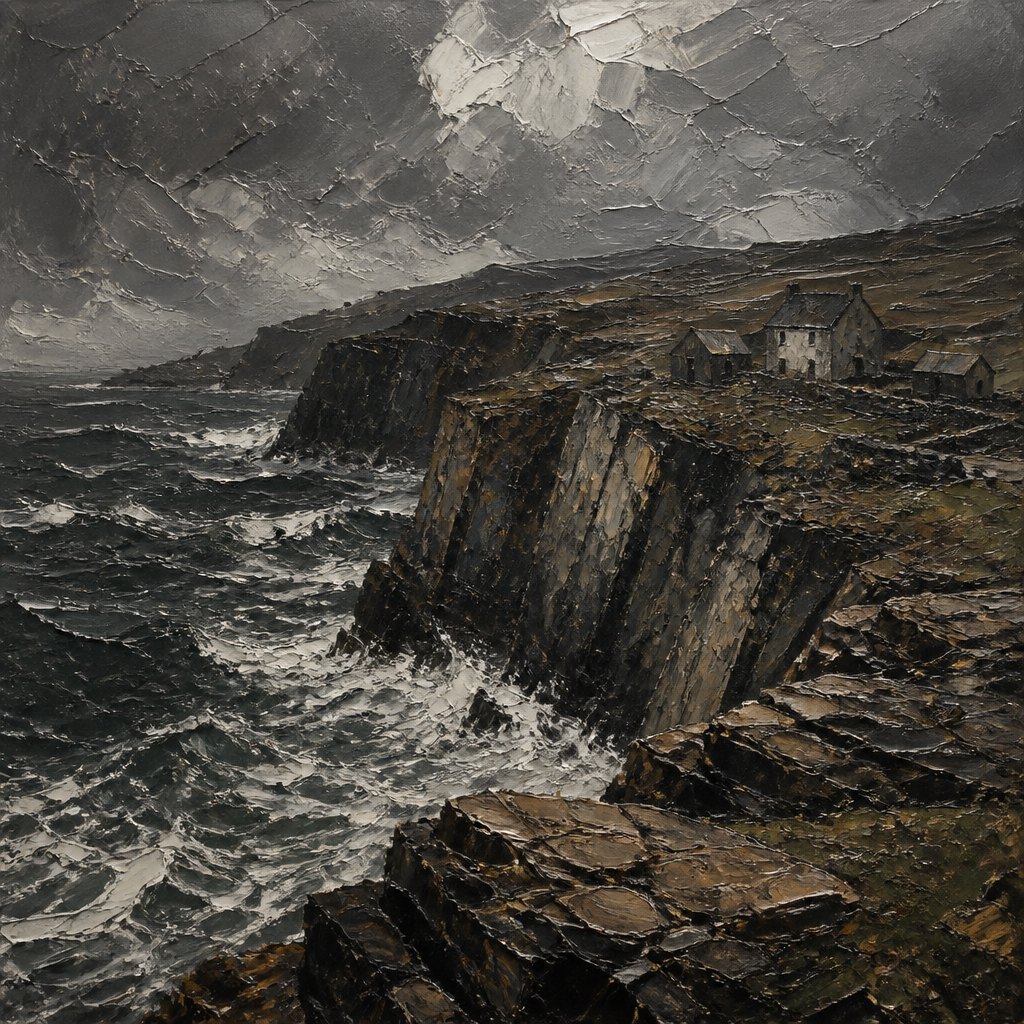
He builds surfaces with heavy, often palette-knife-applied paint, favoring rough, tactile texture over polished academic finish, letting visible ridges and buildup of pigment itself argue against artificial prettiness and academic idealization.
dark, earthy tonal range
Deep browns, blacks, and muted greens dominate his palette, lending scenes a somber, almost photographic gravity that resists any easy sentimentalizing of the rural laborers and working-class subjects he so consistently favored and returned to.
crowded, frieze-like compositions
Figures are often lined up across the canvas in a shallow, frieze-like arrangement, refusing a single hero or dominant focal point and instead presenting community, labor, and shared ritual as genuinely collective subjects worth painting.
unflinching physical description
Bodies, hands, and faces are rendered with plain, unflattering honesty, avoiding the softened idealization typical of academic painting in favor of visible age, dirt, calluses, and honest physical exhaustion worn openly on the skin.
landscapes without picturesque staging
His forest and coastal scenes, especially the rocky cliffs of Étretat, favor raw geological presence over composed, picturesque prettiness, treating rock, cave, and sea as blunt physical fact rather than decorative scenery arranged for a viewer.
The life
Courbet was born in 1819 in Ornans, the son of a prosperous landowning farmer, and kept close ties to his native region throughout his life. He moved to Paris around 1840 to study law but instead taught himself painting, copying Spanish and Dutch masters in the Louvre and rejecting formal academic training.
His reputation was made by two enormous, deliberately unglamorous canvases: The Stone Breakers, showing two laborers at grinding manual work, and A Burial at Ornans, a vast group portrait of his hometown at a funeral. Both defied the era's expectation that only historical or religious scenes deserved monumental treatment. When the official 1855 jury rejected some of his work, Courbet erected his own pavilion outside the fair to show it independently, a bold declaration that art needed no institutional permission.
Courbet remained a committed republican and socialist his entire life, friendly with the anarchist theorist Pierre-Joseph Proudhon. During the Paris Commune of 1871 he served on its arts commission and was later held responsible for the toppling of the Vendôme Column. Convicted and ordered to pay for its reconstruction, he fled to Switzerland in 1873 to escape the debt, and died there in La Tour-de-Peilz in December 1877, still working and still defiant.
Timeline
- 1819Born in Ornans, Franche-Comté, France
- 1840Moves to Paris, largely self-taught as a painter
- 1849Paints The Stone Breakers and A Burial at Ornans
- 1855Builds his own Pavilion of Realism after Salon rejection
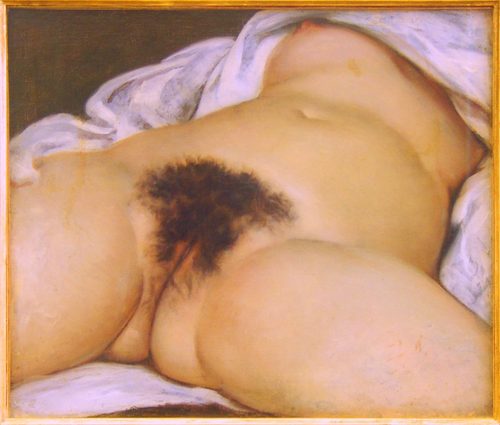
- 1866Paints The Origin of the World, kept private for decades
- 1871Joins the Paris Commune's arts commission
- 1873Flees to Switzerland to escape debt and prosecution
- 1877Dies in exile in La Tour-de-Peilz, Switzerland
Most famous works
| Work | Date | Why it matters |
|---|---|---|
| The Stone Breakers | 1849 | Two anonymous laborers at grinding manual work, painted at history-painting scale; destroyed in World War II. |
| A Burial at Ornans | 1849–50 | A monumental group portrait of his hometown at a funeral that scandalized the Paris Salon. |
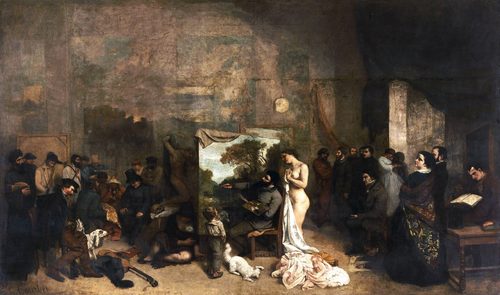
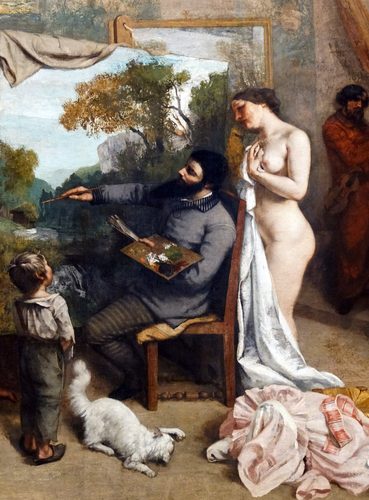
| The Artist's Studio | 1854–55 | A vast allegorical self-portrait surrounded by patrons, friends, and symbolic figures of his career. |
| The Origin of the World | 1866 | A close, unflinching study of the female body, kept from public view for roughly a century. |
| Young Ladies on the Banks of the Seine | 1857 | Two fashionable women resting outdoors, its casual realism read by critics as faintly scandalous. |
 AI-generated
Create in the same spirit
Make Realism art of your own
This AI interpretation echoes the aesthetic world Gustave Courbet worked in — it depicts no real artwork. Generate your own with the Realism Art Style generator.
Open the Realism Art Style generator →Legacy
Courbet gave Realism its manifesto and its nerve, insisting that painting answer only to the visible world rather than academic hierarchy or religious and historical subject matter. His independent pavilion outside the 1855 fair set a precedent that Manet and the Impressionists would follow when official Salons rejected them. Painters from Manet to the early Cézanne studied his handling of paint and his refusal to flatter. You feel him now whenever an artist insists on painting ordinary, unglamorous life at full seriousness and full scale, rather than shrinking it to a minor genre subject.
Frequently asked questions
What is Gustave Courbet famous for?
Courbet is famous for founding Realism, painting ordinary laborers and villagers at a monumental scale once reserved for history painting, most notably in The Stone Breakers and A Burial at Ornans.
Where can I see Courbet's paintings?
The Musée d'Orsay in Paris holds A Burial at Ornans and The Artist's Studio. The Art Institute of Chicago and the Metropolitan Museum of Art also hold significant works.
Why did Courbet build his own pavilion in 1855?
After the Exposition Universelle jury rejected several of his paintings, Courbet built a private pavilion nearby to exhibit them independently, asserting an artist's right to bypass official approval.
What movement did Courbet belong to?
Courbet founded and led Realism, arguing that painters should depict only what they could actually see, rejecting the idealized subjects of academic and Romantic painting.