 Famous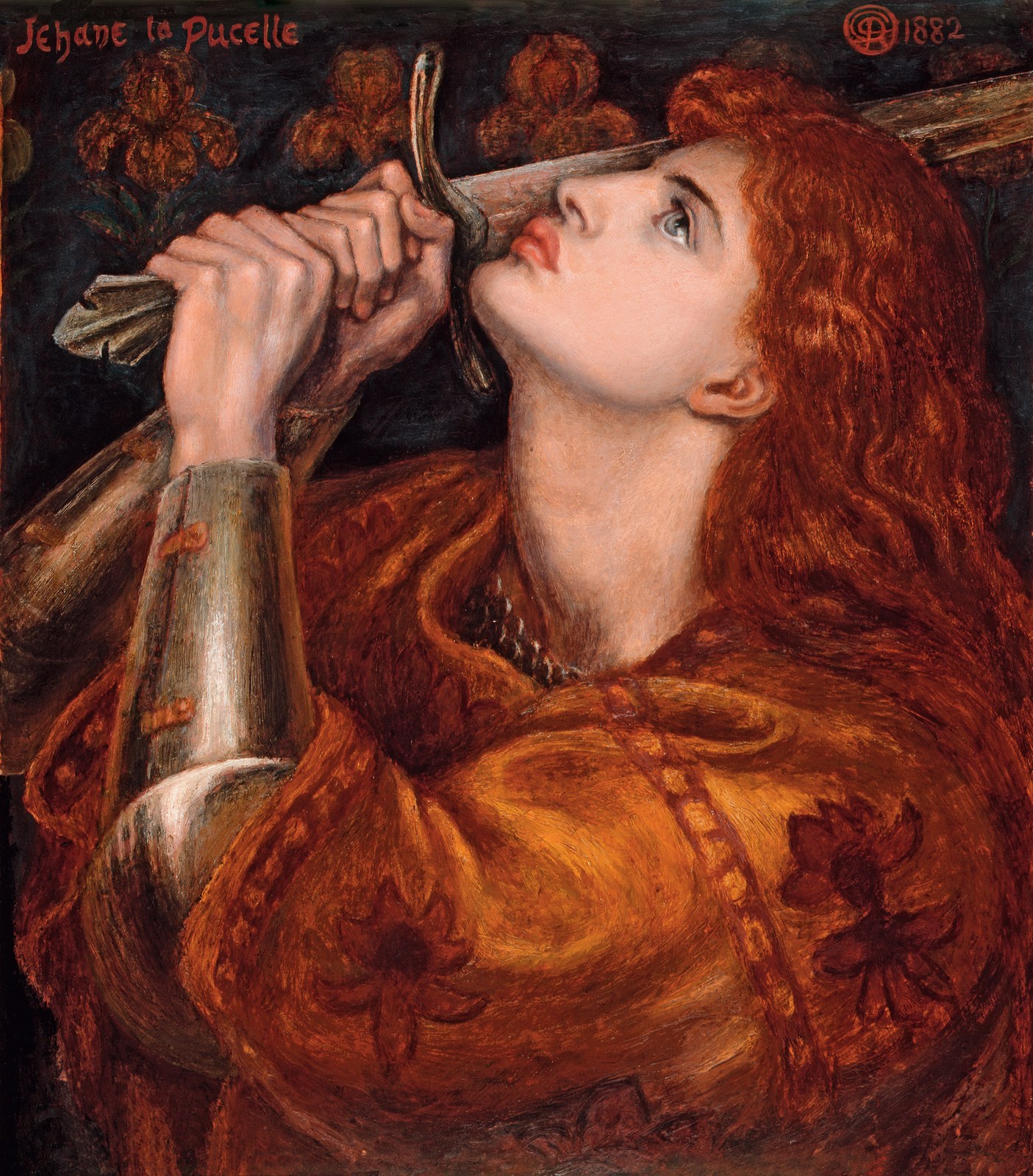
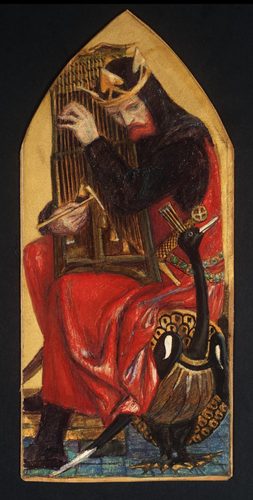
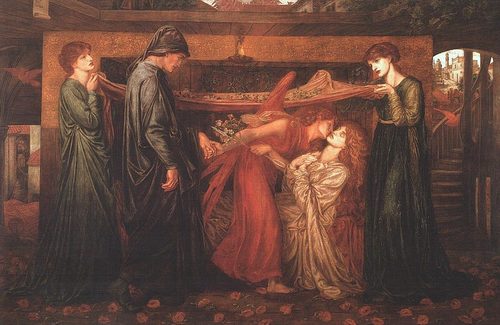
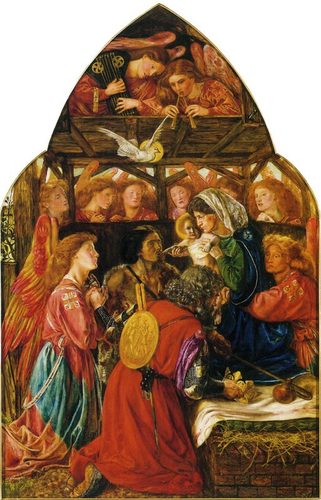
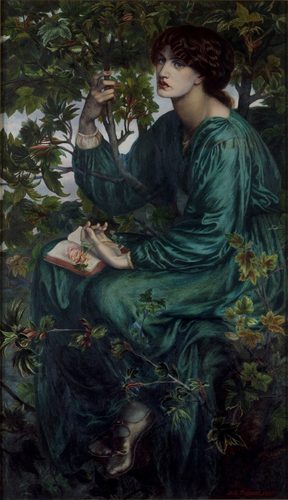
Dante Gabriel Rossetti (1828–1882) was a British painter and poet who co-founded the Pre-Raphaelite Brotherhood in 1848, steering British art away from academic convention toward intense color, literary subject matter, and a new ideal of female beauty that still shapes how we picture the Victorian imagination.
Born in London to an Italian émigré family steeped in Dante studies, Rossetti trained briefly at the Royal Academy before rejecting its methods alongside William Holman Hunt and John Everett Millais. He worked as both painter and poet, translating Dante and the early Italian poets while developing a signature style: half-length female figures, often his wife Elizabeth Siddal or later Jane Morris, posed against flowers and symbolic objects in saturated color.
After Siddal's death in 1862, Rossetti's paintings grew more overtly sensuous — women with tumbling hair and heavy-lidded stares that defined a whole strand of Victorian aesthetics. In his final decade, poor health and dependence on chloral hydrate, prescribed for insomnia, slowed his output, though he continued painting until his death at Birchington-on-Sea in 1882.
How to recognize a Rossetti
Jewel-toned color
Rossetti built his canvases from saturated reds, greens, and golds layered like stained glass, favoring rich pigment over naturalistic light. The effect is decorative and symbolic rather than descriptive — color chosen to intensify mood, not to record what daylight actually looked like.
Half-length female icons
Most mature works isolate a single woman from the waist up, filling the canvas with her face and hair. This tight, frontal format turns portrait into icon, inviting a long, direct stare that dissolves narrative into pure presence.
Cascading, wavy hair
Hair becomes an active design element — thick, rippling waves that fill negative space and echo the curves of drapery and flowers around the figure. It reads almost as landscape, a second subject as important as the face itself.
Symbolic still-life props
Flowers, mirrors, combs, and fruit surround his sitters, each chosen for meaning drawn from poetry and myth rather than decoration alone. A viewer fluent in his symbolism reads these objects like a second, quieter text.
Medieval and literary settings
Subjects come from Dante, Arthurian legend, and Italian poetry rather than everyday Victorian life, staged in shallow, tapestry-like spaces with minimal depth. The past becomes a dreamscape for exploring desire and loss.
Heavy-lidded, direct gaze
His women look straight out of the picture with a languid, unblinking intensity that Victorian critics found both magnetic and unsettling. That gaze — more than any single motif — is the signature most copied by his followers.
The life
Rossetti grew up in a household devoted to Dante Alighieri — his father was a Dante scholar — and this literary inheritance shaped everything he later painted. He entered the Royal Academy Schools in 1846 but found its teaching stale, and in 1848 he joined Hunt and Millais to found the Pre-Raphaelite Brotherhood, a rebellion against the polished, brown-toned history painting the Academy favored.
Unlike his Brotherhood peers, Rossetti rarely exhibited publicly after the 1850s, preferring to sell directly to private patrons like Frederick Leyland. He met Elizabeth Siddal, a milliner's assistant who modeled for the group, married her in 1860, and lost her to a laudanum overdose in 1862 — a grief that marked the rest of his life. He buried his poems with her, then had them exhumed and published seven years later.
Through the 1860s and 70s, Rossetti's painting turned toward large, single-figure works of women like Jane Morris, wife of his friend and collaborator William Morris, rendered with increasing opulence. His health declined under the strain of insomnia and chloral hydrate use, and he withdrew from public life. He died at Birchington-on-Sea in 1882, leaving behind both a body of paintings and poetry that defined a Victorian idea of beauty.
Timeline
- 1828Born in London to an Italian émigré family
- 1848Co-founds the Pre-Raphaelite Brotherhood
- 1850Exhibits "Ecce Ancilla Domini!"
- 1860Marries Elizabeth Siddal
- 1862Siddal dies; buries his manuscript poems with her
- 1869Exhumes and publishes his poems
- 1871Shares Kelmscott Manor with William and Jane Morris
- 1882Dies at Birchington-on-Sea
Most famous works
| Work | Date | Why it matters |
|---|---|---|
| The Girlhood of Mary Virgin | 1849 | His first exhibited oil, quietly announcing the Brotherhood's new style to London. |
| Ecce Ancilla Domini! | 1850 | A stark, pale Annunciation whose plainness startled Victorian critics. |
| Beata Beatrix | 1864–70 | A memorial to Elizabeth Siddal, transfigured as Dante's Beatrice. |
| Lady Lilith | 1866–68 | A temptress combing her hair, emblem of dangerous, self-absorbed beauty. |
| Proserpine | 1874 | Jane Morris as the captive queen of the underworld, pomegranate in hand. |
| The Blessed Damozel | 1875–78 | A painted companion to his own poem of longing across heaven and earth. |
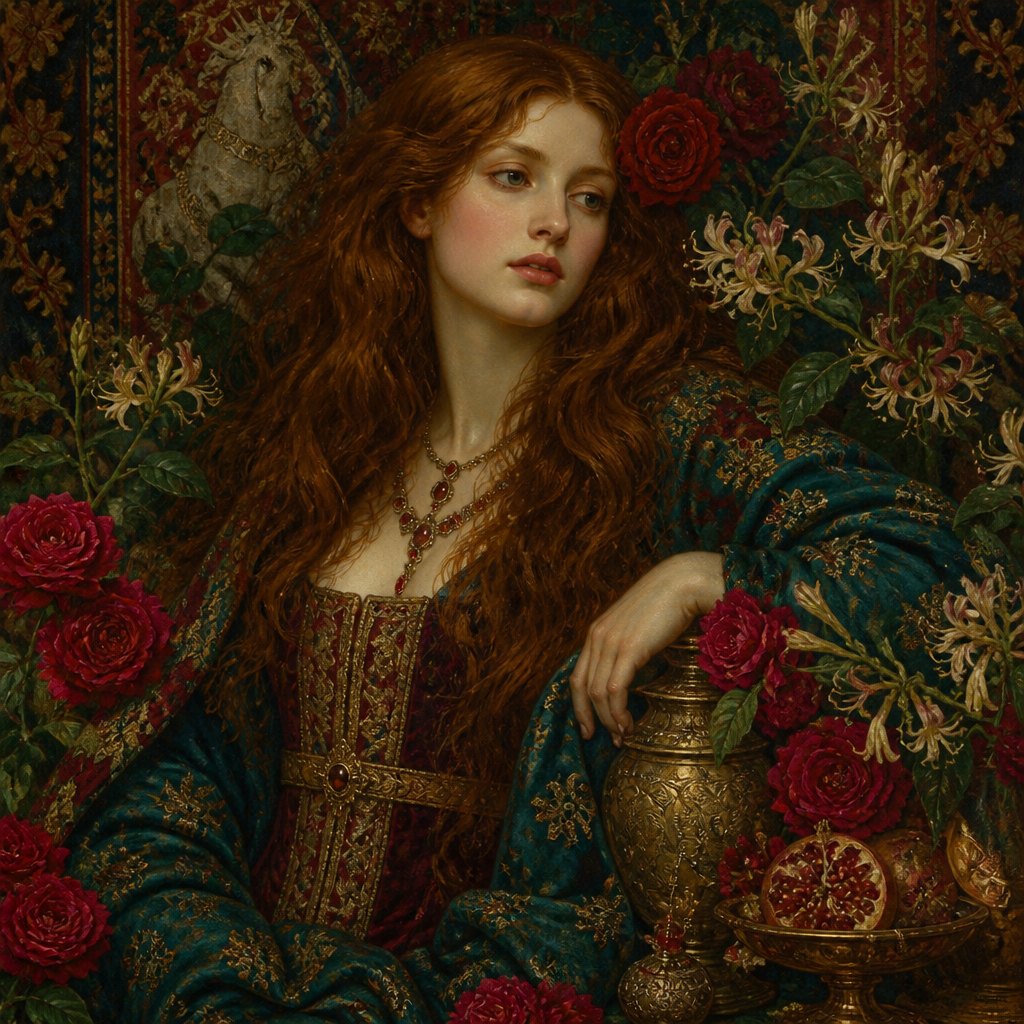 AI-generated
Create in the same spirit
Make Pre Raphaelite Brotherhood art of your own
This AI interpretation echoes the aesthetic world Dante Gabriel Rossetti worked in — it depicts no real artwork. Generate your own with the Pre-Raphaelite Art Style generator.
Open the Pre-Raphaelite Art Style generator →Legacy
Rossetti's fusion of poetry and painting gave the Pre-Raphaelite movement its most enduring visual language — the intense, symbol-laden female portrait that later fed directly into Art Nouveau and the Aesthetic Movement. Edward Burne-Jones and William Morris, his close collaborators, carried his decorative sensibility into stained glass, textiles, and book design, extending his influence well beyond painting. The type of woman he invented — abundant hair, heavy gaze, surrounded by flowers — became shorthand for Victorian romantic melancholy and still surfaces in fashion photography and fantasy illustration. Visit the Tate or the Delaware Art Museum, home to major Rossetti and Siddal holdings, and his color sense still reads as startlingly modern.
Frequently asked questions
What is Dante Gabriel Rossetti famous for?
Rossetti is famous for co-founding the Pre-Raphaelite Brotherhood in 1848 and for paintings of women — often Elizabeth Siddal or Jane Morris — rendered in rich color as symbolic, half-length icons of beauty and longing.
Where can I see Rossetti's paintings today?
Tate Britain in London holds major works including 'Beata Beatrix,' while the Delaware Art Museum in Wilmington has one of the world's largest public collections of Rossetti paintings, drawings, and manuscripts.
What art movement did Rossetti belong to?
Rossetti co-founded the Pre-Raphaelite Brotherhood, a group of British artists who rejected academic convention in favor of intense color, sharp detail, and literary or medieval subject matter.
Was Rossetti also a poet?
Yes. Rossetti published poetry alongside his painting, including 'The Blessed Damozel,' and translated early Italian poets. He buried a manuscript of poems with his wife in 1862, then had them exhumed and published in 1870.