 Famous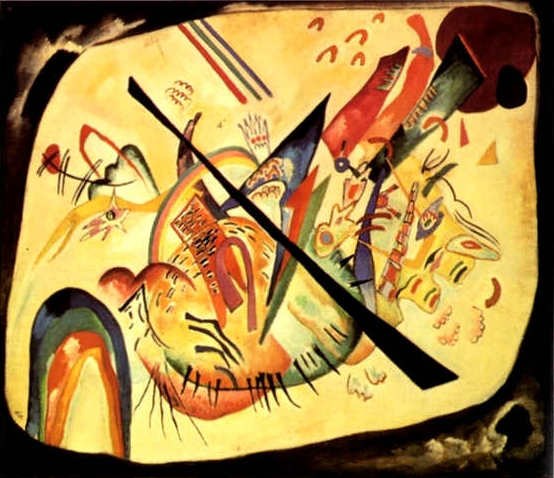
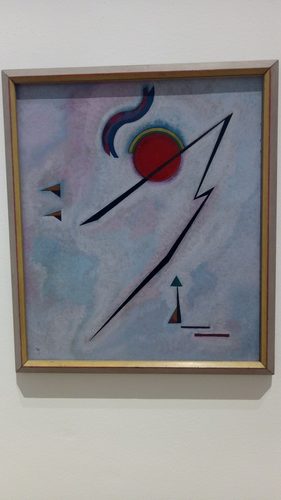
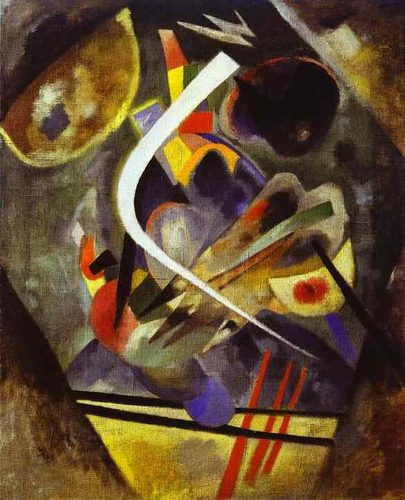
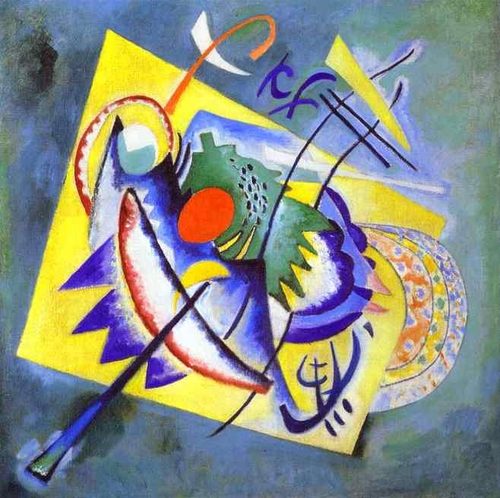
Wassily Kandinsky (1866–1944) was a Russian-born painter and theorist widely credited as a pioneer of abstract art, one of the first artists to abandon recognizable subject matter entirely in favor of color, line, and form used as an independent, near-musical language.
Kandinsky trained first in law and economics before turning to painting in his thirties, moving to Munich to study art. There he co-founded the Blaue Reiter group with Franz Marc, developing a theory that color and shape carried direct spiritual and emotional force, akin to musical tones, independent of any object depicted. Around 1910–13, he began painting works with no recognizable subject at all, among the earliest fully abstract paintings in Western art.
Kandinsky taught at the Bauhaus in Germany through the 1920s and early 1930s, refining a more geometric, precise abstract vocabulary. The school's forced closure under Nazi pressure in 1933 sent him to Paris, where he spent his final decade continuing to paint and write until his death in 1944, having laid foundational groundwork for abstraction that shaped the rest of twentieth-century art.
How to recognize a Kandinsky
Music-inspired abstraction
Kandinsky treated painting as a visual equivalent of music, calling many works 'Compositions' or 'Improvisations,' using color and rhythm to strike an emotional chord the way a symphony would, with no object required.
Explosive, floating color
Bold patches of red, blue, and yellow seem to hover and collide across the canvas without settling into fixed shapes, color used as raw energy rather than as description of any object.
Dissolving figuration
In his transitional works, horses, riders, and landscapes break apart into loose color and gesture, recognizable forms dissolving at the edges as he pushed steadily toward paintings with no subject at all.
Geometric Bauhaus precision
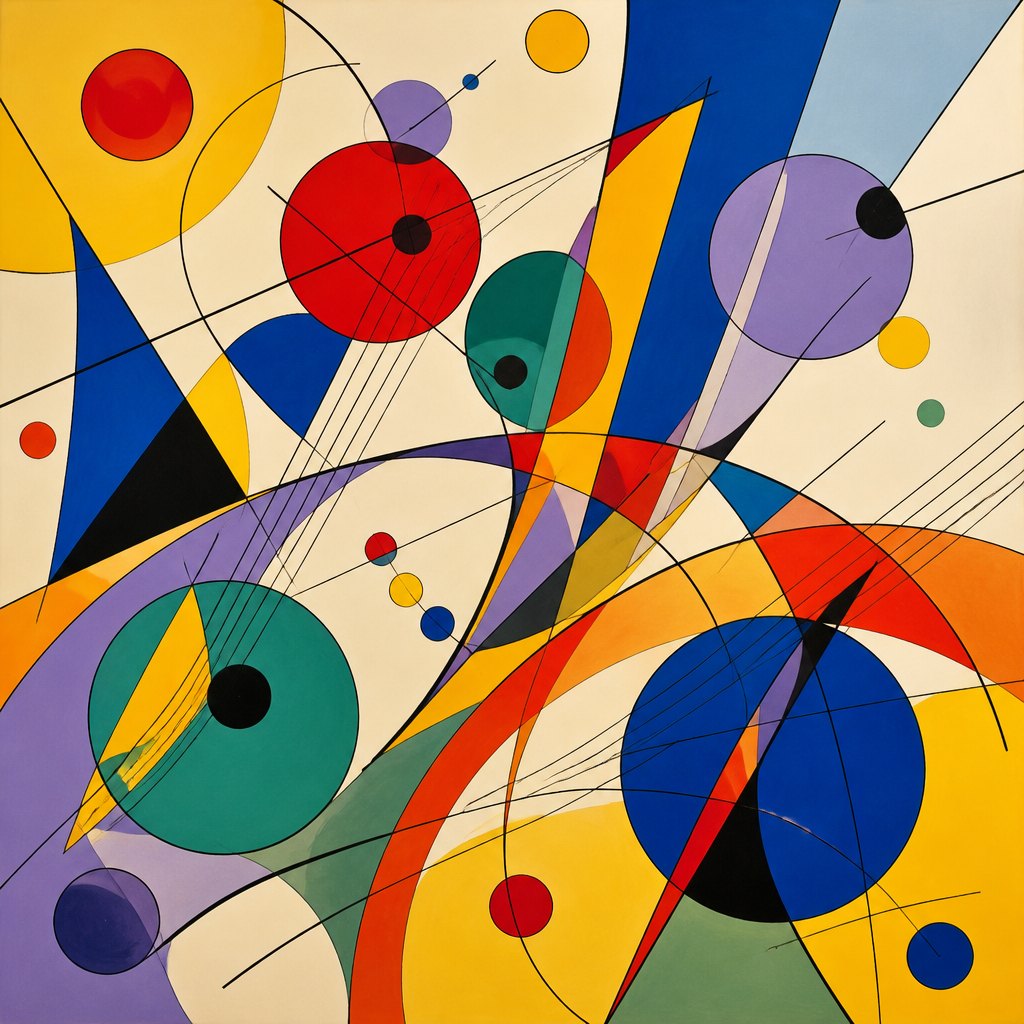
At the Bauhaus, Kandinsky's loose, gestural abstraction gave way to circles, triangles, and grids arranged with near-scientific precision, reflecting his study of how basic shapes and colors affect perception and feeling.
Dense, layered compositions
Many canvases pile overlapping lines, arcs, and color fields into busy, all-over compositions with no single focal point, inviting the eye to wander the surface the way it might follow a piece of music.
Black outlined shapes
In his later work, crisp black contour lines frequently pen in floating circles and biomorphic forms, giving otherwise weightless color fields a sense of drawn structure and playful, almost diagrammatic order.
The life
Wassily Kandinsky was born in Moscow in 1866 and initially trained in law and economics, teaching briefly at Moscow University. At thirty, he abandoned a promising legal career to study painting in Munich, a decision he later described as triggered partly by seeing one of Monet's haystack paintings and realizing that subject matter itself might not be essential to a picture's power.
In Munich, Kandinsky became a central figure of the German avant-garde, co-founding the Blaue Reiter group with Franz Marc in 1911 and publishing his influential treatise 'Concerning the Spiritual in Art.' Around 1910 to 1913, he produced paintings that abandoned recognizable subject matter almost entirely, among the earliest fully abstract works in Western painting.
World War I forced Kandinsky back to Russia, where he taught and helped shape early Soviet art institutions before growing disillusionment with the political climate led him back to Germany in 1921. He joined the Bauhaus as a teacher, developing a more geometric abstract style through the 1920s. When the Nazis closed the Bauhaus in 1933, Kandinsky relocated to Paris, where he continued painting in a freer, more biomorphic style until his death in 1944.
Timeline
- 1866Born in Moscow, Russia
- 1896Leaves a law career to study painting in Munich
- 1911Co-founds the Blaue Reiter group with Franz Marc
- 1912Publishes 'Concerning the Spiritual in Art'
- 1913Paints among his first fully abstract compositions
- 1922Joins the Bauhaus as a teacher in Germany
- 1933Nazi closure of the Bauhaus forces his move to Paris
- 1944Dies in Neuilly-sur-Seine, near Paris
Most famous works
| Work | Date | Why it matters |
|---|---|---|
| Composition VII | 1913 | A densely layered, large-scale abstraction often cited as the culmination of his pre-war 'Compositions' series. |
| Composition VIII | 1923 | A geometric, Bauhaus-era abstraction of circles and triangles marking his shift toward precise, structured forms. |
| Yellow-Red-Blue | 1925 | A large canvas dividing bold primary color fields with geometric shapes, a key statement of his mature style. |
| On White II | 1923 | A stark abstract composition of interlocking lines and shapes floating on a near-empty white ground. |
| Several Circles | 1926 | Overlapping translucent circles in varied colors, among his best-known explorations of shape as pure feeling. |
 AI-generated
Create in the same spirit
Make der Blaue Reiter art of your own
This AI interpretation echoes the aesthetic world Wassily Kandinsky worked in — it depicts no real artwork. Generate your own with the Expressionism Art Style generator.
Open the Expressionism Art Style generator →Legacy
Kandinsky is credited, alongside a handful of contemporaries, with painting some of the first works in Western art history to abandon recognizable subject matter entirely — a move that opened the door to nearly every abstract movement that followed, from Abstract Expressionism to Color Field painting. His writings on color, form, and the spiritual purpose of art gave abstraction a theoretical foundation, not just a visual one, shaping how generations of artists and teachers talked about painting itself. His Bauhaus years also embedded his ideas directly into design education, influencing how color and composition are still taught today.
Frequently asked questions
What is Wassily Kandinsky famous for?
Kandinsky is famous for pioneering abstract art, painting among the first Western works with no recognizable subject, and for treating color and form as an independent, near-musical language.
Where can you see Kandinsky's paintings?
The Guggenheim Museum in New York holds a major collection, along with the Centre Pompidou in Paris, the Lenbachhaus in Munich, and the State Tretyakov Gallery in Moscow.
Was Kandinsky really the first abstract painter?
He is one of a small group of artists, including Hilma af Klint and František Kupka, who moved toward pure abstraction around the same period; Kandinsky's theoretical writings made his role especially influential.
What art movement is Wassily Kandinsky associated with?
Kandinsky helped found the Blaue Reiter, part of German Expressionism, and later taught at the Bauhaus, making him central to both Expressionist and early abstract art movements.