 Famous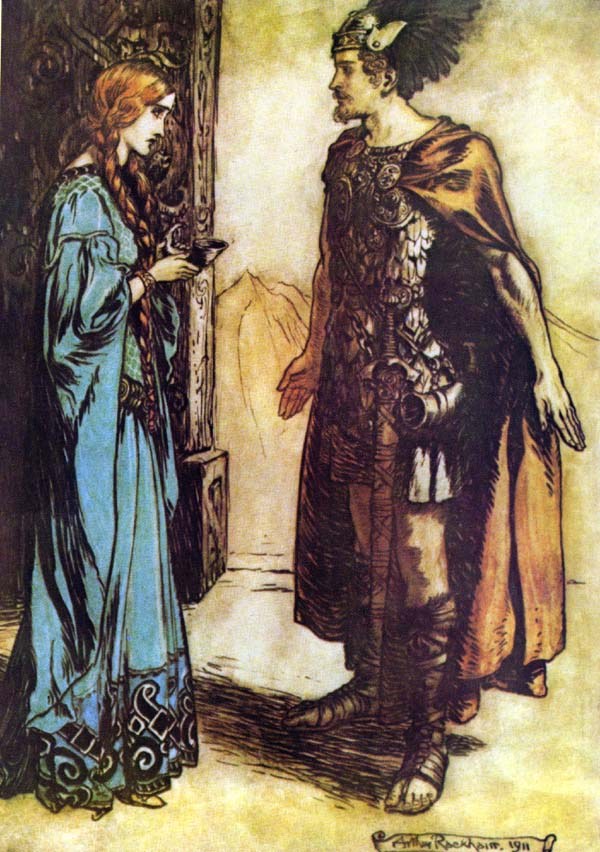
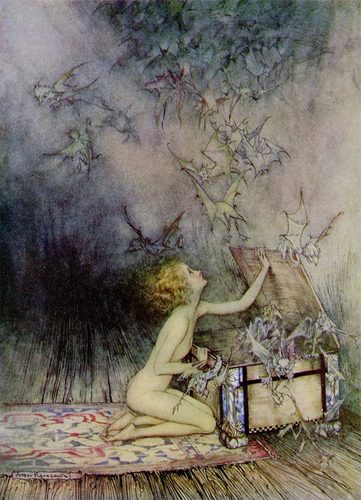
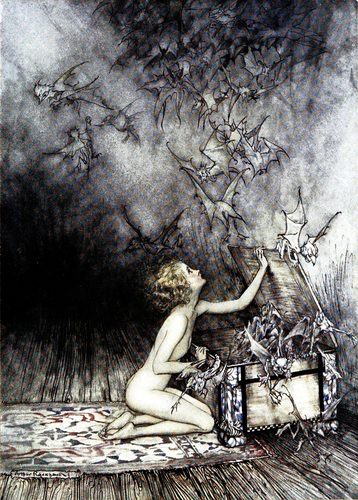
Arthur Rackham (1867–1939) was an English illustrator whose gnarled trees, twilight woods, and gently grotesque spirits defined the so-called golden age of book illustration in the early twentieth century. Working in delicate pen line washed with muted watercolor, he gave children's classics an atmosphere that was as unsettling as it was enchanting.
Rackham trained as an insurance clerk before turning to illustration full-time, building his reputation through gift-book editions aimed at the lucrative Christmas market. His 1905 Rip Van Winkle established the format that made him famous: full-color plates tipped into finely bound volumes, sold to a public eager for beautifully produced fantasy.
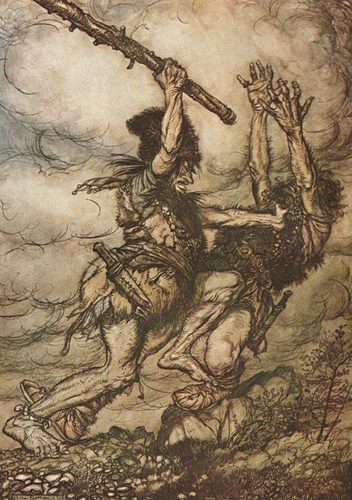
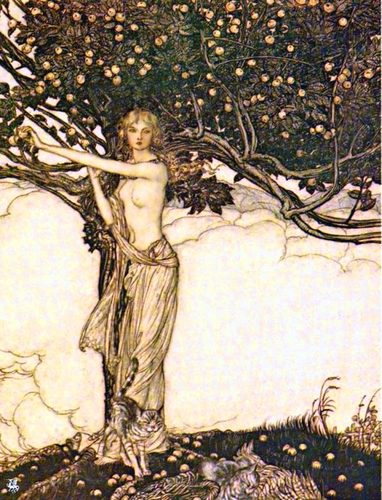
He went on to illustrate Peter Pan in Kensington Gardens, Alice's Adventures in Wonderland, Grimm's fairy tales, and Wagner's Ring cycle, each rendered in his instantly recognizable style of spindly, animate trees and translucent color. Working almost until his death, he completed illustrations for Kenneth Grahame's The Wind in the Willows shortly before he died in Surrey in 1939, closing a decades-long career that shaped how English-speaking readers still picture fairy tales.
How to recognize a Rackham
Gnarled, animate trees
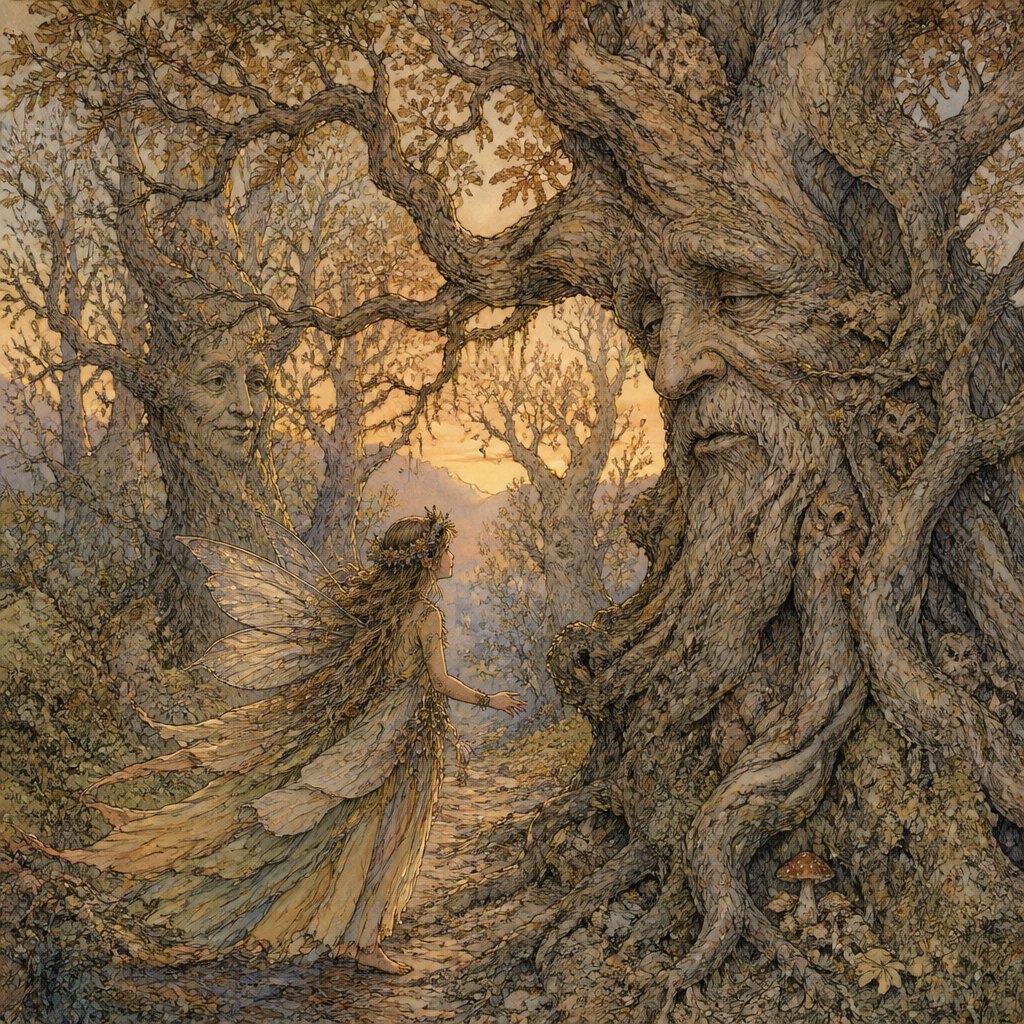
Rackham's trees twist into knotted, almost human forms—faces and limbs emerging from bark and root—turning ordinary woodland into something watchful beneath its storybook charm, a hallmark readers recognize instantly.
Pen line under watercolor
He built each image from fine, scratchy pen-and-ink drawing, then washed it with translucent watercolor in muted browns, greens, and golds, letting the underlying line show faintly through every layer of color.
Wizened gnomes and goblins
His supporting cast of gnarled dwarfs, hunched goblins, and wrinkled crones has skin like tree bark and postures borrowed from roots and branches, blurring the line between his creatures and his landscapes.
Delicate fairy figures
Against his craggy grotesques, Rackham set slender, luminous fairies and princesses in flowing dress, their softness and pale coloring a deliberate contrast to the twisted creatures that surround them on the page.
Muted autumnal palette
Rackham favored a subdued range of olive, ochre, rust, and dove grey rather than bright color, giving his scenes the hushed, dusky light of an English autumn afternoon or fading dusk.
Silhouette and shadow-play
Many pages set flat black silhouettes against pale backgrounds, a technique borrowed from decorative arts that let him suggest crowds of dancing figures or distant branches with striking economy of means.
The life
Arthur Rackham was born in London in 1867, one of twelve children in a middle-class family. He worked for years as a clerk at the Westminster Fire Office while studying art at evening classes at the Lambeth School of Art, only becoming a full-time illustrator and journalist in his mid-twenties.
His career took off in the early 1900s as publishers began producing lavish illustrated gift books for the Christmas trade. His 1905 edition of Washington Irving's Rip Van Winkle, with full-color plates reproduced from his watercolors, was a sensation and set the template he would follow for three decades: intricate pen drawings washed in muted color, bound in deluxe limited editions alongside cheaper trade copies.
Over the following years he illustrated Peter Pan in Kensington Gardens, Alice's Adventures in Wonderland, Grimm's and Hans Christian Andersen's fairy tales, and Wagner's Ring cycle, becoming, alongside Edmund Dulac and Kay Nielsen, one of the defining names of what is now called the golden age of illustration. He continued working through the 1920s and 1930s even as photographic color printing made the gift-book format less commercially central.
His final commission, illustrations for Kenneth Grahame's The Wind in the Willows, was completed from his sickbed; he died at his home in Limpsfield, Surrey, in 1939.
Timeline
- 1867Born in London, England.
- 1884Begins evening art classes at the Lambeth School of Art.
- 1892Leaves clerking to become a full-time illustrator.
- 1905Rip Van Winkle makes him a leading gift-book illustrator.
- 1906Illustrates Peter Pan in Kensington Gardens.
- 1907Illustrates Alice's Adventures in Wonderland.
- 1910Illustrates Wagner's Ring cycle for English editions.
- 1939Dies in Surrey, having just finished The Wind in the Willows.
Most famous works
| Work | Date | Why it matters |
|---|---|---|
| Rip Van Winkle | 1905 | The gift-book edition that made his reputation, pairing Washington Irving's tale with lavish color plates. |
| Peter Pan in Kensington Gardens | 1906 | His best-loved fairy-tale world, filled with gnarled trees and wistful woodland spirits from J. M. Barrie's story. |
| Alice's Adventures in Wonderland | 1907 | A now-classic edition reimagining Lewis Carroll's Wonderland in Rackham's twilight palette. |
| Grimm's Fairy Tales | 1909 | Illustrations for the Grimm tales that show his gift for the uncanny alongside the charming. |
| The Rhinegold and the Valkyrie | 1910 | Illustrations for Wagner's Ring operas, blending myth and forest atmosphere at monumental scale. |
| The Wind in the Willows | 1939–40 | His last commission, completed from his sickbed and published after his death. |
 AI-generated
Create in the same spirit
Make Art Nouveau art of your own
This AI interpretation echoes the aesthetic world Arthur Rackham worked in — it depicts no real artwork. Generate your own with the Art Nouveau Style generator.
Open the Art Nouveau Style generator →Legacy
Rackham's fusion of pen line and translucent watercolor became the visual template for English-language fantasy illustration, echoed for decades in editions of fairy tales, children's classics, and, much later, in the atmosphere film and game designers reach for when picturing enchanted forests. Alongside Edmund Dulac and Kay Nielsen, he helped make illustrated gift books a serious art form rather than a minor craft, and his gnarled, faintly sinister trees set a visual vocabulary for depicting nature as alive and watchful that persists in fantasy art, animation, and concept design well over a century later, whenever an artist wants a forest to feel like it is thinking.
Frequently asked questions
What is Arthur Rackham famous for?
Rackham is famous for defining the golden age of book illustration, pairing delicate pen line with muted watercolor to create the gnarled trees, gentle fairies, and unsettling gnomes that illustrate Peter Pan in Kensington Gardens, Alice in Wonderland, and Wagner's Ring cycle.
Where can I see Rackham's original artwork?
Original Rackham watercolors are held by British museums including the Victoria and Albert Museum in London, and his illustrated gift-book editions remain widely available in libraries and rare-book collections.
What art movement was Rackham part of?
Rackham worked within the Art Nouveau-influenced golden age of illustration, alongside contemporaries such as Edmund Dulac and Kay Nielsen, producing lavishly illustrated gift books for the Edwardian Christmas market rather than aligning with a formal art movement.
Did Rackham illustrate real fairy tales or invent his own?
He illustrated existing texts—fairy tales by the Brothers Grimm and Hans Christian Andersen, classics like Alice in Wonderland, and operas like Wagner's Ring cycle—bringing his own visual imagination to established stories rather than writing new ones.