 Famous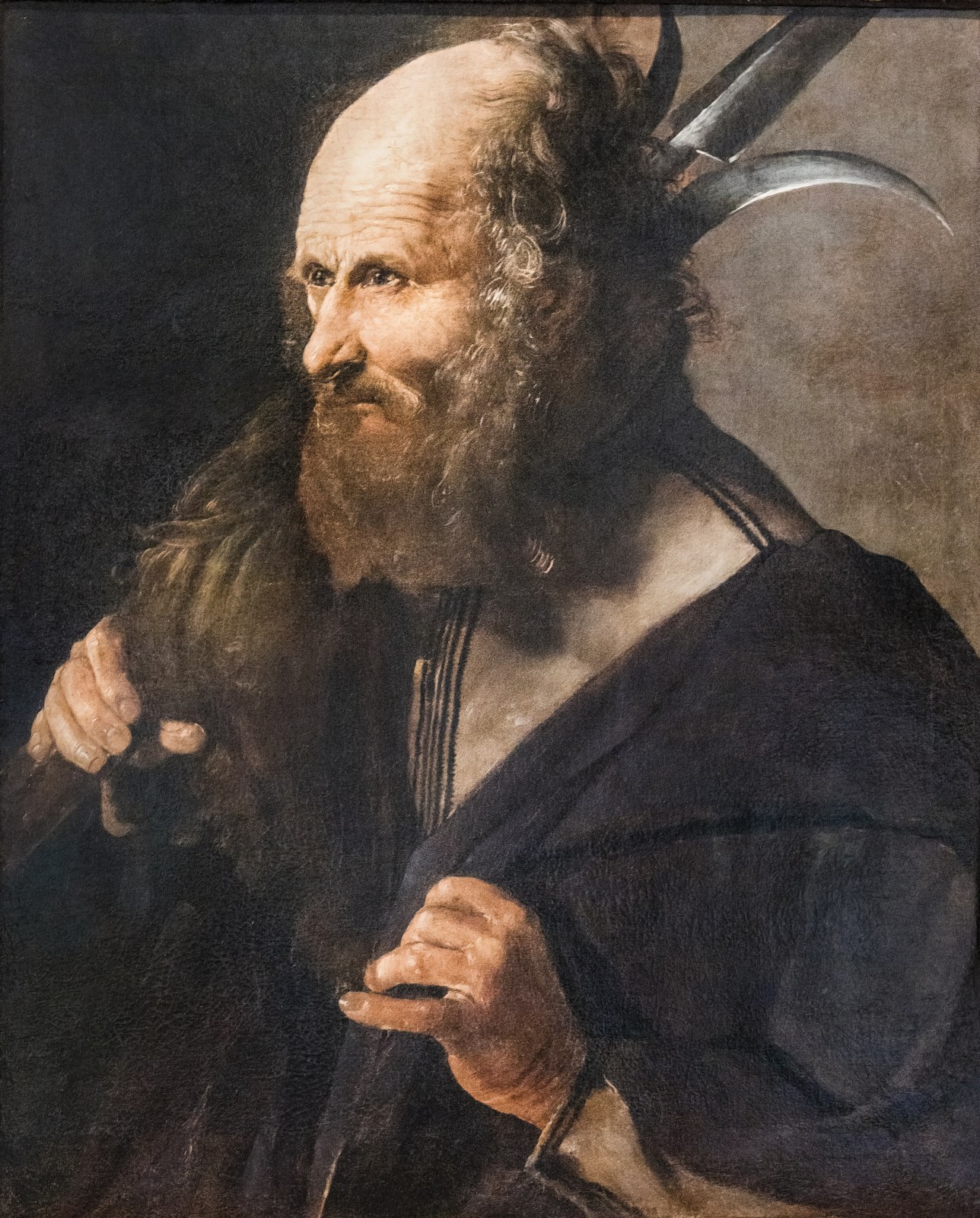
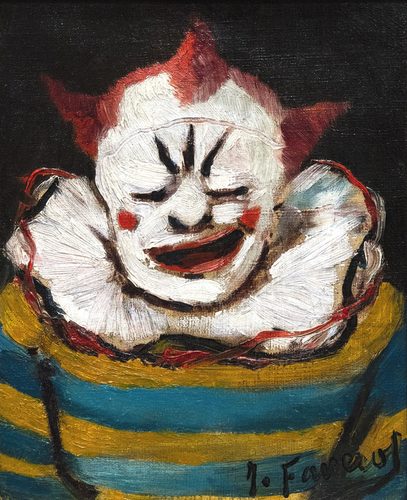
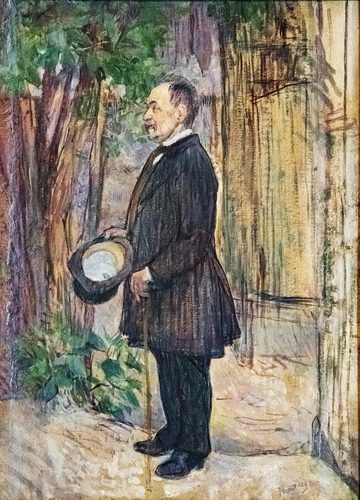
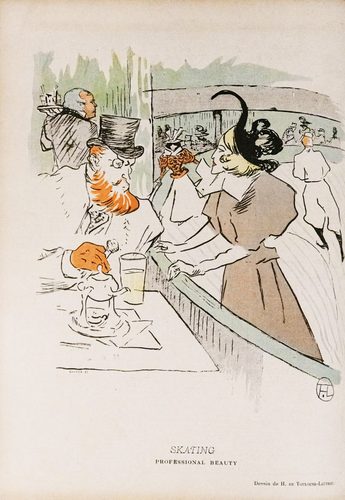
Henri de Toulouse-Lautrec (1864–1901) was a French painter and printmaker who chronicled the cafés, cabarets, and brothels of Montmartre in swift, graphic lines and flattened color, and who transformed the advertising poster into a serious modern art form.
Born into an aristocratic family in southern France, Toulouse-Lautrec broke both legs in childhood accidents; a bone disorder kept his legs from growing further, leaving him with an adult torso on a child-sized lower body and lifelong physical pain. Unable to pursue the aristocratic sporting life expected of him, he devoted himself entirely to drawing and painting, training formally in Paris before settling in Montmartre in the mid-1880s.
There he found his subject: dance halls like the Moulin Rouge, cabaret singers, circus performers, and the women of the brothels he lived among and painted with unusual directness and respect. His color lithographs for the Moulin Rouge and other venues, built from flat planes of color and bold outline influenced by Japanese prints, made him the era's leading poster artist. Heavy drinking accelerated a decline in his health, and he died in 1901 at 36, following a stroke.
How to recognize a Toulouse-Lautrec
Swift, calligraphic line
Toulouse-Lautrec drew with rapid, confident contour lines that capture a dancer's kick or a singer's gesture in a few strokes, prioritizing motion and character over careful, finished modeling of light.
Flat color, bold outline
Influenced by Japanese woodblock prints, he filled shapes with flat, unmodulated color bounded by strong outlines, especially in his posters, giving them a graphic punch that reproduced well in cheap print.
Cropped, off-center composition
Borrowing from photography and Japanese prints, he cropped figures at the frame's edge and pushed the main subject off center, creating a snapshot-like immediacy rare in painting of his time.
Nightlife and cabaret subjects
Dancers, singers, circus riders, and the women of Montmartre's brothels fill his work, observed from the inside as a regular patron rather than a distant tourist looking in on their world.
Unflattering, honest portraiture
He painted performers and working women without idealizing their features, catching exhaustion, boredom, or sharp wit alongside glamour, a directness some contemporaries found shocking in subjects usually prettified for display.
Innovative lithographic posters
Toulouse-Lautrec treated the commercial poster as fine art, using color lithography's flat printed layers to design bold, simplified images for venues like the Moulin Rouge that still define the look of the era.
The life
Henri de Toulouse-Lautrec was born in Albi, France, in 1864, into one of the oldest aristocratic families in the country. A bone disorder, likely related to his parents' close family relation, left his bones fragile; two childhood falls broke his legs, which then stopped growing, while his torso developed normally, leaving him an adult of unusual proportions who walked with a cane for the rest of his life.
Excluded from the physical, outdoor life expected of his class, he turned fully to art, studying under academic painters in Paris before finding his real subject in Montmartre, then the city's bohemian entertainment district. He moved there in the mid-1880s and largely stayed, becoming a fixture at the Moulin Rouge and other cabarets, sketching performers and patrons from life, often from a regular table at the venues themselves.
His 1891 poster for the Moulin Rouge, Moulin Rouge: La Goulue, made him famous overnight and launched a prolific decade of color lithographs, paintings, and drawings documenting Montmartre's dancers, singers, and working women. Heavy alcohol use, worsened by his physical pain and a demanding social life, damaged his health severely by his early thirties. After a mental and physical collapse in 1899, he died in 1901 at his family's estate, at age 36.
Timeline
- 1864Born in Albi, France
- 1878Breaks his leg in a childhood accident
- 1879Breaks his other leg; growth stops
- 1882Begins formal art training in Paris
- 1884Settles in Montmartre
- 1891Creates his breakthrough Moulin Rouge poster
- 1899Health collapse; brief sanatorium stay
- 1901Dies at Château de Malromé, age 36
Most famous works
| Work | Date | Why it matters |
|---|---|---|
| Moulin Rouge: La Goulue | 1891 | The poster that made him famous overnight, reducing a cabaret dancer to bold flat shapes against black. |
| At the Moulin Rouge | 1892–1895 | A large group portrait of performers and patrons at the cabaret, cropped like a candid photograph. |
| Jane Avril | 1893 | A poster portrait of the dancer mid-motion, her leg kicked high in a sweep of graphic line. |
| The Laundress | 1888 | An early, sympathetic painting of a working-class woman at her labor, before his Montmartre nightlife period. |
| In the Salon at the Rue des Moulins | 1894 | An unflinching, intimate view of brothel life, painted from among the women rather than about them. |
| The Clownesse Cha-U-Kao | 1895 | A circus performer in bright yellow, painted with sympathy for the loneliness beneath the costume and makeup. |
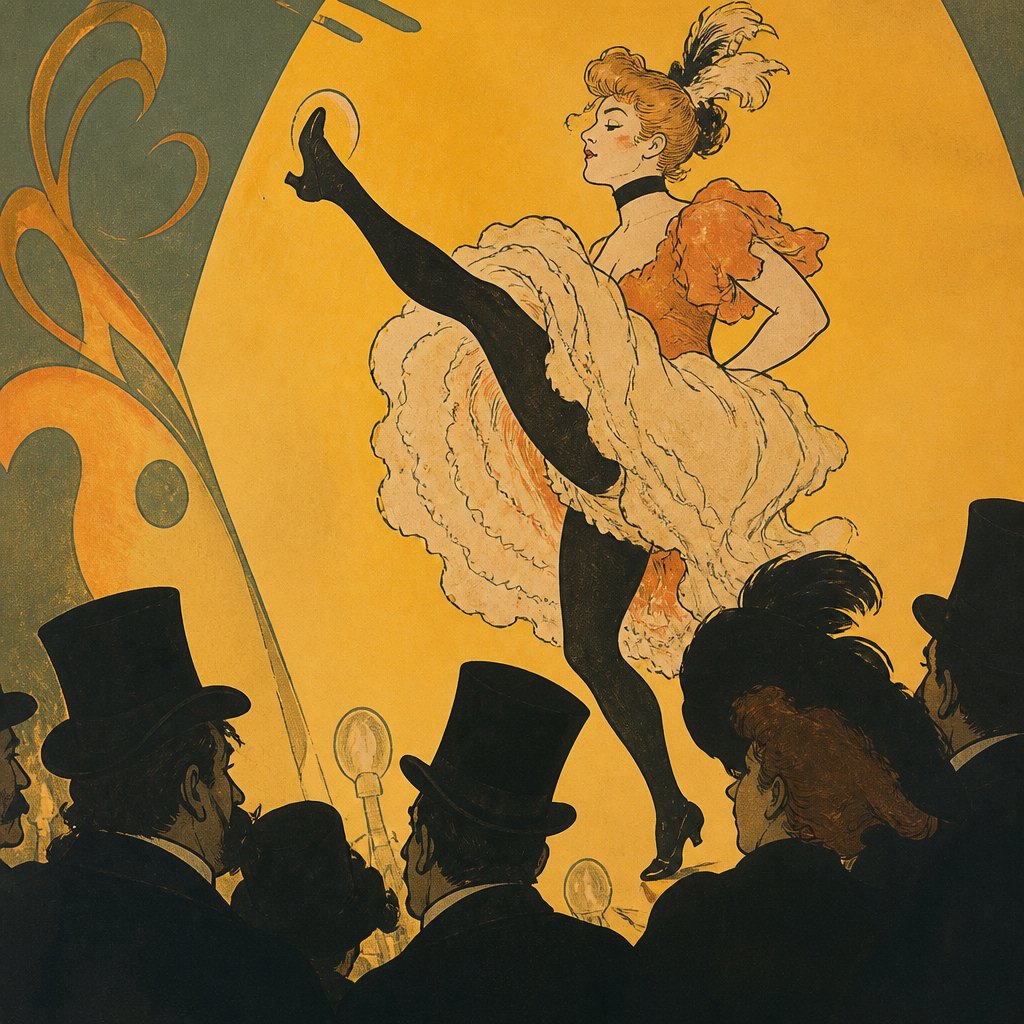 AI-generated
Create in the same spirit
Make Post Impressionism art of your own
This AI interpretation echoes the aesthetic world Henri de Toulouse-Lautrec worked in — it depicts no real artwork. Generate your own with the Post-Impressionism Art Style generator.
Open the Post-Impressionism Art Style generator →Legacy
Toulouse-Lautrec's posters turned commercial printing into a respected art form and set the template for graphic design well into the twentieth century, from Art Nouveau advertising to modern branding. His unsentimental, close-up view of nightlife and working women expanded what painting was allowed to look at seriously, influencing later chroniclers of urban life from Picasso's Blue Period to twentieth-century photojournalism. The Musée Toulouse-Lautrec in his native Albi holds the largest collection of his work. He remains a rare case of an artist whose fastest, most disposable commercial work—a poster meant to be pasted on a wall and forgotten—became his most enduring achievement.
Frequently asked questions
What is Toulouse-Lautrec famous for?
Toulouse-Lautrec is famous for his paintings and color lithograph posters of Montmartre nightlife, especially the Moulin Rouge, capturing dancers, singers, and performers in bold, flattened color and swift graphic line.
Where can I see Toulouse-Lautrec's work?
The Musée Toulouse-Lautrec in Albi, France, holds the largest collection. The Musée d'Orsay in Paris, the Art Institute of Chicago, and the Metropolitan Museum of Art also hold major paintings and posters.
What art movement was Toulouse-Lautrec part of?
He is usually grouped with Post-Impressionism, though he is best known for his own graphic style, which fused Impressionist-era subject matter with the flat color and bold outline of Japanese prints.
Why did Toulouse-Lautrec use a cane and walk with difficulty?
A childhood bone disorder caused his legs to break easily and then stop growing after two falls, leaving him an adult with a normal-sized torso and unusually short legs for the rest of his life.