 Famous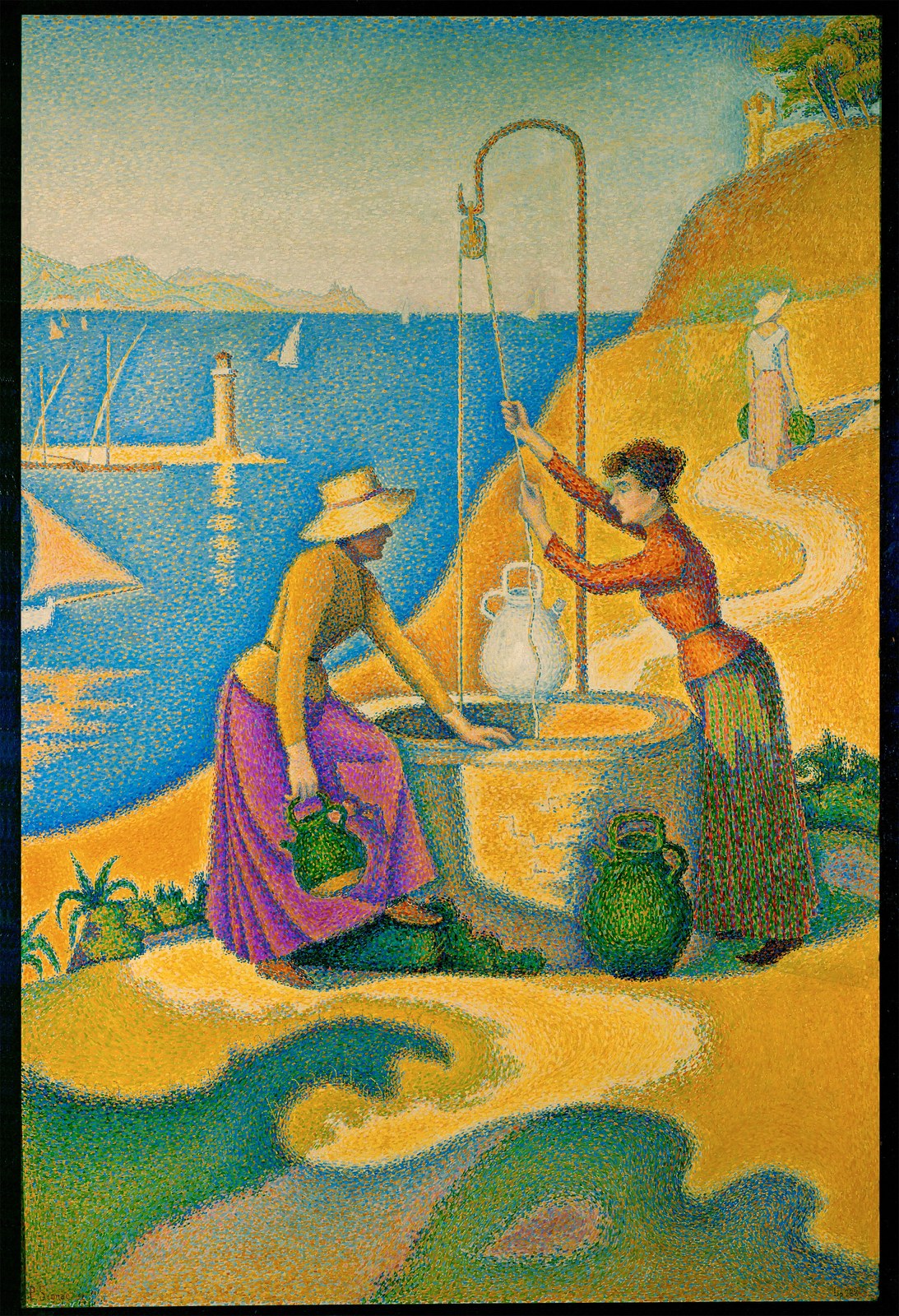
Paul Signac (1863–1935) was a French painter and theorist who, after Georges Seurat's early death, became the leading champion of Neo-Impressionism, carrying its pointillist technique forward into sunlit harbor scenes across France and the Mediterranean for over three decades.
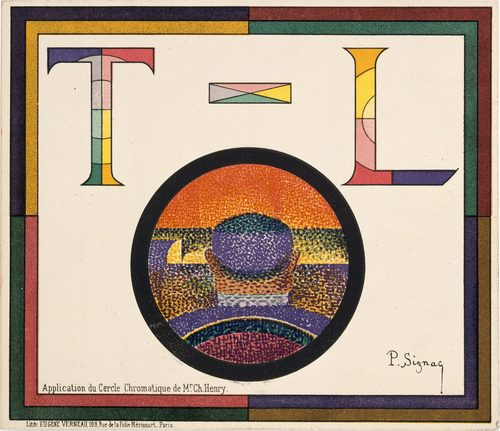
Self-taught and initially inspired by Monet, Signac met Seurat in 1884 and quickly adopted his systematic approach to color, becoming a close collaborator and, after Seurat's death in 1891, the movement's most visible advocate. Signac's 1899 treatise, D'Eugène Delacroix au néo-impressionnisme, laid out the movement's theoretical basis and influenced younger painters, including Henri Matisse during his own brief Neo-Impressionist phase.
An avid sailor, Signac worked increasingly from the water, painting the ports of Saint-Tropez, Venice, Rotterdam, and Constantinople in luminous, expansive dots larger and freer than Seurat's tight technique, closer to mosaic than to optical science. He also served for decades as president of the Société des Artistes Indépendants, supporting younger avant-garde painters and defending exhibition freedom. He died in Paris in 1935, having outlived Seurat by more than forty years and kept Neo-Impressionism alive well past its founding moment.
How to recognize a Signac
Large, mosaic-like dots
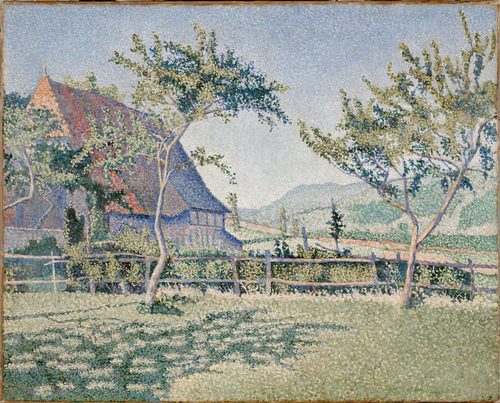
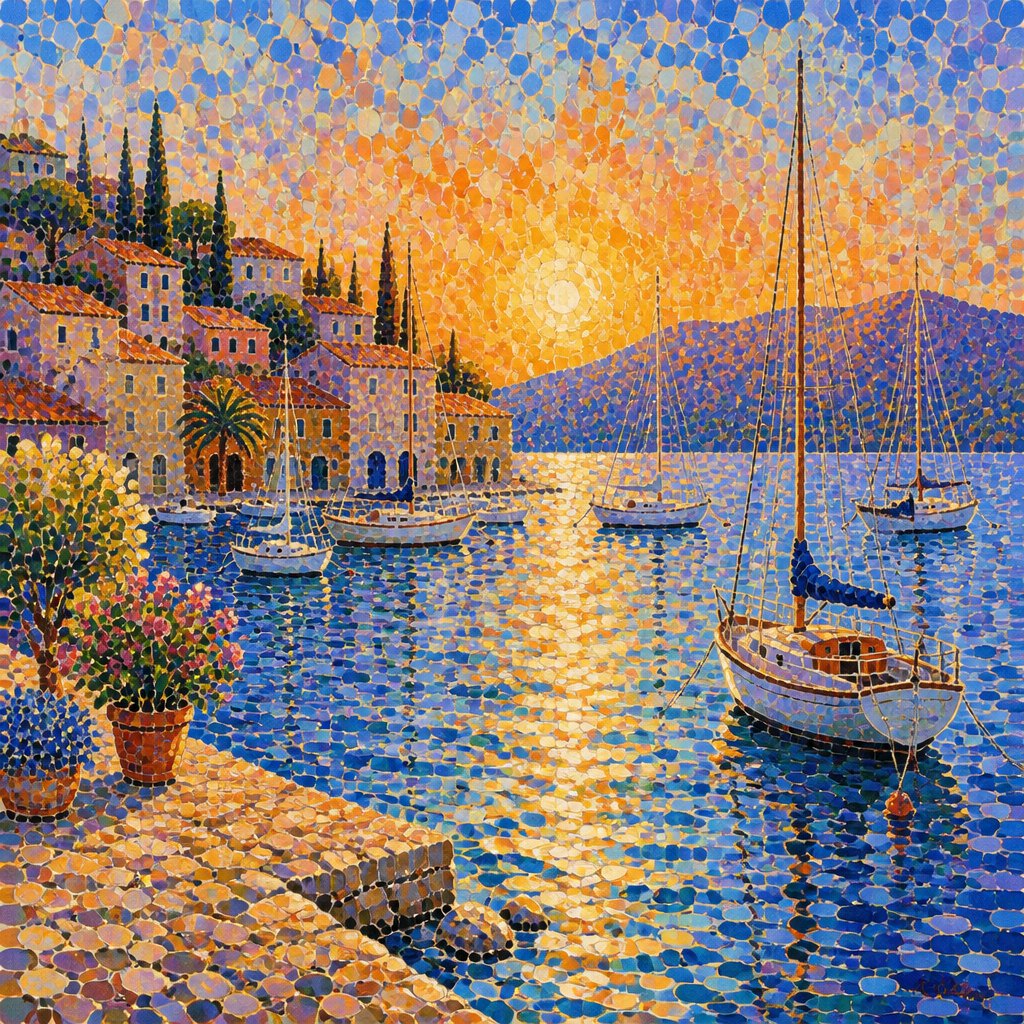
Signac's brushwork used bigger, more visible squares and dabs of color than Seurat's tight pointillism, closer to mosaic tesserae, giving his harbor scenes a bold, decorative shimmer rather than fine optical blending.
Luminous harbor scenes
Sailboats, quaysides, and Mediterranean light dominate his mature work, painted from direct experience as an avid sailor who moored in ports from Saint-Tropez to Venice to Constantinople, capturing water and sky in equally saturated color.
Bright, unmixed watercolor sketches
Alongside his oils, Signac made hundreds of loose, rapid watercolors on his travels, using pure washes of color to record light and atmosphere before working ideas up into larger studio paintings.
Complementary color contrast
Following Neo-Impressionist theory, Signac set warm and cool complementary colors—orange against blue, red against green—side by side in small units, trusting the viewer's eye to intensify their brightness together at a distance.
Rhythmic, patterned water
Reflections on water become abstract patterns of small colored strokes in his paintings, breaking up ripples and light into a decorative rhythm that borders on pure abstract pattern across the canvas.
Bold architectural framing
Signac often composed harbor views with strong diagonal masts, rigging, and quay lines cutting across a glowing sky, giving loosely painted scenes a firm, almost graphic structural skeleton beneath the color.
The life
Paul Signac was born in Paris in 1863 into a comfortable middle-class family. Largely self-taught as a painter, he was drawn early to Monet's Impressionism before meeting Georges Seurat in 1884 through the newly formed Société des Artistes Indépendants, an exhibiting society without a jury that the two men helped establish.
Seurat's systematic pointillist technique won Signac over immediately, and the two became close collaborators through the mid-1880s, developing Neo-Impressionist theory together. After Seurat's sudden death in 1891, Signac took up the movement's leadership, refining its technique into looser, larger, more decorative dots and publishing his influential 1899 book on Neo-Impressionist color theory, which shaped younger painters including a young Matisse.
An enthusiastic sailor from childhood, Signac increasingly painted from and about the water, keeping a boat and traveling to ports throughout France, Holland, and the Mediterranean, filling sketchbooks with rapid watercolors that fed his larger studio paintings. He led the Indépendants as president for nearly three decades, championing younger and more radical artists against academic hostility. Signac died in Paris in 1935, at 71, having spent a working life sustaining and evolving the movement he helped found.
Timeline
- 1863Born in Paris, France
- 1884Meets Georges Seurat; co-founds the Indépendants
- 1886Adopts pointillist technique fully
- 1891Becomes Neo-Impressionism's leader after Seurat's death
- 1892Settles part-time in Saint-Tropez
- 1899Publishes his Neo-Impressionist color theory treatise
- 1908Becomes president of the Indépendants
- 1935Dies in Paris
Most famous works
| Work | Date | Why it matters |
|---|---|---|
| The Papal Palace, Avignon | 1900 | A radiant, large-dotted view of the medieval palace across the Rhône, showing Signac's looser mature technique. |
| Portrait of Félix Fénéon | 1890 | A striking profile portrait of the critic who coined the term Neo-Impressionism, set against a swirling decorative background. |
| The Port of Saint-Tropez | 1901–1902 | One of many paintings of the harbor town Signac helped popularize among fellow artists as a summer retreat. |
| Women at the Well | 1892 | A rare figure composition combining classical pose with rigorous pointillist color, painted early in Signac's mature style. |
| Entrance to the Port of Marseilles | 1911 | A large, luminous harbor scene with bold sails and rigging, characteristic of his later Mediterranean work. |
| The Grand Canal (Venice) | 1905 | A shimmering view of Venetian water and architecture, painted during Signac's travels through Italian ports. |
 AI-generated
Create in the same spirit
Make Neo Impressionism art of your own
This AI interpretation echoes the aesthetic world Paul Signac worked in — it depicts no real artwork. Generate your own with the Pointillist Impressionism Art Style generator.
Open the Pointillist Impressionism Art Style generator →Legacy
Signac kept Neo-Impressionism alive and evolving for more than four decades after Seurat's death, and his writing on color theory became a bridge between nineteenth-century optical science and twentieth-century modernism, directly shaping Matisse's early move toward pure, unmixed color. As president of the Société des Artistes Indépendants, he gave younger and more radical painters, including future Fauves and Cubists, a place to exhibit outside academic jurors' control. His harbor paintings also helped popularize the French Riviera and Saint-Tropez as places for artists to live and work, a pull that still shapes how the region is painted and photographed today.
Frequently asked questions
What is Paul Signac famous for?
Signac is famous for carrying forward Georges Seurat's pointillist technique after Seurat's death, applying it in bolder, larger dots to sunlit harbor scenes, and for his influential writings on Neo-Impressionist color theory.
Where can I see Paul Signac's paintings?
Major works are held at the Musée d'Orsay in Paris, the Museum of Modern Art in New York, the Art Institute of Chicago, and the Signac collections at the Musée de l'Annonciade in Saint-Tropez.
What art movement was Signac part of?
Signac was a founder and later leader of Neo-Impressionism, also called Pointillism or Divisionism, which he helped define through both his paintings and his 1899 theoretical book on color.
Was Paul Signac a student of Georges Seurat?
Not formally—Signac was largely self-taught. But after meeting Seurat in 1884, he adopted and adapted Seurat's pointillist method so closely that he became the movement's leading practitioner after Seurat died in 1891.