 Famous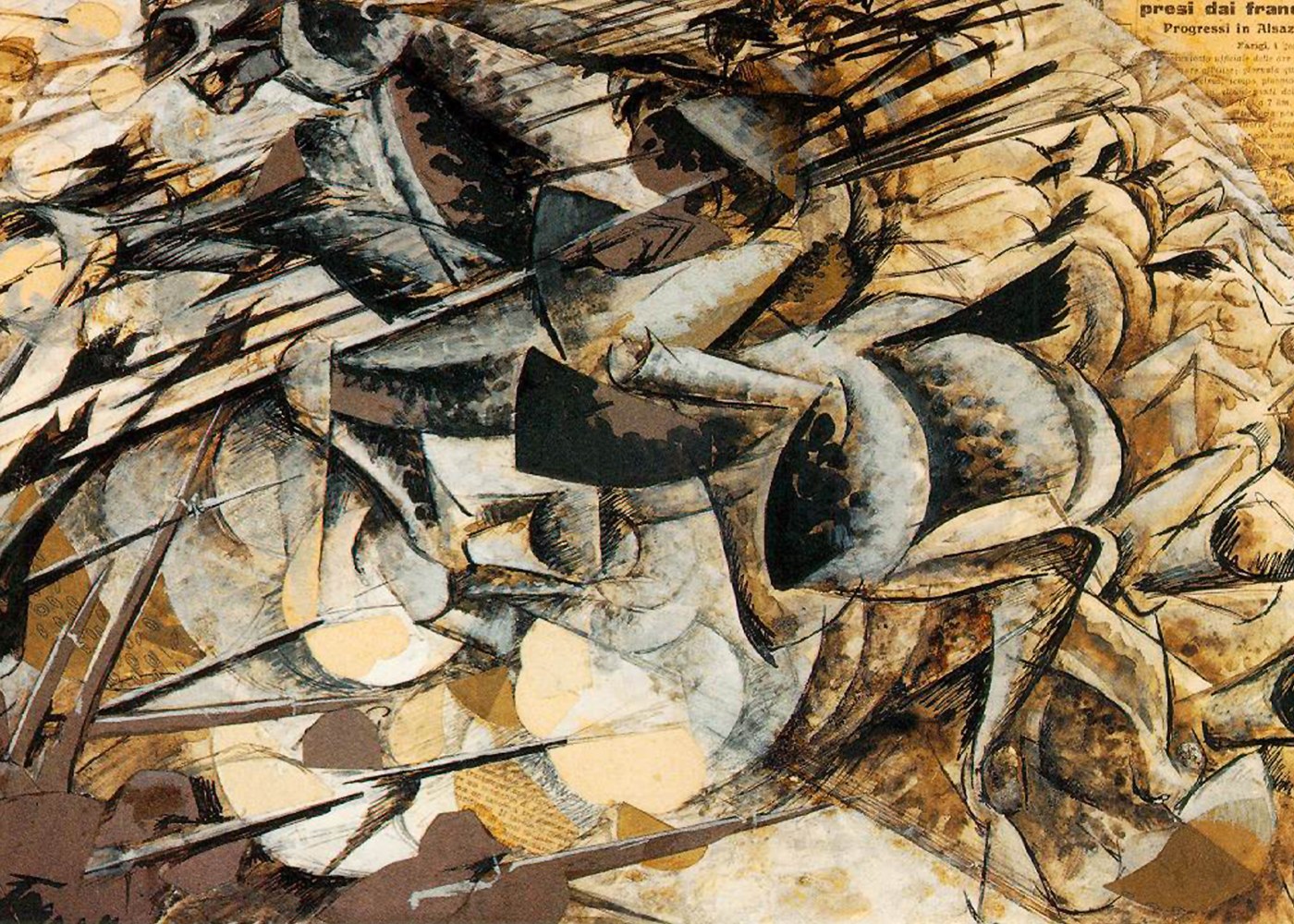
Umberto Boccioni (1882–1916) was an Italian painter and sculptor, the most theoretically driven and artistically accomplished member of the Futurist movement, who translated its cult of speed, machinery, and modern urban energy into some of the twentieth century's most dynamic images of motion.
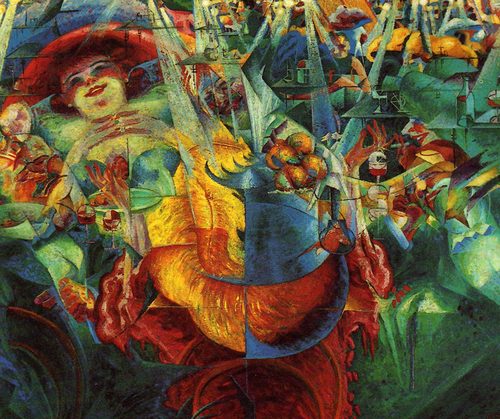
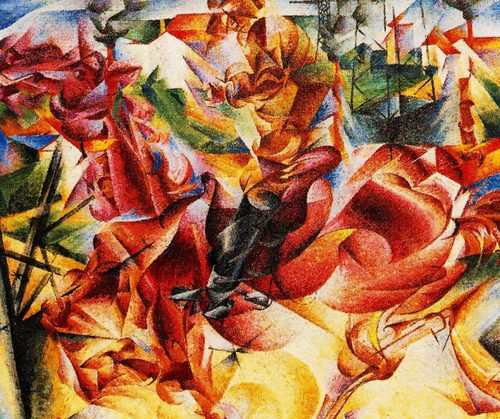
Born in Reggio Calabria, Boccioni trained in Rome and worked briefly in a commercial studio before meeting Gino Severini and studying under the Divisionist painter Giacomo Balla, whose broken brushwork shaped his early technique. In 1910 Boccioni co-signed the Futurist Painting Manifesto with Balla, Severini, Carlo Carrà, and Luigi Russolo, and quickly became the group's leading painter, producing canvases that shattered figures and streets into overlapping planes of force meant to convey motion, noise, and simultaneity rather than a frozen instant.
From 1912 Boccioni turned increasingly to sculpture, publishing a Futurist sculpture manifesto and producing bronze figures that fused the human body with its own implied movement through space. Volunteer service in the First World War ended his career abruptly: Boccioni died in 1916 near Verona after being thrown from a horse during a military exercise, at thirty-three.
How to recognize a Boccioni
Lines of force
Boccioni broke figures and objects into radiating, overlapping planes he called "lines of force," a technique meant to show not a body's shape but the energy it exerts on the space and air around it.
Divisionist color roots
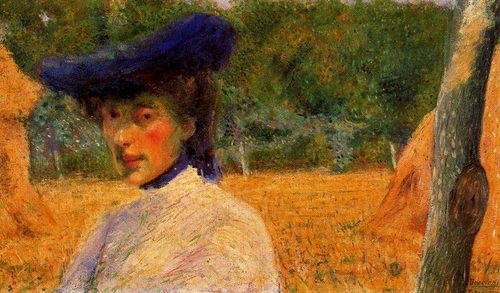
His early training in Divisionism left a habit of small, separate strokes of complementary color, which he sped up and fractured under Futurism into a shimmering, vibrating surface.
Form fused with motion
In sculpture, Boccioni cast the human figure as if caught mid-stride and mid-dissolve, form and air merging into a single continuous, wind-shaped silhouette rather than a static study.
Modern urban subjects
Trams, construction sites, factories, and crowded streets replace the pastoral and academic subjects of traditional painting, reflecting the movement's fascination with industrial machinery and the noise of the modern city.
Simultaneity of viewpoint
Boccioni often layered multiple moments or angles of a single subject into one canvas, so a rider, a building, and passing crowds appear to exist in the same instant.
Theoretical, manifesto-driven practice
More than most Futurists, Boccioni paired every stylistic leap with written theory, co-authoring painting and sculpture manifestos that turned his canvases and bronzes into deliberate demonstrations of Futurist ideas.
The life
Umberto Boccioni was born in 1882 in Reggio Calabria and spent a peripatetic childhood before settling in Rome, where he studied art and briefly worked in a commercial poster studio. There he met Gino Severini, and both came under the influence of Giacomo Balla, who introduced them to Divisionist technique — painting in small strokes of separated color.
Boccioni moved to Milan around 1907 and, drawn to the poet Filippo Tommaso Marinetti's Futurist movement, became a driving force behind its visual arm. In 1910 he co-signed the Manifesto of Futurist Painters and the Technical Manifesto of Futurist Painting, and over the next two years produced his best-known canvases, including a series depicting the emotional states of departure and arrival at a train station.
From 1912 Boccioni increasingly turned to sculpture, publishing the Technical Manifesto of Futurist Sculpture and modeling bronze figures that fused body and motion into a single dynamic form, his most enduring contribution to twentieth-century art. When Italy entered the First World War, Boccioni, an ardent interventionist, volunteered for military service. He survived combat only to die in an accident: thrown from a horse during a cavalry training exercise near Verona, he succumbed to his injuries on 17 August 1916, at thirty-three.
Timeline
- 1882Born in Reggio Calabria, Italy
- 1901Moves to Rome to study art
- 1907Settles in Milan
- 1910Co-signs the Futurist Painting Manifesto
- 1911Paints the States of Mind triptych
- 1912Publishes the Technical Manifesto of Futurist Sculpture
- 1913Completes Unique Forms of Continuity in Space
- 1915Volunteers for military service in World War I
- 1916Dies near Verona after a training accident, aged thirty-three
Most famous works
| Work | Date | Why it matters |
|---|---|---|
| The City Rises | 1910 | A monumental scene of laborers and a rearing horse fusing collective human energy with industrial construction. |
| States of Mind: The Farewells | 1911 | Part of a triptych rendering emotional experience at a train station through fractured, simultaneous imagery. |
| Unique Forms of Continuity in Space | 1913 | His bronze masterpiece, a striding figure dissolved into wind-shaped planes; now Italy's Futurist icon. |
| Dynamism of a Cyclist | 1913 | A canvas fracturing a cyclist's motion into overlapping, radiating lines of force. |
| Development of a Bottle in Space | 1913 | A sculpture translating a still-life object into interlocking Futurist planes of form. |
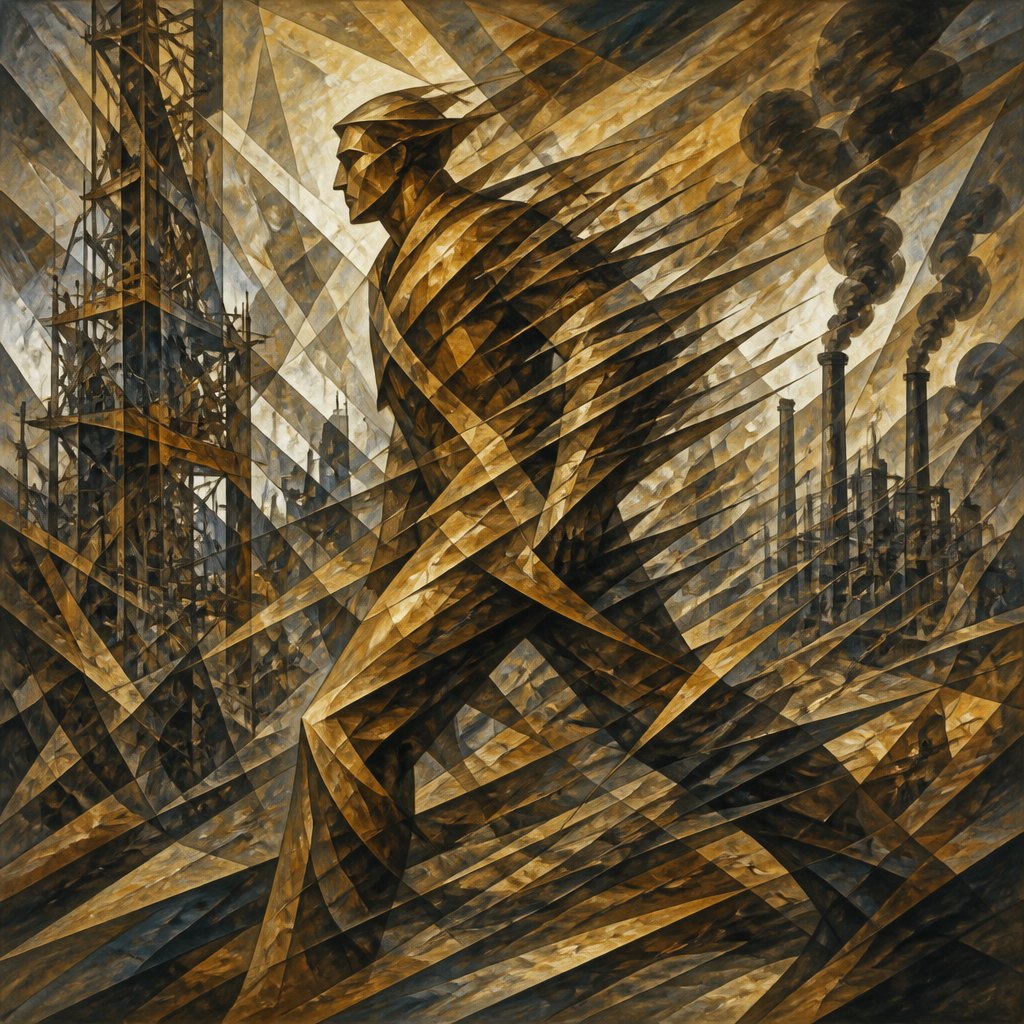 AI-generated
Create in the same spirit
Make Futurism art of your own
This AI interpretation echoes the aesthetic world Umberto Boccioni worked in — it depicts no real artwork. Generate your own with the Futurism Art Style generator.
Open the Futurism Art Style generator →Legacy
Boccioni's early death cut short Futurism's most capable artist, but his ideas about motion, simultaneity, and the fusion of form and space shaped sculpture and painting well beyond Italy. Unique Forms of Continuity in Space became one of the twentieth century's most reproduced sculptures, later appearing on Italian coinage as a national symbol of modernity. His manifestos gave later movements, from Vorticism to Constructivism, a working vocabulary for depicting speed and industrial energy. Major holdings at Milan's Museo del Novecento, MoMA, and the Metropolitan Museum keep his shattering, forward-driving vision of the machine age in constant public view.
Frequently asked questions
What is Umberto Boccioni famous for?
Boccioni is famous for Futurist paintings and sculptures that fracture bodies and cities into dynamic lines of motion, most famously the bronze *Unique Forms of Continuity in Space* (1913).
Where can I see Boccioni's work?
Major works are held at Milan's Museo del Novecento, the Museum of Modern Art and Metropolitan Museum in New York, and Italy's Galleria Nazionale d'Arte Moderna in Rome.
What art movement did Boccioni belong to?
Boccioni was a leading painter, sculptor, and theorist of Italian Futurism, co-signing its founding manifestos in 1910 and becoming the movement's most influential visual artist.
How did Umberto Boccioni die?
Boccioni died in 1916 near Verona, Italy, after being thrown from a horse during a military training exercise while serving in the First World War; he was thirty-three.