 Famous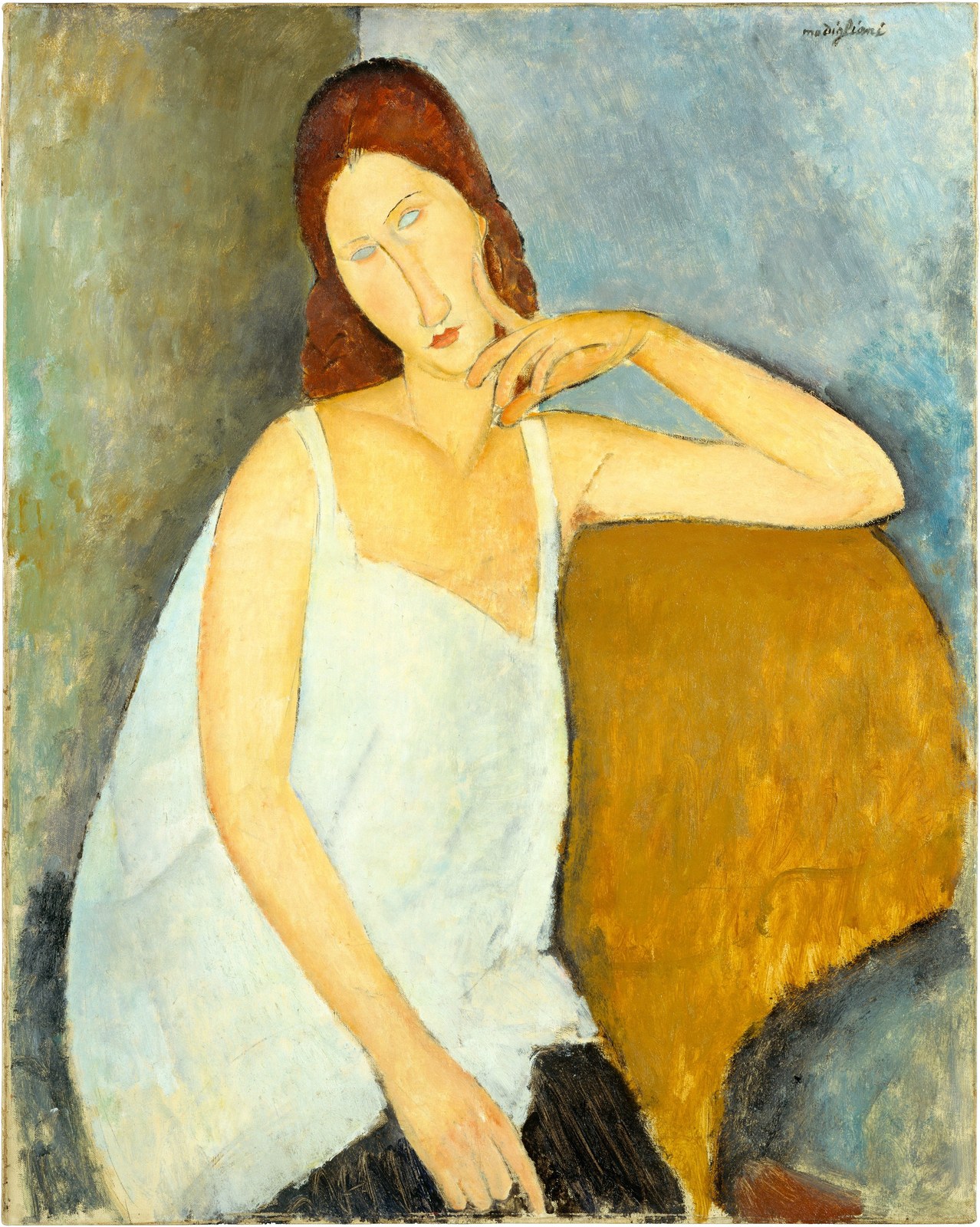
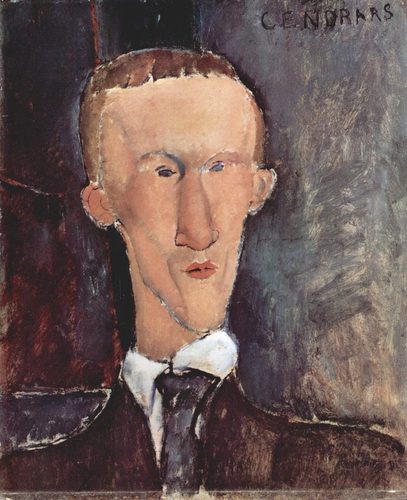
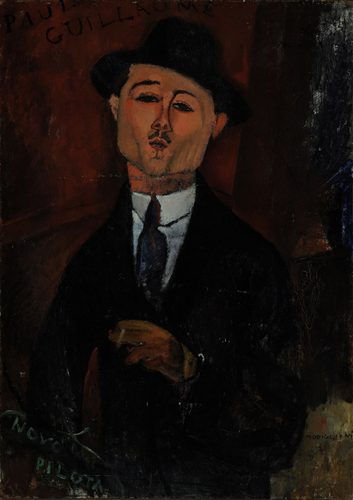
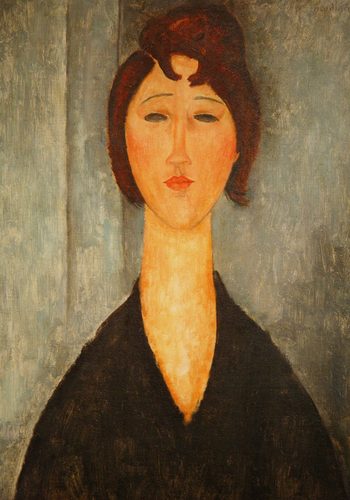
Amedeo Modigliani (1884–1920) was an Italian painter and sculptor whose elongated, mask-like portraits — long necks, tilted heads, almond eyes often left blank — made him one of the most recognizable figures of early twentieth-century Paris. Born in Livorno to a Sephardic Jewish family, he trained in Italy before settling in Paris in 1906 — first in Montmartre, later Montparnasse — where he fell in with Picasso, Brancusi, and the international bohemia gathered there. He first pursued sculpture, carving elongated stone heads influenced by African and Khmer art before chronic ill health forced him back to painting around 1915. His mature portraits and nudes fuse that sculptural simplification with warm, close color, painted quickly and with evident confidence in a compressed handful of productive years. He lived hard, drinking and using drugs heavily, and sold little in his lifetime beyond a small circle of dealers and friends. Tuberculosis, worsened by that lifestyle, killed him in January 1920 at thirty-five; his devoted partner Jeanne Hébuterne, pregnant with their second child, took her own life the following day.
How to recognize a Modigliani
Elongated necks and heads
Modigliani stretches necks, faces, and torsos into long, graceful columns, a habit carried over from his years as a sculptor, giving even a simple seated portrait an air of calm, almost architectural elegance.
Blank almond eyes
Many sitters' eyes are left as flat, unpainted almonds of gray-blue or simply blank, giving faces a masklike, inward stillness rather than direct psychological address, calm and unreadable no matter how close you look.
Warm, simplified skin tones
Flesh is rendered in smooth, warm ochre and amber, blended with almost no visible brushwork, so bodies read as continuous sculpted surfaces rather than a patchwork of light and shadow.
Tilted, off-center heads
Heads are frequently tilted at a gentle angle on their long necks, a small asymmetry that keeps otherwise still, frontal poses from feeling stiff or purely decorative, lending each portrait a quiet, private mood.
Confident economy of line
A single sure contour often defines nose, brow, and jaw at once, drawn without visible correction, the mark of a painter who had already worked the same forms in stone.
Reclining figure compositions
His reclining figures fill the canvas edge to edge with warm color and a calm, frank gaze, a compositional boldness that scandalized his only solo show and still feels startlingly modern today.
The life
Modigliani was born in Livorno, Italy, in 1884 to a cultured Sephardic Jewish family that had recently lost its fortune. Chronic illness marked him early — pleurisy and typhoid as a boy, then a tuberculosis diagnosis around age sixteen that shadowed the rest of his life. He trained in Florence and Venice before moving to Paris in 1906, settling among the artists of Montparnasse.
In Paris he first devoted himself to sculpture, carving a series of elongated stone heads inspired by African masks and Khmer sculpture that he considered his true calling, until the physical toll of stone dust and his fragile lungs forced him back to painting around 1915. Working fast and living hard on alcohol, hashish, and little money, he produced the elongated portraits of Montparnasse figures — dealers, lovers, fellow artists — that define his reputation.
His one solo exhibition, in 1917, was shut down by police over the frankness of the works on display. Real recognition came only after his death: tuberculosis and years of neglect killed him in January 1920, and his partner Jeanne Hébuterne, pregnant and grieving, died by suicide the next day.
Timeline
- 1884Born in Livorno, Italy
- 1900Contracts tuberculosis at sixteen
- 1906Moves to Paris, first settling in Montmartre
- 1909Devotes himself chiefly to stone sculpture
- 1915Returns mainly to painting as health declines
- 1917Sole solo exhibition closed by police
- 1920Dies in Paris of tuberculosis at thirty-five
Most famous works
| Work | Date | Why it matters |
|---|---|---|
| Reclining Nude | 1917 | One of his frank, full-length nudes that scandalized his only solo show and later became among the most expensive paintings ever sold. |
| Jeanne Hébuterne | c. 1918–19 | Repeated portraits of his partner and muse, her long neck and tilted head among his most tender and personal images. |
| Head | c. 1911–12 | A limestone carving from his intense sculptural period, elongated and mask-like, showing the African and Khmer influences behind his painted style. |
| Portrait of Jean Cocteau | 1916 | A sharp character study of the writer, reduced to essential lines and a wry, knowing expression. |
| Portrait of Chaim Soutine | 1917 | A warm, sympathetic portrait of a fellow struggling painter, part of Modigliani's ongoing gallery of Montparnasse's bohemian circle. |
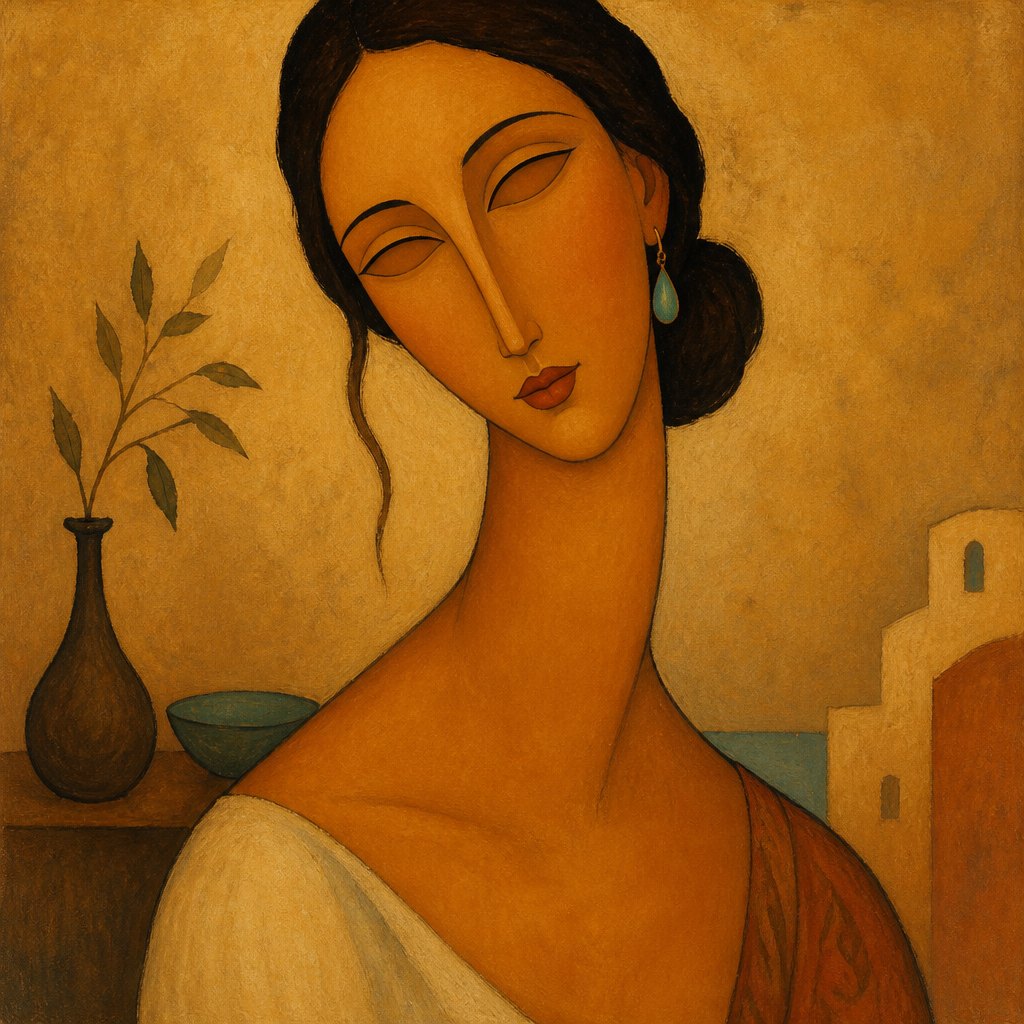 AI-generated
Create in the same spirit
Make Expressionism art of your own
This AI interpretation echoes the aesthetic world Amedeo Modigliani worked in — it depicts no real artwork. Generate your own with the Expressionism Art Style generator.
Open the Expressionism Art Style generator →Legacy
Modigliani's fusion of sculptural simplification with warm, direct color gave twentieth-century portraiture a new kind of shorthand — a few confident lines standing in for a whole likeness — that later illustrators and figurative painters still borrow. His elongated forms echo in fashion drawing and graphic design as much as in fine art, and his brief, hard-lived Montparnasse story became one of modern art's defining legends of bohemian poverty followed by posthumous fortune. Auction prices for his work now rank among the highest ever paid for paintings, a late irony for a painter who sold almost nothing while alive. You feel him now in any portrait that trades detail for pure, graceful line.
Frequently asked questions
What is Amedeo Modigliani famous for?
Modigliani is famous for elongated portraits and nudes with long necks, tilted heads, and mask-like almond eyes, painted in Montparnasse in the years before his early death.
Where can I see Modigliani's paintings?
Major holdings are at the Musée de l'Orangerie and Centre Pompidou in Paris, New York's Museum of Modern Art, and the Barnes Foundation in Philadelphia.
How did Amedeo Modigliani die?
Modigliani died in Paris in January 1920 of tubercular meningitis, worsened by years of poverty, heavy drinking, and drug use, at the age of thirty-five.
What art movement was Modigliani part of?
Modigliani worked outside any single movement but is generally grouped with Expressionism and the School of Paris, the loose community of foreign-born artists in early 1900s Montparnasse.