 Famous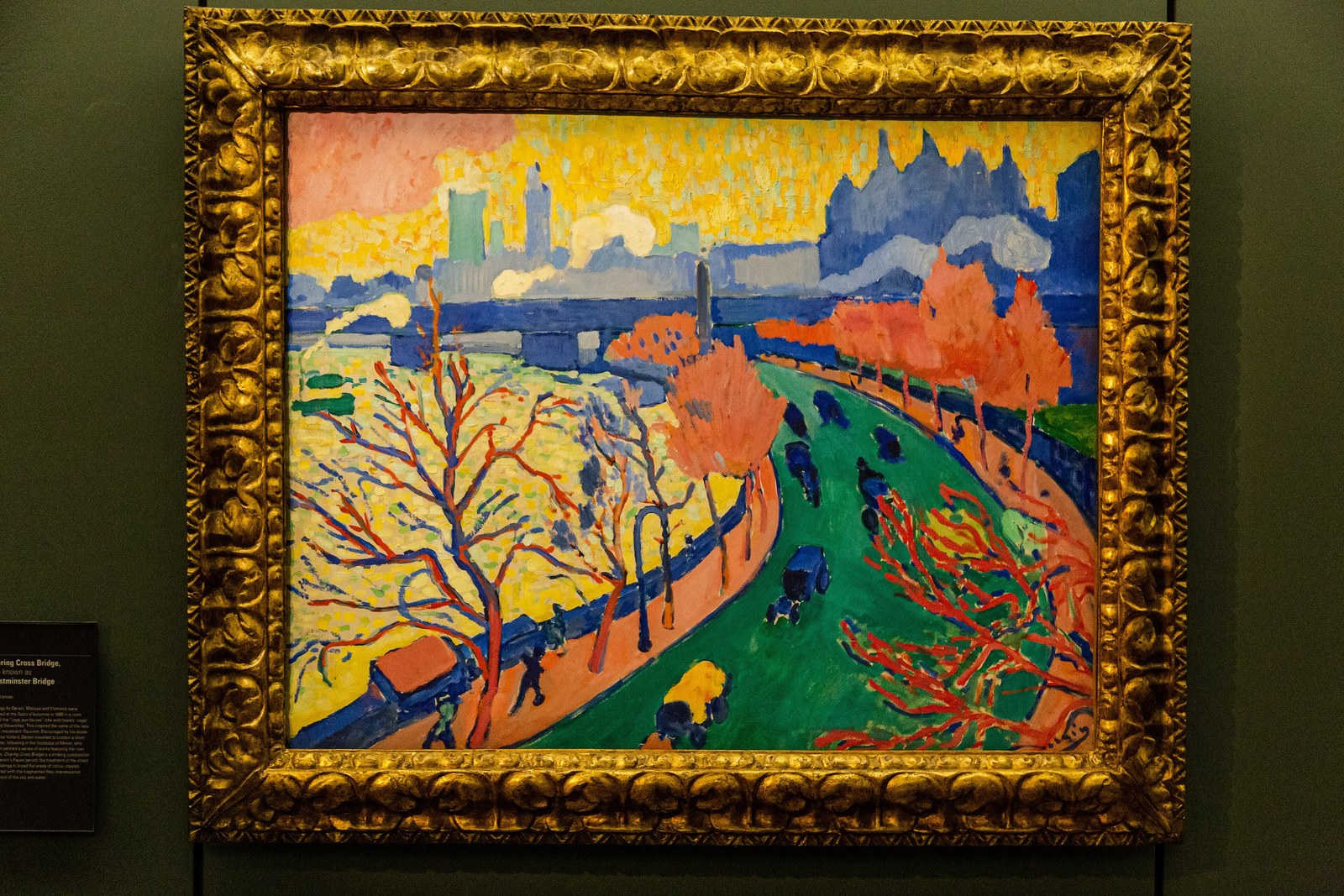
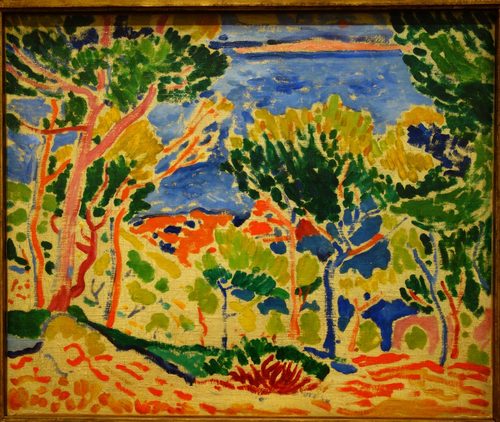
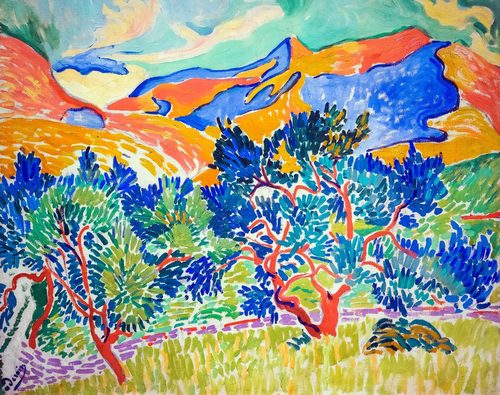
André Derain (1880–1954) was a French painter who, alongside Henri Matisse, helped launch Fauvism in 1905, one of the twentieth century's first great color revolutions. He met Matisse at an art school in Paris and, with his friend Maurice de Vlaminck, developed a shared taste for painting straight from vivid, unmixed tubes of pigment rather than observed local color. His 1905 stay in the fishing port of Collioure with Matisse produced landscapes so saturated in unnatural reds, greens, and blues that critics grouped their work under the mocking label "fauves," or wild beasts. A 1906 commission sent him to London, where he painted a celebrated series reimagining the Thames in the same explosive palette. Fauvism itself was short-lived, and by the 1910s Derain had turned toward a darker, more classical and Cubist-influenced style, later moving into a conservative, museum-schooled realism that never regained his early acclaim. His reputation suffered lasting damage after he traveled to Germany in 1941 on a Nazi-sponsored cultural trip during the occupation of France, a decision that shadowed his final years.
How to recognize a Derain
Explosive unmixed color
Derain applies pure, saturated color straight from the tube — reds, oranges, and greens that have little to do with a scene's actual local color — building form through contrast rather than gradual shading.
Short, choppy brushstrokes
His Fauvist canvases are built from quick, visible dabs and dashes rather than blended paint, giving water, foliage, and sky a restless, flickering surface energy that never quite settles into stillness.
Riverbank and harbor views
Ports, riverbanks, and bridges recur throughout his Fauvist period, especially Collioure's harbor and London's Thames, ordinary working waterways transformed by extraordinary color into scenes that feel closer to celebration than documentation.
Bold outlined forms
Objects are often ringed in dark or contrasting outline even amid the wild color, a habit that anchors the compositions and hints at the more structured painter he would later become.
Later classical retreat
After Fauvism, his palette darkened and his forms grew heavier and more traditionally modeled, drawing on Old Master composition in a deliberate turn away from radical color that puzzled former admirers.
Mask and primitivist influence
Like his Paris circle, Derain collected African and Oceanic masks, and their simplified, angular features surface in the flattened faces of his figure paintings, especially in his brief Cubist-influenced period.
The life
Derain was born in Chatou, near Paris, and studied engineering before his parents allowed him to pursue painting, enrolling at the Académie Carrière, where he met Matisse. A chance meeting on a train with Maurice de Vlaminck led to a shared studio in Chatou and a mutual push toward ever more intense, unnatural color, the seed of what became Fauvism.
The summer of 1905, spent painting alongside Matisse in the Mediterranean port of Collioure, produced the movement's defining works, shown that autumn at the Salon d'Automne to widespread ridicule and the coining of the "fauves" name. A dealer's commission sent Derain to London in 1906 and 1907 to paint a series of views along the Thames, among his most celebrated pictures.
Fauvism dissolved within a few years as its members scattered toward other styles, and Derain moved through a Cubist-influenced phase before settling into a darker, classically inspired realism that occupied the rest of his long career, alongside stage design and illustration. His 1941 acceptance of a Nazi-organized trip to Germany, intended as cultural propaganda, badly damaged his standing in postwar France. He continued working from his home outside Paris until his death in 1954, after being struck by a car.
Timeline
- 1880Born in Chatou, near Paris
- 1898Meets Matisse at the Académie Carrière
- 1900Begins painting alongside Maurice de Vlaminck in Chatou
- 1905Paints in Collioure with Matisse, launching Fauvism
- 1906Travels to London for a Thames painting series
- 1910Moves toward Cubist-influenced, then classical style
- 1941Joins a Nazi-sponsored cultural trip to Germany
- 1954Dies near Paris after a car accident
Most famous works
| Work | Date | Why it matters |
|---|---|---|
| Charing Cross Bridge, London | 1906 | One of his acclaimed Thames series, the bridge and river dissolved into bands of unnatural orange and blue. |
| The Turning Road, L'Estaque | 1906 | A Fauvist landscape of a curving Provençal road in slabs of pure, unblended color. |
| Mountains at Collioure | 1905 | Painted during the pivotal summer with Matisse, one of the works that gave Fauvism its name. |
| The Pool of London | 1906 | A bustling river scene rendered in saturated, non-naturalistic color, among his most reproduced London views. |
| Bal à Suresnes | 1903 | An early dance-hall scene showing his interest in modern urban leisure before his Fauvist breakthrough. |
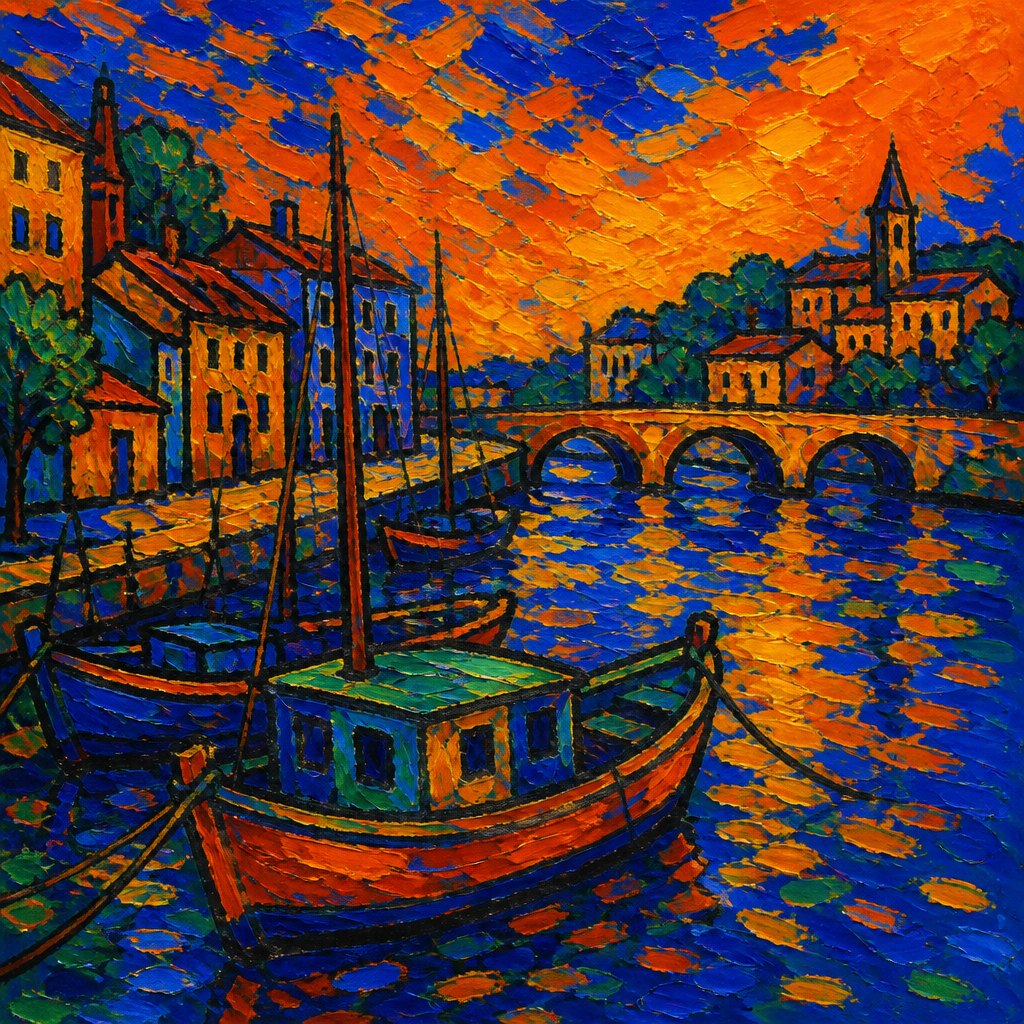 AI-generated
Create in the same spirit
Make Fauvism art of your own
This AI interpretation echoes the aesthetic world André Derain worked in — it depicts no real artwork. Generate your own with the Fauvism Art Style generator.
Open the Fauvism Art Style generator →Legacy
Derain's role in launching Fauvism, however briefly he stayed within it, helped prove that color could be pushed past observed reality without losing coherence, a lesson later abstract painters extended much further. His London series remains a touchstone for painters chasing atmosphere through pure color rather than fact. His own later retreat into conservative realism, and his damaging wartime choices, complicate a legacy that briefly burned as bright as any in modern art; historians still weigh his few radical years against the caution and compromise that followed. You feel his early work now in any cityscape or landscape that lets color stand in for accurate description.
Frequently asked questions
What is André Derain famous for?
Derain is famous for co-founding Fauvism with Henri Matisse in 1905, painting landscapes and cityscapes in explosive, unnatural color, most notably a celebrated series of London's Thames.
Where can I see André Derain's paintings?
Major Fauvist works are held at the Musée d'Art Moderne de la Ville de Paris, London's Courtauld Gallery, MoMA, and the Metropolitan Museum of Art.
How long did Derain paint in the Fauvist style?
Derain's Fauvist period lasted only a few intense years, roughly 1905 to 1907, before he moved toward Cubist and then more classical, traditional styles.
What art movement was André Derain part of?
Derain co-founded Fauvism alongside Matisse and Vlaminck, though he later moved through Cubist influence into a conservative, classically grounded realism.