 Famous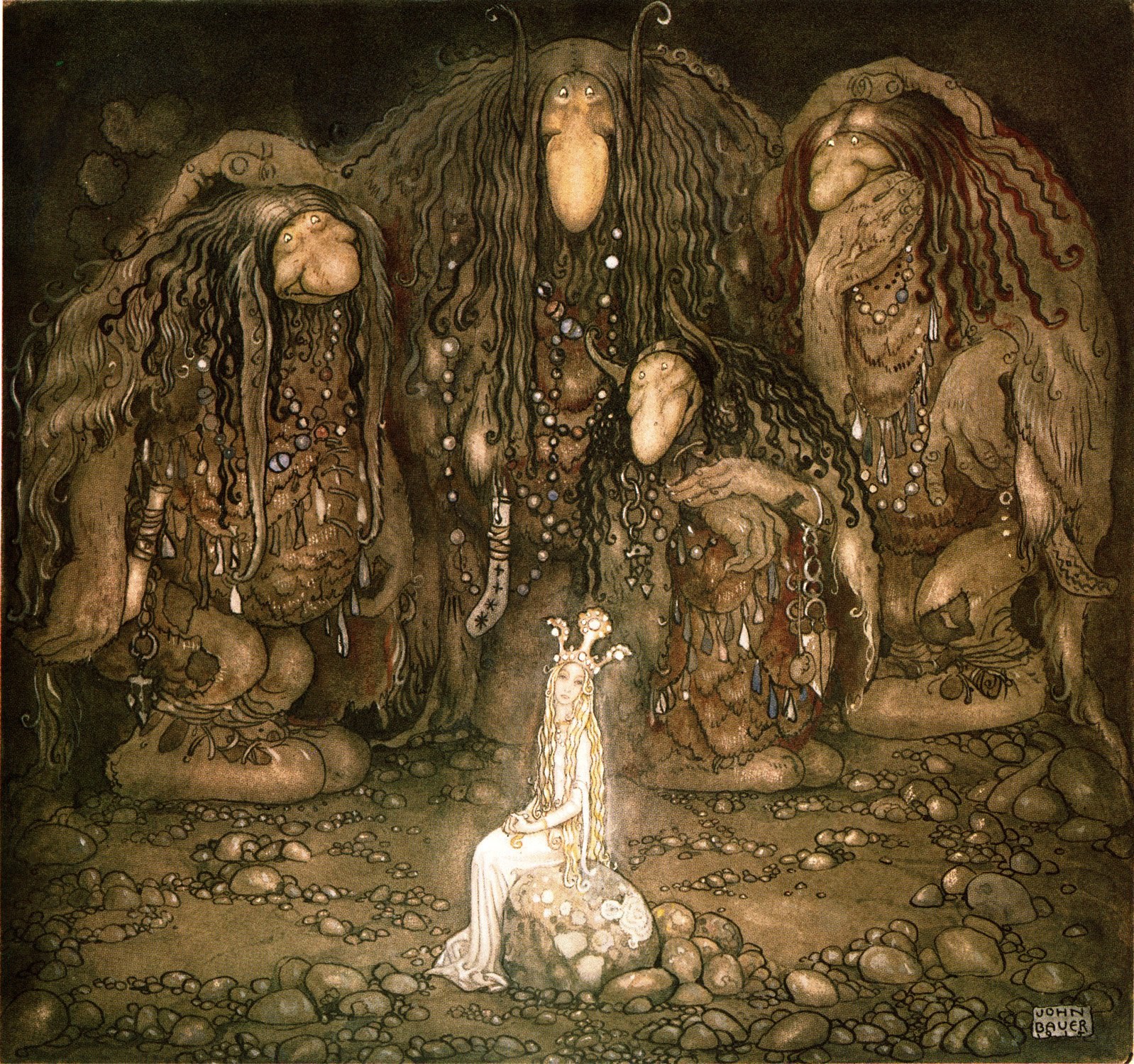
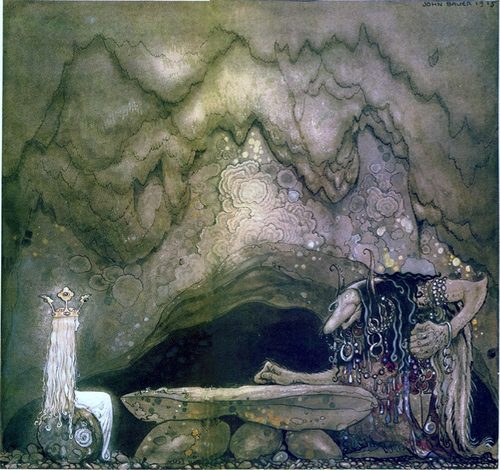
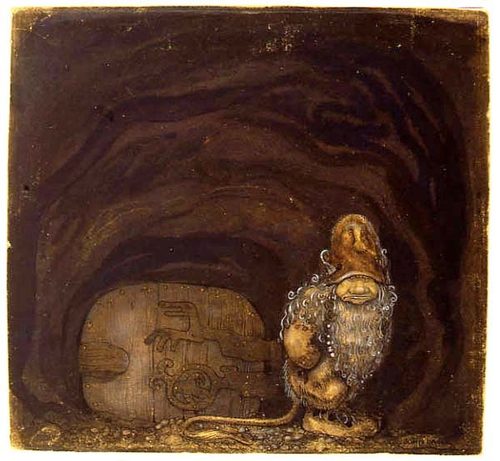
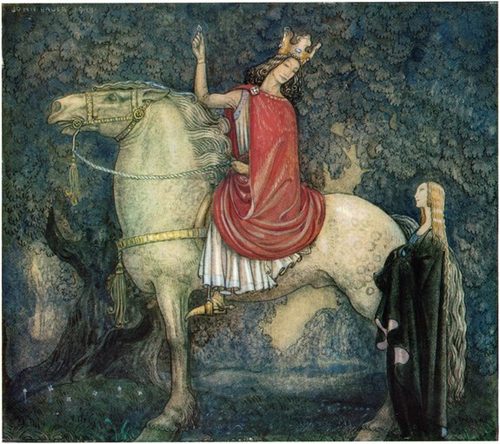
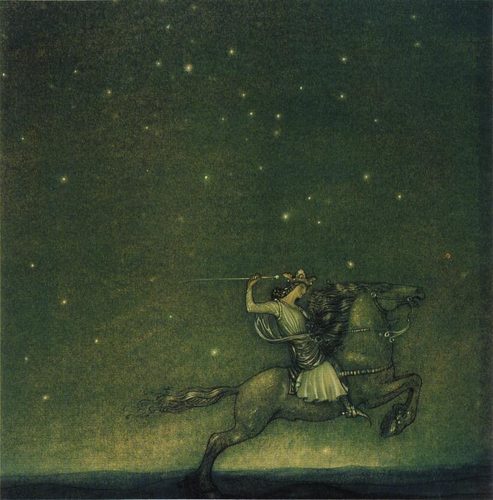
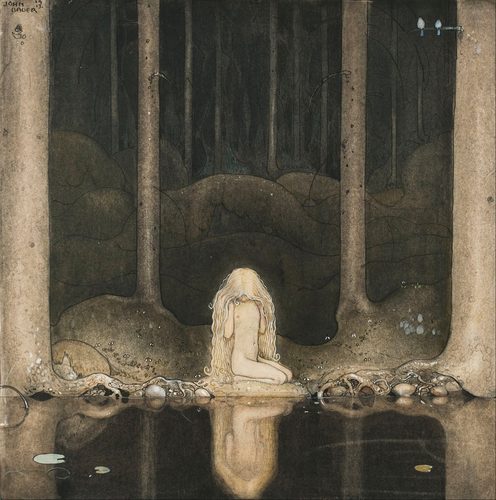
John Bauer (1882–1918) was a Swedish artist whose paintings of trolls, forests, and fairy-tale princesses gave visual form to Scandinavian folklore and remain the way Swedes picture their own myths. Working chiefly in watercolor and gouache, he set his stories in the deep pine forests of his native Småland, rendered in somber greens and blues broken by pockets of golden light.
Bauer trained at the Royal Swedish Academy of Arts in Stockholm and traveled through Lapland, an experience that shaped his sense of Nordic landscape. He found his signature subject in illustrating Swedish and German folktales, most famously as the principal illustrator, from 1907 onward, of the annual anthology Bland tomtar och troll (Among Gnomes and Trolls), where his massive, moss-covered trolls loom over tiny human figures with a mixture of menace and melancholy.
His career, and life, ended in 1918 when the steamship carrying him, his wife Ester, and their young son sank in a storm on Lake Vättern. He was thirty-six. His troll paintings remain foundational to how Swedish folklore is visualized to this day.
How to recognize a Bauer
Giant, mossy trolls
Bauer's trolls are huge, stooped, and covered in moss and lichen, their forms the color and texture of stone or tree bark, often shown gazing sorrowfully rather than menacingly at the tiny humans who wander into their forest.
Towering pine forests
Dense, vertical stands of pine trees fill his compositions floor to ceiling, their trunks rising like columns and closing off the sky, giving even daylight scenes a hushed, cathedral-like enclosure.
Small, luminous princesses
Against the scale of his trolls, Bauer painted slight, fair-haired princesses in pale dresses, their small size and stillness emphasizing how vast and old the forest world around them feels.
Muted forest palette
He worked in somber blue-greens, mossy browns, and charcoal shadow, reserving brighter gold and rose tones for small pockets of magic light, so color itself signals where enchantment breaks through the gloom.
Watercolor and gouache
Bauer favored transparent watercolor washes built up in layers, sometimes strengthened with opaque gouache highlights, giving his forests a soft, atmospheric depth rather than the hard outlines of graphic illustration.
National Romantic mood
His forests draw on Sweden's National Romantic movement, treating the northern landscape itself as a character—ancient, brooding, and slightly supernatural—rather than mere backdrop to human or troll figures moving through it.
The life
John Bauer was born in Jönköping, in the Swedish province of Småland, in 1882, and grew up close to the forests that would define his art. He studied at the Royal Swedish Academy of Arts in Stockholm, and in his twenties traveled to Lapland in northern Sweden, an encounter with the stark Nordic landscape that deepened his feeling for scale and wilderness.
He found his subject illustrating folklore: Swedish legends of trolls and forest spirits, alongside fairy tales collected from wider Northern European tradition. From 1907 he became the principal illustrator of Bland tomtar och troll (Among Gnomes and Trolls), a Christmas anthology that appeared annually and made his brooding, moss-covered trolls and wide-eyed princesses part of Swedish visual culture. He also produced independent paintings and murals, and illustrated other Scandinavian folktale collections, steadily refining a watercolor technique that balanced somber shadow with pockets of glowing light.
In 1918, at the height of his powers, Bauer, his wife Ester, and their young son Bengt boarded the steamship Per Brahe to travel across Lake Vättern. The ship sank in a sudden storm, and all aboard were lost. Bauer was thirty-six. He left behind a compact but enormously influential body of work that continues to shape how trolls and Nordic forests are imagined.
Timeline
- 1882Born in Jönköping, Sweden.
- 1900Begins studies at the Royal Swedish Academy of Arts, Stockholm.
- 1904Travels through Swedish Lapland with fellow artists.
- 1906Marries the artist Ester Ellqvist.
- 1907Becomes principal illustrator of Bland tomtar och troll.
- 1918Dies with his wife and son in the sinking of the Per Brahe.
Most famous works
| Work | Date | Why it matters |
|---|---|---|
| Bland tomtar och troll | 1907–1915 | His annual illustrations for this Christmas anthology are the source of nearly all his famous troll and princess imagery. |
| The Changelings (Bortbytingarna) | 1913 | Illustrations for Helena Nyblom's tale of a human child and a troll child swapped at birth, among his best-known troll imagery. |
| Lapland landscape studies | c. 1904 | Paintings from his journey through northern Sweden that deepened his feeling for vast, ancient wilderness. |
| Troll and forest paintings | 1910s | Independent studio paintings of solitary, moss-covered trolls that extended his book illustrations into fine art. |
| Nordic and German folktale illustrations | 1900s–1910s | Illustration work for folktale collections beyond the annual anthology, broadening his fairy-tale imagery. |
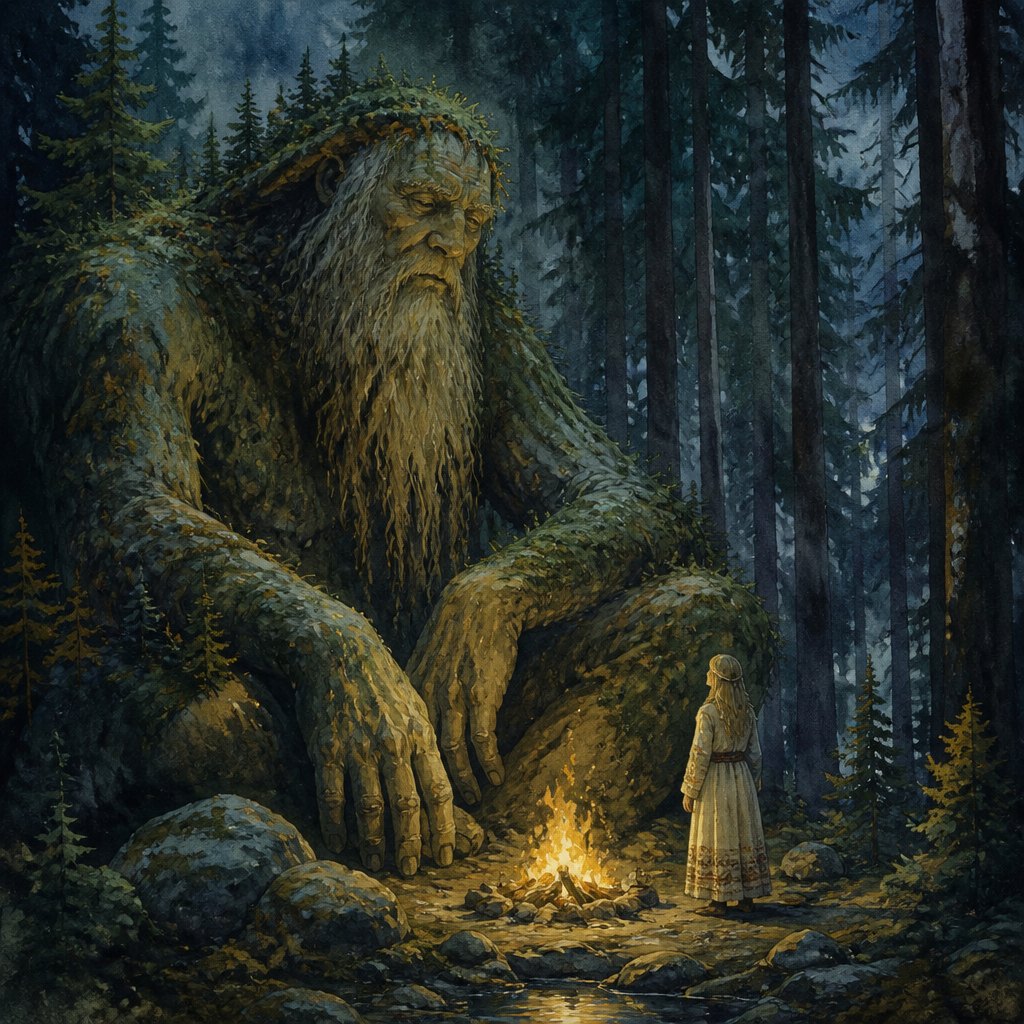 AI-generated
Create in the same spirit
Make Art Nouveau art of your own
This AI interpretation echoes the aesthetic world John Bauer worked in — it depicts no real artwork. Generate your own with the Art Nouveau Style generator.
Open the Art Nouveau Style generator →Legacy
Bauer's trolls remain the default image of Scandinavian folklore: when contemporary illustrators, animators, or game designers picture a Nordic troll, they are almost always drawing on his moss-covered giants and brooding pine forests, whether they know his name or not. His paintings shaped how Sweden pictures its own myths in children's books, theater sets, and tourism imagery, and helped cement a National Romantic tradition of treating the northern forest as a living, ancient presence. Because his career was cut short so abruptly, his surviving body of work is compact, but its influence on Nordic fantasy art and design has only grown across the century since his death.
Frequently asked questions
What is John Bauer famous for?
Bauer is famous for his paintings of huge, moss-covered trolls and delicate princesses set in dense Swedish pine forests, especially his illustrations for the annual anthology Bland tomtar och troll, which shaped how Swedish folklore is visualized to this day.
Where can I see John Bauer's paintings?
Major holdings of Bauer's watercolors are at the Jönköpings läns museum in his home city and the Nationalmuseum in Stockholm, and his illustrations remain widely reprinted in editions of Bland tomtar och troll.
What movement was John Bauer part of?
Bauer worked within Swedish National Romanticism and the broader Art Nouveau current in Scandinavian illustration, treating the northern forest landscape itself, alongside folklore figures like trolls, as a subject worthy of serious painting.
How did John Bauer die?
Bauer, his wife Ester, and their young son died in November 1918 when the steamship Per Brahe sank in a storm on Lake Vättern in Sweden; he was thirty-six years old.