 Famous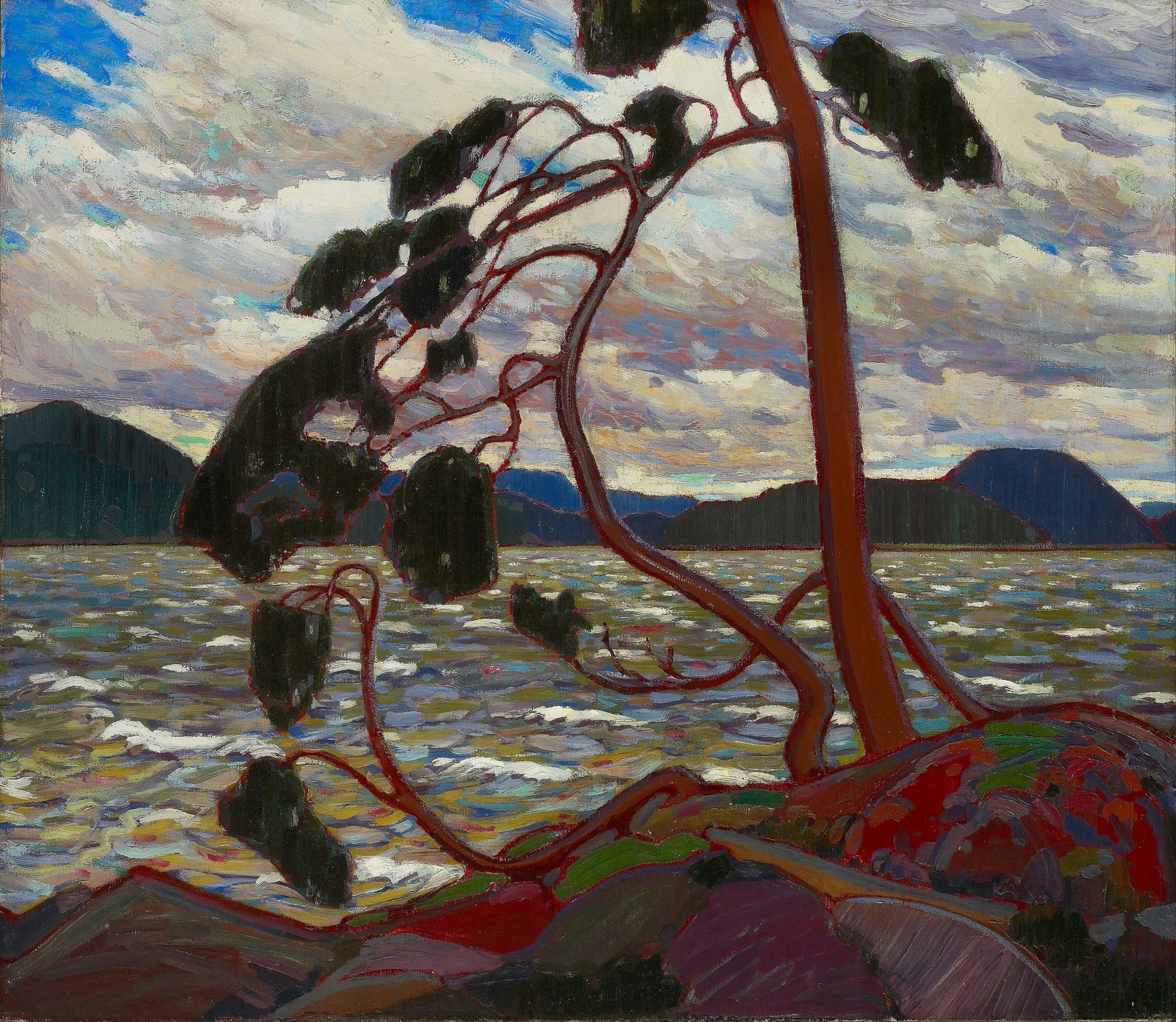
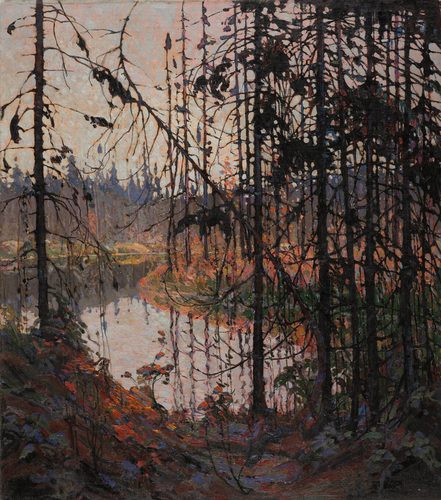
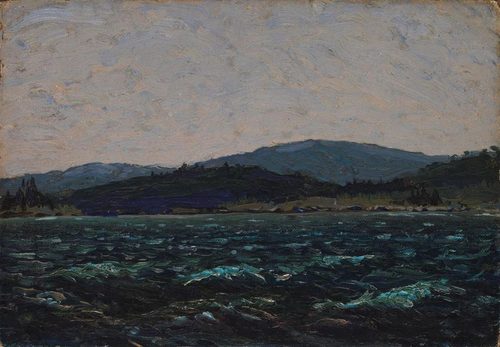
Tom Thomson (1877–1917) was a Canadian painter whose bold, rapidly painted sketches of the Algonquin Park wilderness helped define a distinctly Canadian modern landscape style and directly inspired the founding of the Group of Seven, though he died before the group formally formed.
Working as a commercial artist in Toronto, he began spending summers in Algonquin Park around 1912, working as a guide and fire ranger while painting small, vivid oil sketches on wooden panels directly from nature. Encouraged by fellow artists at the Grip Ltd. design firm, including several future Group of Seven members, he developed a bold, thickly applied style using strong color and simplified forms to capture the north's light and weather.
He used these small panel sketches as the basis for larger studio canvases painted over the winter in Toronto, including his best-known works. In the summer of 1917, at thirty-nine, he drowned in Canoe Lake in Algonquin Park; the exact circumstances were never fully established.
Though he never lived to see the Group of Seven form in 1920, his work was foundational to it, and he is now considered one of Canada's most influential landscape painters.
How to recognize a Thomson
Bold, thick impasto sketches
He applied paint straight from the tube in thick, confident strokes onto small wooden panels, capturing fleeting northern light and weather in a single fast outdoor session rather than a studio setup.
Saturated autumn and sunset color
He pushed color toward intensity rather than accuracy, using hot oranges, deep reds, and violet skies to capture the drama of northern sunsets and autumn foliage rather than a calmer, naturalistic light.
Small panel, larger canvas method
He painted quick oil sketches on small wood panels outdoors, then reworked his strongest ones into larger, more resolved studio canvases over the following winter, a working method he repeated for years.
Wind-bent pines and lone trees
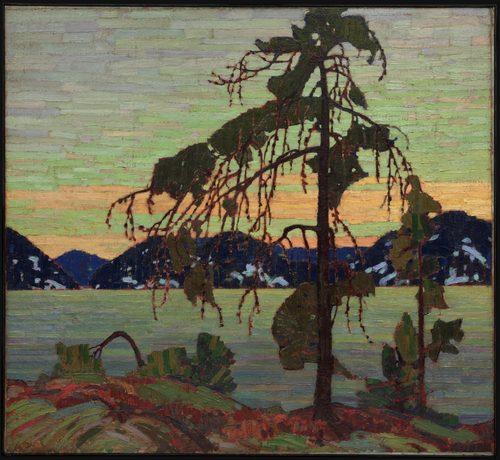
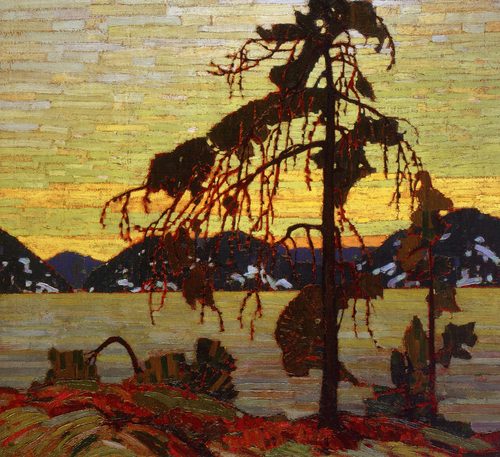
A recurring subject is a single wind-shaped pine or spruce silhouetted against water or sky, standing in for the resilience and isolation of the northern wilderness itself, most famously in The Jack Pine.
Reflective northern lakes
He returned often to still or rippled lake surfaces, using broken, patterned brushwork to capture reflected sky and shoreline color rather than a smooth, literal mirror image of the world above.
Simplified, graphic shorelines
He flattened distant shorelines and hills into simplified bands of color, favoring bold graphic structure over fine detail, a habit likely shaped by his years of design and commercial art training in Toronto.
The life
Tom Thomson was born in 1877 near Claremont, Ontario, and grew up in the Owen Sound area. After working various jobs, he trained briefly in commercial art and joined the Toronto design firm Grip Ltd. around 1908, where he worked alongside several artists who would later found the Group of Seven.
Beginning around 1912, Thomson spent his summers in Algonquin Park, working as a fishing guide and fire ranger while painting small oil sketches on wooden panels directly outdoors. These sketches, made fast and often in difficult conditions, captured the northern wilderness with an intensity that set them apart from more conventional landscape painting of the day.
Over the following winters in his Toronto studio, he reworked his strongest sketches into larger, ambitious canvases, including The Jack Pine and The West Wind, both painted in his final years. His reputation grew quickly among Toronto's art community even as wider recognition remained limited.
In July 1917, Thomson drowned in Canoe Lake, Algonquin Park, at thirty-nine, three years before his friends formally organized as the Group of Seven, a movement his work had already anticipated.
Timeline
- 1877Born near Claremont, Ontario
- 1905Moves to Toronto to work in commercial art
- 1908Joins design firm Grip Ltd. with future Group of Seven artists
- 1912Begins painting summers in Algonquin Park
- 1914Paints in Algonquin Park with A.Y. Jackson and Arthur Lismer
- 1916Paints The Jack Pine
- 1917Drowns in Canoe Lake at thirty-nine
Most famous works
| Work | Date | Why it matters |
|---|---|---|
| The Jack Pine | 1916–17 | A solitary wind-bent pine against a still lake and sunset sky, now one of the most recognized images in Canadian art. |
| The West Wind | 1916–17 | A wind-blasted lone pine leaning over water, painted in his final winter and among his most celebrated studio canvases. |
| Autumn Foliage | 1916 | A dense, brilliantly colored sketch of fall leaves showing his rapid outdoor technique and taste for saturated color. |
| Northern River | 1914–15 | A screen of thin trees against a river beyond, an early example of his simplified, graphic approach to the landscape. |
| Spring Ice | 1916 | A view of breaking ice on a northern lake, rendered with broken, patterned brushwork typical of his lake paintings. |
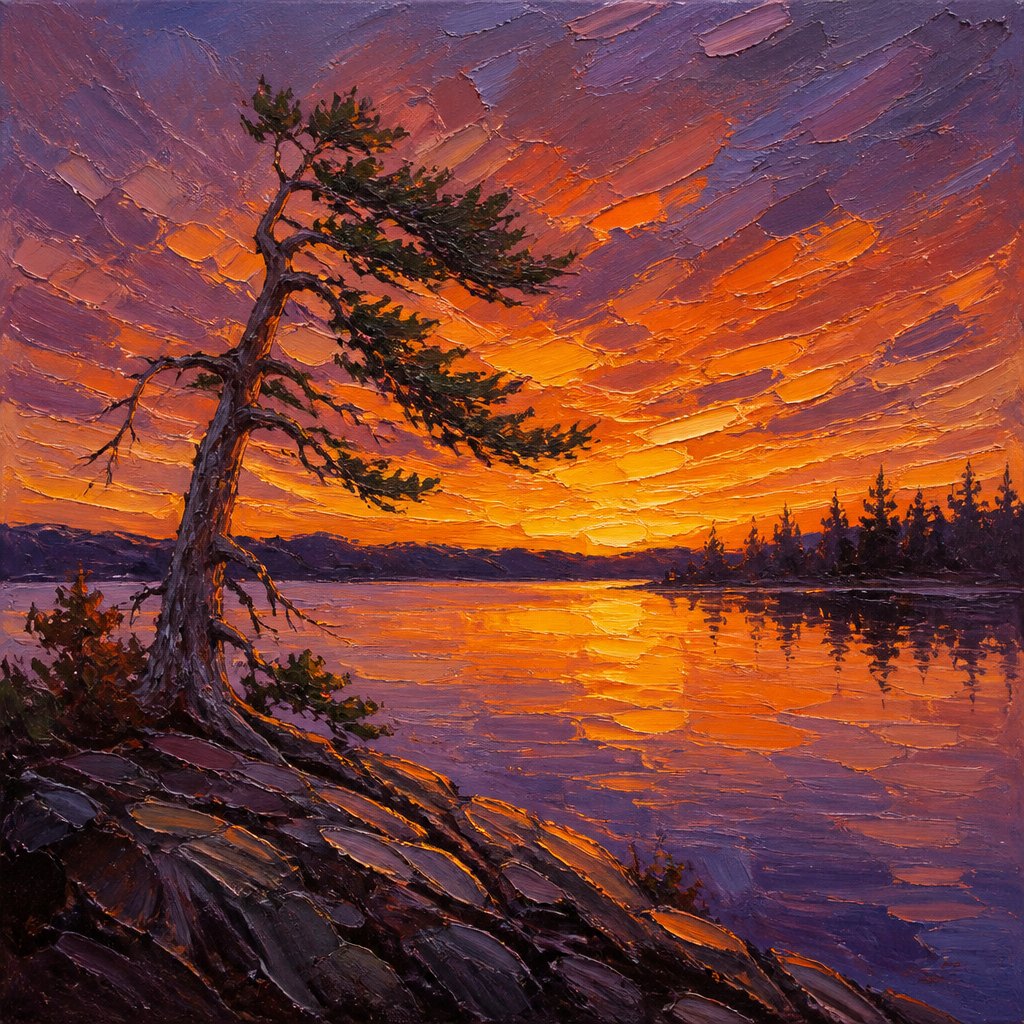 AI-generated
Create in the same spirit
Make Post Impressionism art of your own
This AI interpretation echoes the aesthetic world Tom Thomson worked in — it depicts no real artwork. Generate your own with the Post-Impressionism Art Style generator.
Open the Post-Impressionism Art Style generator →Legacy
Thomson's rapid, intensely colored panel sketches reset expectations for what Canadian landscape painting could look like, trading polished convention for direct, weather-driven immediacy. Friends and colleagues from Grip Ltd. who painted alongside him in Algonquin Park went on to found the Group of Seven in 1920, explicitly building on the direction his work had already taken, though Thomson did not live to join them. The Jack Pine and The West Wind remain touchstones of Canadian visual identity, reproduced widely on everything from stamps to schoolbooks. Algonquin Park itself, where he worked and died, is now inseparable from his name in the Canadian imagination.
Frequently asked questions
What is Tom Thomson famous for?
He is known for bold, rapidly painted sketches of Algonquin Park's wilderness, including The Jack Pine and The West Wind, and for directly inspiring the Group of Seven.
Where can you see Tom Thomson's paintings?
The National Gallery of Canada in Ottawa and the Art Gallery of Ontario in Toronto hold his best-known canvases, with many small oil sketches spread across Canadian museum collections.
Was Tom Thomson a member of the Group of Seven?
No. He died in 1917, three years before his friends formally organized as the Group of Seven in 1920, but his work directly shaped the style the group became known for.
How did Tom Thomson die?
He drowned in Canoe Lake, Algonquin Park, in July 1917 at the age of thirty-nine; the precise circumstances of his death were never fully established.