 Famous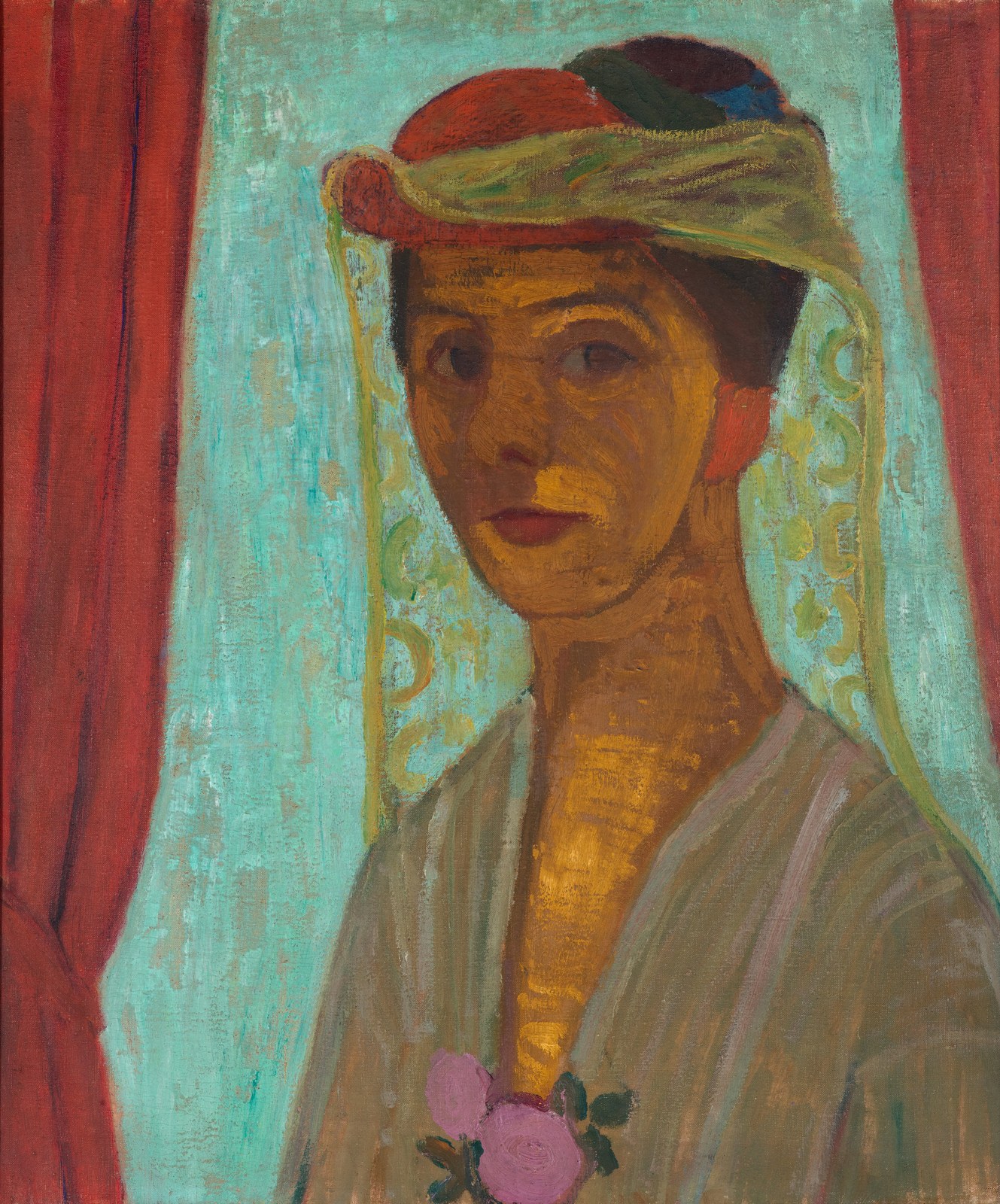
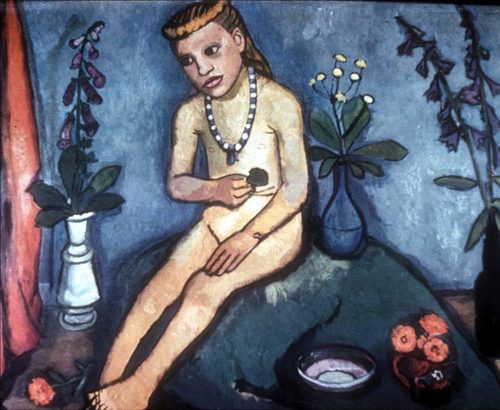
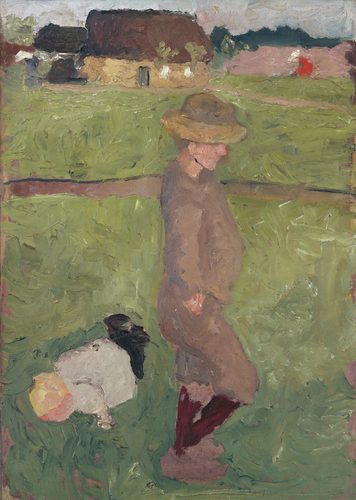
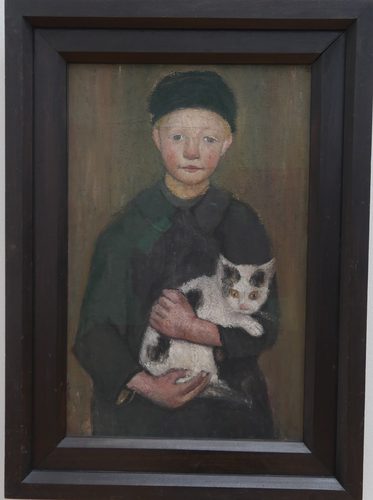
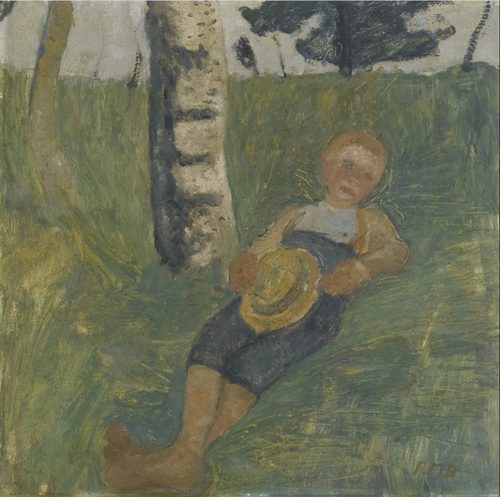
Paula Modersohn-Becker (1876–1907) was a German painter who compressed a lifetime of innovation into barely a decade, becoming one of the first Expressionists and the first woman known to have painted a nude self-portrait in Western art history.
She trained in Bremen and Berlin before settling at Worpswede, the artists' colony known for moody, sentimental landscapes. Four solo trips to Paris changed her direction entirely: studying Cezanne, Gauguin, and ancient Egyptian and Fayum portraiture, she began flattening forms, thickening her outlines, and pushing color toward feeling rather than description.
Her subjects stayed close and plain — peasant women, infants, elderly villagers, and above all herself, painted again and again with a directness rare for the period. She died of an embolism eighteen days after giving birth to her only child, at thirty-one, having produced roughly 750 paintings in about ten working years.
Recognition came late. Dismissed or ignored by most critics during her life, Modersohn-Becker was rediscovered by the Expressionists who followed her, who found in her blunt, structural paintings a language they were only starting to build for themselves.
How to recognize a Modersohn-Becker
Flattened, sculptural forms
She simplified bodies into broad, rounded volumes instead of naturalistic anatomy, borrowing the frontal weight of Egyptian portrait sculpture and Gauguin's simplified figures. Faces and torsos read as solid, almost carved shapes rather than illusions of soft flesh.
Earthy, muted palette
She favored ochre, brick red, moss green, and chalky flesh tones over Impressionist brightness, giving her paintings a grounded, soil-colored warmth that matched her rural Worpswede subjects and her plainspoken approach to portraiture.
Unflinching self-portraits
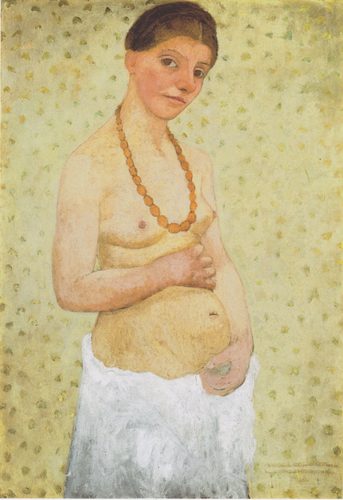
She painted and drew herself dozens of times, including nude, without vanity or apology — a radical act for a woman artist in 1906 — treating her own body as a legitimate subject for serious painting.
Peasant and infant subjects
Rather than idealized rural scenes, she painted old women, nursing mothers, and infants with plain, close attention, stripping away the sentimentality typical of Worpswede genre painting in favor of something starker and more dignified.
Thick, deliberate outlines
She bounded her forms with heavy, visible contour lines, flattening depth and pushing her paintings toward pattern and structure rather than atmospheric illusion, a technique she absorbed from Gauguin and Cezanne during her Paris stays.
Still lifes of plain objects
Her late still lifes arrange humble items — bowls, flowers, glass bottles — into tightly structured compositions, using simplified shapes and close color harmonies to test the same formal ideas she explored in her figure paintings.
The life
Paula Becker was born in Dresden in 1876 and grew up in Bremen, where she took her first drawing lessons before training more formally in London and Berlin. In 1898 she joined the artists' colony at Worpswede, a marshy village near Bremen known for atmospheric, melancholy landscape painting, and there she met the painter Otto Modersohn, whom she married in 1901.
Worpswede's landscape tradition never fully satisfied her. Between 1900 and 1907 she made four extended trips to Paris, where she absorbed Cezanne's structural approach to form, Gauguin's flattened color and outline, and the frontal simplicity of Egyptian mummy portraits she studied in the Louvre. Each return to Germany widened the gap between her painting and the gentler style of her Worpswede colleagues, including her husband.
Her final Paris stay, in early 1907, produced some of her strongest work, including bold self-portraits and studies of mothers and children. She returned to Worpswede pregnant and gave birth to a daughter, Mathilde, that November. Eighteen days later she collapsed from an embolism and died at thirty-one.
She left behind roughly 750 paintings and over a thousand drawings, almost all made in a single compressed decade, most still unsold and unrecognized at the time of her death.
Timeline
- 1876Born in Dresden, Germany
- 1888Family moves to Bremen
- 1896Begins formal art training in Berlin
- 1898Joins the Worpswede artists' colony
- 1900Makes her first solo trip to Paris
- 1901Marries painter Otto Modersohn
- 1906Paints her nude self-portraits in Paris
- 1907Gives birth to daughter Mathilde; dies weeks later
Most famous works
| Work | Date | Why it matters |
|---|---|---|
| Self-Portrait on the Sixth Wedding Anniversary | 1906 | A nude self-portrait, among the first by a woman artist in Western painting, asserting her body as her own subject. |
| Self-Portrait with Amber Necklace | 1906 | A composed, frontal self-portrait showing her mature flattened style and Egyptian-influenced sense of stillness. |
| Reclining Mother and Child | 1906 | A nursing-mother study that treats maternity with plain physical directness rather than idealization. |
| Old Peasant Woman Praying | c. 1906 | A study of rural age and devotion rendered with blunt, sculptural simplicity rather than sentiment. |
| Girl Blowing a Flute in the Birch Wood | c. 1905 | A Worpswede scene showing her early move away from landscape sentiment toward flattened, patterned figures. |
 AI-generated
Create in the same spirit
Make Expressionism art of your own
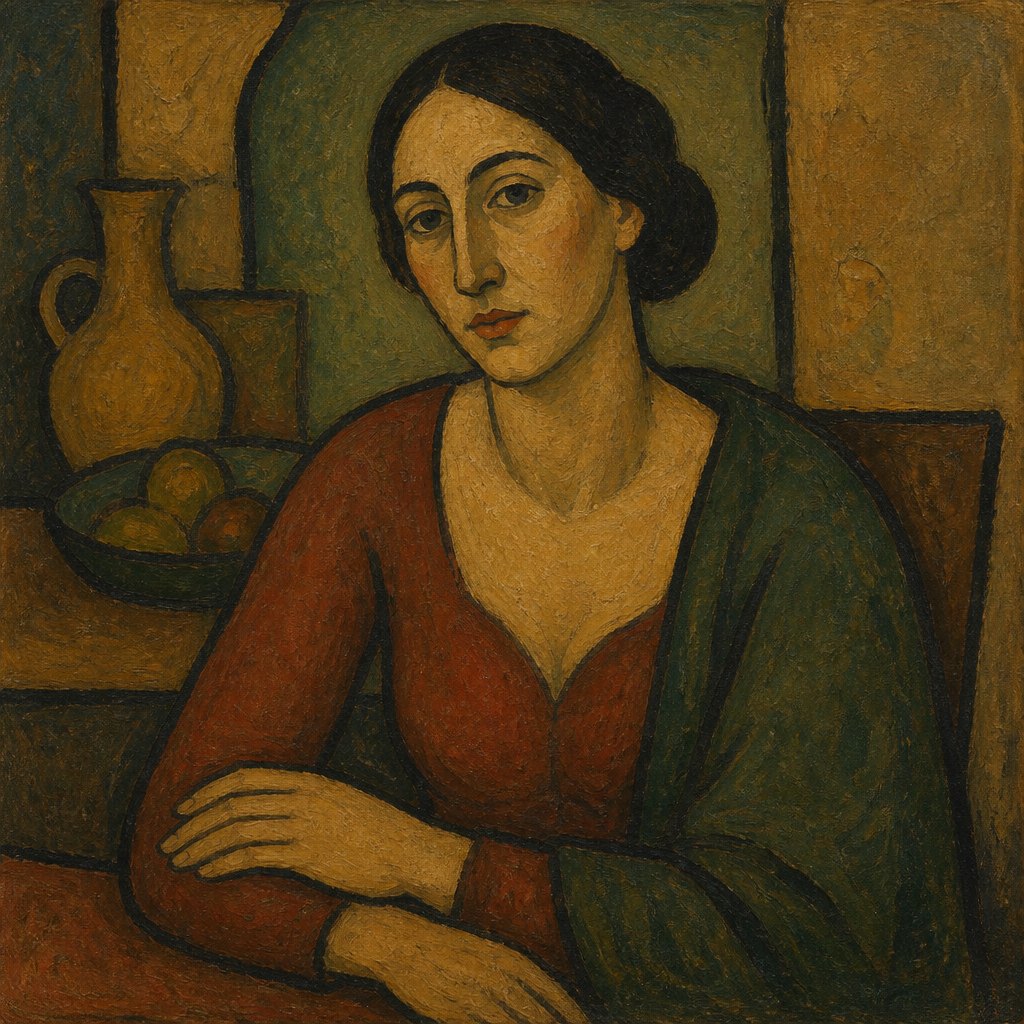
This AI interpretation echoes the aesthetic world Paula Modersohn-Becker worked in — it depicts no real artwork. Generate your own with the Expressionism Art Style generator.
Open the Expressionism Art Style generator →Legacy
Modersohn-Becker's reputation grew only after her death, when Rilke — a family friend who wrote an elegy for her — and later Expressionist painters recognized how far her blunt, structural style had moved beyond her Worpswede surroundings. Her 1906 self-portraits are now cited among the earliest instances of a woman artist depicting her own nude body as serious subject matter, not spectacle. She is widely regarded as a forerunner of German Expressionism, painting years before Die Brucke and Der Blaue Reiter formed as movements. Bremen opened a museum dedicated to her work in 1927, the first museum built for a woman painter. Her plain, unsentimental eye still shapes how modern portraiture is taught.
Frequently asked questions
What is Paula Modersohn-Becker famous for?
She is known as an early German Expressionist and for painting one of the first nude self-portraits by a woman artist, in 1906, alongside plain, structurally simplified portraits of peasants, mothers, and children.
Where can you see Paula Modersohn-Becker's paintings?
The Paula Modersohn-Becker Museum in Bremen, Germany — the first museum dedicated to a woman artist — holds a major collection, alongside works in Berlin's Nationalgalerie and other German museums.
How many paintings did Paula Modersohn-Becker make?
She produced roughly 750 paintings and over a thousand drawings and sketches, nearly all within about a decade of active work before her death at thirty-one.
What art movement was Paula Modersohn-Becker part of?
She worked at the Worpswede artists' colony but moved beyond its landscape tradition; she is now classified as a pioneer of German Expressionism, painting years before the movement had a name.