 Famous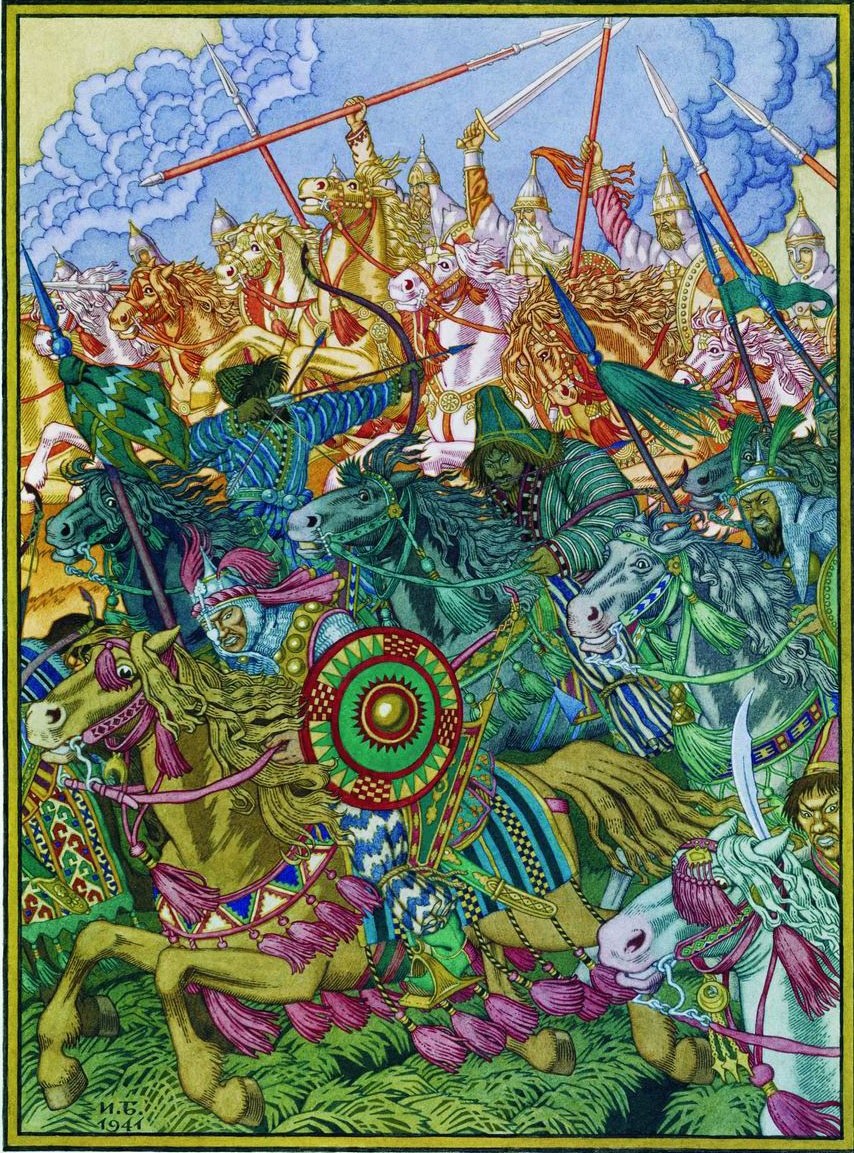
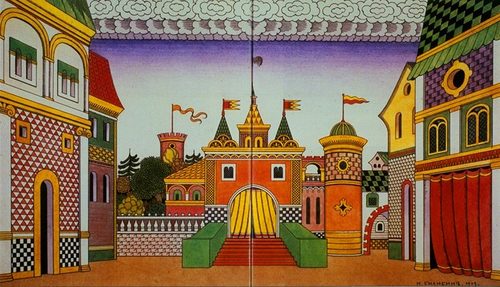
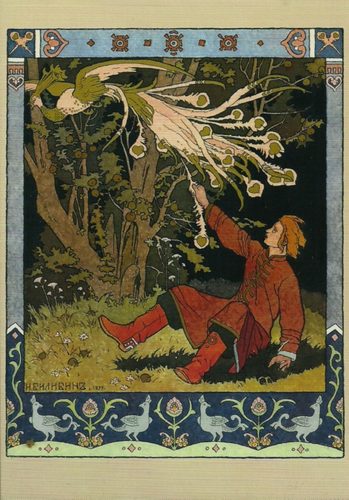
Ivan Bilibin (1876–1942) was a Russian illustrator and stage designer who created the definitive visual language for Russian fairy tales, wrapping his scenes of firebirds, tsars, and forest witches in dense, gold-toned ornamental borders inspired by folk art, icon painting, and Japanese prints. His flat color, strong outline, and decorative patterning became the visual signature of the Mir Iskusstva (World of Art) circle.
Trained under the painter Ilya Repin, Bilibin made his name in the early 1900s illustrating a series of Russian fairy tales for the state printing office, including Vasilisa the Beautiful and The Tale of Tsar Saltan. He also designed sets and costumes for opera and ballet, notably productions of Rimsky-Korsakov's operas, bringing his ornamental style to the stage for audiences in Russia and, later, Paris.
After the 1917 Revolution, Bilibin emigrated, living in Egypt and then France, where he continued illustrating and designing for émigré theater. Drawn by a revival of Soviet patriotism, he returned to Leningrad in 1936 to teach. He died there in 1942, during the German siege of the city, having refused to be evacuated.
How to recognize a Bilibin
Ornamental borders
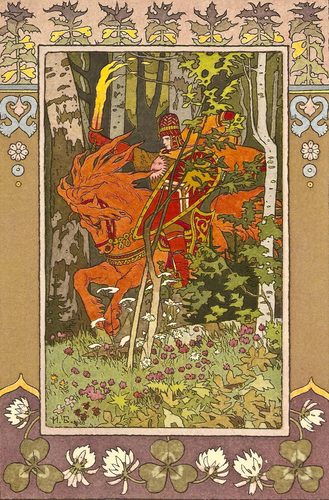
Bilibin framed nearly every illustration in dense decorative borders of interlacing plants, birds, and geometric pattern, drawing on Russian folk woodcuts and manuscript illumination to turn the page's edge into part of the picture.
Flat color, hard outline
He filled his figures with flat, unshaded blocks of saturated color bounded by crisp black outline, a style close to stained glass or woodblock print rather than naturalistic painting or realistic modeling of light.
Firebirds and forest witches
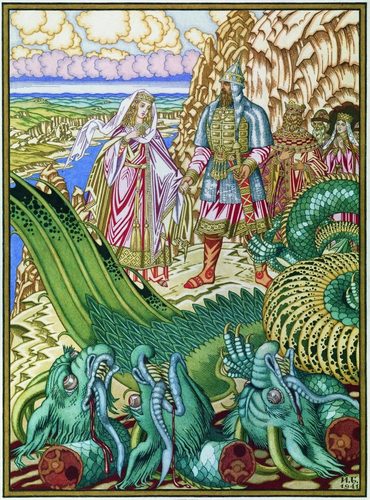
Recurring folklore figures—the Firebird, the witch Baba Yaga, armored warriors, and bearded tsars—populate his scenes, each rendered with the stylized, storybook clarity of Russian oral tradition and printed folktale collections.
Onion domes and log architecture
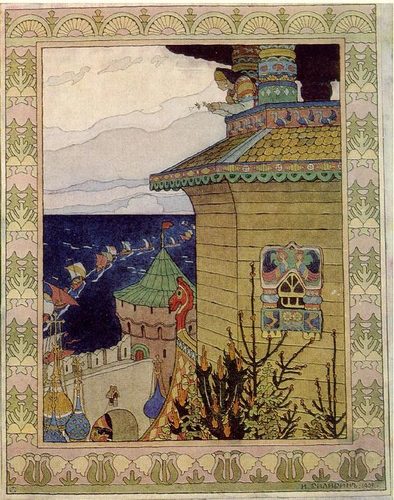
Bilibin rendered traditional Russian architecture—onion-domed churches, carved wooden towers, fortress walls—in exacting, pattern-rich detail, giving his fairy-tale settings a concrete, almost archaeological sense of place rooted in real folk buildings.
Lubok-inspired palette
His color sense draws on Russian lubok prints and icon painting: deep reds, blues, and gold set against black and cream, a jewel-box brightness distinct from Western academic painting of the period.
Stage and costume design
Beyond the page, Bilibin's decorative eye shaped opera and ballet sets and costumes, translating his flat, ornamental illustration style into three-dimensional spectacle for Rimsky-Korsakov productions and other folkloric stagings across two countries.
The life
Ivan Bilibin was born in 1876 near St. Petersburg and studied painting under Ilya Repin at the Imperial Academy of Arts. He also studied traditional Russian and folk art directly, traveling through northern Russia to sketch peasant architecture, costume, and ornament that he later folded into his illustrations.
His breakthrough came in the early 1900s with a state-commissioned series of illustrated Russian fairy tales, including Vasilisa the Beautiful, The Tale of Tsar Saltan, and The Tale of the Golden Cockerel, each wrapped in his signature decorative borders. He became associated with the Mir Iskusstva (World of Art) group, and extended his ornamental style into stage design, creating sets and costumes for opera and ballet productions, including work connected to Sergei Diaghilev's circle.
Bilibin left Russia after the 1917 Revolution, settling first in Cairo and then, from the mid-1920s, in Paris, where he continued illustrating and designing for the theater among the Russian émigré community. In 1936, in a wave of returning Soviet patriotism, he moved back to Leningrad to teach at the Academy of Arts. He remained in the city through the German siege that began in 1941 and died there in early 1942, having declined the chance to be evacuated.
Timeline
- 1876Born near St. Petersburg, Russia.
- 1898Begins studying painting under Ilya Repin.
- 1899Illustrates his first Russian fairy tales, launching his ornamental style.
- 1920Leaves Russia amid civil war, settling in Cairo.
- 1925Moves to Paris and continues illustrating and stage design.
- 1936Returns to Leningrad to teach at the Academy of Arts.
- 1942Dies in Leningrad during the German siege of the city.
Most famous works
| Work | Date | Why it matters |
|---|---|---|
| Vasilisa the Beautiful | 1899 | One of his earliest fairy-tale commissions, establishing the densely ornamented style he became known for. |
| The Frog Princess | 1899 | Illustrations for another classic Russian tale, part of the fairy-tale series that made his name. |
| The Tale of Tsar Saltan | 1905 | Illustrations for Pushkin's verse fairy tale, pairing his decorative borders with scenes of the Swan Princess and Prince Guidon's island kingdom. |
| The Tale of the Golden Cockerel | 1907 | Illustrations for another Pushkin fairy tale, among his most refined ornamental designs. |
| Opera and ballet stage designs | 1900s–1910s | Stage and costume designs bringing his folkloric visual style to opera productions of Rimsky-Korsakov's work. |
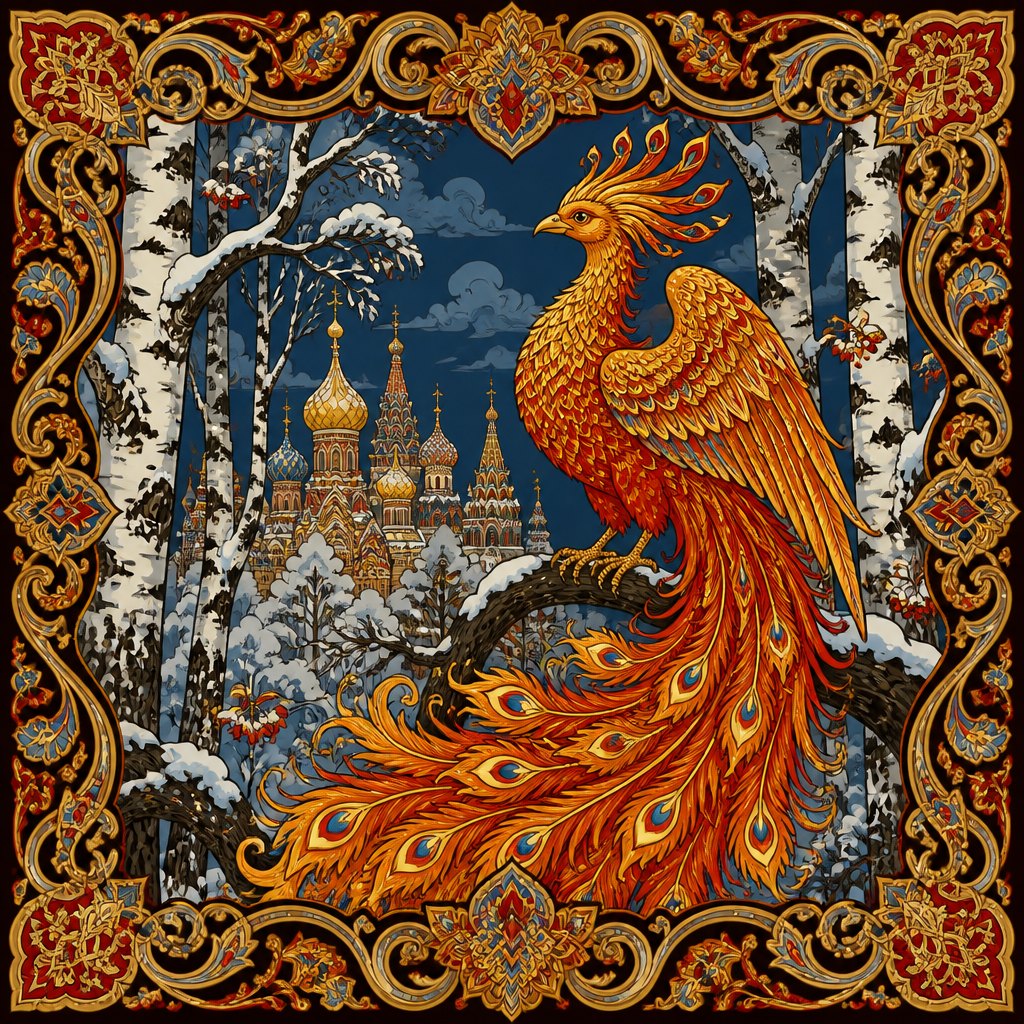 AI-generated
Create in the same spirit
Make Art Nouveau art of your own
This AI interpretation echoes the aesthetic world Ivan Bilibin worked in — it depicts no real artwork. Generate your own with the Art Nouveau Style generator.
Open the Art Nouveau Style generator →Legacy
Bilibin gave Russian folklore a visual identity so complete that it still defines how firebirds, tsars, and fairy-tale villages are drawn, from Soviet-era animation to contemporary illustration and game art. His fusion of folk ornament, icon-painting color, and Japanese-influenced flatness helped shape a distinctly Russian strand of Art Nouveau design, and his decorative borders influenced generations of book and poster designers across Eastern Europe. Because he trained the next generation both in Paris among Russian émigrés and later back in Leningrad, his ornamental approach to Russian fairy-tale imagery passed directly to students who carried it into the Soviet illustration tradition.
Frequently asked questions
What is Ivan Bilibin famous for?
Bilibin is famous for his intricately bordered illustrations of Russian fairy tales—firebirds, tsars, witches, and folk architecture rendered in flat color and gold-toned ornament—which became the defining visual style of Russian folklore in print.
Where can I see Bilibin's work?
Major holdings of Bilibin's illustrations and stage designs are at the State Russian Museum and the Tretyakov Gallery, and his fairy-tale books remain in print in facsimile and reprint editions worldwide.
What art movement was Bilibin part of?
Bilibin belonged to the Mir Iskusstva (World of Art) circle, a Russian movement that combined Art Nouveau design with a revival of folk and medieval Russian visual tradition, applied across illustration, theater, and graphic design.
How did Ivan Bilibin die?
Bilibin remained in Leningrad after returning to the Soviet Union in 1936 and died there in early 1942 during the German siege of the city, having chosen not to be evacuated.