 Famous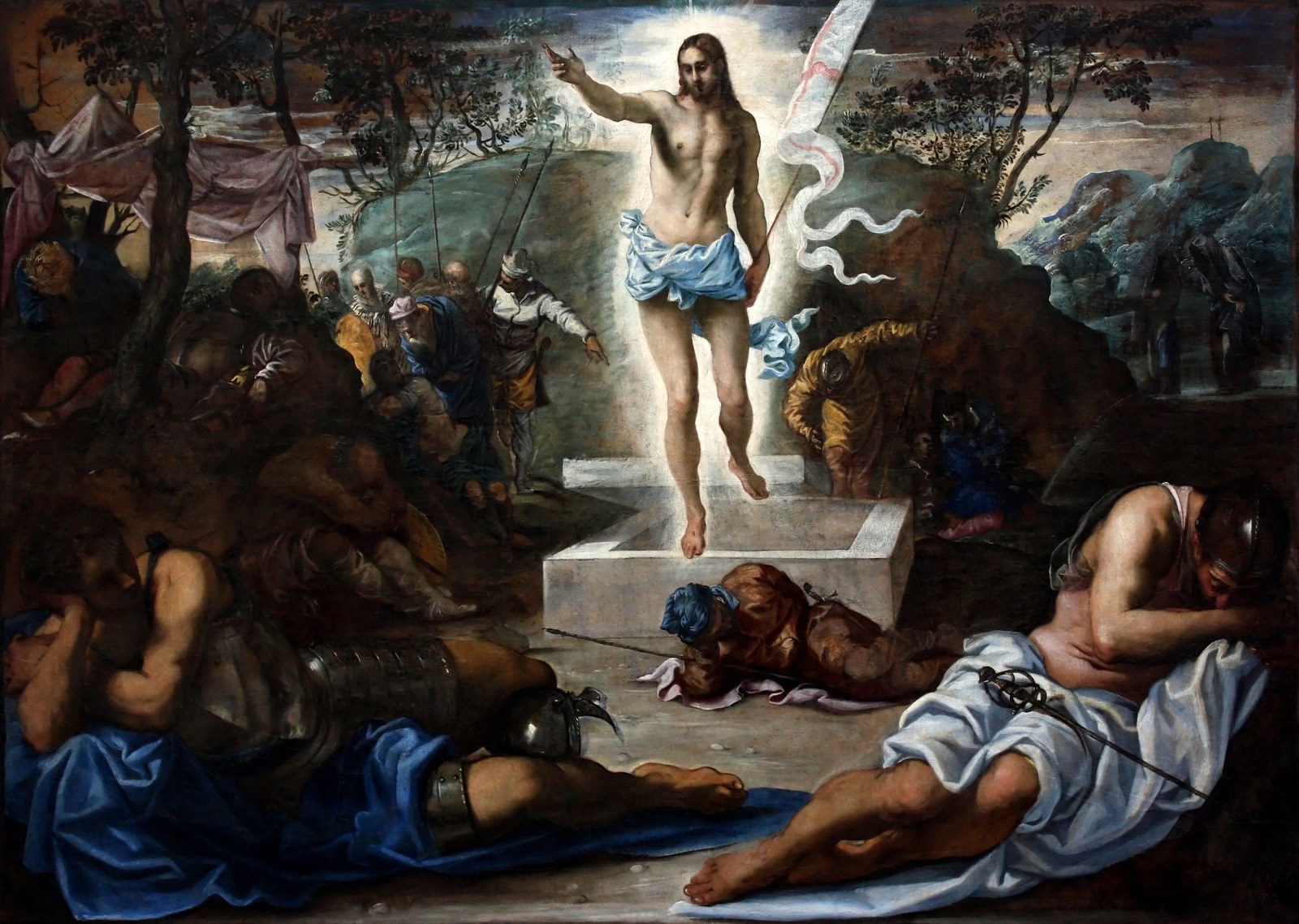
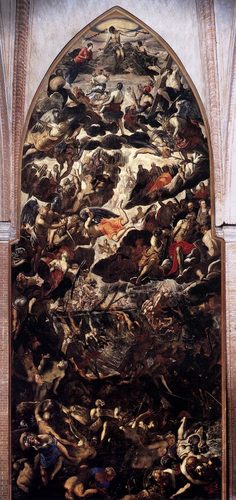
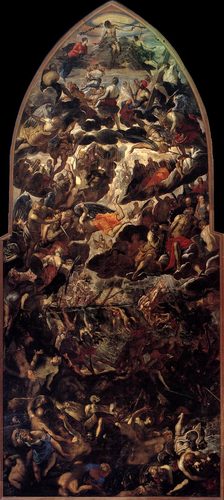
Tintoretto (1518–1594), born Jacopo Robusti in Venice, became the most prolific and theatrical painter of the late Venetian Renaissance, covering the city's churches and civic buildings with canvases of enormous scale and speed. His nickname came from his father's trade as a cloth dyer, or tintore. Early biographers record that he briefly studied under Titian before being dismissed, though the story's details are uncertain; whatever his training, he was working independently in Venice by his early twenties.
His reputation was made by The Miracle of the Slave (1548), a dramatically foreshortened composition that announced his signature style: dynamic diagonals, plunging perspective, and figures caught mid-motion under theatrical light. He reportedly kept a workshop motto pairing Michelangelo's draftsmanship with Titian's color as his personal ambition.
From 1564 he devoted decades to decorating the Scuola Grande di San Rocco with dozens of biblical scenes, an achievement that dominates the building to this day. Late in life he painted a final, visionary Last Supper for San Giorgio Maggiore. He died in Venice in 1594, having rarely left the city his entire career.
How to recognize a Tintoretto
Steep diagonal compositions
Figures and architecture are set on sharp diagonal axes rather than balanced horizontals, giving even static scenes a sense of headlong motion and instability, as if the whole canvas were caught mid-fall or mid-flight.
Theatrical, plunging light
Strong beams of light cut through dark settings, picking out isolated figures or gestures while leaving the rest of the scene in shadow, closer to stage lighting than daylight, heightening the drama of each episode.
Rapid, visible brushwork
Paint is applied quickly and loosely compared to his Venetian peers, with visible strokes and unfinished-looking passages that convey urgency and speed rather than the smooth polish favored by Titian and other contemporaries.
Extreme foreshortening
Bodies twist and plunge through space at dramatic angles, tumbling or reaching toward the viewer, a technical display of perspective that became a signature feature of his large narrative scenes and ceiling compositions.
Crowded narrative scale
His largest commissions pack dozens of figures across enormous canvases spanning entire walls and ceilings, turning single rooms, especially at the Scuola Grande di San Rocco, into immersive cycles rather than isolated pictures.
Dark grounds, luminous flesh
Figures emerge from near-black backgrounds through pools of light on skin and drapery, a contrast that gives his crowded, fast-painted scenes clarity and focus despite their density, speed, and sheer physical scale.
The life
Jacopo Robusti, later known as Tintoretto, was born in Venice in 1518, the son of a cloth dyer, or tintore, from which his nickname derived. Early biographers claim he briefly entered Titian's workshop as a boy before being sent away, though the anecdote's accuracy is uncertain. However he trained, he was working independently in Venice by his early twenties and had joined the city's painters by 1539.
His breakthrough came with The Miracle of the Slave (1548), a dramatic, foreshortened composition that announced the restless energy and steep diagonals that would define his career. He worked at extraordinary speed and scale, reportedly underbidding rivals to win commissions and then overdelivering on ambition once the work was his.
From 1564 he undertook the defining project of his life: decorating the Scuola Grande di San Rocco with dozens of canvases depicting the lives of Christ and Saint Roch, a commission that occupied him for over two decades and still fills the building today. He continued receiving major commissions into old age, including a final, visionary Last Supper for the church of San Giorgio Maggiore, completed shortly before his death.
Tintoretto rarely left Venice in his lifetime. He died there in 1594, having built one of the largest and most theatrical bodies of work of the entire Renaissance.
Timeline
- 1518Born Jacopo Robusti in Venice
- 1539Recorded as an independent master painter in Venice
- 1548Paints The Miracle of the Slave
- 1564Begins decorating the Scuola Grande di San Rocco
- 1587Completes the narrative cycle at San Rocco
- 1592Paints The Last Supper for San Giorgio Maggiore
- 1594Dies in Venice
Most famous works
| Work | Date | Why it matters |
|---|---|---|
| The Miracle of the Slave | 1548 | The dramatically foreshortened breakthrough painting that established his reputation. |
| Susanna and the Elders | c. 1555 | A luminous biblical scene showing his handling of light and space. |
| Crucifixion | 1565 | A vast, crowded centerpiece of the Scuola Grande di San Rocco cycle. |
| Origin of the Milky Way | c. 1575 | A dynamic mythological composition prized for its swirling, unstable motion. |
| Paradise | c. 1588 | One of the largest oil paintings in the world, filling a wall of the Doge's Palace. |
| The Last Supper | 1592–94 | His final, visionary treatment of the subject, painted for San Giorgio Maggiore. |
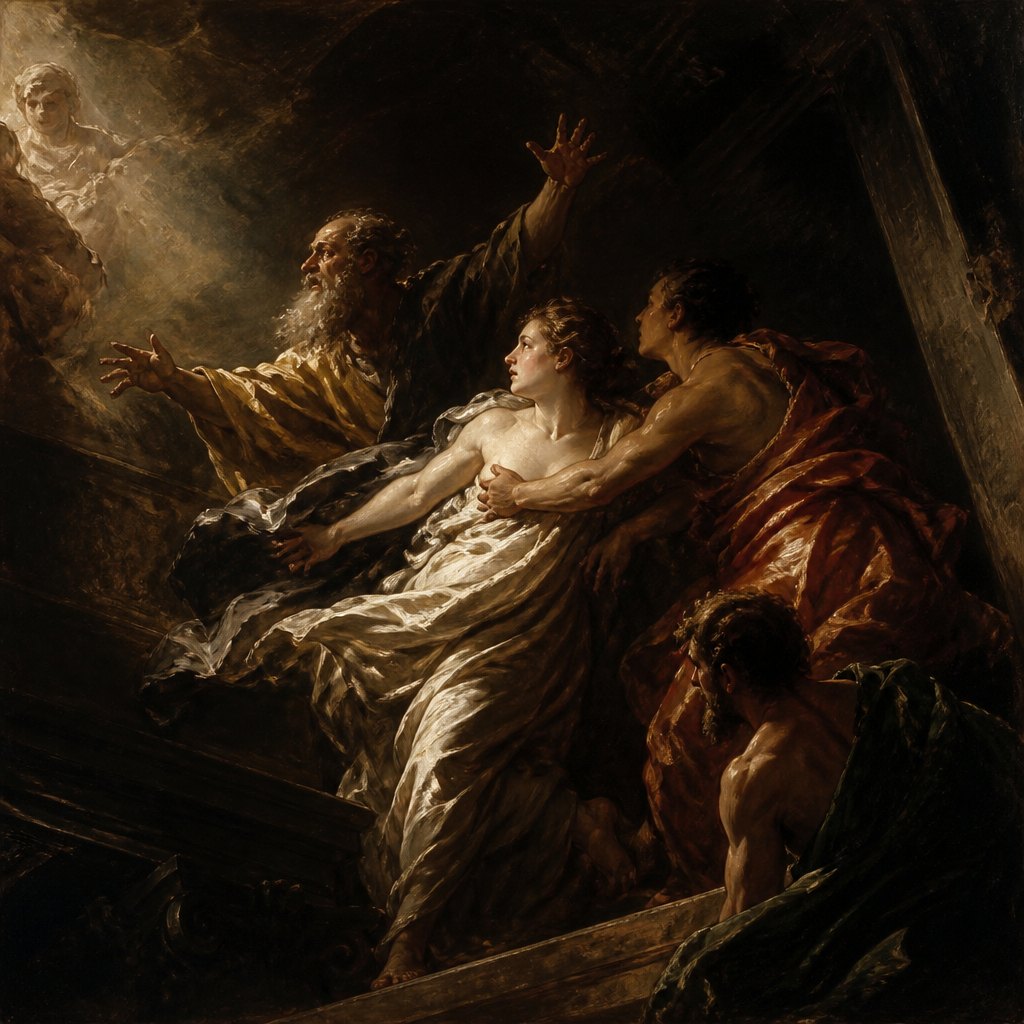 AI-generated
Create in the same spirit
Make Mannerism art of your own
This AI interpretation echoes the aesthetic world Tintoretto worked in — it depicts no real artwork. Generate your own with the Mannerism Art Style generator.
Open the Mannerism Art Style generator →Legacy
Tintoretto pushed Venetian painting toward drama and speed, showing that scale and urgency could carry as much authority as Titian's polish or Michelangelo's draftsmanship. His example influenced later painters, including Rubens and El Greco, both of whom studied his handling of light and motion. The Scuola Grande di San Rocco remains, unusually among Renaissance decorative projects, almost entirely intact and still hung where he painted it, letting visitors experience one artist's vision across an entire building rather than fragments scattered in separate museums. His restless, theatrical energy anticipates qualities later prized in Baroque and even Romantic painting, well beyond his own century.
Frequently asked questions
What is Tintoretto famous for?
Tintoretto is famous for vast, fast-painted religious and mythological scenes marked by steep diagonals, dramatic light, and figures caught mid-motion. His decades-long decoration of Venice's Scuola Grande di San Rocco is considered his masterpiece and remains largely intact today.
Where can you see Tintoretto's paintings today?
The Scuola Grande di San Rocco in Venice holds the largest concentration of his work, still displayed where he painted it. Further paintings hang in Venice's Gallerie dell'Accademia, the Doge's Palace, London's National Gallery, and the Prado in Madrid.
What was Tintoretto's artistic motto?
Early biographers recorded his workshop motto as combining 'the drawing of Michelangelo and the color of Titian,' a stated ambition to unite Florentine draftsmanship with Venetian color, which shaped the dramatic, richly colored style he became known for.
What artistic movement did Tintoretto belong to?
Tintoretto worked within Venetian Mannerism, a late-Renaissance style marked by dramatic composition, elongated figures, and theatrical light. He is considered, alongside Titian and Veronese, one of the three great masters of sixteenth-century Venetian painting.