 Famous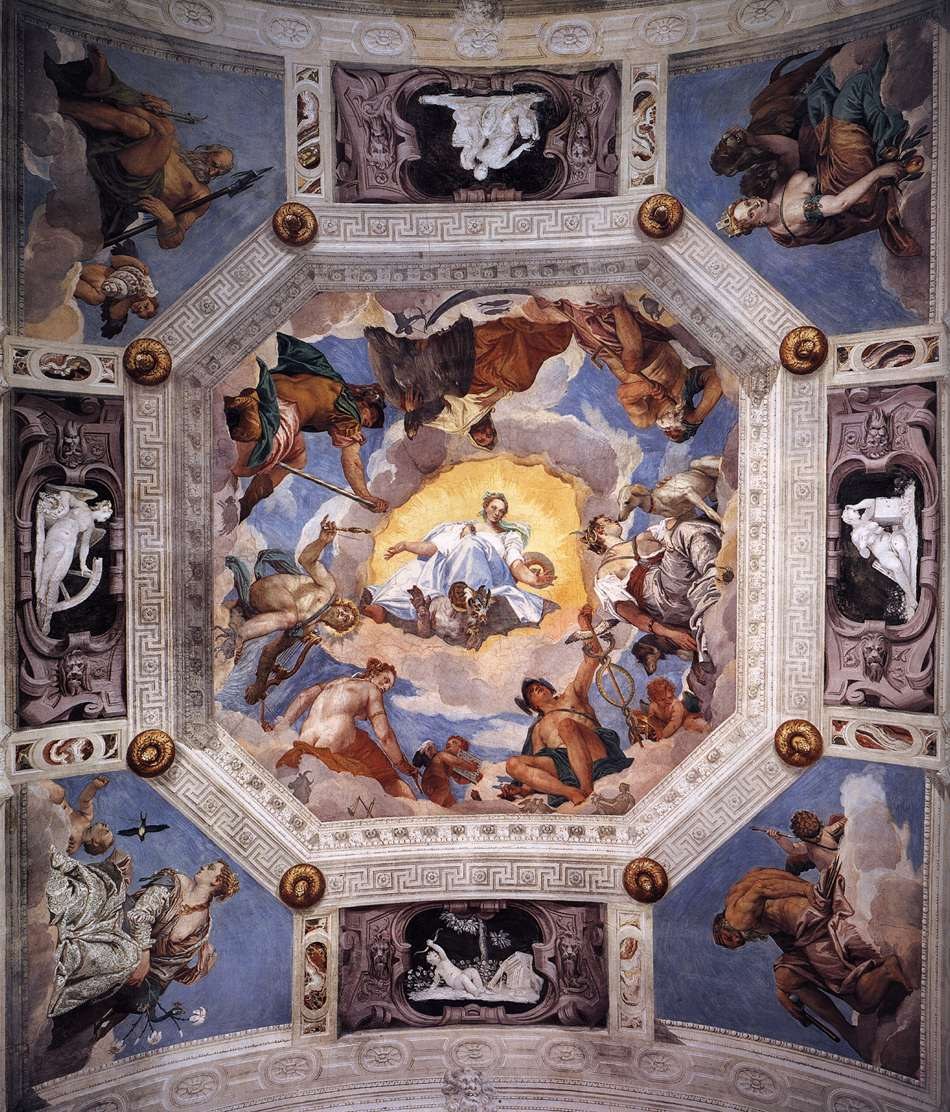
Paolo Veronese (1528–1588), born Paolo Caliari in Verona, became one of the three great masters of sixteenth-century Venetian painting, prized for enormous, luminous feast and ceremonial scenes. He trained under the Veronese painter Antonio Badile before moving to Venice around 1553, where he quickly won commissions decorating the ceilings of the Doge's Palace.
Veronese's gift was for staging: colossal architectural settings filled with richly dressed figures, animals, and incident, bathed in a cool, silvery light distinct from the warmer palettes of his Venetian peers. His frescoes for the Villa Barbaro at Maser, and vast canvases like The Wedding at Cana, display an almost theatrical command of crowd and space.
In 1573 he was summoned before the Venetian Inquisition over his painting of the Last Supper, which included dwarfs, drunkards, and dogs alongside the sacred scene. Rather than repaint it, Veronese simply retitled the work The Feast in the House of Levi, sidestepping censure while keeping his composition intact. He continued receiving major commissions, including ceiling paintings for the Doge's Palace, until his death in Venice in 1588.
How to recognize a Veronese
Silvery, cool-toned light
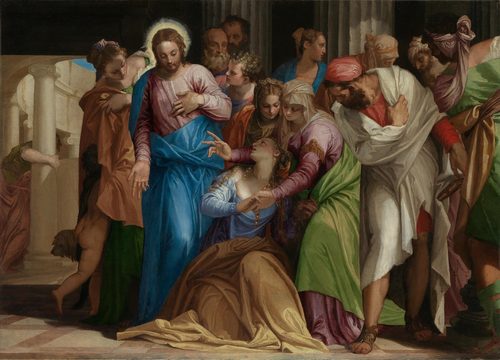
Veronese bathes his scenes in a bright, cool daylight distinct from the warm golden glow favored by Titian, giving marble, silk, and skin a luminous, almost pearly finish rarely matched by his Venetian contemporaries.
Colossal architectural settings
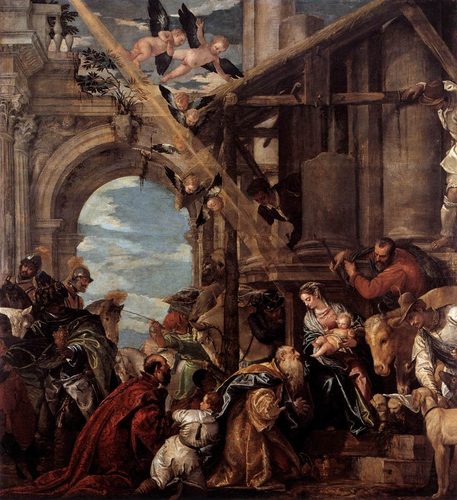
Scenes unfold beneath towering classical colonnades and staircases, with painted architecture often extending a room's real space, turning banquets and gatherings into monumental theatrical sets rather than simple backdrops for figures.
Crowded feast compositions
Dozens of guests, servants, musicians, and animals fill wide horizontal canvases, each engaged in a distinct small action, turning a single meal or gathering into a sprawling, carefully choreographed social panorama.
Opulent costume detail
Silks, brocades, and jewels are rendered with loving specificity, dressing biblical and mythological figures in the luxurious fashions of contemporary Venetian nobility rather than in historically accurate period dress of an earlier age.
Wide horizontal formats
Many major works stretch far wider than tall, echoing the shape of a banquet table itself and allowing long processions of figures and architecture to unfold left to right across the canvas.
Confident, unshadowed color
Bold local colors sit side by side with minimal murky shadow, giving even crowded scenes a clarity and buoyancy that later inspired colorists from Rubens to Delacroix and, eventually, the Impressionists.
The life
Paolo Caliari was born in Verona in 1528, the son of a stonecutter, and trained locally under the painter Antonio Badile, whose daughter he would eventually marry. He took the name Veronese, after his native city, once his career carried him beyond it.
Around 1553 he moved to Venice, quickly winning commissions to decorate ceilings in the Doge's Palace, where his bright, confident color and gift for architectural staging set him apart. Through the 1550s and 1560s he developed his signature mode: enormous, crowded scenes of feasts and ceremonies bathed in cool, silvery light, seen in his frescoes for the Villa Barbaro at Maser and in monumental canvases like The Wedding at Cana.
His high period brought both triumph and controversy. In 1573 the Venetian Inquisition summoned him over a Last Supper painting crowded with dwarfs, drunkards, and dogs alongside sacred figures. Rather than alter the composition, Veronese simply renamed the work The Feast in the House of Levi, preserving his imagery while avoiding censure, an episode recorded in surviving trial transcripts.
He remained Venice's most sought-after decorative painter for the rest of his career, completing further ceiling cycles for the Doge's Palace in the 1580s. He died in Venice in 1588.
Timeline
- 1528Born Paolo Caliari in Verona
- 1553Moves to Venice, begins painting ceilings for the Doge's Palace
- 1561Frescoes the Villa Barbaro at Maser
- 1563Paints The Wedding at Cana
- 1573Paints The Feast in the House of Levi, questioned by the Inquisition
- 1582Paints the Triumph of Venice ceiling for the Doge's Palace
- 1588Dies in Venice
Most famous works
| Work | Date | Why it matters |
|---|---|---|
| The Wedding at Cana | 1563 | A vast banquet scene, one of the largest paintings ever made for a refectory wall. |
| The Feast in the House of Levi | 1573 | A lavish Last Supper renamed after questioning by the Venetian Inquisition. |
| Villa Barbaro Frescoes | 1561 | An illusionistic fresco cycle turning a country villa's walls into painted vistas. |
| Triumph of Venice | c. 1582 | A soaring ceiling painting glorifying the city, made for the Doge's Palace. |
| The Rape of Europa | c. 1580 | A richly colored mythological scene admired for its decorative, silvery light. |
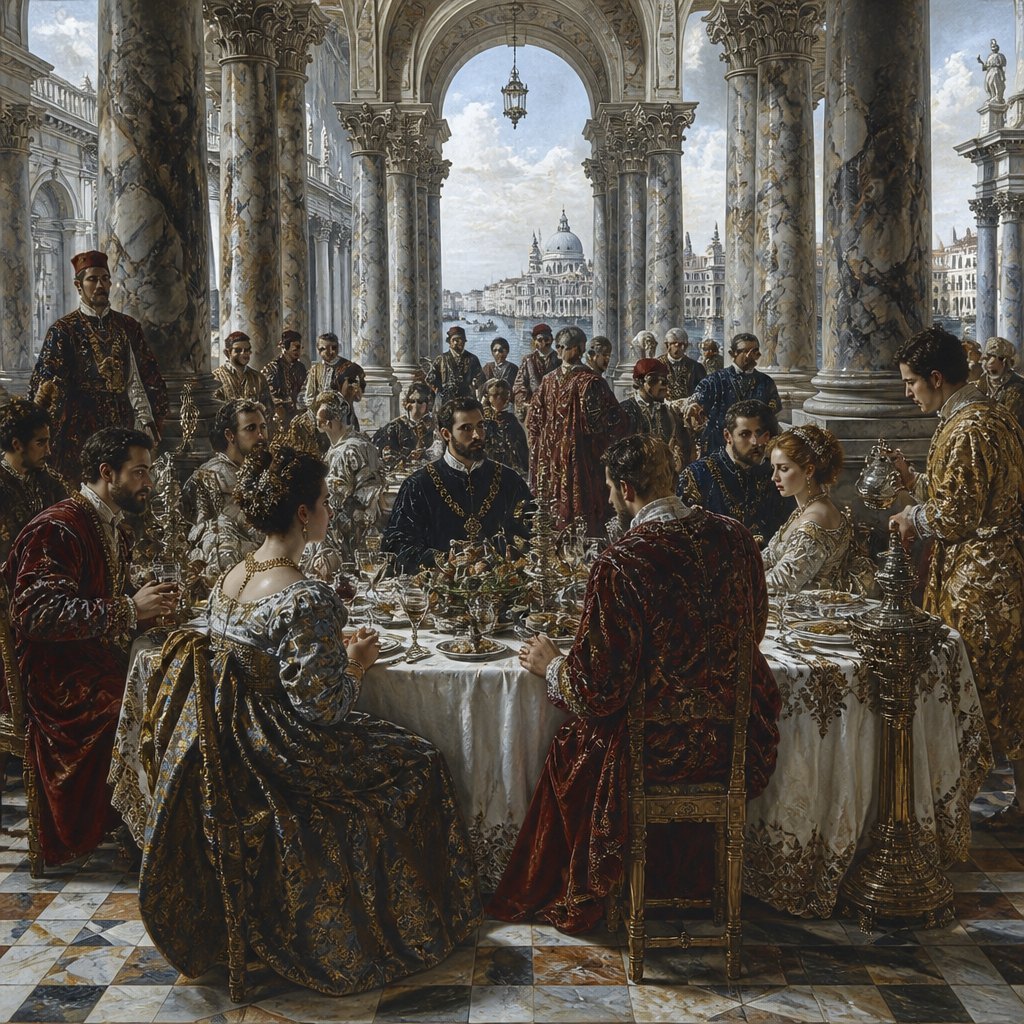 AI-generated
Create in the same spirit
Make Venetian School art of your own
This AI interpretation echoes the aesthetic world Paolo Veronese worked in — it depicts no real artwork. Generate your own with the Venetian Colorism Renaissance Art Style generator.
Open the Venetian Colorism Renaissance Art Style generator →Legacy
Veronese's silvery color and theatrical staging gave Venetian painting a lighter, more decorative register than Titian's warmth or Tintoretto's drama, and later colorists, from Rubens to Delacroix, who called him one of painting's supreme colorists, studied his compositions closely. His Inquisition trial over The Feast in the House of Levi survives as one of the period's fullest documents of how artists negotiated religious authority, still cited in discussions of artistic freedom. Grand banquet and ceremonial painting, from Baroque ceiling decoration to later academic history painting, owes a visible debt to his crowded, sunlit staging of human spectacle.
Frequently asked questions
What is Paolo Veronese famous for?
Veronese is famous for enormous, luminous banquet and ceremonial paintings, especially The Wedding at Cana and The Feast in the House of Levi. His crowded compositions, silvery light, and lavish costume detail made him one of Venice's three great sixteenth-century masters.
Where can you see Veronese's paintings today?
The Wedding at Cana hangs in the Louvre, facing the Mona Lisa. The Feast in the House of Levi is in Venice's Gallerie dell'Accademia, and further ceiling paintings remain in the Doge's Palace and the Villa Barbaro at Maser.
Why was Veronese questioned by the Inquisition?
In 1573 the Inquisition objected to his Last Supper painting's inclusion of dwarfs, drunkards, and dogs alongside sacred figures. Rather than alter the composition, Veronese simply renamed it The Feast in the House of Levi, avoiding censure while keeping his imagery intact.
What artistic movement did Veronese belong to?
Veronese worked within the Venetian School of the late Renaissance, alongside Titian and Tintoretto. His bright, decorative color and grand architectural staging distinguish his style within that group, and later influenced Baroque and Rococo decorative painting.