 Famous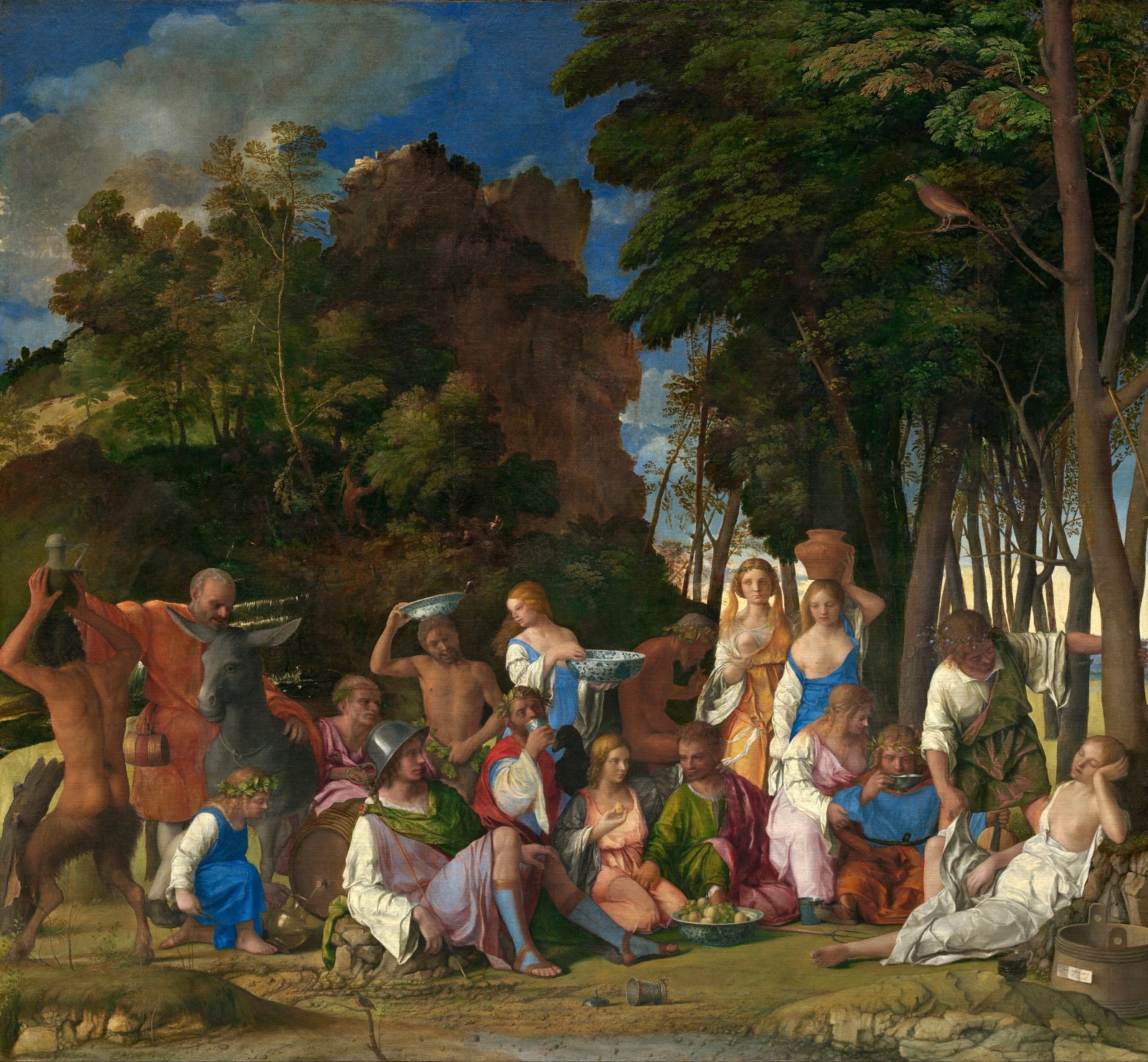
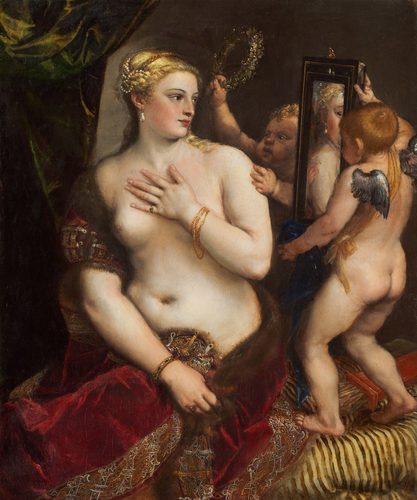
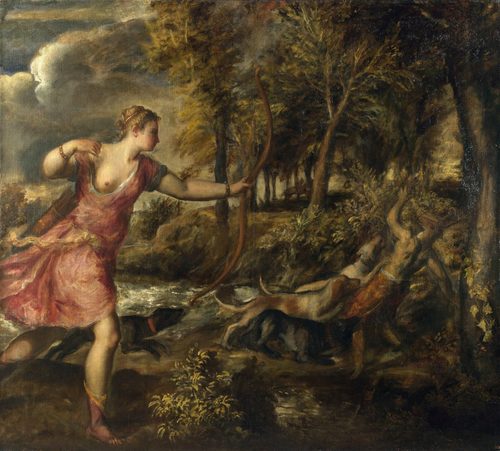
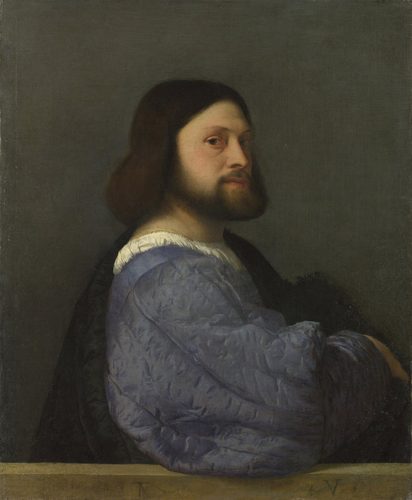
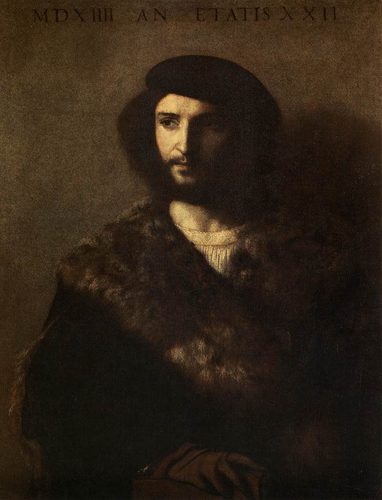
Titian (c. 1488–1576), born Tiziano Vecellio in the mountain town of Pieve di Cadore, became the dominant painter of sixteenth-century Venice and the artist most responsible for establishing color, rather than line, as the foundation of great painting. Trained in the workshops of the Bellini family and alongside Giorgione, he inherited Venice's rich colorito tradition and pushed it further, using bold, visible brushwork and glowing pigment to build form directly through paint rather than careful preliminary drawing. His long career, spanning roughly seven decades, ranged from mythological scenes and altarpieces to some of the era's most sought-after portraits, painted for the Venetian Republic, the papacy, and the courts of Spain and the Holy Roman Empire, including Emperor Charles V, who granted him noble rank. Titian's late paintings grew increasingly loose and expressive, built from thick, almost abstract passages of paint applied with fingers as much as brushes, a handling that later shaped painters working in far freer styles. He ran a large, productive workshop and remained artistically active into extreme old age, dying in Venice in 1576 during a plague outbreak. His influence on later colorists, from Rubens to Velázquez, is difficult to overstate.
How to recognize a Titian
Color over drawn line
Titian built form directly through layered color and visible brushwork rather than careful underdrawing, a distinctly Venetian approach that let hue and light, rather than outline, define shape, volume, and mood.
Loose, visible brushwork
Especially in his late work, Titian's brushstrokes remain visible and rough rather than smoothed into an even finish, giving surfaces an energetic, almost unfinished texture up close that resolves into form from a distance.
Rich, warm reds and golds
Titian favored deep reds, warm golds, and glowing flesh tones set against darker, more muted backgrounds, a warm Venetian palette partly shaped by the city's trade access to rare imported pigments.
Sensuous mythological scenes
His mythological paintings for courtly patrons treated classical stories as occasions for lush color, relaxed reclining poses, and atmospheric landscape, favoring sensuous mood over strict moralizing narrative or literal storytelling.
Confident state portraiture
Titian's portraits of popes, kings, and nobles combine strong psychological presence with restrained, dignified poses and rich costume detail, establishing a lasting template that European court portraiture followed for generations afterward.
Atmospheric landscape backgrounds
Even in portraits and religious scenes, Titian's backgrounds often open onto soft, hazy landscapes touched with warm evening light, adding atmosphere and depth without ever competing with the central figures in the foreground.
The life
Titian was born around 1488 in Pieve di Cadore, in the mountains north of Venice, and moved to the city as a boy to train, first briefly with Gentile Bellini and then in the workshop of his brother Giovanni Bellini, Venice's leading painter. He also worked closely with the young Giorgione, and the two artists' styles were so similar early on that some paintings remain disputed between them.
After Giorgione's early death and Bellini's in 1516, Titian emerged as Venice's dominant painter, securing the prestigious position of official painter to the Venetian Republic. Over the following decades he produced altarpieces for Venetian churches, mythological paintings for the Duke of Ferrara and other courts, and portraits for an international clientele that eventually included Pope Paul III and Holy Roman Emperor Charles V, who granted him noble rank.
Titian's workshop became one of the most productive in Europe, and his personal style grew progressively looser and more expressive as he aged, culminating in late works built from thick, visibly worked paint. He continued painting into his late eighties, dying in Venice in 1576 during an outbreak of plague that also killed his son.
Timeline
- 1488Born in Pieve di Cadore, near Venice
- 1508Works alongside Giorgione in Venice
- 1516Becomes official painter to the Venetian Republic
- 1523Paints mythological scenes for the Duke of Ferrara
- 1533Granted noble rank by Emperor Charles V
- 1548Travels to Augsburg to paint Charles V
- 1576Dies in Venice during a plague outbreak
Most famous works
| Work | Date | Why it matters |
|---|---|---|
| Assumption of the Virgin | 1516–1518 | A monumental altarpiece for the Frari church in Venice that announced Titian's arrival as the city's leading painter. |
| Bacchus and Ariadne | 1520–1523 | A vivid mythological scene painted for the Duke of Ferrara, celebrated for its dynamic composition and rich color. |
| Venus of Urbino | 1538 | A celebrated reclining nude whose composition became a recurring template in later Western painting. |
| Charles V on Horseback | 1548 | An equestrian state portrait of the emperor that set a lasting model for royal portraiture. |
| Pietà | 1575–1576 | Titian's dark, unfinished final work, intended for his own tomb, left incomplete at his death. |
| Man with a Glove | c. 1520 | An early portrait admired for its relaxed pose and psychological subtlety, widely imitated afterward. |
 AI-generated
Create in the same spirit
Make Venetian School art of your own
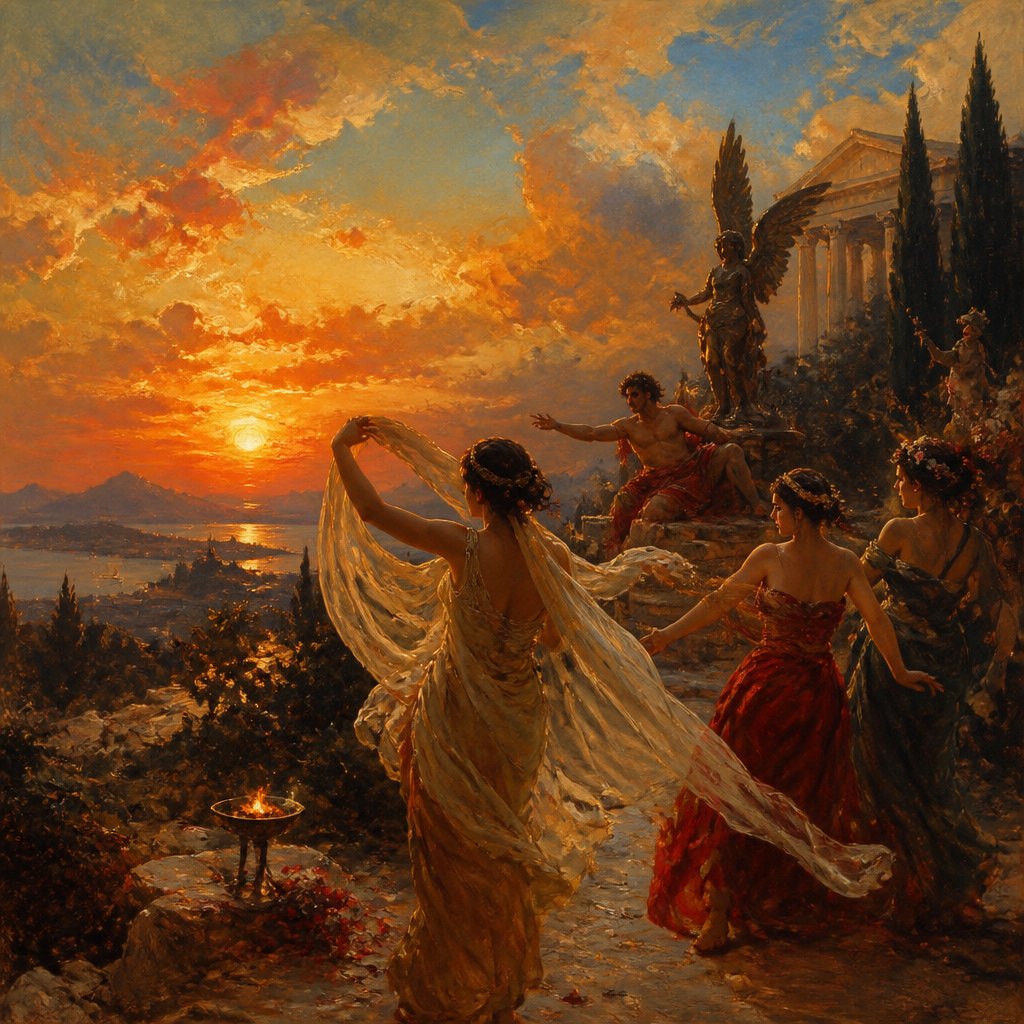
This AI interpretation echoes the aesthetic world Titian worked in — it depicts no real artwork. Generate your own with the Venetian Colorism Renaissance Art Style generator.
Open the Venetian Colorism Renaissance Art Style generator →Legacy
Titian's emphasis on color and loose, visible brushwork over precise drawing reshaped what painting could look like, directly influencing Venetian successors like Tintoretto and Veronese. His example traveled across Europe: Rubens studied and copied his work extensively, and later painters from Velázquez to the nineteenth-century colorists looked to his handling of paint as a model for expressive freedom. His mythological paintings established compositional templates repeated for centuries, and his state portraits set the standard for how rulers wanted to be seen. The debate over color versus line that Titian's work provoked shaped academic painting theory in France and Italy for generations after his death.
Frequently asked questions
What is Titian famous for?
Titian is famous for pioneering the Venetian emphasis on color and loose brushwork over precise line, in mythological scenes, altarpieces, and portraits for European royalty and the papacy.
Where can you see Titian's paintings?
Major works remain in Venice, including the Frari church and the Gallerie dell'Accademia. Further paintings are held in the Prado in Madrid, the Louvre, and the National Gallery in London.
How many paintings did Titian complete?
Titian and his large workshop produced several hundred paintings over his roughly seven-decade career, though scholars continue to debate how many surviving works are entirely by his own hand.
What art movement was Titian part of?
Titian was the leading figure of the Venetian School, distinguished from the Florentine and Roman High Renaissance by its emphasis on color, light, and visible brushwork over precise drawing.