 Famous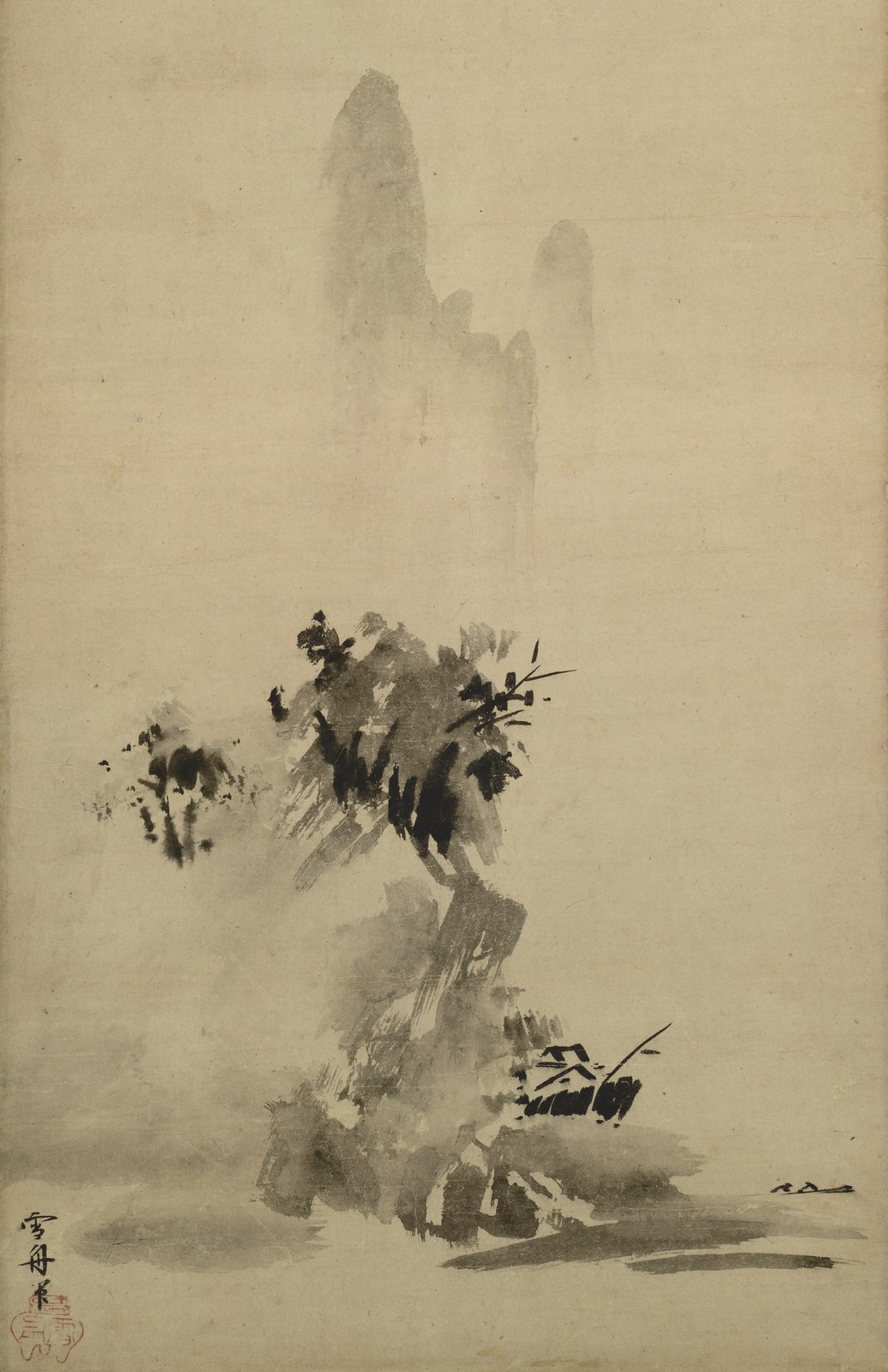
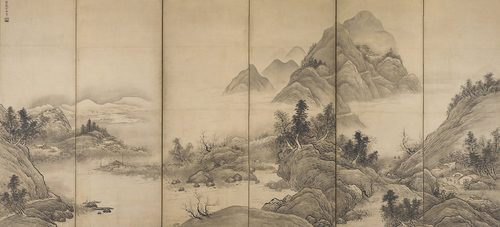
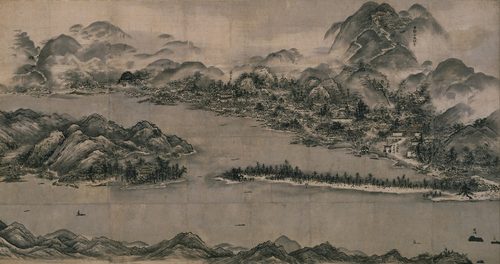
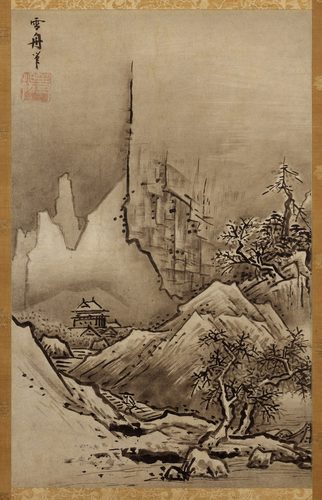
Sesshū Tōyō (1420–1506) was a Zen Buddhist monk and painter who became the most celebrated master of ink painting (suibokuga) in Japanese history, prized for landscapes that compress mountains, mist, and water into a few decisive strokes.
Trained at the Kyoto temple Shōkoku-ji under the painter-priest Shūbun, Sesshū later moved west to Suō Province, where the powerful Ōuchi clan supported his own studio. In 1467 he sailed to Ming China with an Ōuchi-sponsored trade mission, studying temple paintings and the countryside firsthand — a rare direct encounter with Chinese source material for a Japanese artist of his era. He returned convinced that direct observation, not slavish copying of old masters, should guide the brush.
His mature work spans two extremes: the explosive "splashed-ink" (haboku) technique, where landscapes seem to condense out of a few wet, rushing strokes, and long, meticulously built handscrolls like Sansui Chōkan, unrolled scene by scene like a journey. Both approaches share the same conviction that a landscape's spirit matters more than its topographical accuracy.
Later generations of Japanese ink painters treated Sesshū as the standard against which their own brushwork was measured, and several of his paintings are now designated National Treasures of Japan.
How to recognize a Tōyō
Splashed-ink landscapes
In his haboku technique, mountains and huts seem to condense from a handful of rapid, wet strokes — ink pooling into rock, thinning into mist, the whole scene readable in seconds yet built from real discipline.
Angular, decisive brushwork
His brush favors hard, straight-edged strokes over soft gradations — cliffs cut like folded paper, pine branches snapping at sharp angles, a graphic clarity closer to calligraphy than to atmospheric painting.
Deep, layered space
Sesshū builds landscapes in receding planes — a foreground rock, a middle screen of mist, distant peaks barely inked — so the eye travels back through the picture the way it would through an actual valley.
Small, purposeful figures
Tiny travelers, fishermen, or hermits appear at the base of towering landscapes, dwarfed by rock and pine — a reminder of scale, and of the Zen sense that nature dwarfs any single human errand.
Gnarled pine and rock
Twisted pines, jagged outcrops, and wind-bent branches recur across his scrolls — motifs borrowed from Chinese Song and Yuan painting but rendered with a drier, more angular hand distinctly his own.
Handscroll journeys
His long handscrolls unfold like a traveled road, season sliding into season and weather into weather across many feet of paper — landscape treated as a journey through time, not a single frozen view.
The life
Sesshū was born Oda Tōyō in Bitchū Province in 1420 and entered the Zen priesthood as a boy, eventually training at Shōkoku-ji, the great Kyoto monastery-studio where the priest-painter Shūbun taught the ink techniques imported from China. Sesshū absorbed Shūbun's landscape vocabulary but chafed at the capital's court-centered art world.
By the 1450s he had moved west to Suō Province (present-day Yamaguchi), where the powerful Ōuchi clan supported his own studio, the Unkoku-an. From there, in 1467, he joined an Ōuchi-sponsored trade mission to Ming China, spending roughly two years traveling the country, visiting temples, and sketching real mountains rather than copying earlier paintings — an experience almost no other Japanese painter of his generation had.
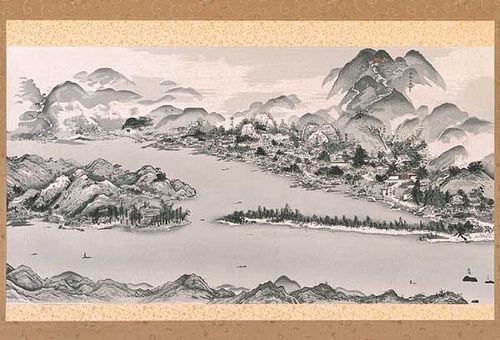
Back in Japan, Sesshū entered his most productive decades, painting the long handscroll Sansui Chōkan in 1486 and, in old age, the famous splashed-ink Haboku Sansui for a departing disciple in 1495 — a work that distilled a lifetime of practice into a handful of strokes. He also painted screens, portraits, and a celebrated view of the scenic Ama-no-Hashidate coastline.
Sesshū died in 1506 in his eighties, by then recognized as the defining Japanese ink painter of his age, having fused Chinese technique with a temperament entirely his own.
Timeline
- 1420Born in Bitchū Province, later ordained as a Zen monk
- 1454Moves to Suō Province, gains Ōuchi clan patronage
- 1467Departs for Ming China with a trade mission
- 1469Returns to Japan after two years in China
- 1486Completes the handscroll Sansui Chōkan
- 1495Paints the splashed-ink masterwork Haboku Sansui
- 1506Dies in Suō Province, in his mid-eighties
Most famous works
| Work | Date | Why it matters |
|---|---|---|
| Haboku Sansui (Splashed-Ink Landscape) | 1495 | Painted for a departing student, it condenses an entire mountain scene into a few explosive strokes. |
| Sansui Chōkan (Long Landscape Scroll) | 1486 | A handscroll journey through the four seasons, unrolled scene by scene across many feet of paper. |
| View of Ama-no-Hashidate | c. 1502 | A rare topographic landscape of the pine-covered sandbar, drawn from direct observation rather than convention. |
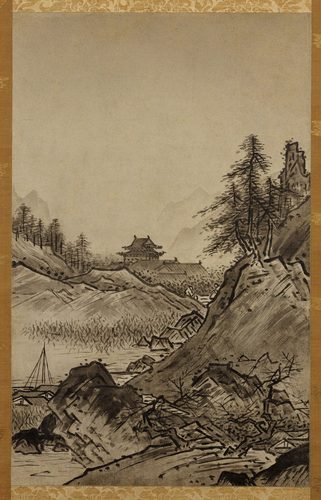
| Winter Landscape | late 1400s | A stark, angular hanging scroll whose jagged brushwork became a touchstone for later Japanese ink painters. |
| Autumn Landscape | late 1400s | Companion piece to Winter Landscape, pairing dense ink masses with passages of bare, untouched paper. |
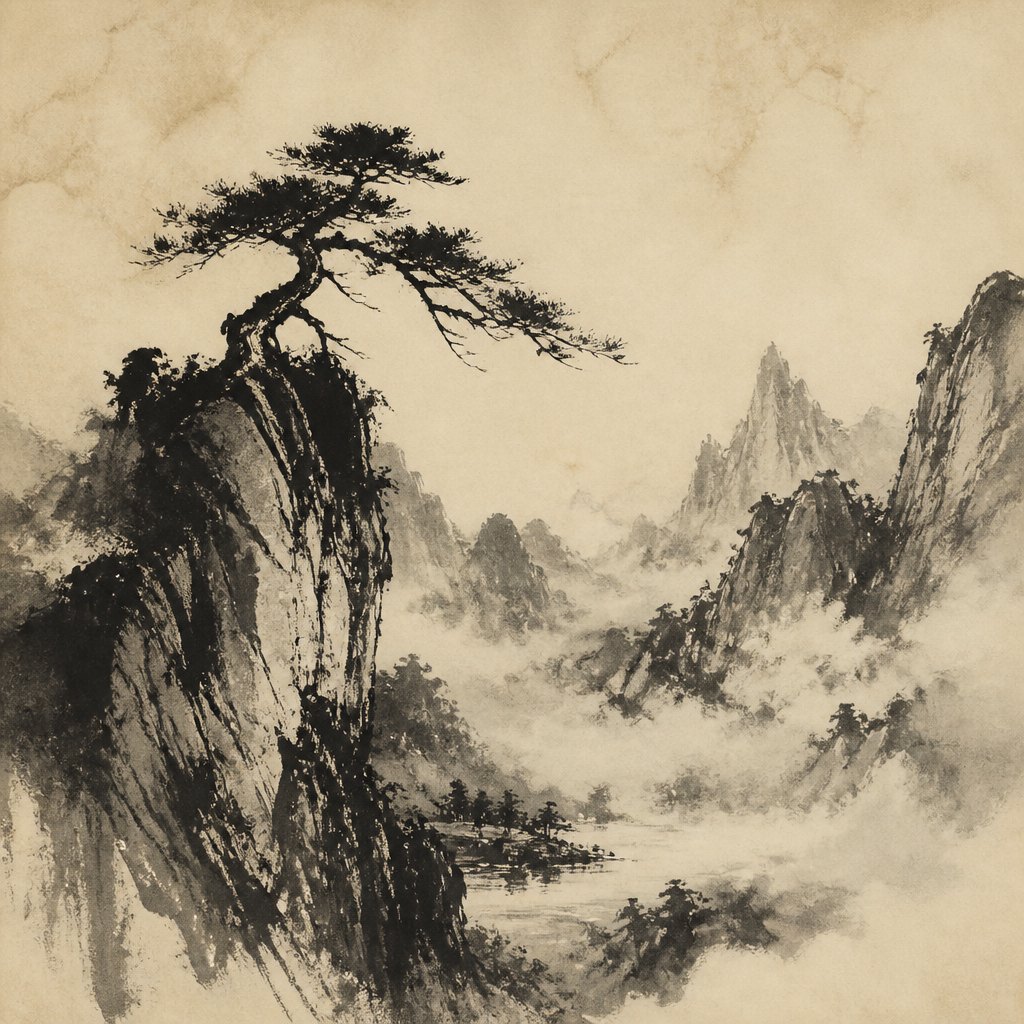 AI-generated
Create in the same spirit
Make art in this spirit
This AI interpretation echoes the aesthetic world Sesshū Tōyō worked in — it depicts no real artwork. Generate your own with the Song Dynasty Ink Painting Style generator.
Open the Song Dynasty Ink Painting Style generator →Legacy
Sesshū set the terms Japanese ink painting would follow for centuries. His insistence on direct observation over copying older masters, and his willingness to push brushwork toward near-abstraction in the splashed-ink mode, gave later painters permission to trust their own eyes and hands. The Unkoku and Hasegawa schools both claimed descent from his style, and generations of monks and professional painters studied his scrolls as the benchmark for controlled, economical ink work. Several of his paintings carry Japan's National Treasure designation, the country's highest protection for cultural property. Today his angular cliffs and condensed, breathing mist still shape how ink landscapes are drawn and read.
Frequently asked questions
What is Sesshū Tōyō famous for?
Sesshū is famous as Japan's greatest ink-painting master, especially for splashed-ink (haboku) landscapes that compress mountains and mist into a few rapid strokes, and for handscrolls like Sansui Chōkan.
Where can you see Sesshū's paintings today?
Major works are held in Japanese museums and temples, including the Tokyo National Museum and Kyoto National Museum; several, such as Haboku Sansui and Sansui Chōkan, are designated National Treasures of Japan.
Did Sesshū really travel to China?
Yes. In 1467 he joined an Ōuchi-clan trade mission to Ming China, spending about two years there studying temple paintings and sketching the landscape firsthand before returning to Japan.
What art movement did Sesshū belong to?
He worked within the Zen-influenced suibokuga (ink-wash) tradition of Muromachi-period Japan, adapting Chinese Song and Yuan painting models into a distinctly Japanese, more angular style.