 Famous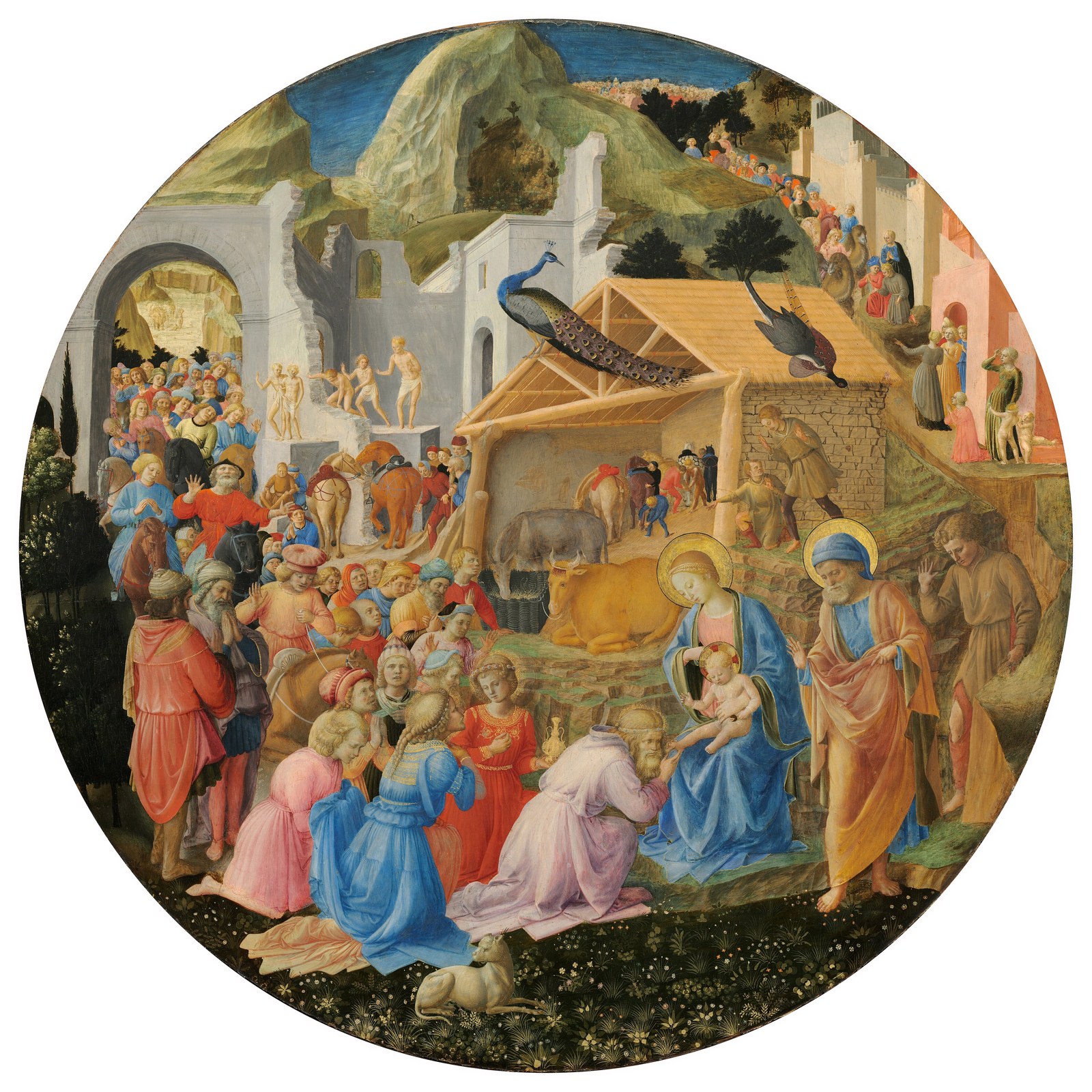
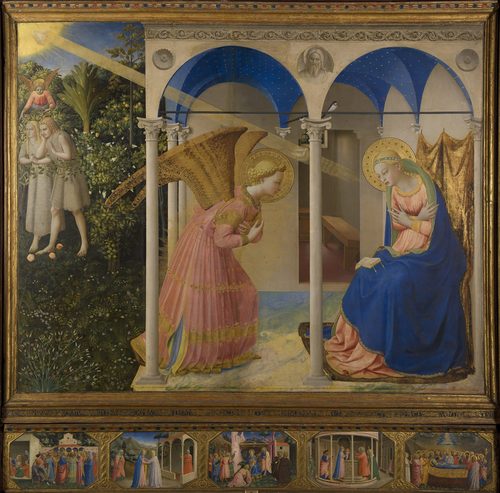
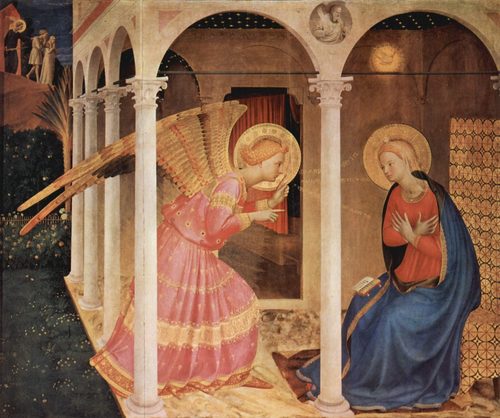
Fra Angelico (c. 1395–1455), born Guido di Pietro, was a Florentine Dominican friar and painter whose serene, clear-lit frescoes for the monastery of San Marco fused the new science of Renaissance perspective with an unusually calm, devotional simplicity, making him one of the most admired religious painters of the fifteenth century.
He joined the Dominican order around 1420 at the friary of Fiesole, taking the name Fra Giovanni; "Angelico" was an honorific applied after his death. Working steadily for churches and monasteries around Florence, he absorbed the perspective and figural weight pioneered by Masaccio while keeping a personal palette of clear, light-filled color and an atmosphere of quiet stillness. His central achievement is the cycle of frescoes he painted, with assistants, in the cells and corridors of the rebuilt San Marco monastery in the early 1440s, images meant purely for the private prayer of the friars who lived there.
Fra Angelico spent his final years working in Rome for two popes, decorating a chapel in the Vatican for Pope Nicholas V. He died in Rome in 1455. In 1982 the Catholic Church beatified him, formally recognizing the reputation for holiness that had followed him since his own lifetime.
How to recognize a Angelico
Clear, luminous color
Fra Angelico favored pure, light-filled hues, rose, sky blue, soft gold, applied with a clarity that gives his scenes an almost weightless glow, distinct from the deeper, shadowed palettes of his contemporaries.
Calm, unhurried figures
His saints and holy figures move with quiet restraint, hands folded, faces composed, gestures gentle rather than dramatic, creating an atmosphere of stillness suited to spaces meant for private prayer.
Perspective in service of prayer
He used Masaccio-style perspective and architectural framing not for spectacle but to place a devotional scene inside a believable, orderly space, letting the viewer step into the moment rather than merely observe it.
Radiant gold and light
Gold leaf and pale, sourceless light recur throughout his work, often surrounding sacred figures with a soft glow that reads as light itself rather than mere decoration, brightening a scene without ever overwhelming it.
Spare monastic settings
Many frescoes, made for the friars' own cells at San Marco, strip away ornament almost entirely, leaving a single scene against a plain wall or cell-like space, intimate and unadorned.
Gentle, rounded faces
Fra Angelico's faces are softly modeled and youthful, with mild expressions and downcast or gentle gazes, favoring quiet inwardness over the sharper individuality found in more secular portraiture of the era.
The life
Fra Angelico was born Guido di Pietro around 1395, likely in or near Vicchio in the Mugello region outside Florence. Little is documented about his early training as a painter, though he was already active as an artist before entering religious life.
Around 1420 he joined the Dominican order at the friary of Fiesole, taking the name Fra Giovanni. He continued painting throughout his decades as a friar, working for churches and confraternities around Florence and steadily absorbing the perspective and sculptural weight that Masaccio had brought to Florentine painting in the 1420s. His central body of work is the fresco cycle he produced, with the help of assistants, for the rebuilt Dominican monastery of San Marco in Florence in the early 1440s, painting a single devotional scene into each friar's cell for private meditation.
In 1445 Pope Eugenius IV summoned him to Rome, and he spent much of his later career working for the papacy, including a chapel for Pope Nicholas V in the Vatican. He returned briefly to lead his order's friary in Fiesole in the early 1450s before going back to Rome, where he died in 1455.
Timeline
- 1395Born Guido di Pietro, near Vicchio
- 1420Enters the Dominican order at Fiesole
- 1433Paints the Linaiuoli Triptych for a Florentine guild
- 1436Begins work for the new monastery of San Marco
- 1440Paints the cell frescoes at San Marco
- 1445Summoned to Rome by Pope Eugenius IV
- 1447Frescoes a chapel for Pope Nicholas V in the Vatican
- 1455Dies in Rome
Most famous works
| Work | Date | Why it matters |
|---|---|---|
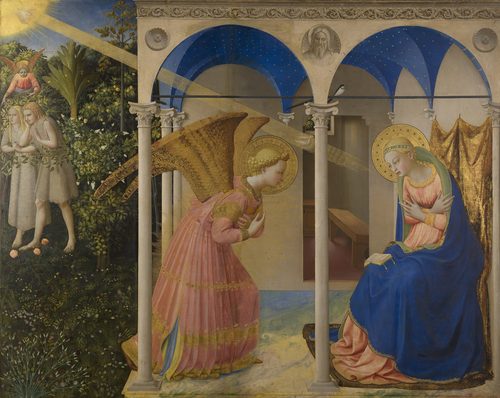
| The Annunciation (San Marco) | c. 1440-1445 | A fresco painted at the top of the dormitory stairs at San Marco, among the most reproduced images of the scene. |
| Cell Frescoes, Convent of San Marco | c. 1440-1442 | A cycle of intimate devotional scenes painted directly into the friars' individual cells for private prayer. |
| Deposition from the Cross | c. 1432-1434 | An altarpiece for Santa Trinita, Florence, combining Gothic detail with newly confident Renaissance perspective and landscape. |
| Linaiuoli Triptych | 1433 | A large altarpiece commissioned by the Florentine linen guild, framed by Lorenzo Ghiberti's ornate marble surround. |
| The Last Judgment | c. 1425-1431 | A vivid panel contrasting an orderly, dancing paradise with a chaotic, punishing hell in sharp visual opposition. |
 AI-generated
Create in the same spirit
Make Early Renaissance art of your own
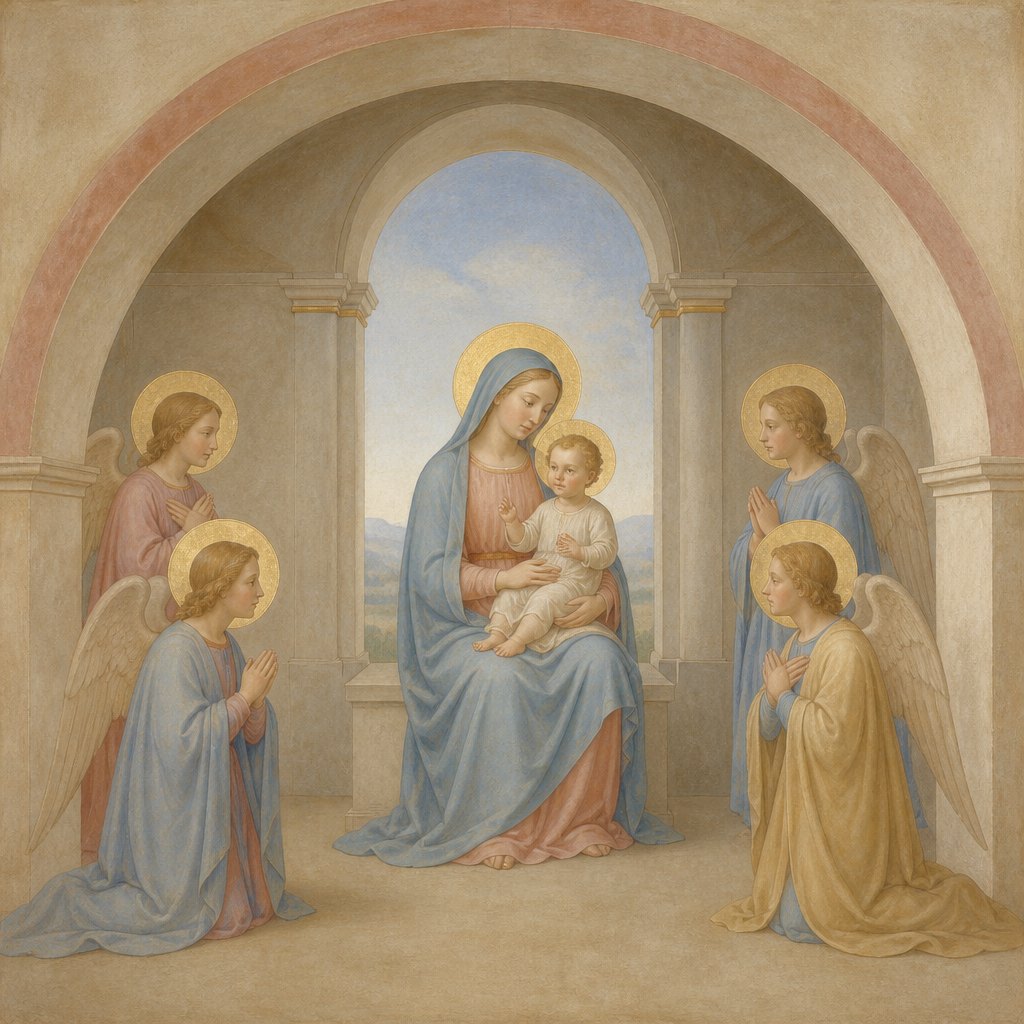
This AI interpretation echoes the aesthetic world Fra Angelico worked in — it depicts no real artwork. Generate your own with the Quattrocento Perspective Renaissance Art Style generator.
Open the Quattrocento Perspective Renaissance Art Style generator →Legacy
Fra Angelico showed that the technical breakthroughs of Masaccio and Brunelleschi, perspective, weight, real space, could serve quiet devotion as easily as public spectacle. His San Marco cells, painted for an audience of one friar at a time, remain some of the most intimate religious images of the Renaissance. Vasari praised him for a purity of life that matched his art, and the Church later beatified him. You feel him now in any image that uses clarity and stillness rather than drama to hold attention, in soft, even light standing in for something larger than the room it fills.
Frequently asked questions
What is Fra Angelico famous for?
Fra Angelico is famous for the luminous, serene fresco cycle he painted in the friars' cells at the monastery of San Marco in Florence, blending Renaissance perspective with a distinctly calm, devotional style.
Where can you see Fra Angelico's work today?
The Museo di San Marco in Florence, the former monastery itself, holds his greatest fresco cycle. Panel paintings are also held by the Uffizi in Florence, the Prado in Madrid, and other major museums.
Was Fra Angelico really a monk?
Yes. Born Guido di Pietro, he became a Dominican friar around 1420, taking the name Fra Giovanni, and painted throughout his religious life. He was beatified by the Catholic Church in 1982.
What movement did Fra Angelico belong to?
Fra Angelico worked within the Early Renaissance in Florence, absorbing the perspective and figural weight introduced by Masaccio while keeping a gentler, more devotional style rooted in his Dominican training.