 Famous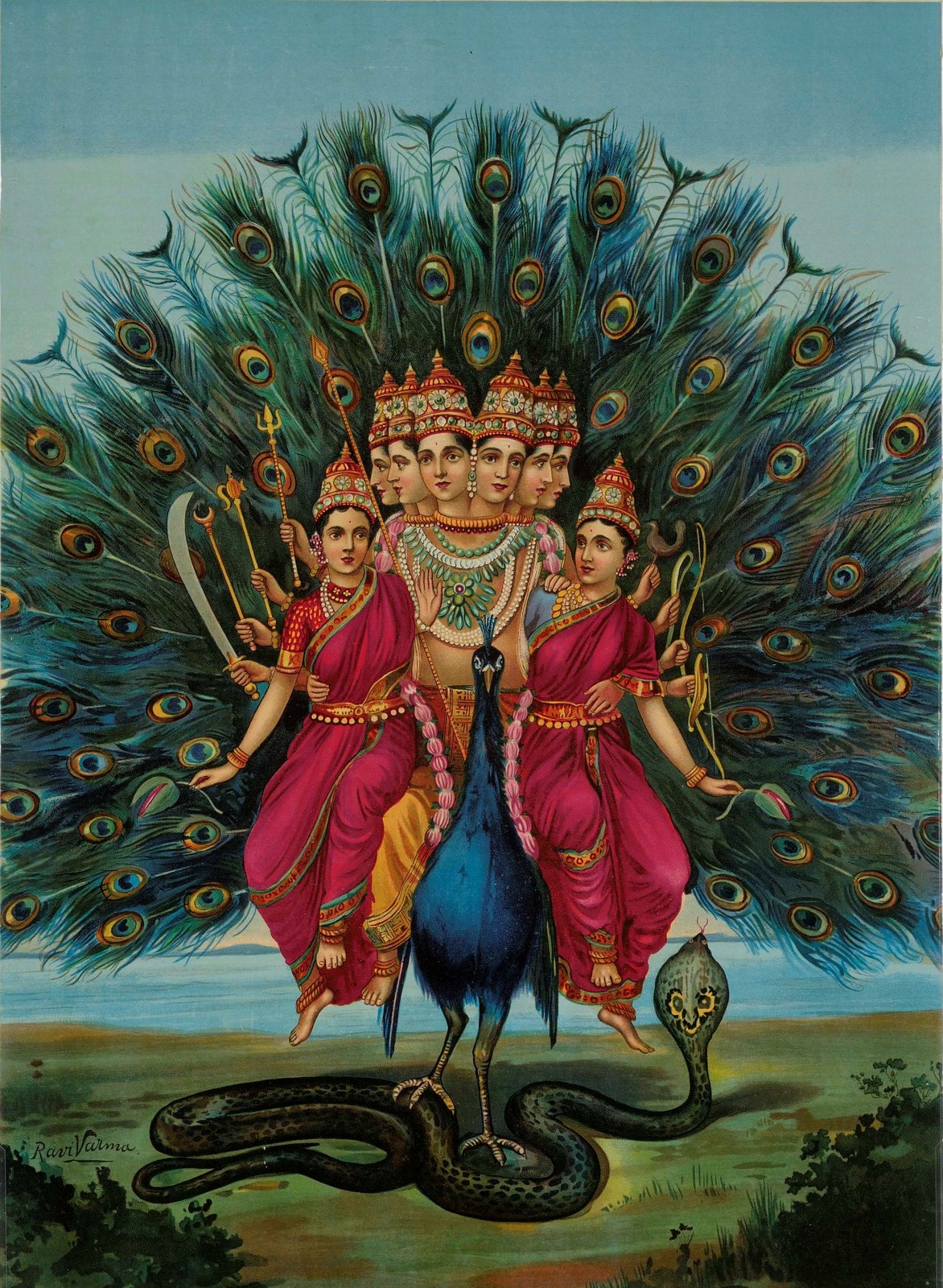
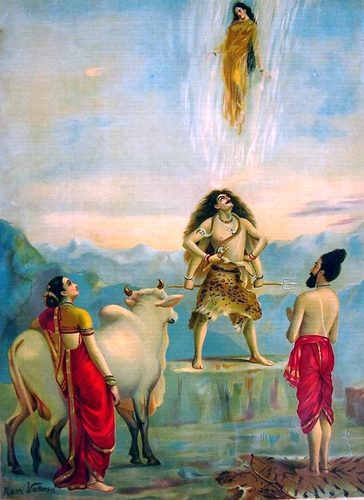
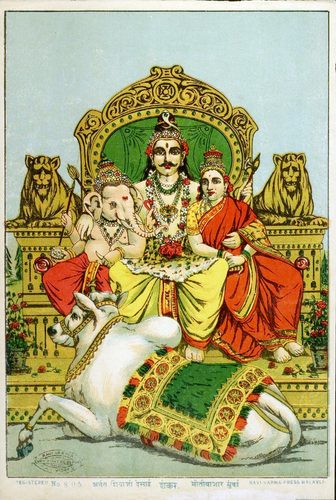
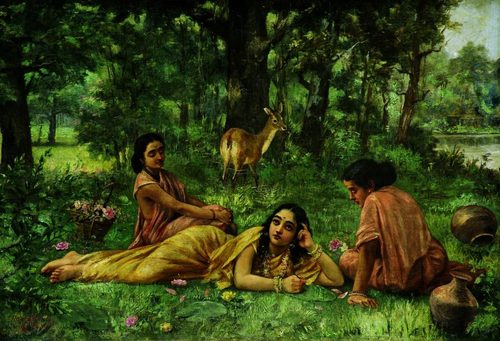
Raja Ravi Varma (1848–1906) was an Indian painter from the princely state of Travancore who became the first Indian artist to achieve wide fame using European academic oil painting technique, best known for turning scenes from the Ramayana, Mahabharata, and Puranas into lifelike, theatrically staged paintings.
Born into an aristocratic family with royal connections in Kilimanoor, Kerala, he studied under local painters and later received informal guidance from a visiting European portrait painter, absorbing Western techniques of oil painting, perspective, and portraiture largely unfamiliar in Indian art at the time. He built his early reputation painting portraits of Indian royalty and won recognition at exhibitions in Vienna and Chicago.
His most consequential decision was commercial rather than purely artistic: in 1894 he founded a lithographic press near Mumbai to mass-produce affordable prints of his mythological paintings, putting images of deities like Lakshmi and Saraswati into homes, shops, and calendars across India on a scale no painter had reached before. His depictions of gods and heroines, often modeled on real women he knew, became the template many Indians still visualize those figures through.
Ravi Varma died in 1906, having reshaped both the look of Hindu religious imagery and the status of the professional painter in India.
How to recognize a Varma
Theatrical, lifelike staging
Ravi Varma poses gods and heroines like actors on a stage, caught mid-gesture with dramatic lighting and detailed drapery — a theatrical realism borrowed from European academic painting and Indian stagecraft alike.
Mythological subjects, human faces
Deities and epic heroines are painted with the individualized faces of real, specific models rather than stylized icons, giving figures like Damayanti or Shakuntala an approachable, almost portrait-like human presence.
Rich, layered drapery
Sarees, jewelry, and richly patterned textiles are rendered with careful attention to fold, sheen, and drape, showing off his academic training in modeling fabric convincingly under directional studio light and shadow.
European oil technique, Indian subject
He applied Western academic tools — linear perspective, chiaroscuro, careful anatomical modeling — to purely Indian literary and religious subject matter, a bold combination almost no earlier Indian painter had seriously attempted.
Narrative, single-frame storytelling
Each painting compresses a single moment from an epic or legend into one clear, readable scene, carefully chosen for maximum emotional and dramatic effect rather than symbolic or decorative abstraction.
Mass-reproduced calendar imagery
Through his lithographic press, his compositions were reprinted by the millions as prints and calendar art, so his specific vision of gods and heroines became the default image many Indians still recognize.
The life
Ravi Varma was born in 1848 in Kilimanoor, a small principality allied with the royal house of Travancore in present-day Kerala, into a family with artistic and courtly connections. He showed early talent for drawing and was encouraged by local palace painters before receiving informal guidance from a visiting European portrait painter who introduced him to oil technique and Western composition in the late 1860s.
He built his reputation first as a portraitist of Indian nobility, gaining access to princely courts across the subcontinent and gradually developing the confident, illusionistic style that would define his career. Recognition abroad followed: his paintings won acclaim at the Vienna exhibition in the 1870s and at the World's Columbian Exposition in Chicago in 1893.
His greatest impact came through mass reproduction rather than the paintings alone. In 1894 he established a lithographic press near Mumbai specifically to print affordable copies of his mythological scenes, which spread across India through markets, shops, and religious calendars. Through this press, his particular vision of Lakshmi, Saraswati, and epic heroines became embedded in Indian popular imagination on a scale unmatched by any painter before him.
He was honored by the colonial government with the Kaisar-i-Hind medal in 1904 and died in his native Kilimanoor in 1906.
Timeline
- 1848Born in Kilimanoor, Travancore
- 1868Receives informal guidance from a visiting European painter
- 1873Wins acclaim for oil paintings sent to the Vienna exhibition
- 1893Wins awards at the World's Columbian Exposition in Chicago
- 1894Founds a lithographic press to mass-print his paintings
- 1904Awarded the Kaisar-i-Hind gold medal
- 1906Dies in Kilimanoor
Most famous works
| Work | Date | Why it matters |
|---|---|---|
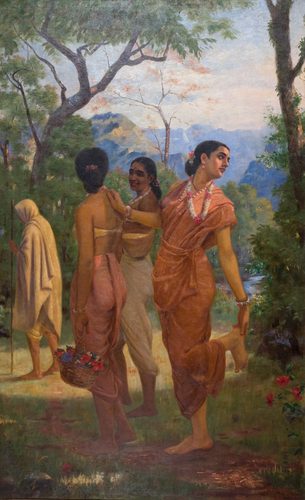
| Shakuntala | c. 1870 | A recurring subject drawn from Kalidasa's play, showing the heroine pretending to remove a thorn while glancing back at her beloved. |
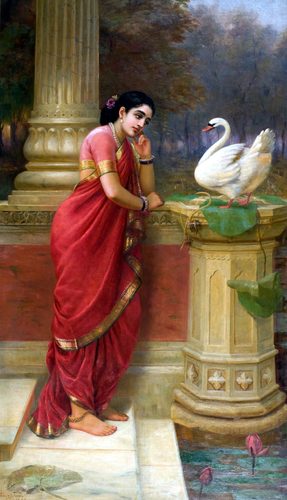
| Damayanti and the Swan | c. 1899 | One of his most reproduced mythological scenes, showing the princess Damayanti conversing with a golden swan carrying her message to Nala. |
| Galaxy of Musicians | 1889 | A rare non-mythological group portrait of women from different regions of India, each playing a different instrument. |
| Lakshmi | c. 1896 | A widely reproduced devotional image of the goddess of wealth that became a template for later calendar art and temple imagery. |
| Saraswati | c. 1896 | A devotional portrait of the goddess of knowledge and the arts that remains one of the most widely reproduced religious images in India. |
 AI-generated
Create in the same spirit
Make Academic Art art of your own
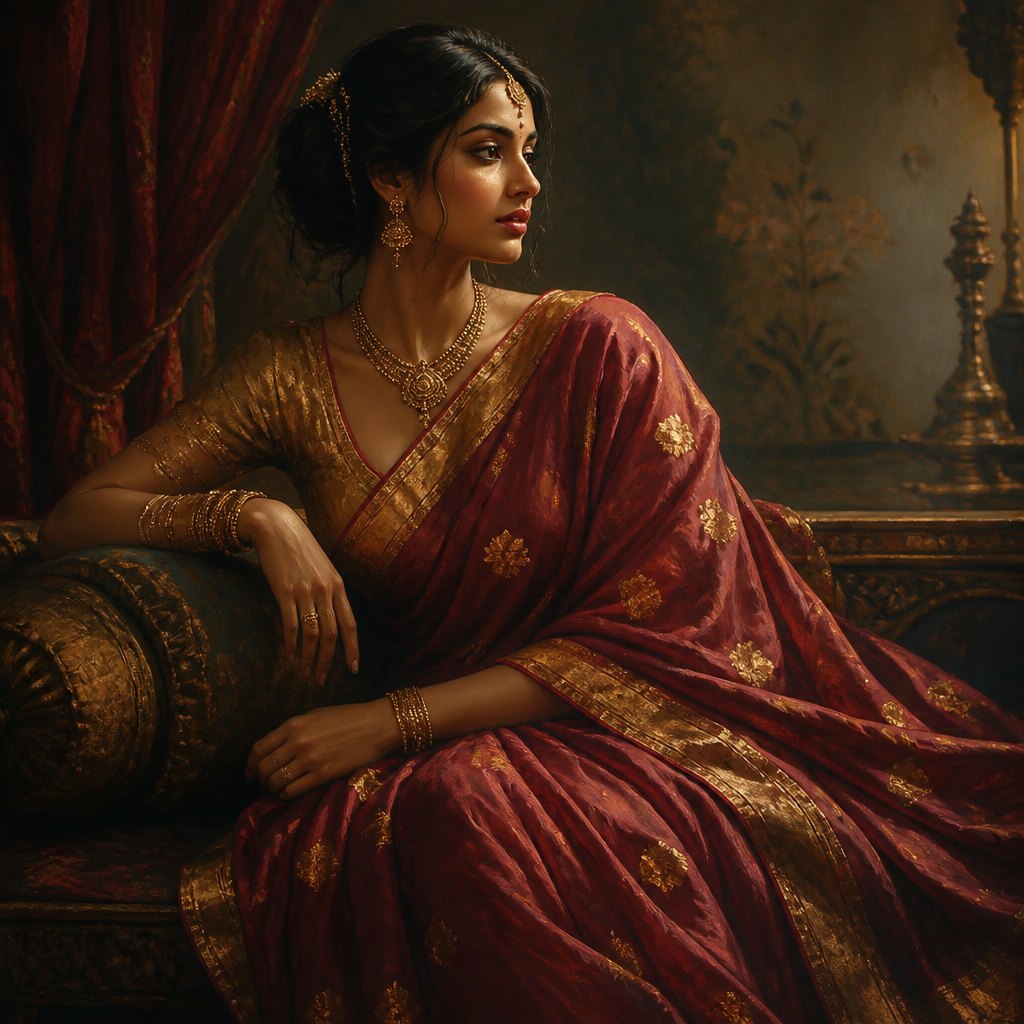
This AI interpretation echoes the aesthetic world Raja Ravi Varma worked in — it depicts no real artwork. Generate your own with the Academic Classical Art Style generator.
Open the Academic Classical Art Style generator →Legacy
Ravi Varma changed what Indian religious imagery looked like. Before him, gods and epic heroines were rendered mostly in regional stylized traditions; after his lithographic prints spread across the subcontinent, his particular vision of figures like Lakshmi, Saraswati, and Shakuntala became the default many Indians still picture when they imagine them, reproduced endlessly on calendars, packaging, and temple walls. He also demonstrated that Indian artists could work within European academic technique without abandoning Indian subject matter, opening a path later Indian modernists reacted both against and in dialogue with. He is widely regarded as one of the founding figures of modern Indian painting.
Frequently asked questions
What is Raja Ravi Varma famous for?
Ravi Varma is famous for realistic oil paintings of Hindu deities and epic heroines, and for founding a lithographic press that spread those images across India as affordable prints.
Where can you see Raja Ravi Varma's paintings today?
His paintings are held at the Sri Chitra Art Gallery in Thiruvananthapuram, the National Gallery of Modern Art in New Delhi, and various palace collections across India.
Why was Raja Ravi Varma's printing press significant?
His 1894 lithographic press mass-produced affordable prints of his mythological paintings, spreading specific images of gods like Lakshmi and Saraswati into ordinary Indian homes for the first time.
What art movement is Raja Ravi Varma associated with?
He is associated with Indian academic art, blending European academic realism with Indian mythological and literary subject matter, and is considered a founder of modern Indian painting.