 Famous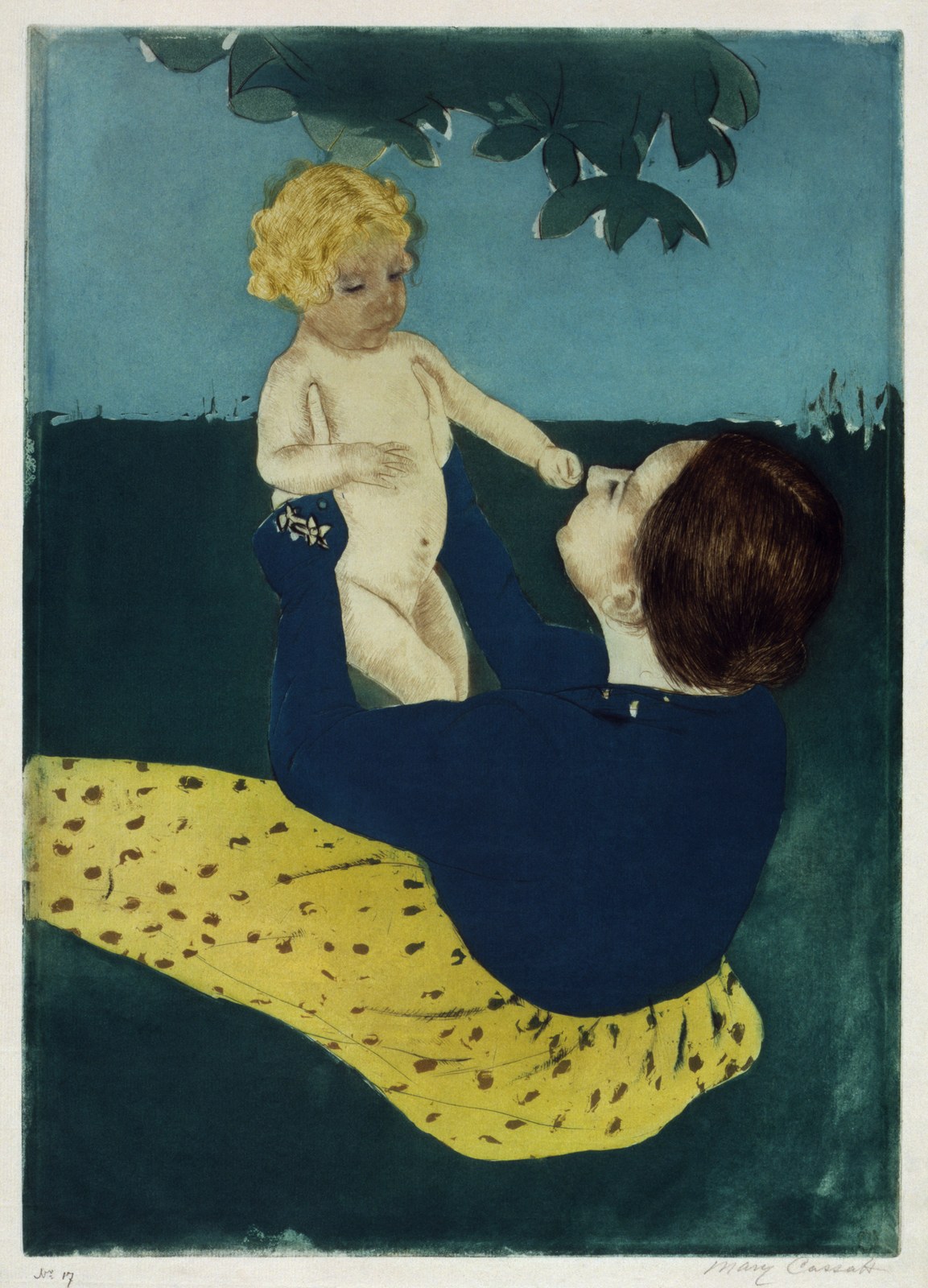
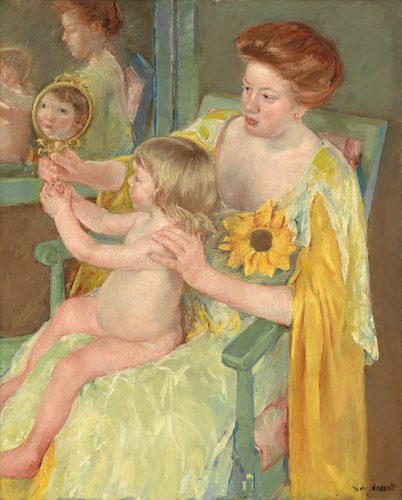
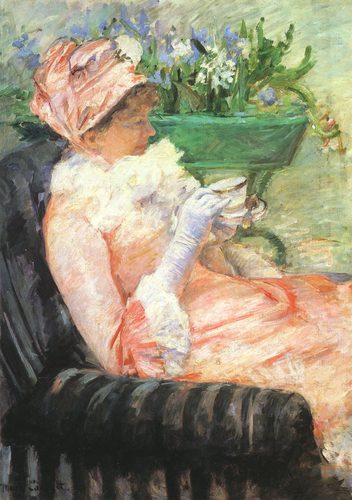
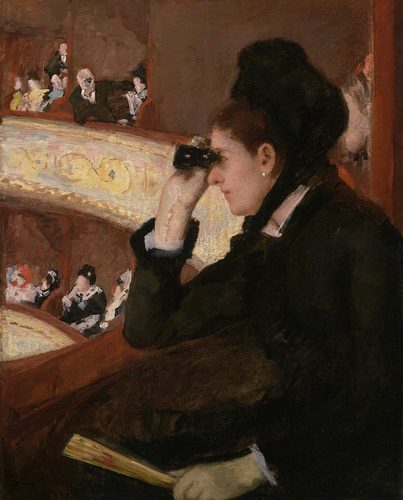
Mary Cassatt (1844–1926) was an American painter who became one of the only U.S. citizens to exhibit regularly with the French Impressionists, celebrated for paintings of mothers, children, and women's private routines rendered with close observation rather than sentimentality. Born near Pittsburgh to a wealthy family, she studied at the Pennsylvania Academy of the Fine Arts before moving to Paris, where formal art schools remained closed to women and she trained privately, copying old masters in the Louvre.
Edgar Degas invited her to join the Impressionist group in 1877, beginning a close artistic friendship and a lasting shift in her work toward looser brushwork and unconventional compositions. She exhibited with the group through the early 1880s, focusing increasingly on the mother-and-child theme that became her signature, and on scenes of women reading, sewing, and taking tea.
A major exhibition of Japanese woodblock prints in Paris in 1890 reshaped her approach again, pushing her toward flattened space and bold outline in an acclaimed series of color prints. She also advised wealthy American collectors, helping bring Impressionist paintings into major U.S. museum collections. Failing eyesight ended her painting career around 1914; she died near Paris in 1926.
How to recognize a Cassatt
Mothers and children
Cassatt returned constantly to the bond between mother and child, painting bathing, holding, and reading not as sentimental icons but as physically specific, closely observed daily acts full of ordinary weight and effort.
Unsentimental domestic realism
She avoided idealized softness, instead showing tired arms, awkward poses, and the genuine physical weight passed between two figures, giving her domestic scenes an honesty that was rarer than sentiment in the genre.
Japanese-influenced flatness
After studying an 1890 exhibition of Japanese woodblock prints, she adopted flattened perspective, bold outlines, and densely patterned fabric in a celebrated series of color prints made in the early 1890s.
Cropped, unusual viewpoints
Influenced by Degas and by photography, she often cropped figures at odd angles or looked down from above, breaking with the traditional centered, full-length composition favored by earlier academic portraiture.
Bright, patterned interiors
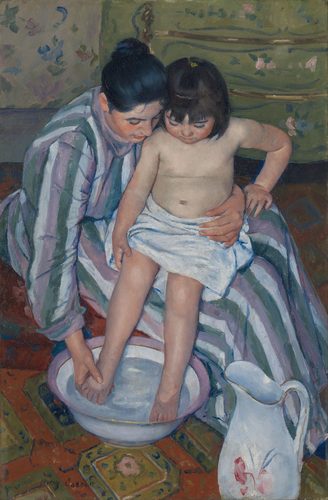
Wallpaper, striped dresses, and patterned upholstery fill her interiors with active, busy surface design, so that color and pattern do nearly as much visual work as the figures posed within them.
Confident, economical drawing
Her line is sure and fast, particularly in her prints and pastels, capturing a whole gesture with a handful of decisive marks rather than careful, slowly labored finish or excess detail.
The life
Mary Cassatt was born in 1844 near Pittsburgh, Pennsylvania, to a prosperous family that later moved the household to Europe for several years during her childhood. She studied at the Pennsylvania Academy of the Fine Arts before settling permanently in Paris, where women were barred from the École des Beaux-Arts, and instead trained privately and copied old masters at the Louvre, supporting herself as an independent, unmarried woman for her entire career.
In 1877 Edgar Degas invited her to exhibit with the Impressionists, and the two became close artistic collaborators and friends. She showed with the group through the early 1880s, developing looser brushwork and increasingly focusing on women and children in domestic settings, a subject she made distinctly her own.
A landmark 1890 exhibition of Japanese woodblock prints in Paris pushed her toward flatter space and stronger outline, resulting in an acclaimed series of color prints in the early 1890s. She also used her position to advise wealthy American friends, including the Havemeyer family, on building Impressionist collections that later entered U.S. museums. Diabetes and cataracts gradually destroyed her eyesight, ending her painting career around 1914; she died near Paris in 1926.
Timeline
- 1844Born near Pittsburgh, Pennsylvania
- 1866Moves to Paris to study art
- 1874Settles permanently in Paris
- 1877Invited by Edgar Degas to join the Impressionists
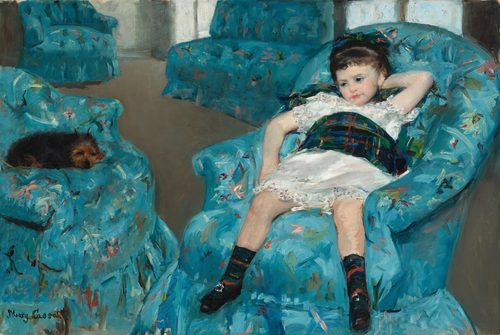
- 1878Paints Little Girl in a Blue Armchair
- 1890Sees the Paris exhibition of Japanese prints
- 1893Completes The Child's Bath and The Boating Party
- 1914Failing eyesight ends her painting career
- 1926Dies near Paris
Most famous works
| Work | Date | Why it matters |
|---|---|---|
| Little Girl in a Blue Armchair | 1878 | A sprawling, unposed child portrait praised by Degas, who reportedly helped rework its composition. |
| The Child's Bath | 1893 | A tightly cropped, tender bathing scene showing Japanese-print influence in its flattened, patterned space. |
| The Boating Party | 1893–94 | A bold, high-angle composition of a mother and child rowed across water by a dark-clad oarsman. |
| Woman Bathing (La Toilette) | 1890–91 | A color drypoint and aquatint print from her acclaimed Japanese-influenced series, prized for its clean line. |
| The Cup of Tea | c. 1880–81 | A quiet portrait of women's social ritual, rendered in bold pink and touches of loose brushwork. |
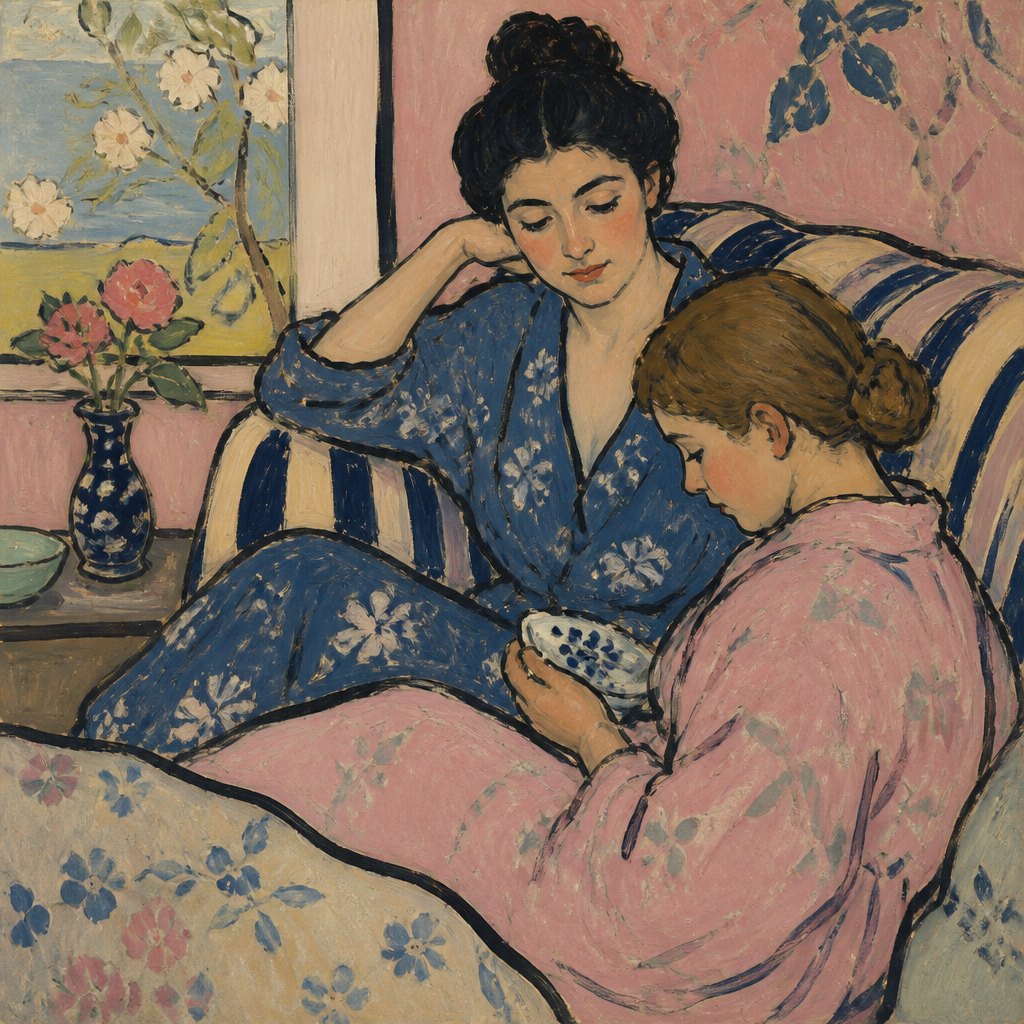 AI-generated
Create in the same spirit
Make Impressionism art of your own
This AI interpretation echoes the aesthetic world Mary Cassatt worked in — it depicts no real artwork. Generate your own with the Impressionism Art Style generator.
Open the Impressionism Art Style generator →Legacy
Cassatt gave the Impressionist movement one of its few American voices and one of its sharpest eyes for domestic life, treating the mother-and-child theme with a seriousness that kept it from tipping into sentimentality. Her prints, made after studying Japanese woodblock art, are still studied for their economy of line and flattened, patterned space. Beyond her own painting, her advocacy shaped how American museums first acquired Impressionist works, quietly steering major collections toward Paris. Later painters of domestic and family life, and any artist interested in honest, unposed intimacy between figures, work in a tradition she helped define.
Frequently asked questions
What is Mary Cassatt famous for?
Cassatt is famous for Impressionist paintings and prints of mothers and children, rendered with close, unsentimental observation, and for being one of the only American artists to exhibit regularly with the French Impressionists.
Where can I see Mary Cassatt's work?
Her paintings and prints are held at the National Gallery of Art in Washington, the Metropolitan Museum of Art in New York, the Art Institute of Chicago, and the Musée d'Orsay in Paris.
What art movement was Mary Cassatt part of?
She was part of the Impressionist movement, invited to exhibit with the group by Edgar Degas in 1877 and showing alongside Monet, Renoir, Morisot, and Degas through the early 1880s.
Why did Mary Cassatt stop painting?
Diabetes and cataracts gradually damaged her eyesight, and by around 1914 she was forced to give up painting entirely, though she lived until 1926.