 Famous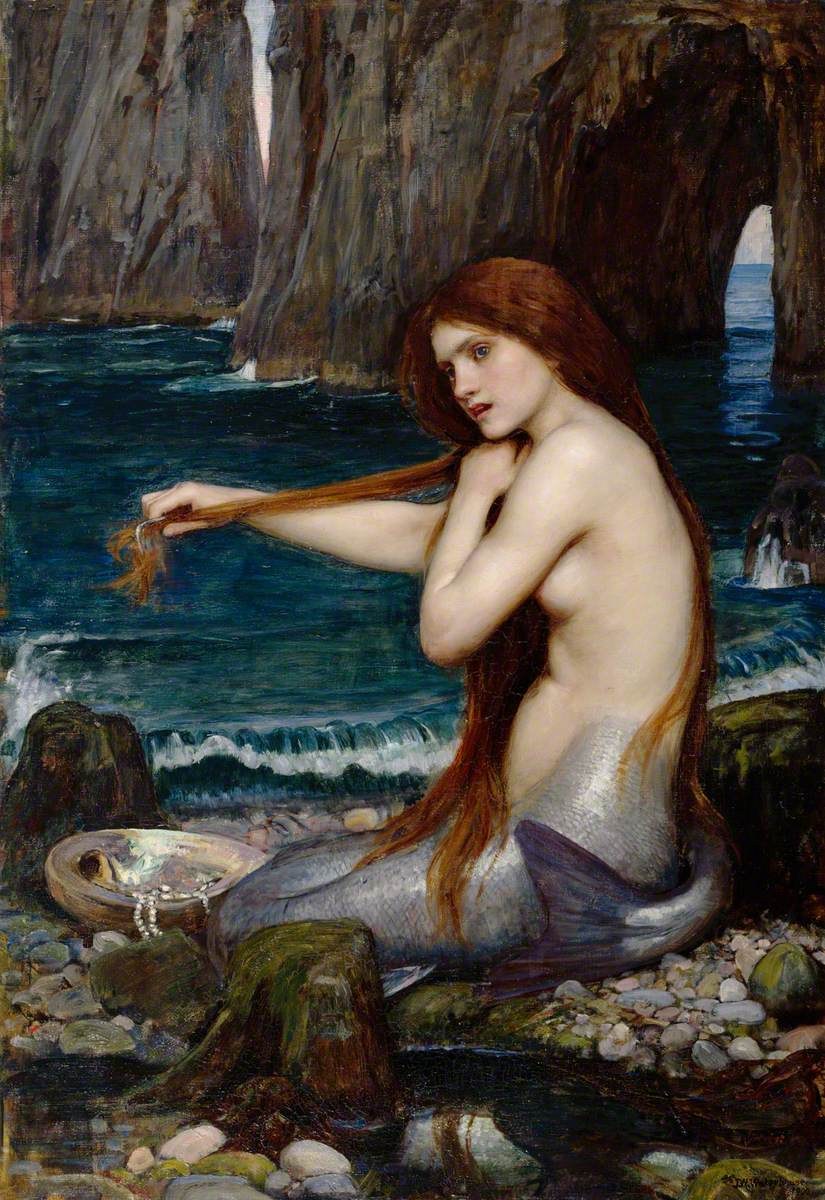
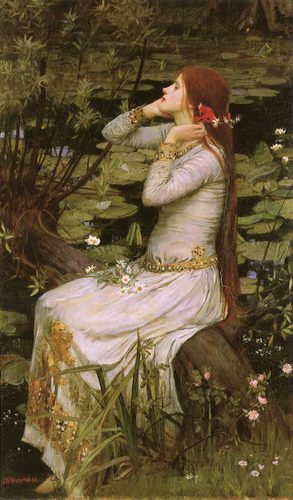
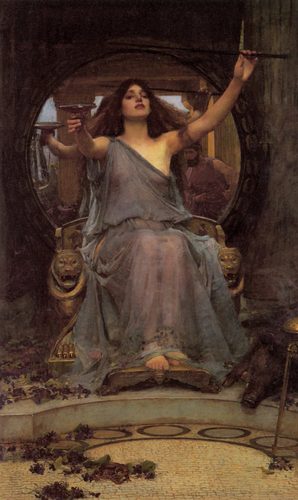
John William Waterhouse (1849–1917) was a British painter who fused Pre-Raphaelite subject matter with academic training, becoming best known for luminous, atmospheric paintings of mythological and literary heroines — sorceresses, nymphs, and doomed women drawn from Tennyson, Homer, and Ovid — often set beside still or moving water.
Born in Rome to English painter parents, Waterhouse grew up steeped in classical art before the family returned to London, where he trained at the Royal Academy Schools. He began exhibiting Roman genre scenes in the classical style popularized by Alma-Tadema, then shifted decisively in the 1880s toward the literary, emotionally charged subjects that defined his mature career, starting with 'The Lady of Shalott' in 1888.
Waterhouse painted repeatedly from Arthurian legend and Greek myth, favoring women at moments of transformation, choice, or fate — Ophelia drifting toward death, Circe wielding her power, Hylas lured by nymphs. His technique combined loose, confident brushwork with rich color and careful composition, earning him a reputation as a later Pre-Raphaelite though he worked a generation after the original Brotherhood. He continued painting until his death in London in 1917.
How to recognize a Waterhouse
Water as threshold
Rivers, lakes, and pools appear constantly, marking moments of transformation, danger, or fate for his heroines. Water in Waterhouse's world is never just scenery — it signals a character crossing from one state of being to another.
Loose, atmospheric brushwork
Unlike the tight finish of earlier Pre-Raphaelites, Waterhouse painted with visible, confident strokes, especially in foliage and drapery, giving his scenes a shimmering, slightly unstable quality that suits their dreamlike subjects.
Mythic and literary heroines
His subjects come almost entirely from Greek myth, Arthurian legend, and Romantic poetry — Circe, Ophelia, the Lady of Shalott — women caught at a decisive emotional or supernatural turning point.
Rich, saturated drapery
Flowing fabric in deep blues, greens, and reds dominates his compositions, often more vivid than the surrounding landscape, used to convey movement and the emotional weight of the scene.
Autumnal, twilight color
Waterhouse favored warm, muted golds and greens suggesting late afternoon or autumn, lending even his most dramatic mythic subjects a wistful, elegiac mood rather than high drama.
Wild, overgrown nature
Riverbanks, forests, and gardens grow dense and untamed around his figures, rendered with enough botanical detail to root fantasy subjects in a convincingly observed natural world.
The life
Waterhouse was born in Rome, where his father worked as a painter, and the family's return to London in the 1850s placed him amid a thriving art world. He initially studied sculpture before switching to painting at the Royal Academy Schools around 1871, developing early skill in the classical genre scenes then fashionable under painters like Alma-Tadema and Frederic Leighton.
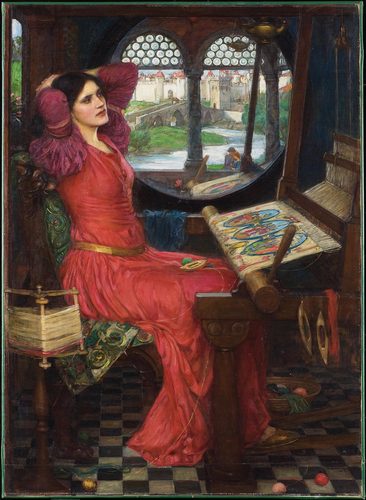
Through the 1870s he exhibited Roman-themed works to modest success, but a decisive shift came in the 1880s toward literary and mythological subjects charged with emotion, beginning with 'The Lady of Shalott' (1888), which won him wide acclaim and remains his best-known painting. He continued mining Tennyson, Homer, Ovid, and Keats for subjects over the following decades, returning repeatedly to certain themes, including several separate paintings of the Lady of Shalott across his career.
Waterhouse was elected to the Royal Academy in 1895 and remained a respected, steadily working painter even as Impressionism and early modernism reshaped British taste. He married fellow painter Esther Kenworthy in 1883. He died in London in 1917 after a long illness, his late, unfinished canvases showing he was still developing his style at the end.
Timeline
- 1849Born in Rome, Italy
- 1854Family returns to London
- 1871Enters the Royal Academy Schools
- 1883Marries painter Esther Kenworthy
- 1888Paints "The Lady of Shalott"
- 1895Elected to the Royal Academy
- 1917Dies in London
Most famous works
| Work | Date | Why it matters |
|---|---|---|
| The Lady of Shalott | 1888 | Tennyson's cursed weaver adrift toward Camelot, his most famous and reproduced painting. |
| Ophelia | 1889 | Shakespeare's doomed heroine gathering flowers beside the stream, a subject he revisited across decades. |
| Circe Invidiosa | 1892 | The sorceress poisoning a pool, her power rendered through swirling color and pose. |
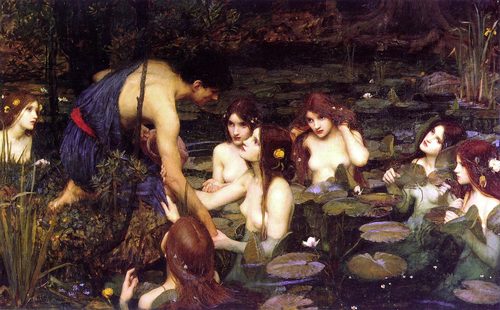
| Hylas and the Nymphs | 1896 | Water nymphs drawing a young man beneath a pool's surface, later a flashpoint in museum display debates. |
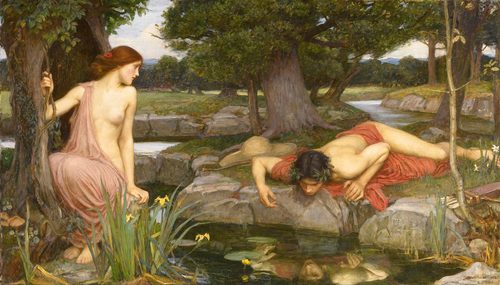
| Echo and Narcissus | 1903 | A nymph's unrequited longing staged beside a mirror-still pool reflecting the myth's central irony. |
 AI-generated
Create in the same spirit
Make Pre Raphaelite Brotherhood art of your own
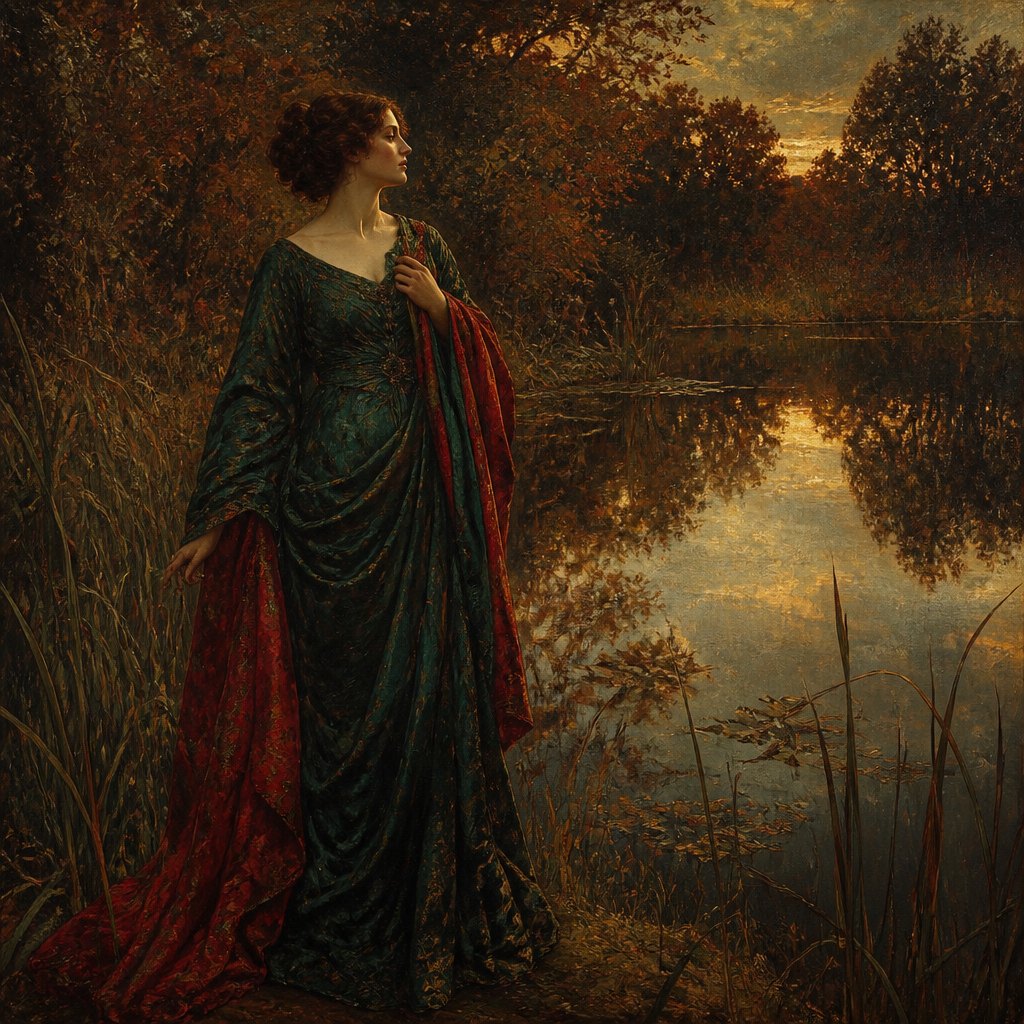
This AI interpretation echoes the aesthetic world John William Waterhouse worked in — it depicts no real artwork. Generate your own with the Pre-Raphaelite Art Style generator.
Open the Pre-Raphaelite Art Style generator →Legacy
Waterhouse gave late Victorian and Edwardian audiences an accessible bridge between Pre-Raphaelite intensity and academic polish, and his mythic heroines shaped popular imagination around figures like the Lady of Shalott and Ophelia. His paintings remain among the most reproduced images from British art, appearing constantly in prints, book covers, and fantasy illustration, and his water-bound, emotionally charged compositions anticipated later fantasy and Symbolist art. 'Hylas and the Nymphs' became a flashpoint in 2018 when a museum briefly removed it to prompt public debate about how museums display the female form, proving his work still provokes serious conversation.
Frequently asked questions
What is John William Waterhouse famous for?
Waterhouse is famous for 'The Lady of Shalott' (1888) and other richly atmospheric paintings of mythological and literary heroines, blending Pre-Raphaelite detail with looser, more painterly academic technique.
Where can I see Waterhouse's paintings today?
Tate Britain holds 'The Lady of Shalott,' while the Art Gallery of New South Wales, Manchester Art Gallery, and other museums hold major works spanning his career.
What art movement did Waterhouse belong to?
Waterhouse is often called a later Pre-Raphaelite for his literary subjects, though he trained academically and painted a generation after the original Brotherhood disbanded.
Why did Waterhouse paint the Lady of Shalott more than once?
He returned to Tennyson's poem across his career, capturing different moments of her story each time, showing his lasting fascination with her fate.