 Famous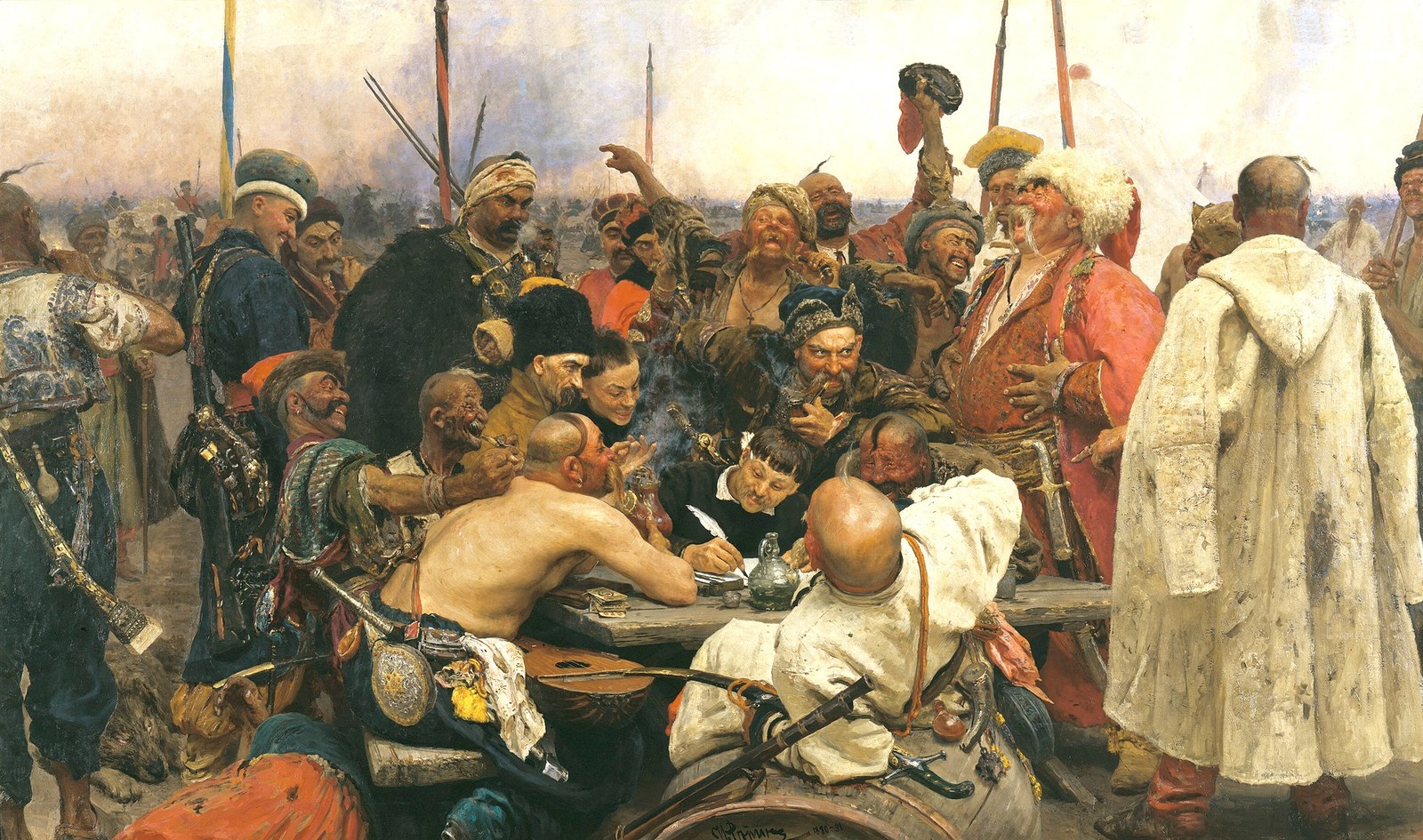
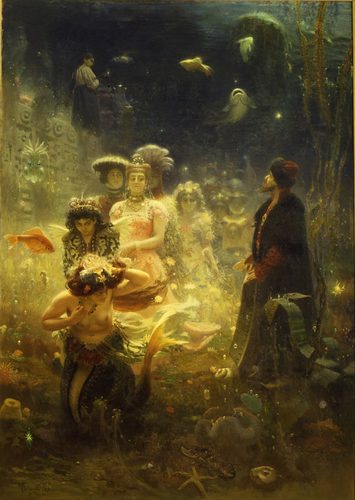
Ilya Repin (1844–1930) was a Russian-Ukrainian painter whose unflinching realism, psychological portraiture, and scenes of ordinary labor and social injustice made him the most celebrated artist of the Peredvizhniki, the 'Wanderers' who broke from the Imperial Academy to bring Russian life directly before the public.
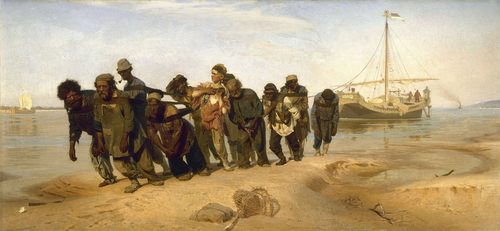
Born in Chuhuiv, in present-day Ukraine, to a military settler family, Repin studied icon painting locally before entering the Imperial Academy of Arts in St. Petersburg in 1864. His 1873 masterpiece 'Barge Haulers on the Volga,' depicting exhausted laborers straining against a rope harness, established him instantly as Russia's foremost realist and a voice for the poor.
Repin spent decades painting Russian history, literature, and contemporary life with equal intensity, from the psychologically charged 'Ivan the Terrible and His Son Ivan' to vast group portraits like 'Ceremonial Sitting of the State Council.' He taught at the Academy, mentoring a generation of Russian painters, and maintained close friendships with writers including Tolstoy, whom he painted repeatedly. After the 1917 Russian Revolution, his estate at Kuokkala became part of newly independent Finland, and he remained there in self-imposed exile until his death in 1930.
How to recognize a Repin
Unflinching social realism
Repin painted laborers, prisoners, and the rural poor without sentimentality or idealization, showing exhaustion and hardship directly on the body and face. His realism aimed to make privileged viewers confront conditions they usually looked past.
Psychological portrait intensity
His portraits — of writers, composers, and public figures — probe character through expression and posture rather than flattering likeness, often catching sitters in a moment of visible inner tension or thought.
Dense, animated crowd scenes
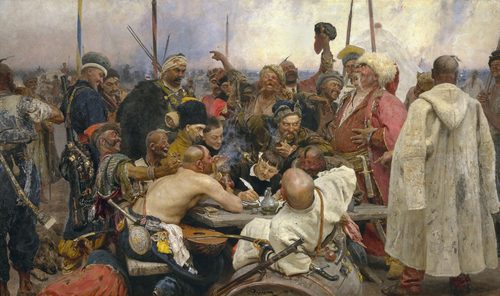
Large group compositions pack dozens of individualized figures into a single canvas, each with distinct posture and expression, turning a crowd into a chorus of separate human stories rather than a generic mass.
Loaded historical drama
Repin chose charged moments from Russian history and literature — violence, grief, defiance — rendered with theatrical lighting and raw emotional expression that pulls the viewer into the scene's crisis.
Earthy, restrained color
His palette leans toward browns, grays, and muted earth tones suited to depicting labor and hardship, reserving brighter color for moments of emotional or dramatic emphasis within a scene.
Confident academic brushwork
Trained rigorously at the Imperial Academy, Repin combined precise anatomical drawing with visible, energetic brushwork, giving his large-scale compositions both structural solidity and a sense of immediate, felt motion.
The life
Repin was born in the garrison town of Chuhuiv, where he first learned painting from local icon painters before traveling to St. Petersburg and entering the Imperial Academy of Arts in 1864. He won the Academy's gold medal in 1871 and used the accompanying travel grant to study in France and Italy, absorbing European trends while remaining committed to Russian subject matter.
His 1873 painting 'Barge Haulers on the Volga' made him famous overnight, its unsentimental depiction of laborers harnessed to a boat rope becoming an enduring symbol of both realist technique and social conscience. He joined the Peredvizhniki, or Wanderers, a group of realist painters who organized independent traveling exhibitions outside the Imperial Academy's control, and became its most prominent member.
Over the following decades Repin produced historical epics, psychologically searching portraits of figures like Leo Tolstoy and Modest Mussorgsky, and monumental group works commissioned by the state. He taught at the Academy for years, shaping younger Russian painters. After Finland gained independence in 1917, his estate at Kuokkala fell outside Soviet territory, and Repin lived there the rest of his life, dying in 1930 without returning to Russia.
Timeline
- 1844Born in Chuhuiv, Russian Empire (present-day Ukraine)
- 1864Enters the Imperial Academy of Arts, St. Petersburg
- 1873Completes "Barge Haulers on the Volga"
- 1878Joins the Peredvizhniki (the Wanderers)
- 1885Completes "Ivan the Terrible and His Son Ivan"
- 1894Begins teaching at the Imperial Academy
- 1917Finland's independence separates his estate from Russia
- 1930Dies at Kuokkala, Finland
Most famous works
| Work | Date | Why it matters |
|---|---|---|
| Barge Haulers on the Volga | 1870–73 | Exhausted laborers straining against a rope harness, the painting that launched his fame. |
| Religious Procession in Kursk Province | 1883 | A sprawling crowd scene capturing every social class within a single festival. |
| Ivan the Terrible and His Son Ivan | 1885 | The tsar cradling his mortally wounded son, among Russian art's most psychologically intense paintings. |
| Reply of the Zaporozhian Cossacks | 1880–91 | Cossacks roaring with laughter while composing a defiant letter, a decade-long project on national spirit. |
| Portrait of Leo Tolstoy | 1881 | One of several searching portraits of the writer, capturing his intensity in plain dress. |
 AI-generated
Create in the same spirit
Make Peredvizhniki art of your own
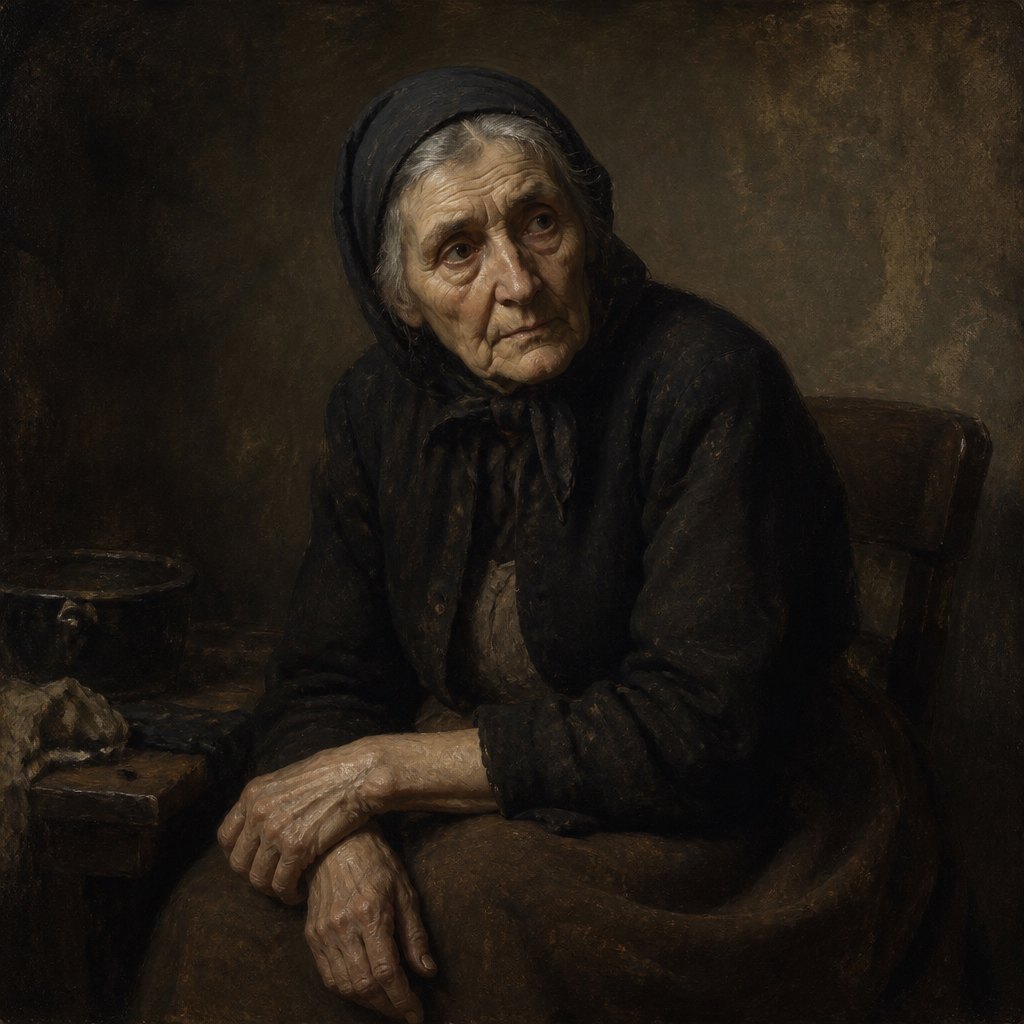
This AI interpretation echoes the aesthetic world Ilya Repin worked in — it depicts no real artwork. Generate your own with the Realism Art Style generator.
Open the Realism Art Style generator →Legacy
Repin set the standard for Russian realism, proving that painting could carry serious social and psychological weight without sacrificing technical mastery, and the Peredvizhniki movement he led broke the Imperial Academy's monopoly on serious art. Soviet authorities later claimed him as a forerunner of Socialist Realism, even though he had left Russia and never worked under Soviet rule. His portraits of Tolstoy, Mussorgsky, and other cultural figures remain primary visual records of Russia's nineteenth-century intellectual life. The Repin Academy of Fine Arts in St. Petersburg carries his name, and his major works anchor the Tretyakov Gallery and Russian Museum collections.
Frequently asked questions
What is Ilya Repin famous for?
Repin is famous for 'Barge Haulers on the Volga' (1873) and for leading the Peredvizhniki, a group of Russian realist painters known for unflinching scenes of labor, history, and social life.
Where can I see Repin's paintings today?
The Tretyakov Gallery in Moscow and the Russian Museum in St. Petersburg hold Repin's major works, including 'Barge Haulers on the Volga' and 'Ivan the Terrible and His Son Ivan.'
What art movement did Repin belong to?
Repin was the leading painter of the Peredvizhniki, or 'Wanderers,' Russian realists who left the Imperial Academy to hold independent exhibitions bringing art directly to the public.
Why did Repin leave Russia?
He did not formally emigrate. His estate at Kuokkala became part of newly independent Finland in 1917, and Repin chose to remain there rather than return under Soviet rule.