 Famous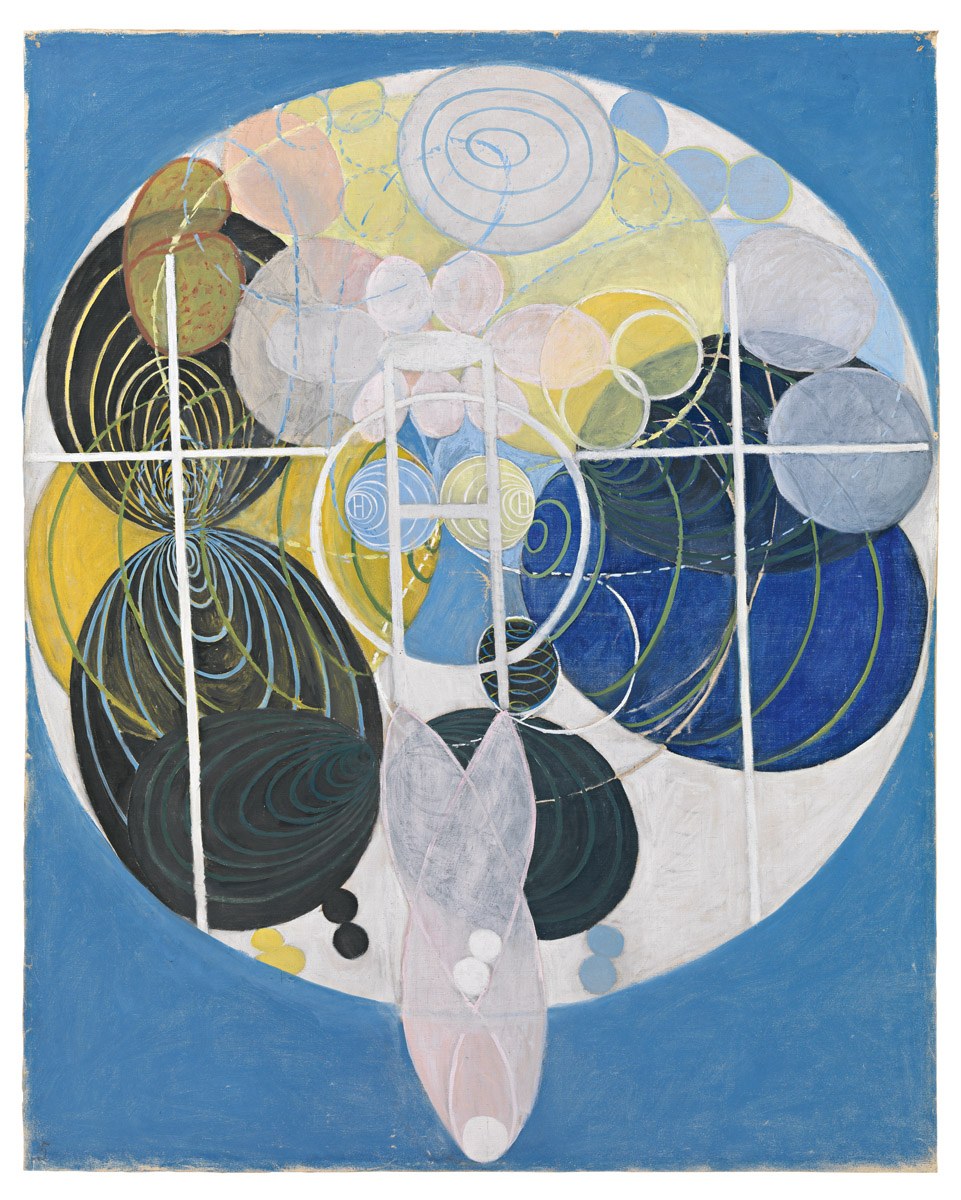
Hilma af Klint (1862–1944) was a Swedish painter who produced startlingly large, abstract, symbol-laden compositions as early as 1906, years before Wassily Kandinsky and other artists usually credited with pioneering abstraction, yet remained almost entirely unknown as an abstract painter during her own lifetime.
Trained at Stockholm's Royal Academy of Fine Arts, af Klint worked conventionally as a landscape and portrait painter before her deep involvement in Spiritualism and Theosophy reshaped her practice. With four other women in a group called "The Five," she held séances and pursued automatic drawing, out of which grew the monumental Paintings for the Temple, a cycle of over 190 works begun in 1906 combining geometric form, botanical motifs, and spiritual symbolism at a scale rare for any painter of the period.
Convinced the world was not ready for this work, af Klint stipulated it remain unseen for twenty years after her death. She continued painting prolifically and privately, developing a distinctive visual language across thousands of works and notebooks, largely outside contact with the emerging European avant-garde. She died in 1944 after being injured in a traffic accident; her abstract paintings were not widely exhibited until the 1980s.
How to recognize a Klint
Monumental scale
Many canvases in *Paintings for the Temple* stand taller than a person, an ambitious scale unusual for any painter of her era and striking for abstract, non-representational work made in near-total privacy.
Spiral and organic geometry
Her compositions favor spirals, curling tendrils, and biomorphic shapes alongside hard geometric forms, blending botanical and mystical references into a visual vocabulary distinct from later European abstraction.
Symbolic color pairing
Af Klint used color systematically to encode meaning, often pairing yellow and blue to signify male and female principles, giving even purely abstract passages a coded, symbolic logic.
Automatic, mediumistic drawing
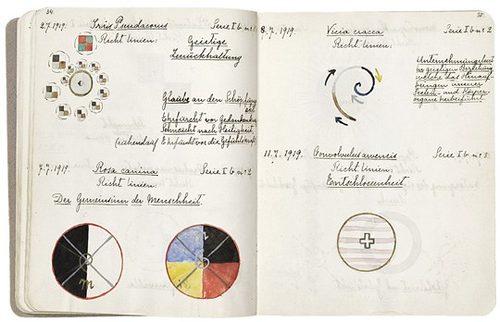
Some works began as automatic drawings made during séances with her spiritualist circle, "The Five," a practice she treated as receiving guidance rather than inventing form outright.
Diagrams of hidden systems
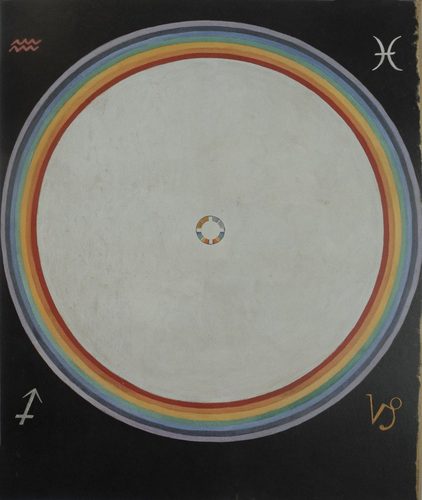
Later series such as the Atom and Tree of Knowledge paintings resemble scientific or esoteric diagrams, charting invisible forces and spiritual hierarchies through interlocking geometric and organic forms.
Private, undisplayed ambition
Despite the scale and ambition of her abstract work, af Klint exhibited it almost nowhere in her lifetime, instructing that it stay unseen for two decades after her death.
The life
Hilma af Klint was born in 1862 near Stockholm to a family with a strong interest in mathematics and the natural sciences. She trained at the Royal Academy of Fine Arts in Stockholm from 1882 to 1887, becoming a competent, conventionally trained landscape and portrait painter who supported herself through commissioned work for years afterward.
From the 1890s, af Klint grew deeply involved in Spiritualism and later Theosophy, joining four other women to form "The Five," a group that held regular séances and experimented with automatic drawing and mediumship. In 1906, guided by what she described as messages received during these sessions, she began the Paintings for the Temple, an ambitious cycle eventually totaling more than 190 works, painted in bursts over roughly a decade and continuing in related series for years after.
Af Klint kept this body of work largely private, showing it to only a small circle and declining to exhibit it publicly, believing contemporary audiences were not prepared to understand it. She continued producing abstract, symbol-rich paintings and detailed notebooks for the rest of her life, alongside occasional conventional work. In her will she stipulated that her abstract paintings remain unseen for twenty years after her death. Af Klint died in 1944 following injuries from a traffic accident, having left behind more than a thousand works largely unknown to the art world.
Timeline
- 1862Born near Stockholm, Sweden
- 1882Enters the Royal Academy of Fine Arts, Stockholm
- 1896Co-founds the spiritualist group "The Five"
- 1906Begins Paintings for the Temple, her major abstract cycle
- 1908Meets Theosophist Rudolf Steiner, who influences her later work
- 1915Completes the core Paintings for the Temple series
- 1932Continues private abstract and symbolic work in later series
- 1944Dies after a traffic accident; leaves instructions to withhold her abstract work
Most famous works
| Work | Date | Why it matters |
|---|---|---|
| The Ten Largest | 1907 | A set of monumental canvases from Paintings for the Temple mapping the stages of human life through color and form. |
| Group IX/SUW, The Swan | 1914–15 | A series pairing an abstracted swan motif with geometric form to explore spiritual duality. |
| The Tree of Knowledge series | 1913–15 | Watercolor works charting esoteric spiritual hierarchies through organic, tree-like diagrams. |
| Primordial Chaos series | 1906–07 | An early group of small abstract works often cited as her first fully non-representational paintings. |
| Altarpieces | 1915 | Three large geometric canvases intended to close the Paintings for the Temple cycle. |
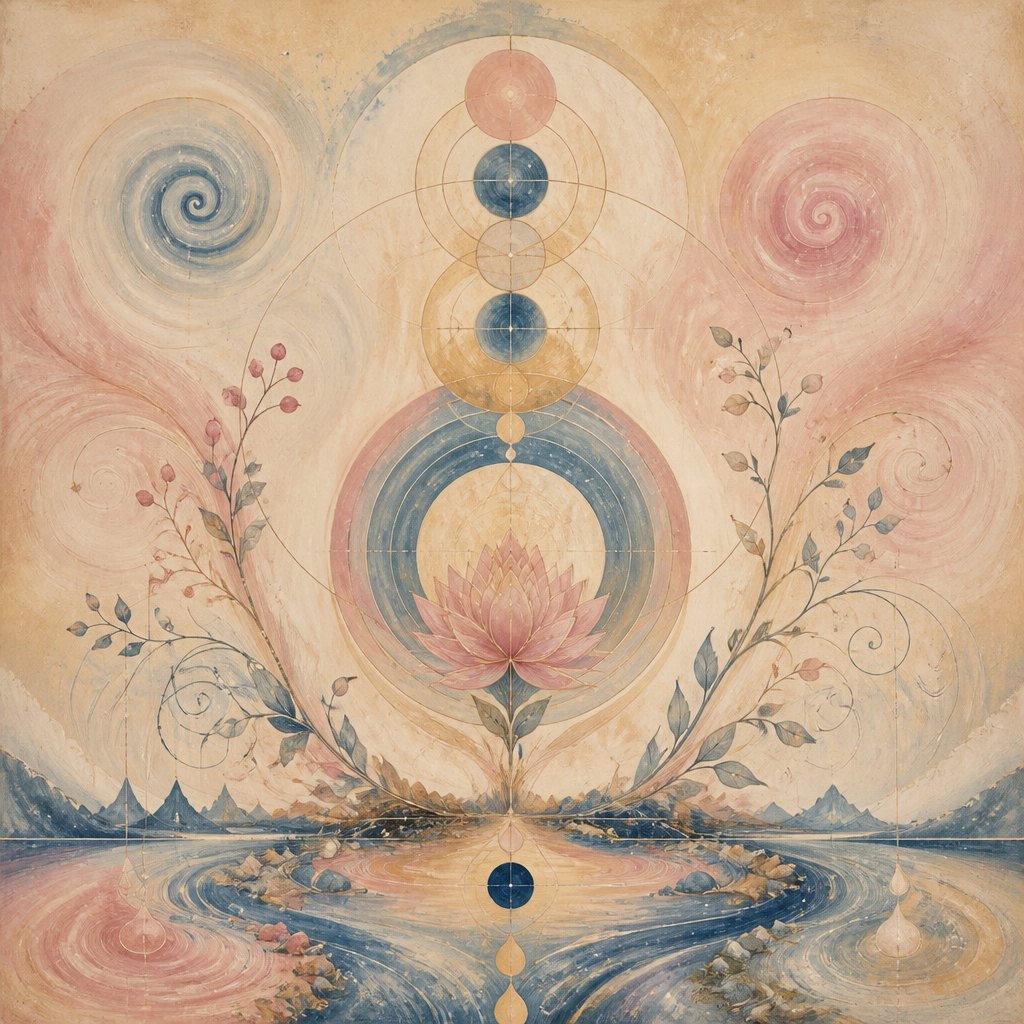 AI-generated
Create in the same spirit
Make Symbolism art of your own
This AI interpretation echoes the aesthetic world Hilma af Klint worked in — it depicts no real artwork. Generate your own with the Symbolism Art Style generator.
Open the Symbolism Art Style generator →Legacy
Long unknown, af Klint is now widely discussed as among the first artists to paint fully abstract, non-representational compositions, predating the abstraction usually credited to Kandinsky, Mondrian, and Malevich. Her rediscovery, accelerating after major exhibitions from the 1980s onward and a record-breaking 2018 Guggenheim retrospective, reshaped the standard history of modern abstraction and its origins in spiritual and esoteric practice rather than only formal experiment. She is now a touchstone for artists and scholars examining the links between mysticism, gender, and the avant-garde. Sweden's Moderna Museet and the Hilma af Klint Foundation preserve the bulk of her work.
Frequently asked questions
What is Hilma af Klint famous for?
Af Klint is famous for painting large-scale, fully abstract compositions as early as 1906, years before artists traditionally credited with pioneering abstraction, though she kept the work largely unseen in her lifetime.
Where can I see Hilma af Klint's paintings?
The largest holdings are at Stockholm's Moderna Museet, managed with the Hilma af Klint Foundation; her work has also toured major museums including the Guggenheim in New York.
What art movement did Hilma af Klint belong to?
Af Klint is generally associated with Symbolism and spiritualist art rather than a formal movement; her abstract paintings are now seen as an independent, early precursor to modern abstraction.
Why did Hilma af Klint hide her abstract paintings?
She believed contemporary audiences were not ready to understand them and stipulated in her will that the abstract works stay unseen for twenty years after her death.