 Famous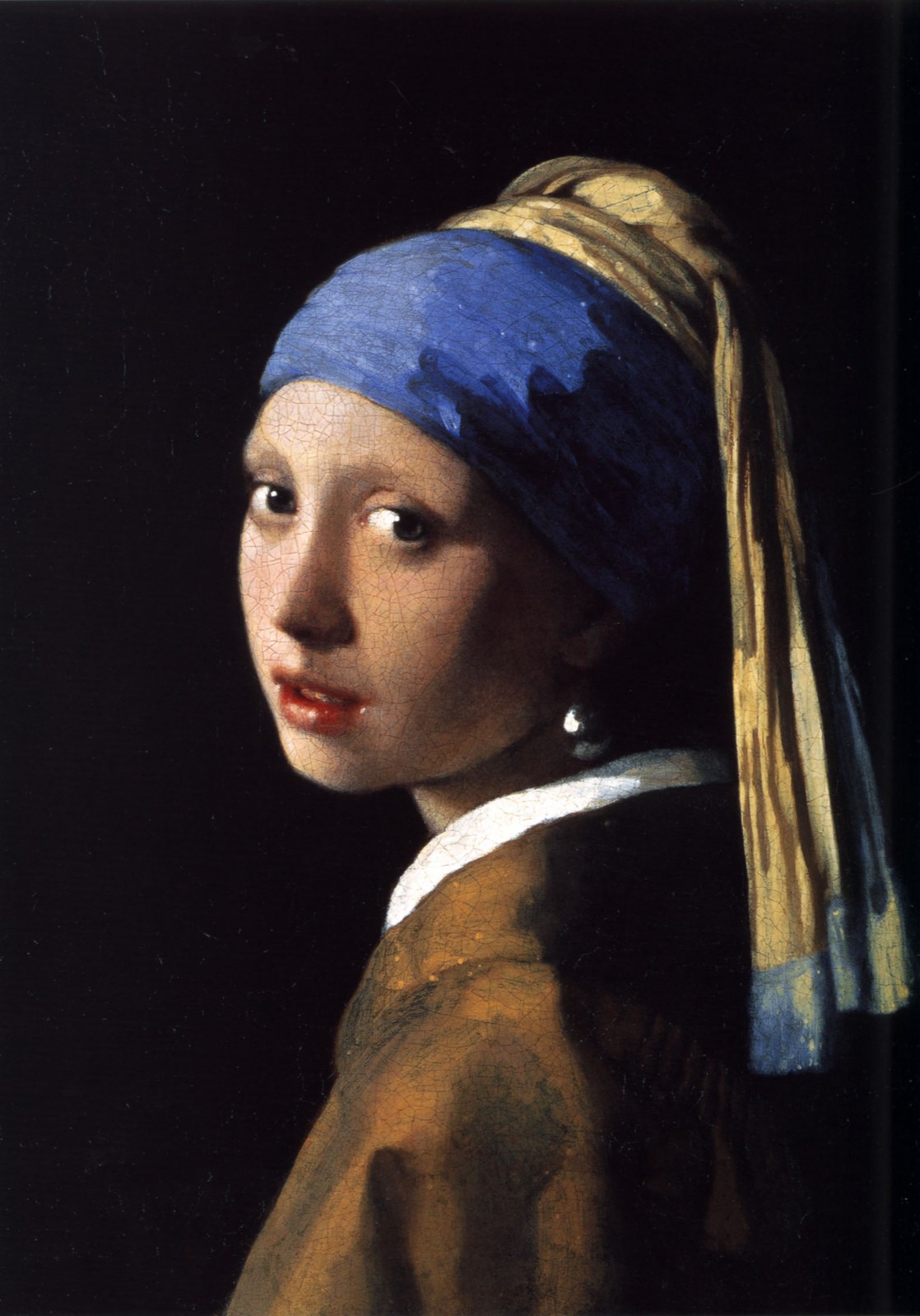
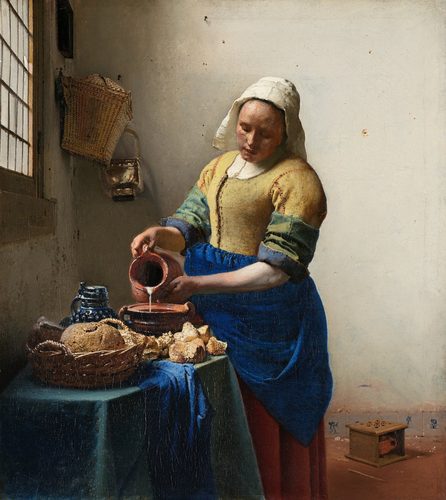
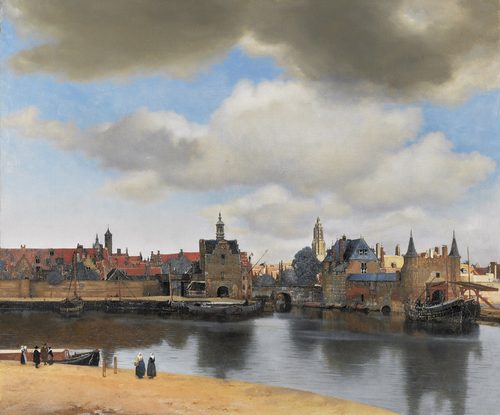
Johannes Vermeer (1632–1675) was a Dutch painter from Delft who, in a career of fewer than forty known paintings, became one of the most quietly influential artists in Western art through his precise, luminous treatment of everyday interior life. Little is documented about his training, though he joined Delft's Guild of St. Luke as a master painter in 1653, the same year he married Catharina Bolnes. He worked slowly and painted rarely, likely supplementing his income as an art dealer and by running his family's inn, which left him only a handful of paintings per year. His mature works show one or two figures in a sunlit room, absorbed in ordinary tasks — pouring milk, reading a letter, weighing coins — rendered with an exactness of light and texture that made small domestic moments feel monumental. He used costly pigments, including natural ultramarine, with striking generosity for a painter of modest means. Financial hardship deepened after France invaded the Dutch Republic in 1672 and collapsed the art market; Vermeer died in Delft in 1675, deeply in debt, leaving his wife and eleven surviving children.
How to recognize a Vermeer
Window-light interiors
Nearly every mature painting places a single figure beside a tall, left-hand window, the daylight falling across it to model fabric, skin, and plaster wall with an extraordinary, almost scientific degree of optical precision and care.
Pointillé highlights
Vermeer dotted small, bright specks of thick paint onto reflective surfaces — pearls, bread crusts, polished metal — mimicking how an unfocused lens or camera obscura renders bright points of light as soft, glowing circles.
Quiet, absorbed figures
His subjects read letters, pour milk, tune instruments, or weigh coins, fully absorbed in private, ordinary tasks and never acknowledging the viewer directly, which gives even his busiest compositions their characteristic hush and stillness.
Costly natural ultramarine
He used genuine ultramarine ground from lapis lazuli with unusual generosity for a painter of modest means, giving fabrics, shadows, and even underpainting a cool, saturated depth of blue rarely afforded by his contemporaries.
Precise, near-photographic detail
Textures of bread crust, polished brass, and woven carpet are rendered with a clarity so exact that scholars still debate whether he relied on optical aids such as a camera obscura to help compose each scene.
Balanced, geometric composition
Tables, wall maps, and window frames create quiet, understated grids and verticals behind his figures, giving even the most casual domestic moment a calm, deliberate, and carefully ordered sense of visual stability and balance.
The life
Very little is documented about Vermeer's early life or training in Delft, where he was born in 1632, the son of an innkeeper and small-time art dealer. He joined the Delft Guild of St. Luke as a master painter in 1653, the same year he married Catharina Bolnes, a marriage before which he is generally thought to have converted to Catholicism, her family's faith.
Vermeer worked in Delft for his entire career, painting slowly and in small numbers — perhaps two or three finished works a year — while supplementing his income by dealing in other artists' paintings and running the family inn he inherited. He served as head of the painters' guild on more than one occasion, suggesting real standing among his peers even though his paintings sold mostly to a small circle of local patrons.
His mature paintings, mostly made from the late 1650s onward, focus on single figures absorbed in domestic tasks inside sunlit rooms, built with remarkable optical precision and costly pigment. The French invasion of the Dutch Republic in 1672 devastated the art market, and Vermeer's finances collapsed along with it. He died suddenly in Delft in December 1675, leaving substantial debts; his wife's later petition to creditors described the strain of his final months. He left eleven surviving children.
Timeline
- 1632Born in Delft
- 1653Marries Catharina Bolnes; joins the Delft Guild of St. Luke
- 1657Paints early mature works such as The Little Street
- 1662Serves as head of the Delft painters' guild
- 1665Paints Girl with a Pearl Earring
- 1668Paints The Art of Painting
- 1672Dutch art market collapses after the French invasion
- 1675Dies in Delft, deeply in debt
Most famous works
| Work | Date | Why it matters |
|---|---|---|
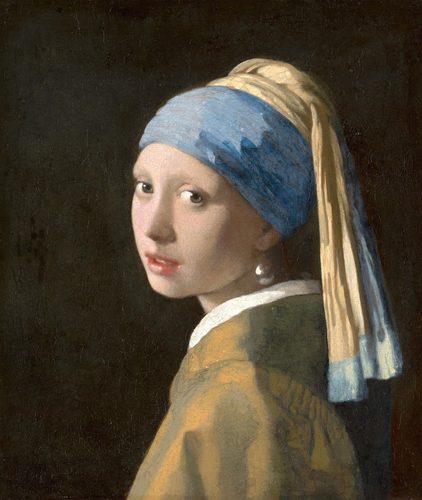
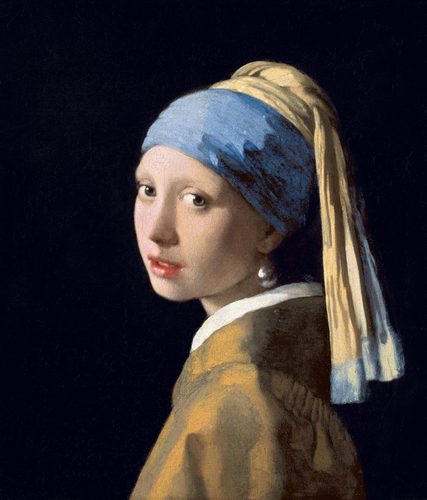
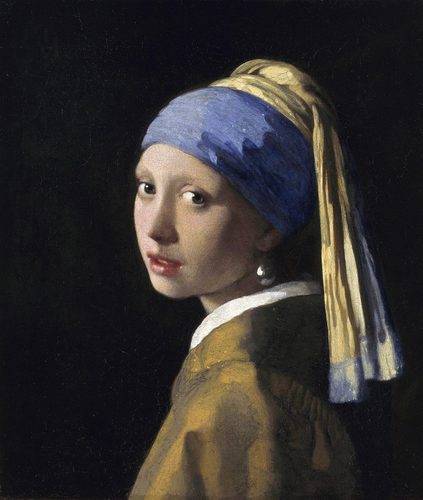
| Girl with a Pearl Earring | c. 1665 | An intimate, luminous portrait of an unidentified young woman, sometimes called the 'Mona Lisa of the North' for its enigmatic gaze. |
| View of Delft | c. 1660–61 | A rare cityscape rendered with near-photographic light effects, later admired by the writer Marcel Proust as among the world's most beautiful paintings. |
| The Milkmaid | c. 1658–61 | A servant pouring milk in a sunlit kitchen, elevated through Vermeer's textured light into one of the great images of quiet labor. |
| The Art of Painting | c. 1666–68 | An elaborate allegory of painting itself, showing an artist at work, that Vermeer reportedly kept in his own studio and never sold. |
| Woman Holding a Balance | c. 1662–64 | A woman weighing scales beneath a painting of the Last Judgment, balancing material and moral concerns in a still, careful composition. |
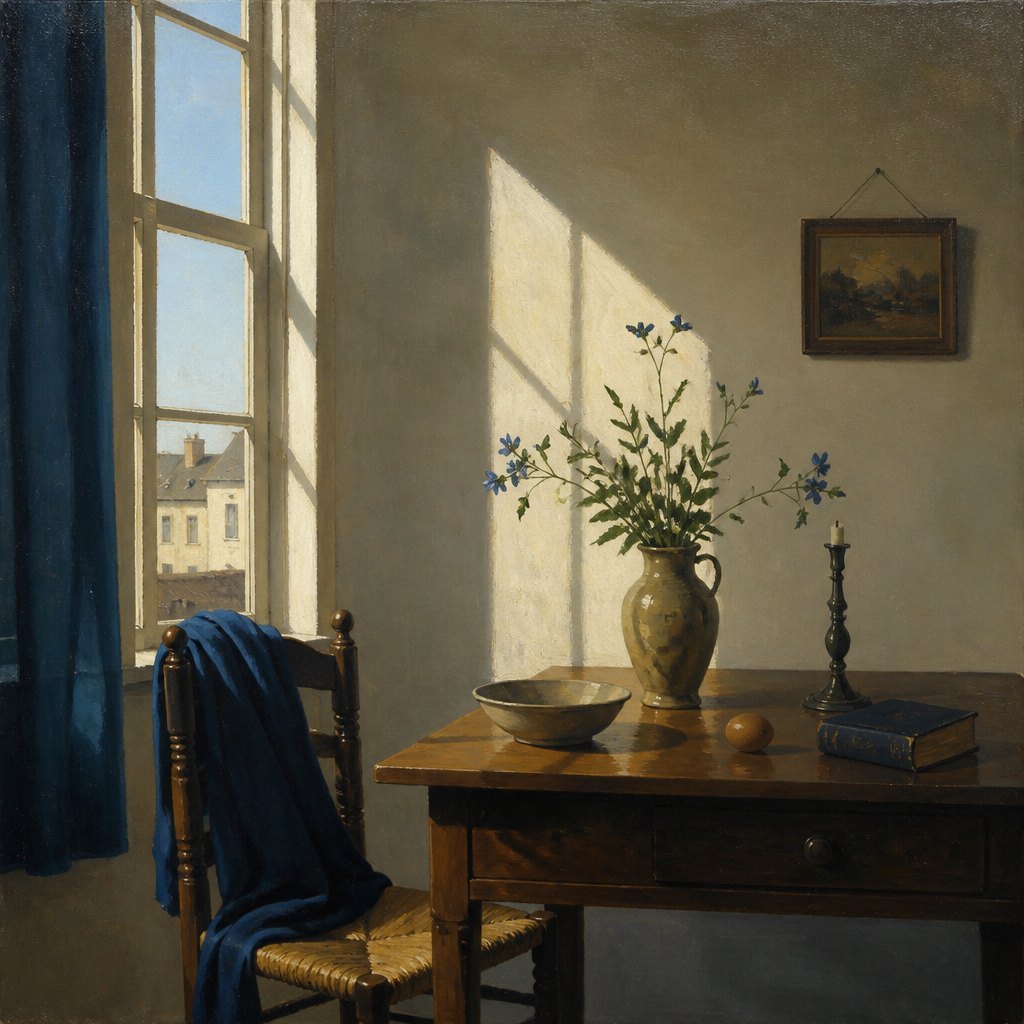 AI-generated
Create in the same spirit
Make Dutch Golden Age art of your own
This AI interpretation echoes the aesthetic world Johannes Vermeer worked in — it depicts no real artwork. Generate your own with the Dutch Golden Age Still Life Art Style generator.
Open the Dutch Golden Age Still Life Art Style generator →Legacy
Vermeer was little known outside Delft during his lifetime and remained largely forgotten for nearly two centuries until the French critic Théophile Thoré-Bürger championed his work in the 1860s, reconstructing his small catalogue almost from scratch. Since then his handling of light, his stillness, and his precise, almost photographic optical effects have influenced painters, photographers, and filmmakers alike, and his methods are still debated by scholars studying his possible use of optical devices such as the camera obscura. With only around thirty-six paintings securely attributed to him, each surviving work carries enormous weight, and exhibitions of even a handful of them draw crowds worldwide. Girl with a Pearl Earring alone has inspired novels, a film, and countless reproductions, keeping his quiet interiors in constant circulation.
Frequently asked questions
What is Vermeer famous for?
Vermeer is famous for Girl with a Pearl Earring and for a small body of luminous domestic interior scenes, prized for their precise, almost photographic treatment of daylight and stillness.
Where can I see Vermeer's paintings today?
The Mauritshuis in The Hague holds Girl with a Pearl Earring; other works are spread across the Rijksmuseum, the Louvre, London's National Gallery, and New York's Frick Collection and Metropolitan Museum.
How many paintings did Vermeer make?
Only around thirty-six paintings are widely accepted as authentic Vermeers, an unusually small surviving output that reflects both his slow working method and the loss of some works over time.
What art movement was Vermeer part of?
Vermeer worked within the Dutch Golden Age, part of the Delft school of genre and interior painting, prized for a luminism distinct even among his light-obsessed Dutch contemporaries.