 Famous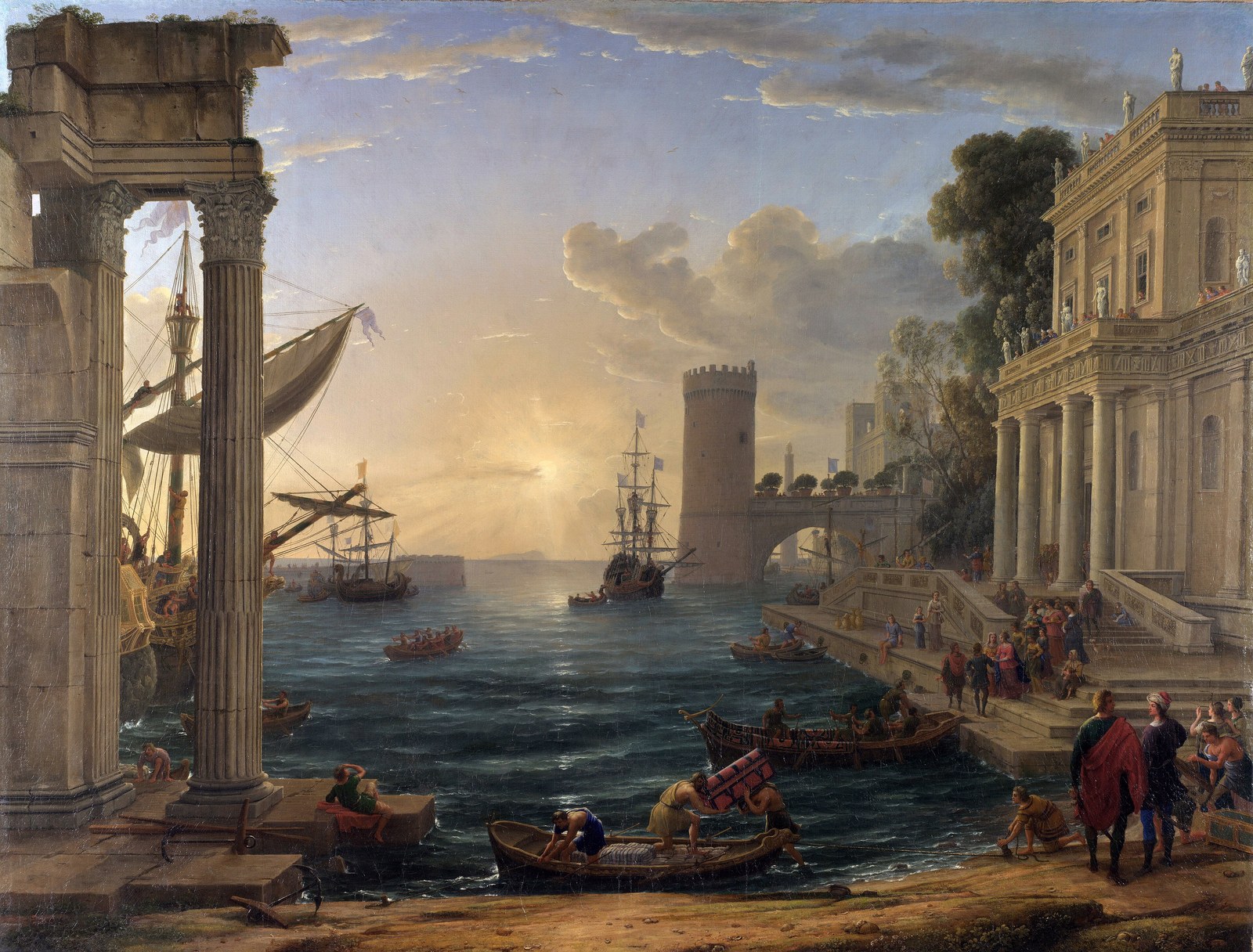
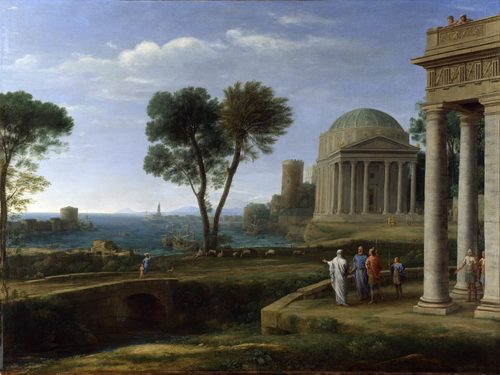
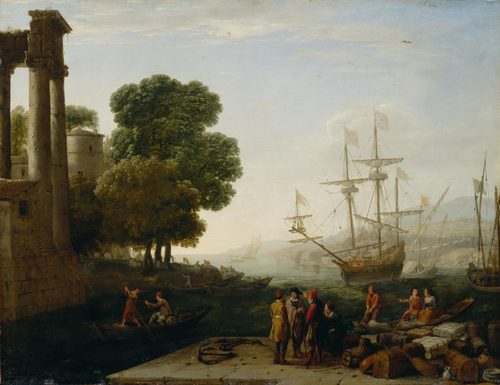
Claude Lorrain (1600–1682), born Claude Gellée in the Duchy of Lorraine, was a French landscape painter who spent nearly his entire career in Rome and invented the idealized, light-drenched landscape that later generations simply called 'Claudian.' Trained as a young apprentice to the Roman landscapist Agostino Tassi, he built a career painting harbors, ruins, and pastoral scenes bathed in the soft gold of dawn or dusk, with small figures from myth or scripture scattered through vast, luminous space. Popes and cardinals became his patrons, and forgeries of his work grew so common that he began keeping the Liber Veritatis, a bound record of drawings documenting every painting he made. His landscapes are not transcriptions of any real place but idealized composites, built from careful studies of the Roman countryside and arranged for maximum atmosphere. Two centuries later, English painters and garden designers still measured nature against his example; J.M.W. Turner arranged to have two of his own paintings hung permanently beside Claude's in London's National Gallery.
How to recognize a Lorrain
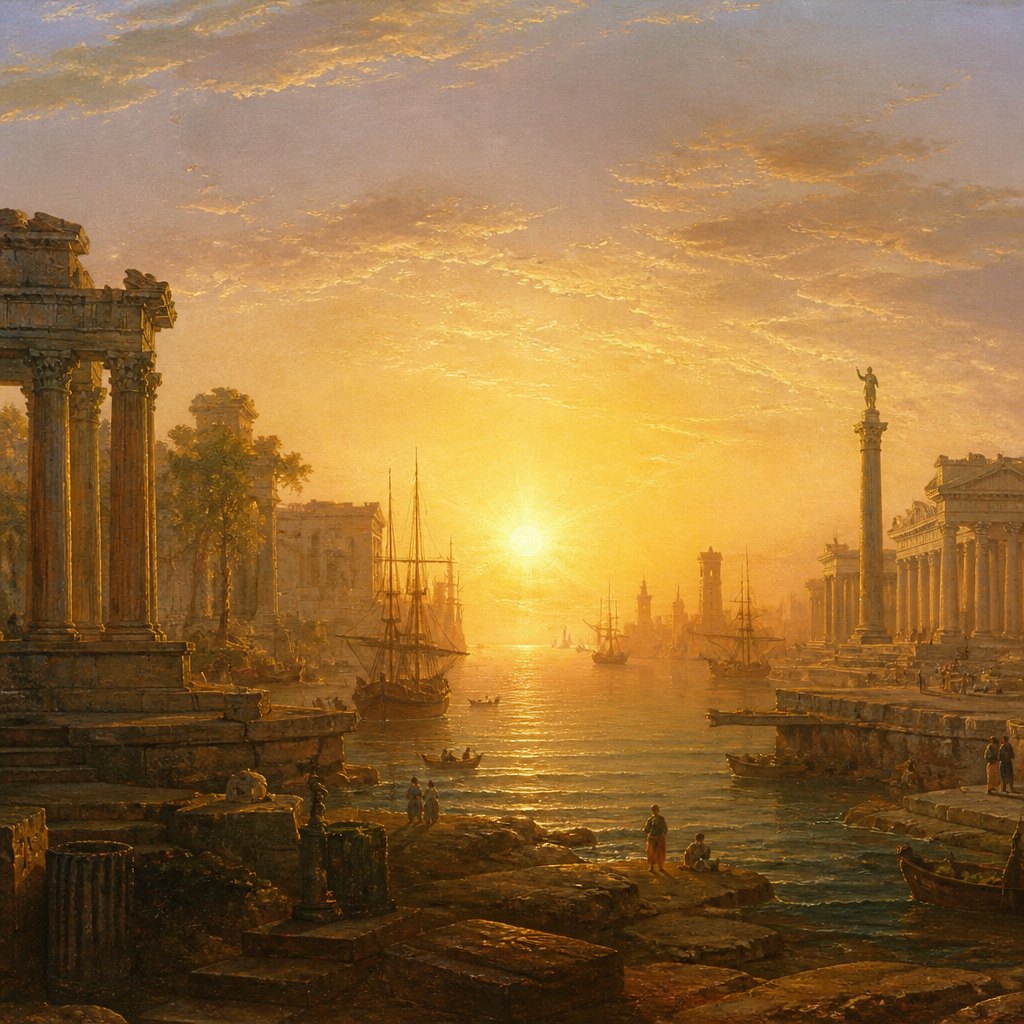
Golden dawn or dusk light
Claude built nearly every composition around a low, glowing sun sitting near the horizon, its warm light diffusing gradually across sky, water, and cloud to unify the whole scene in a single hazy, golden tone.
Framing coulisses
Dark trees, ruins, or jagged rock outcrops sit at the canvas edges like stage wings in a theater, framing a luminous central vista of sky and sea and guiding the eye slowly deep into the distance.
Small figures, vast setting
Mythological or biblical figures appear tiny and almost incidental against sweeping landscapes and harbors, subordinating narrative and incident to atmosphere, light, and the overwhelming, humbling scale of the natural world around them.
Harbor and ruin motifs
Recurring subjects include crumbling classical ruins, tall-masted merchant ships, and imagined harbor towns, blending genuine study of Roman antiquity and the countryside with entirely invented, idealized architecture arranged for maximum pictorial harmony.
Atmospheric perspective
Distant elements soften and pale into a blue-gray haze while foreground rocks, trees, and figures stay comparatively crisp, a graduated depth effect that makes his skies and harbors feel genuinely vast, airy, and convincingly spacious.
Calm, unhurried compositions
Even when depicting mythic departures or biblical episodes, Claude's landscapes remain serene and carefully balanced, prioritizing quiet harmony, spaciousness, and grandeur over drama, violence, or any sense of hurried, urgent narrative incident.
The life
Claude Gellée was born around 1600 in Chamagne, in the Duchy of Lorraine, which gave him the name by which he became known. Orphaned young, he traveled to Rome as a teenager and entered the household of the landscape painter Agostino Tassi, absorbing the craft of composing atmospheric, classically ordered scenery.
He spent virtually his entire working life in Rome, sketching the surrounding countryside and ancient ruins directly from nature before building his finished paintings in the studio as idealized compositions. By the 1630s he was the most sought-after landscape painter in the city, working for popes, cardinals, and visiting European nobility.
As his reputation grew, so did the market for imitations and outright forgeries. Around 1635 he began the Liber Veritatis, drawing a careful record of each completed painting to prove authorship — a practice that survives today as an invaluable catalogue of his output.
Claude continued painting into old age, his late works growing even more spacious and serene. He died in Rome in 1682, having spent nearly his whole working life there; apart from a brief return north to Lorraine in the mid-1620s, he never left Italy again.
Timeline
- 1600Born in Chamagne, Duchy of Lorraine
- 1613Travels to Rome as a young orphan
- 1618Apprenticed to landscape painter Agostino Tassi
- 1625Briefly returns north before settling permanently in Rome
- 1635Begins the Liber Veritatis to record his paintings
- 1648Paints Embarkation of the Queen of Sheba
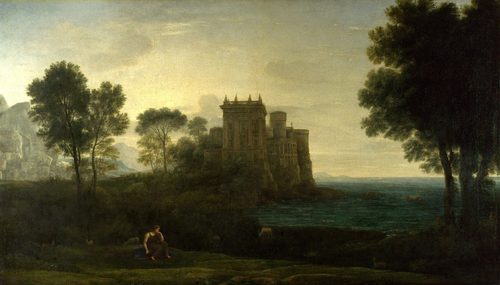
- 1664Paints Landscape with Psyche and the Palace of Cupid
- 1682Dies in Rome
Most famous works
| Work | Date | Why it matters |
|---|---|---|
| Embarkation of the Queen of Sheba | 1648 | A luminous harbor scene where a biblical narrative becomes an excuse for staging light, sea, and classical architecture at dawn. |
| Landscape with the Marriage of Isaac and Rebecca (The Mill) | 1648 | A pastoral river scene of dancing figures beside a watermill, painted as a companion piece to the Sheba embarkation. |
| Seaport with the Embarkation of St Ursula | 1641 | An early mature harbor composition establishing the glowing, sun-toward-the-viewer format Claude would return to for decades. |
| Landscape with Psyche outside the Palace of Cupid | 1664 | A mysterious twilight landscape, later called The Enchanted Castle, admired by English Romantic poets for its wistful, dreamlike stillness. |
| Liber Veritatis | 1635 onward | Not a single painting but a lifelong bound record of drawings after his own works, made to guard against forgery. |
 AI-generated
Create in the same spirit
Make Baroque art of your own
This AI interpretation echoes the aesthetic world Claude Lorrain worked in — it depicts no real artwork. Generate your own with the Baroque Art Style generator.
Open the Baroque Art Style generator →Legacy
Claude's idealized, golden-lit landscapes became the standard against which European painters measured natural beauty for two centuries. English collectors bought his paintings in bulk, English gardens were redesigned to echo his compositions, and travelers carried a tinted 'Claude glass' to view real scenery through his signature warm tones. J.M.W. Turner studied him obsessively and requested that two of his own paintings hang permanently beside Claude's at the National Gallery in London, a wish still honored today. John Constable, too, learned from his handling of light and air. Long after the mythological and biblical subjects faded from fashion, the atmosphere Claude invented — hazy, golden, immense — remained the working definition of the sublime landscape.
Frequently asked questions
What is Claude Lorrain famous for?
Claude Lorrain is famous for inventing the idealized 'Claudian' landscape: vast, harmonious scenes of harbors, ruins, and countryside bathed in golden dawn or dusk light, populated by small mythological figures.
Where can I see Claude Lorrain's paintings today?
London's National Gallery holds an outstanding group, alongside the Louvre in Paris, the Hermitage in St. Petersburg, and the Metropolitan Museum of Art in New York.
What was Claude Lorrain's Liber Veritatis?
It was a bound album of drawings Claude made recording nearly every painting he completed, begun around 1635 to combat forgeries and now a key tool for verifying his authentic works.
What art movement was Claude Lorrain part of?
Claude worked within the Baroque era but largely outside its drama, developing the classical, idealized landscape tradition alongside Nicolas Poussin that later fed directly into Romantic landscape painting.