 Famous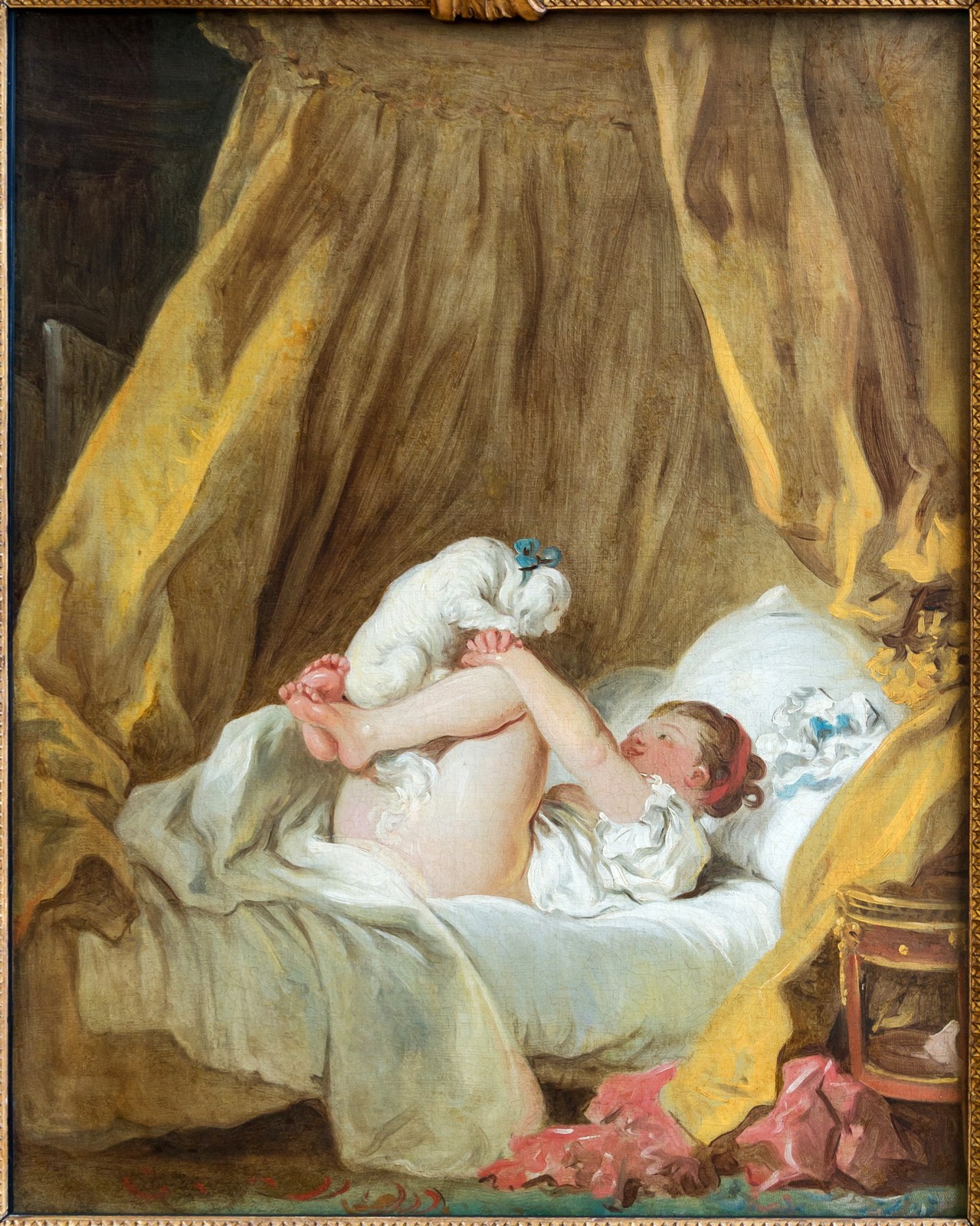
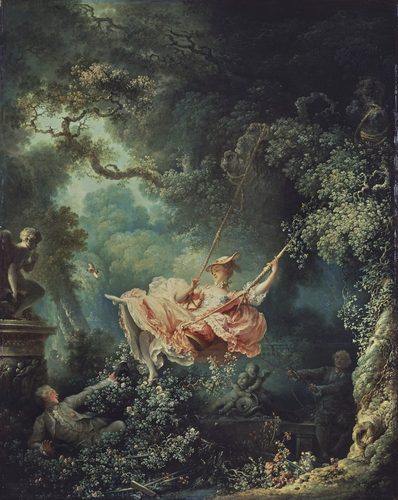
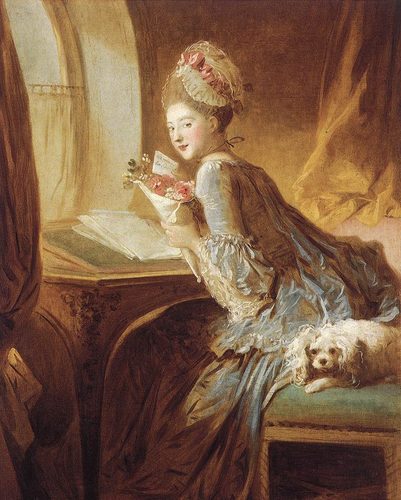
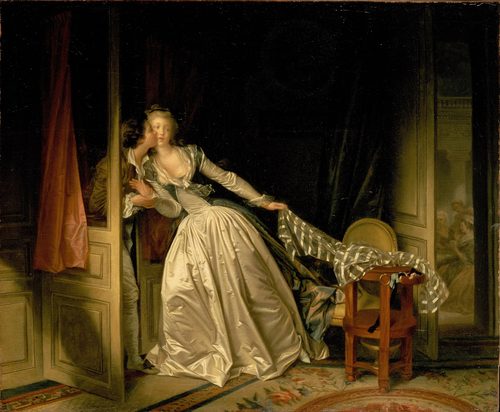
Jean-Honoré Fragonard (1732–1806) was a French painter who became the defining voice of Rococo's final, most uninhibited decade, prized for scenes of flirtation and pleasure rendered with breathtaking speed. Born in Grasse, he trained under Chardin and then François Boucher, absorbing Boucher's taste for softness and myth before traveling to Rome, where he studied Baroque ceiling painters and the tumbling gardens of the Villa d'Este. Back in Paris, Fragonard abandoned the slow path of history painting that the Royal Academy prized and instead worked for private patrons who wanted wit, warmth, and speed. His masterpiece, The Swing (1767), painted for a patron who wanted to see his mistress's shoe fly off as an old bishop pushed her, distilled his gifts: loaded brushwork, tumbling foliage, and a compositional wink aimed straight at the viewer. He also produced remarkable rapid portrait sketches, dashed off in under an hour. The Revolution ended the market for his art almost overnight; patrons fled or were guillotined, and Fragonard, aided partly by the painter Jacques-Louis David, died in relative obscurity in Paris.
How to recognize a Fragonard
Loaded, rushing brushwork
Fragonard built up paint fast and thick, letting individual strokes stay visible as arcs of color rather than blending them smooth. Foliage, silk, and skin all get the same urgent touch, as if the canvas might vanish before he finished.
Gardens gone wild
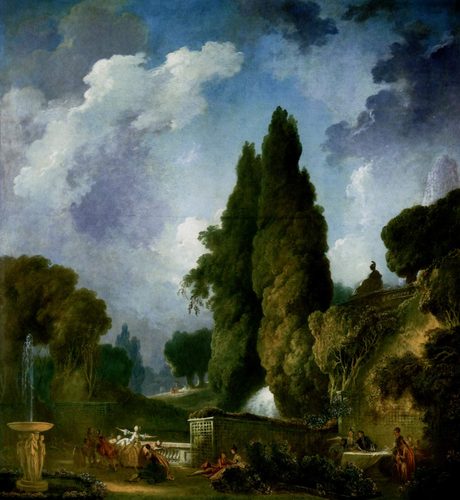
His backgrounds erupt into overgrown parks and tangled trees, more theatrical backdrop than botanical study. Statues peek through leaves, paths curve out of sight, and nature itself seems to conspire in the mischief happening in front of it.
Flirtation as subject
Fragonard painted longing more than love consummated: stolen glances, a lost shoe, a hand reaching where it shouldn't. The charge sits in the almost, not the act, casting viewers as accidental witnesses to someone else's secret.
Pastel, sun-warmed palette
Pinks, creams, and golden greens dominate, lit as though by late-afternoon sun filtered through leaves. The warmth flatters skin and silk alike, giving even mischief a soft, forgiving glow rather than a harsh one.
Diagonal, tumbling compositions
Figures rarely sit still in a Fragonard canvas; skirts billow, swings arc, and bodies lean off-balance along strong diagonals that pull the eye through the scene in one restless, unbroken sweep.
Fantasy portrait sketches
In his rapid figures de fantaisie, Fragonard dressed sitters in invented historical costume and painted them in a single sitting, prizing bravura brushwork and likeness of spirit over careful, labored finish.
The life
Fragonard was born in Grasse in 1732 and moved to Paris as a child. He apprenticed briefly with Jean-Siméon Chardin before entering the studio of François Boucher, the leading decorative painter of the day, whose taste for soft color and mythological subjects shaped his early style. In 1752 he won the Prix de Rome, and after further study at the French Academy he traveled to Italy in 1756, sketching Baroque ceilings and the gardens of the Villa d'Este, experiences that fed his later taste for tumbling foliage and theatrical light.
Back in Paris, Fragonard was admitted to the Royal Academy in 1765 with a conventional history painting, but he soon abandoned that path for private, often playfully erotic commissions suited to his real talents: speed, wit, and warmth. Through the 1760s and 1770s he produced his most celebrated work, including The Swing and the unfinished Progress of Love cycle, working for financiers and aristocrats who wanted charm rather than moral instruction. He also dashed off rapid fantasy portraits, prizing spontaneity over careful finish.
The French Revolution destroyed the market that had sustained him almost overnight, as patrons fled France or lost their fortunes and heads. Fragonard, aided in part by his former rival Jacques-Louis David, took a minor curatorial post but painted little in his final years, dying in Paris in 1806, largely forgotten by a public swept up in new, sterner tastes.
Timeline
- 1732Born in Grasse, in southern France
- 1752Wins the Prix de Rome from the French Academy
- 1756Travels to Rome to study antiquity and Baroque ceiling painting
- 1765Elected to the Royal Academy with a history painting
- 1767Paints The Swing for a private patron
- 1769Marries Marie-Anne Gérard, also a painter
- 1790Loses patrons and income after the Revolution
- 1806Dies in Paris, largely forgotten by the public
Most famous works
| Work | Date | Why it matters |
|---|---|---|
| The Swing | 1767 | A hidden lover watches a young woman kick off her shoe mid-swing, Rococo's most famous image of stolen desire. |
| The Reading Girl | c. 1770 | A young woman absorbed in a book, painted with the loose, buttery brushwork of Fragonard's mature style. |
| The Bolt | c. 1777 | A tense bedroom scene of seduction and resistance, staged like a moment frozen from a play. |
| The Progress of Love | 1771–1773 | A cycle of four large canvases tracing a courtship, rejected by its original patron and later reassembled. |
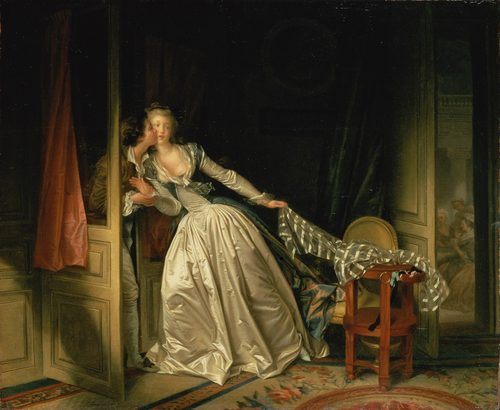
| The Stolen Kiss | c. 1780s | A furtive embrace caught in a doorway, epitomizing his career-long fascination with romantic secrecy. |
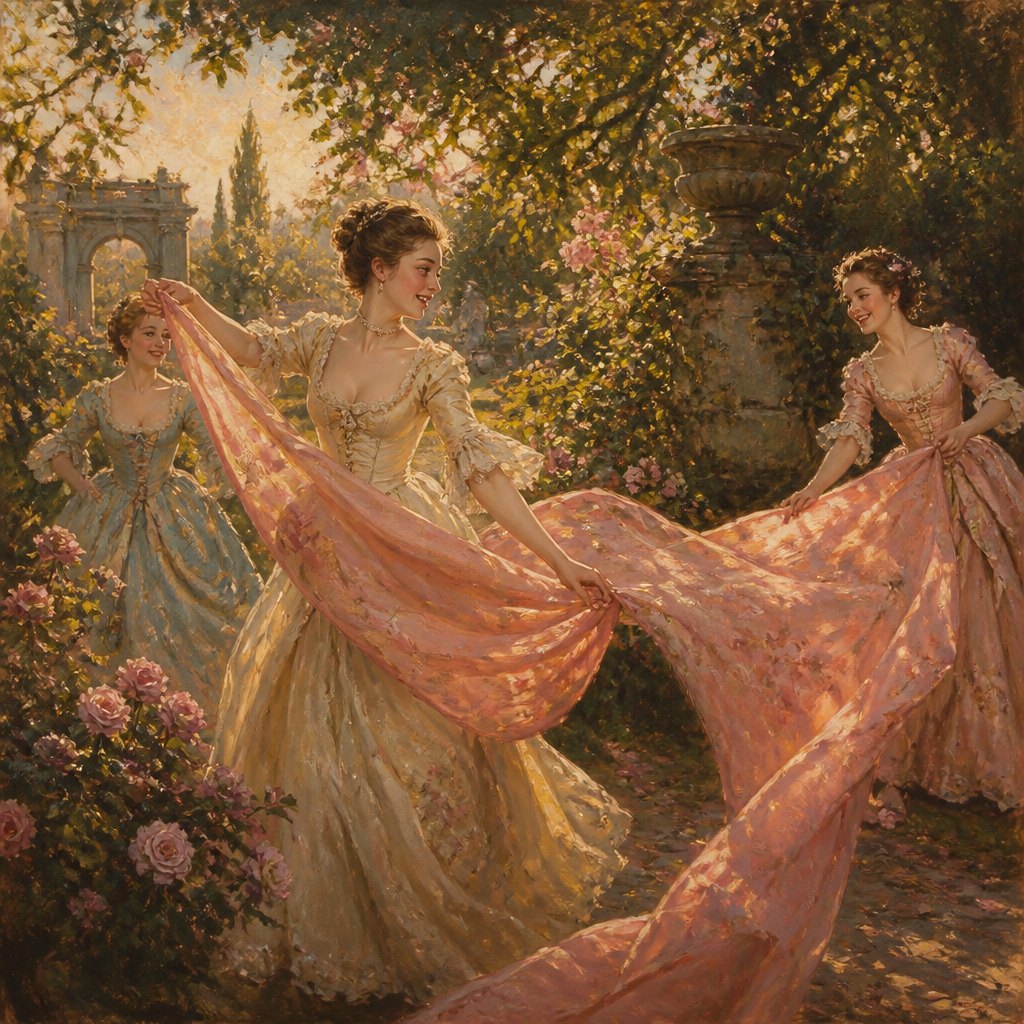 AI-generated
Create in the same spirit
Make Rococo art of your own
This AI interpretation echoes the aesthetic world Jean-Honoré Fragonard worked in — it depicts no real artwork. Generate your own with the Rococo Art Style generator.
Open the Rococo Art Style generator →Legacy
Fragonard closed out the Rococo with a bravura and speed that later painters envied even when they rejected his subject matter. Impressionists such as Renoir studied his loose brushwork and warm light, and the whole tradition of quick, confident oil sketching owes him a debt. His fall from fashion after 1789 became a cautionary tale about art tied too closely to a vanishing aristocratic world. Today his gardens and stolen glances read less as frivolous than as a supreme demonstration of technique, paint moving as fast as feeling. Visit the Frick Collection in New York, home to The Progress of Love, or the Louvre, and his hand still seems to race across the canvas.
Frequently asked questions
What is Jean-Honoré Fragonard famous for?
He is famous for The Swing (1767) and for Rococo paintings of flirtation, gardens, and pleasure, executed with fast, visible brushwork that captured light and movement rather than careful finish.
Where can I see Fragonard's paintings?
The Louvre in Paris holds many key works, the Frick Collection in New York owns The Progress of Love cycle, and the Wallace Collection in London displays The Swing.
How many paintings did Fragonard make?
Fragonard was extremely prolific, producing several hundred paintings along with many drawings and etchings, though exact totals remain uncertain since much of his work was dispersed after the Revolution.
What art movement was Fragonard part of?
Fragonard belonged to the Rococo movement, the light, ornamental style that preceded Neoclassicism in eighteenth-century French art, and is considered its last major painter.