 Famous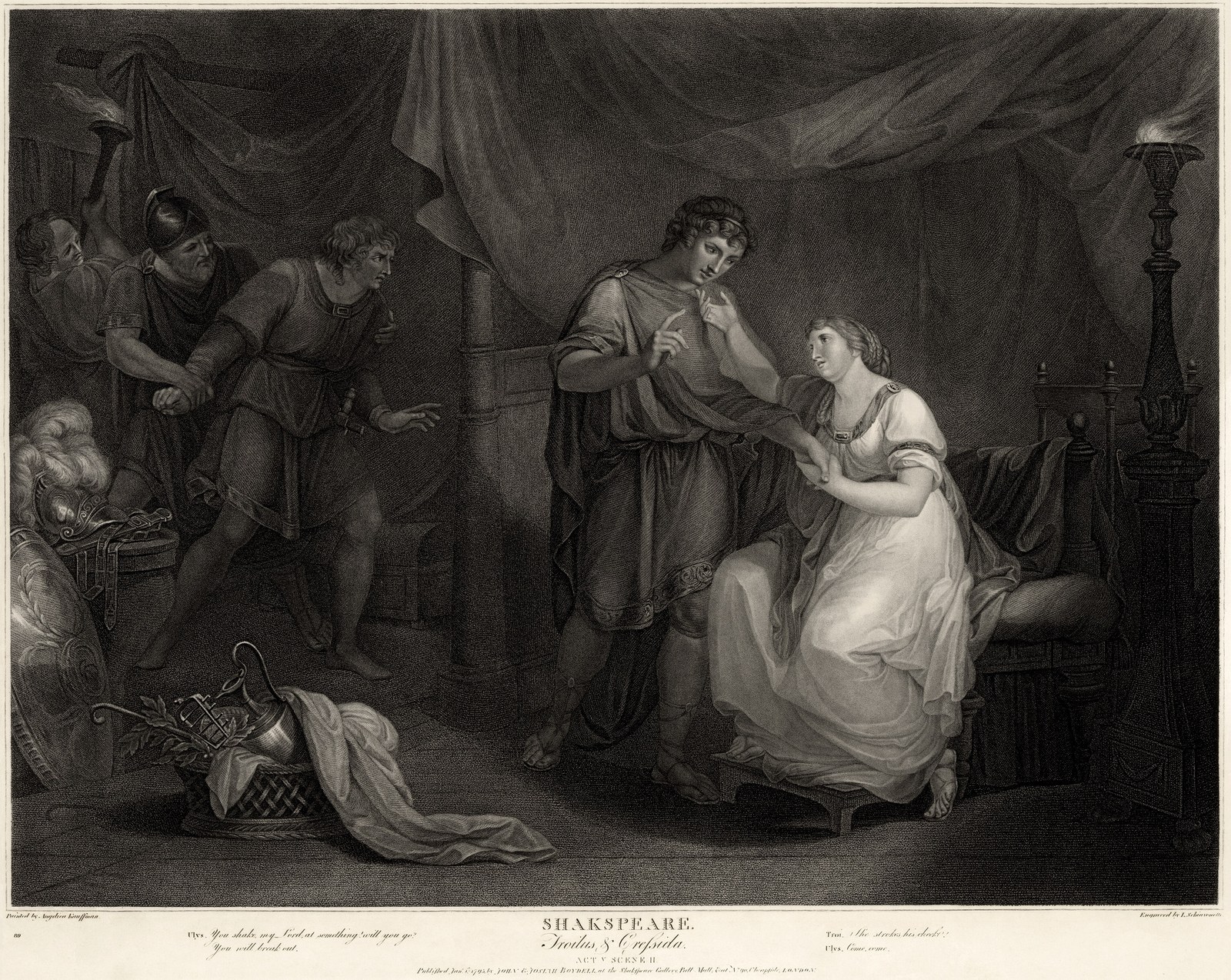
Angelica Kauffman (1741–1807) was a Swiss-Austrian painter who became one of the most celebrated history painters of the eighteenth century and one of only two women among the founding members of Britain's Royal Academy. A prodigy trained by her painter father, she was fluent in several languages and had already earned portrait commissions across Italy before she was twenty. In Rome she studied antiquity alongside Johann Joachim Winckelmann's circle and absorbed the emerging Neoclassical taste for clarity, restraint, and moral subjects drawn from ancient history and literature. Moving to London in 1766, she found instant success, exhibiting scenes from Homer, Virgil, and Shakespeare that rivaled the era's most ambitious male painters, and she helped decorate the ceilings of the new Royal Academy building itself. Her genteel manner and international fame made her one of the best-known artists in Europe, praised by Goethe and painted by Joshua Reynolds. She later settled in Rome, where her house became a gathering place for travelers on the Grand Tour, and she painted large historical and mythological subjects until her death, honored with a funeral modeled on Raphael's.
How to recognize a Kauffman
Ancient subjects, modern grace
Kauffman drew her stories from Homer, Virgil, and Roman history, but painted them with a softness closer to portraiture than battle scenes, favoring quiet emotional moments over violence or spectacle.
Cool, clear Neoclassical color
She used pale blues, dusty rose, and ivory rather than the deep shadows of Baroque painting, keeping figures legible and calm against simplified, often architectural backdrops that recall temples, columns, and the ordered calm of classical antiquity.
Elegant, upright figures
Her men and women stand in graceful, slightly theatrical poses borrowed from classical sculpture, draped in flowing robes that emphasize line and gesture over anatomical drama, their calm bearing suggesting virtue and self-command rather than raw emotion.
Women as protagonists
Where many history painters centered male heroism, Kauffman frequently placed women, mothers, muses, mythic heroines, at the emotional center of the scene, giving them dignity, agency, and interiority rarely afforded female figures in grand historical painting.
Decorative and design work
Beyond easel paintings, she designed ceiling roundels, furniture panels, and interior schemes for fashionable British homes, and her compositions were widely reproduced as prints and even transferred onto porcelain, fans, and other decorative objects across Europe.
Restrained, legible composition
Scenes are built around a few clear figures rather than crowded incident, with careful symmetry and open space that let the story read at a glance, a discipline suited to walls, ceilings, and prints meant to be understood quickly.
The life
Angelica Kauffman was born in Chur, Switzerland, in 1741, the daughter of a modest but skilled painter who recognized her talent early and trained her himself. A gifted linguist and musician as well as a painter, she was earning portrait commissions in Italy by her late teens. In Rome in the early 1760s she studied antiquity and current Neoclassical theory, meeting figures in the circle of Johann Joachim Winckelmann, and began painting the ambitious mythological and historical scenes that would define her career.
Kauffman moved to London in 1766 and achieved almost immediate success, exhibiting history paintings that competed directly with male academicians at a time when women were barred from studying the nude model required for that genre. In 1768 she became a founding member of the Royal Academy, one of only two women, and contributed decorative roundels to its new building. She married the Venetian painter Antonio Zucchi in 1781 and continued to exhibit widely, praised by figures including Johann Wolfgang von Goethe.
In 1782 the couple settled permanently in Rome, where Kauffman's home became a salon for artists and travelers on the Grand Tour. She kept working into her sixties, producing large mythological and historical canvases alongside portraits, and remained one of Europe's most famous painters until her death in 1807. Her funeral, organized by fellow artists, echoed the honors once given to Raphael.
Timeline
- 1741Born in Chur, Switzerland
- 1754Begins painting portraits professionally as a teenager
- 1763Travels to Rome to study classical art
- 1766Moves to London, quickly gains fame
- 1768Becomes a founding member of the Royal Academy
- 1781Marries Venetian painter Antonio Zucchi
- 1782Settles permanently in Rome
- 1807Dies in Rome, given a Raphael-style funeral
Most famous works
| Work | Date | Why it matters |
|---|---|---|
| Cornelia, Mother of the Gracchi | c. 1785 | Cornelia presents her sons as her true treasures, a Neoclassical model of maternal virtue over material wealth. |
| Self-Portrait Hesitating between the Arts of Music and Painting | 1794 | A rare, personal allegory of the choice she made between two careers she loved. |
| Portrait of Johann Wolfgang von Goethe | 1787 | A sensitive portrait of the writer, painted during his travels in Italy, where the two became friends. |
| Penelope at Her Loom | c. 1764 | Homer's faithful wife, shown steadfast at her weaving, an early statement of Kauffman's interest in virtuous women. |
| Ariadne Abandoned by Theseus | c. 1774 | A mythic heroine caught in a moment of grief, treated with restraint rather than melodrama. |
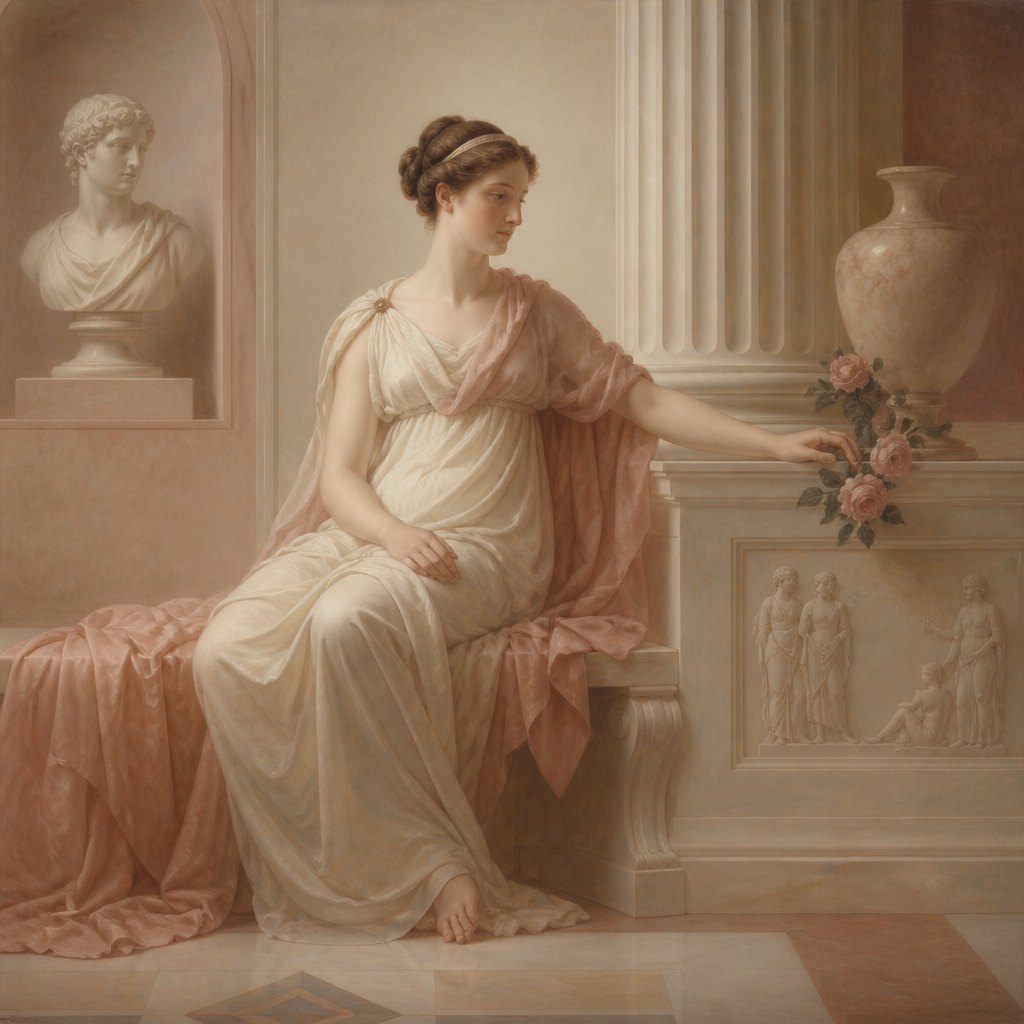 AI-generated
Create in the same spirit
Make Neoclassicism art of your own
This AI interpretation echoes the aesthetic world Angelica Kauffman worked in — it depicts no real artwork. Generate your own with the Neoclassicism Art Style generator.
Open the Neoclassicism Art Style generator →Legacy
Kauffman proved that a woman could sustain a major international career as a history painter, the most prestigious and male-dominated genre of her time, and her example encouraged later women artists across Europe. Her decorative schemes helped define the look of Neoclassical interiors in Britain, and her prints carried her compositions into homes that never owned an original. As one of the Royal Academy's two founding women, she remained an exception for over a century; no other woman was elected a full Royal Academician until Laura Knight in 1936. Her paintings still hang in the Royal Academy and major European museums, a reminder of how much talent history nearly erased.
Frequently asked questions
What is Angelica Kauffman famous for?
She is famous for being one of two women among the Royal Academy's founding members in 1768 and for elegant Neoclassical history paintings drawn from classical myth and literature.
Where can I see Angelica Kauffman's paintings?
Her work hangs at the Royal Academy and National Portrait Gallery in London, the Kunsthaus Zürich, and various European royal collections and country houses.
What movement did Angelica Kauffman belong to?
Kauffman was a leading figure of Neoclassicism, the late-eighteenth-century style that looked to ancient Greece and Rome for clarity, moral seriousness, and restrained emotion.
Why was it unusual for Kauffman to be a history painter?
History painting was considered the most prestigious genre but required training in nude anatomy, from which women were barred, making Kauffman's success in the field exceptional.