 Famous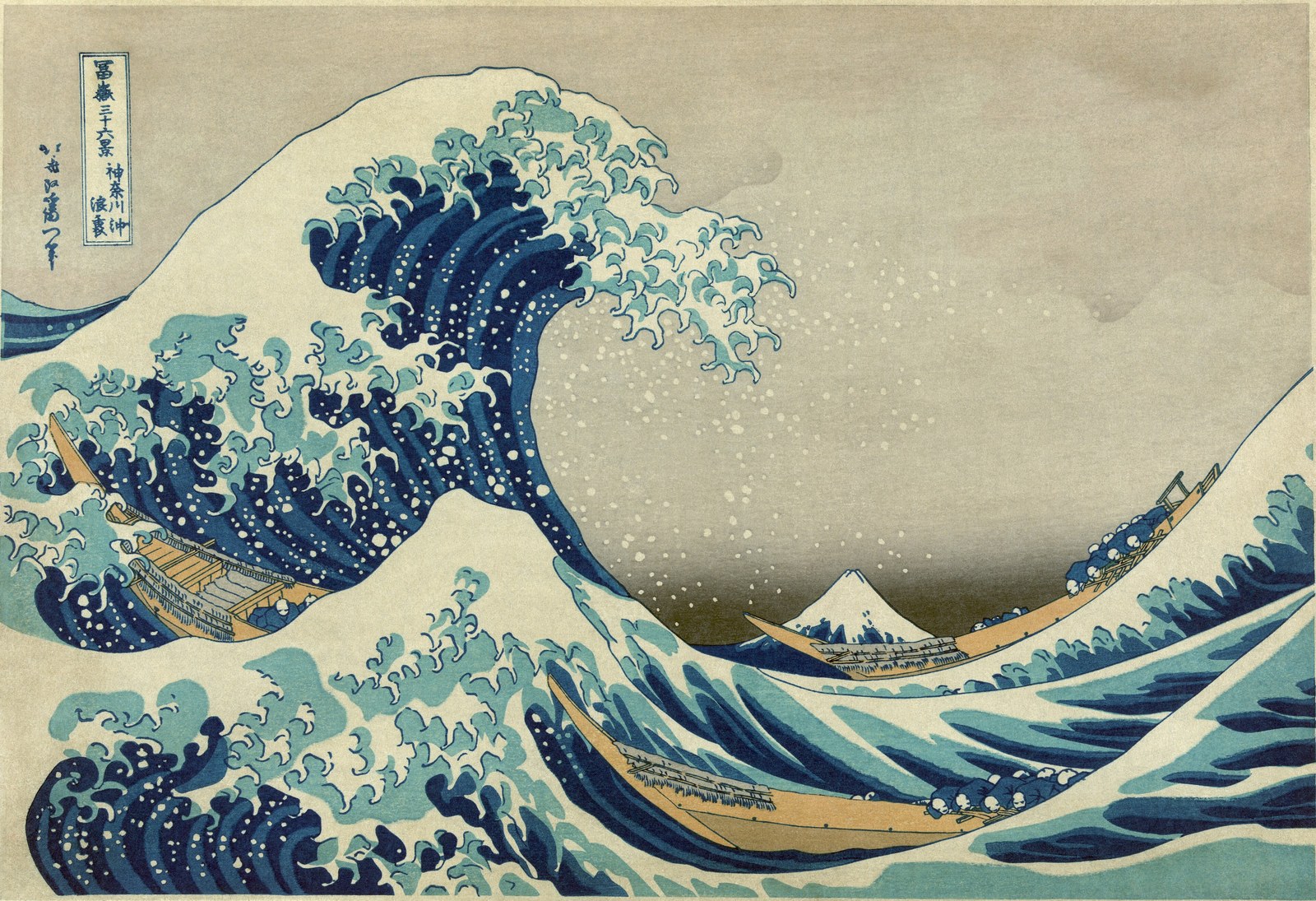
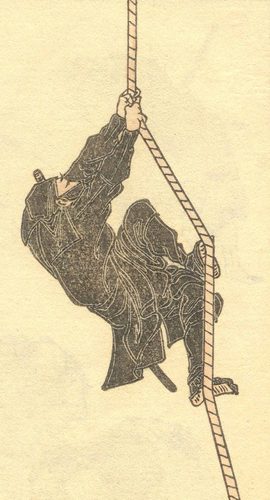
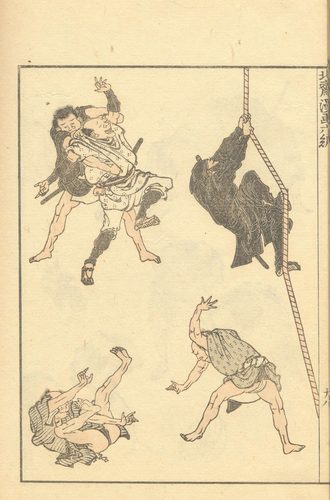
Katsushika Hokusai (1760–1849) was a Japanese ukiyo-e artist whose print series Thirty-six Views of Mount Fuji, especially The Great Wave off Kanagawa, made him the most internationally recognized painter of old Japan.
Born in Edo (Tokyo) to an artisan family, he apprenticed as a woodblock carver before training under the print master Katsukawa Shunshō in the 1770s, absorbing the studio's specialty in actor portraits. Over the following decades he moved restlessly between styles and subjects, working under dozens of different names across his career and repeatedly declaring himself dissatisfied with his own progress.
His late period, from his sixties onward, produced his most famous work: the Thirty-six Views of Mount Fuji series, begun around 1830, which treated the sacred mountain as a constant backdrop to ordinary Japanese life — farmers, fishermen, and travelers going about their business beneath it. He also produced the vast sketchbook collection Hokusai Manga, an encyclopedic record of everyday subjects, and continued painting into his final year.
Hokusai reportedly told students that a few more years would have let him become a true painter — a claim consistent with a career defined by relentless self-revision until his death in 1849.
How to recognize a Hokusai
Prussian-blue waves
Hokusai used the newly imported synthetic pigment Berlin, or Prussian, blue for deep, saturated water and sky, giving his late prints a cool, strikingly modern intensity that earlier natural woodblock pigments simply couldn't match.
Mount Fuji as constant witness
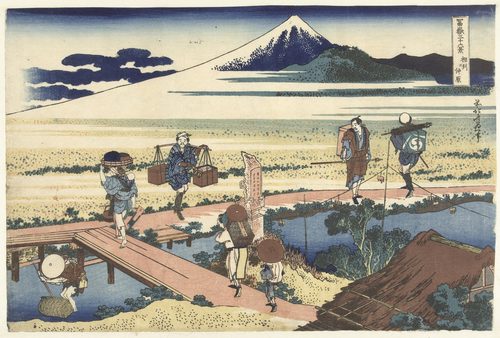
Fuji recurs across his prints as a small, stable triangle in the background of scenes of fishing, farming, or travel — the sacred mountain framing ordinary human labor rather than dominating it.
Dynamic, curling lines
His compositions favor sweeping curves and diagonals — a claw-like burst of foam, a bent tree, a gust of wind — that give even still prints a sense of ongoing motion.
Everyday subjects, elevated
Fishermen, carpenters, travelers, and farmers appear throughout his work, treated with the same compositional seriousness usually reserved for grand landscapes or famous beauties, quietly dignifying the ordinary labor of daily Japanese life.
Encyclopedic sketchbook curiosity
The Hokusai Manga sketchbooks catalogue an enormous range of subjects — animals, ghosts, sumo wrestlers, plants, tools, and everyday gestures — evidence of an artist who treated plain observation itself as endless material.
Bold, flattened composition
He often exaggerated scale and perspective for graphic punch — a towering swell dwarfing a distant peak, a bridge curving improbably underfoot — favoring bold visual impact over strict, measured spatial accuracy.
The life
Hokusai was born in 1760 in Edo to a family connected to the shogunal mirror-maker's workshop, though he was apparently adopted out in childhood. He began work as a woodblock carver in his teens before entering the studio of Katsukawa Shunshō around 1778, where he trained in the popular genre of actor prints under the name Shunrō.
After Shunshō's death, Hokusai left the Katsukawa school and spent the next decades experimenting widely — studying rival schools of Japanese and Chinese painting, absorbing European perspective techniques through Dutch-influenced prints, and working under a long succession of different studio names, a practice he treated as marking new phases of his development.
His breakthrough late period began in earnest in his seventies with the Thirty-six Views of Mount Fuji, published from around 1830, whose star print, The Great Wave off Kanagawa, became instantly popular and remains among the most reproduced images in Japanese art. He followed it with other major series, including waterfalls and bridges across Japan, while continuing to publish volumes of his sketchbook collection Hokusai Manga.
He kept working into his final months, moving house dozens of times over his life and reportedly telling students that true mastery still lay ahead of him. He died in Edo in 1849.
Timeline
- 1760Born in Edo
- 1778Enters the studio of Katsukawa Shunshō, trains in actor prints
- 1795Leaves the Katsukawa school, works independently under new names
- 1814Publishes the first volume of Hokusai Manga
- 1830Begins the Thirty-six Views of Mount Fuji series
- 1831The Great Wave off Kanagawa is published
- 1834Publishes One Hundred Views of Mount Fuji
- 1849Dies in Edo
Most famous works
| Work | Date | Why it matters |
|---|---|---|
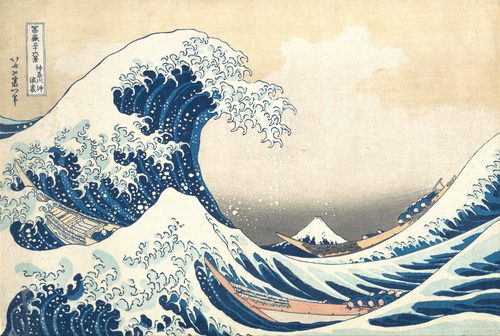
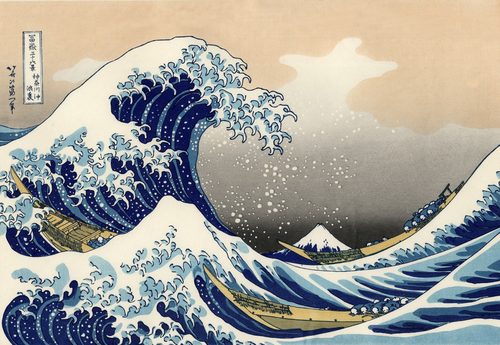
| The Great Wave off Kanagawa | 1831 | The defining image of the Thirty-six Views series, and arguably the single most recognized artwork to come out of Japan. |
| Thirty-six Views of Mount Fuji (series) | 1830–1832 | A landscape series placing the sacred mountain behind scenes of everyday labor, reinventing ukiyo-e landscape as a genre. |
| Fine Wind, Clear Morning (Red Fuji) | 1831 | A stark, near-abstract print reducing the mountain to bold color fields under a mottled sky. |
| Hokusai Manga (sketchbooks) | from 1814 | A sprawling, encyclopedic set of sketchbooks recording thousands of everyday subjects, published in fifteen volumes. |
| A Tour of the Waterfalls of the Provinces (series) | 1832 | A late series showing his fascination with rushing, structured water, standing apart from his famous wave imagery. |
 AI-generated
Create in the same spirit
Make Ukiyo E art of your own
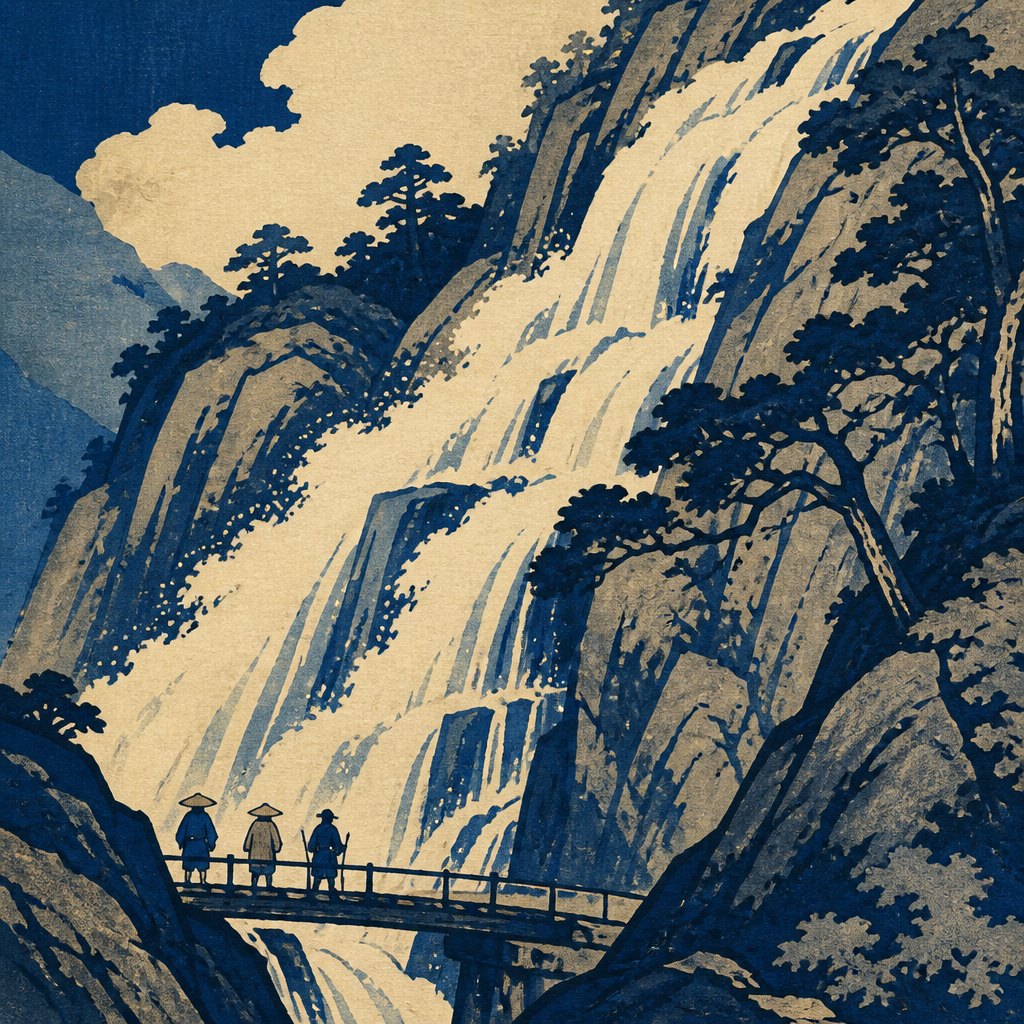
This AI interpretation echoes the aesthetic world Katsushika Hokusai worked in — it depicts no real artwork. Generate your own with the Ukiyo-e Art Style generator.
Open the Ukiyo-e Art Style generator →Legacy
Hokusai's Great Wave became, and remains, one of the most recognized works of Japanese art anywhere in the world, reproduced on everything from museum walls to phone cases. When Japanese prints flooded into Europe after the 1850s, his bold outlines, flattened color, and unconventional viewpoints helped spark Japonisme, directly influencing Monet, Van Gogh, and Degas among others. His restless refusal to settle into one style modeled a kind of lifelong artistic self-renewal that later artists across cultures have pointed to as inspiration. Today the Thirty-six Views remains a standard reference point for how landscape, everyday life, and a single recurring symbol can be woven into one sustained visual project.
Frequently asked questions
What is Katsushika Hokusai famous for?
Hokusai is famous for The Great Wave off Kanagawa and the Thirty-six Views of Mount Fuji series, landscape prints that made him ukiyo-e's most internationally recognized artist.
Where can you see Hokusai's prints today?
His prints are held by major museums worldwide, including the British Museum, the Metropolitan Museum of Art, the Museum of Fine Arts Boston, and the Sumida Hokusai Museum in Tokyo.
How many works did Hokusai create?
Across roughly seventy years he produced an enormous body of work — thousands of prints, illustrations, and paintings, plus the many-volume sketchbook collection Hokusai Manga alone.
What art movement did Hokusai belong to?
He worked within ukiyo-e, the Edo-period 'pictures of the floating world' tradition, and became its leading landscape print designer in his final decades.