 Famous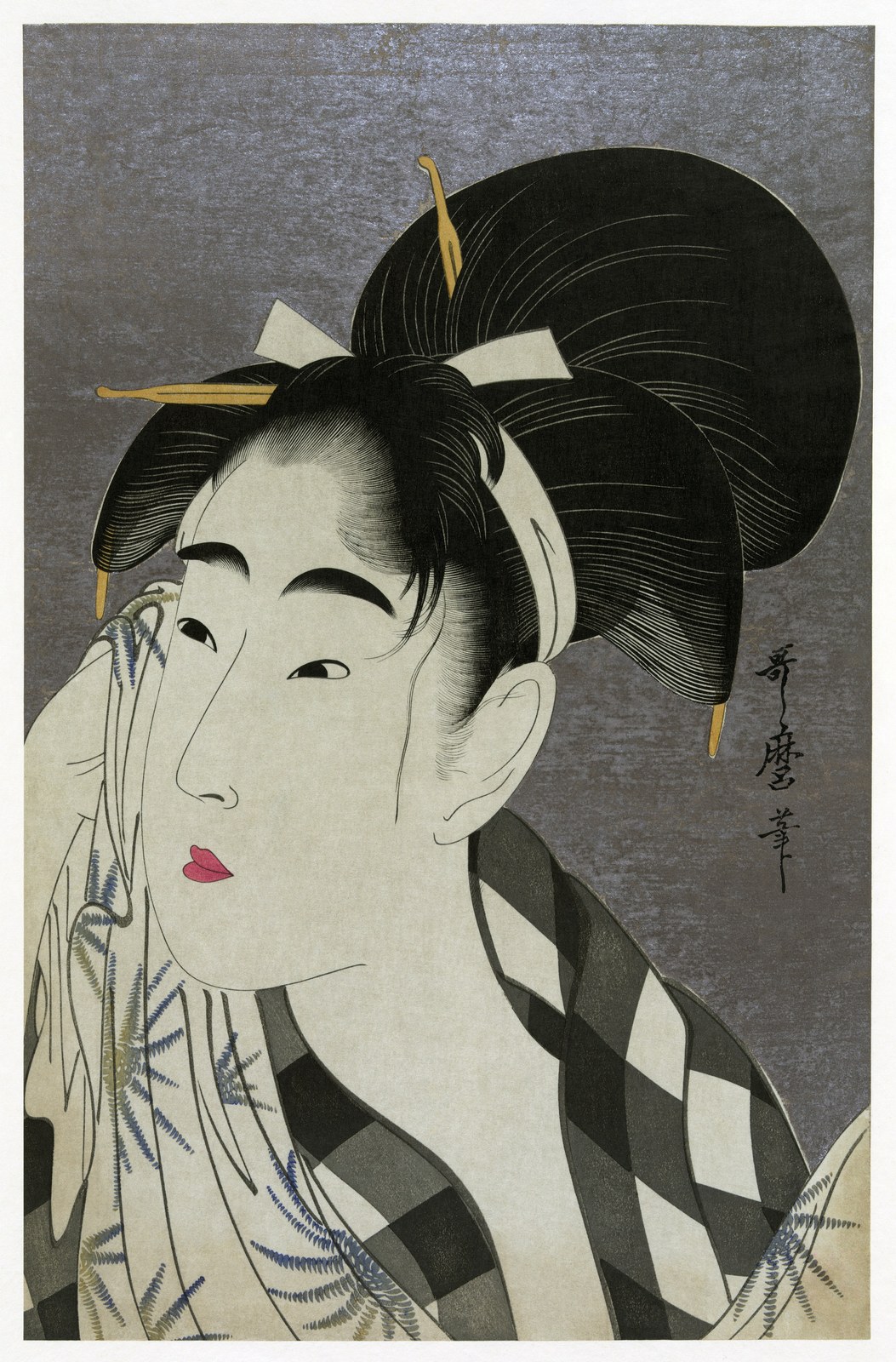
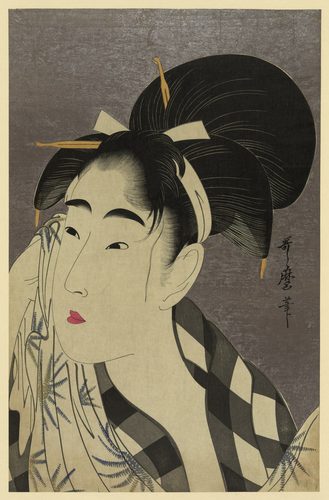
Kitagawa Utamaro (1753–1806) was a Japanese ukiyo-e print designer who redefined the bijin-ga (pictures of beautiful women) genre, moving from full-length figures toward large-headed close-up portraits that read as individual personalities rather than generic beauties.
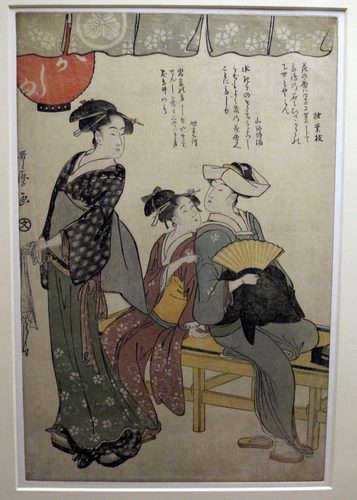
Little is documented about his early life; he trained under the painter Toriyama Sekien and emerged as an independent designer in Edo (Tokyo), working closely with the publisher Tsutaya Jūzaburō, who championed his early career. Through the 1780s and 1790s Utamaro became the city's most sought-after designer of prints depicting courtesans, teahouse waitresses, and other working women, often shown at their toilette or in unguarded, everyday moments.
His ōkubi-e ("large-head picture") format, cropping the composition to the face and shoulders, let him render subtle differences in expression, gaze, and mood — an innovation that changed how the genre worked. He also produced sensitive studies of mothers with children and of women at ordinary domestic tasks.
In 1804 Utamaro was arrested and briefly manacled for producing prints depicting a sixteenth-century warlord and his consorts, a punishment generally understood to have hastened his decline; he died two years later, in 1806.
How to recognize a Utamaro
Large-head close-ups (ōkubi-e)
He pioneered cropping a portrait to just the head and shoulders, filling the sheet with a single face so that a raised eyebrow or half-closed eye carries the whole picture's mood.
Elongated, willowy figures
Utamaro's women are drawn tall and gently curved, necks long and shoulders sloping, fabric falling in soft vertical folds that make even a standing figure feel like it is swaying.
Mica and metallic backgrounds
Many of his portraits float against shimmering mica-dusted grounds, silver or grey, that isolate the face from any specific setting and give the finished print a jewel-like glow under shifting, ambient light.
Psychological, individualized expressions
Rather than repeating a stock beautiful face, he varied the tilt of a head, the set of a mouth, or a sidelong glance to suggest a specific mood or personality.
Intimate, unguarded moments
He favored women caught mid-task — combing out long hair, nursing a child, reading a private letter — rather than formally posed for display, giving even his most famous beauties a quiet, lived-in privacy.
Fine, calligraphic line
His outlines are drawn with a slender, unbroken line that swells and thins like brush calligraphy, most visible in the loose strands of hair escaping an otherwise carefully dressed, elaborate coiffure.
The life
Utamaro's origins are poorly documented — he is thought to have been born around 1753, possibly in Edo, and little is known of his family beyond his apprenticeship to the painter Toriyama Sekien. He began publishing prints and illustrated books in the mid-1770s, starting with actor prints and book illustration; his celebrated nature albums, including the insect book, came in the late 1780s, shortly before he turned decisively to portraits of women.
His career took off through his partnership with the publisher Tsutaya Jūzaburō, one of Edo's most influential print houses. Tsutaya backed Utamaro's shift toward large-format, close-cropped portraits of courtesans and geisha, a format that made him the era's dominant designer of bijin-ga and a household name across the city's pleasure districts.
Through the 1790s he produced an enormous body of work — series portraying famous beauties of the Yoshiwara district, studies of mothers and children, and prints exploring the daily labor of working women. His fame eventually brought him into conflict with the shogunate's sumptuary laws restricting depictions of prominent historical figures.
In 1804, prints referencing the sixteenth-century warlord Toyotomi Hideyoshi and his consorts led to Utamaro's arrest; he was sentenced to house arrest and briefly manacled. The punishment is generally understood to have hastened his decline, and he died in 1806.
Timeline
- 1753Born, probably in Edo
- 1775Begins working as an independent print designer
- 1783Begins his close partnership with publisher Tsutaya Jūzaburō
- 1788Publishes Ehon Mushi Erami, an illustrated book of insects
- 1793Introduces the ōkubi-e large-head portrait format
- 1804Arrested and punished for prints depicting Hideyoshi
- 1806Dies in Edo
Most famous works
| Work | Date | Why it matters |
|---|---|---|
| Ehon Mushi Erami (Picture Book of Selected Insects) | 1788 | An intricately observed illustrated book of insects and plants that revealed his gift for close, textured naturalism early on. |
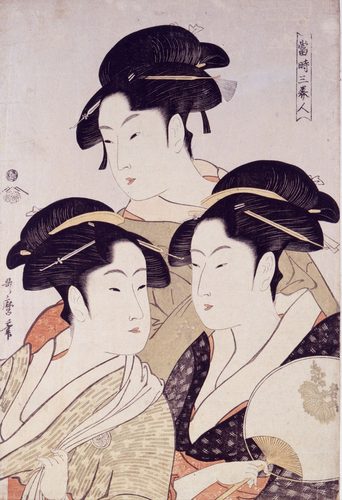
| Three Beauties of the Present Day | 1793 | A celebrated ōkubi-e print comparing three renowned Edo beauties, their faces individualized rather than interchangeable. |
| Ten Types in the Physiognomic Study of Women | c. 1792–1793 | A series of large-head portraits cataloguing distinct feminine temperaments, from bashful to self-possessed. |
| Takashima Ohisa Using Two Mirrors | c. 1795 | A virtuoso double portrait using a hand mirror to show the sitter's face from two angles at once. |
| Yamauba and Kintarō (series) | 1790s | A recurring, tender series depicting the legendary mountain woman nursing and playing with the boy Kintarō. |
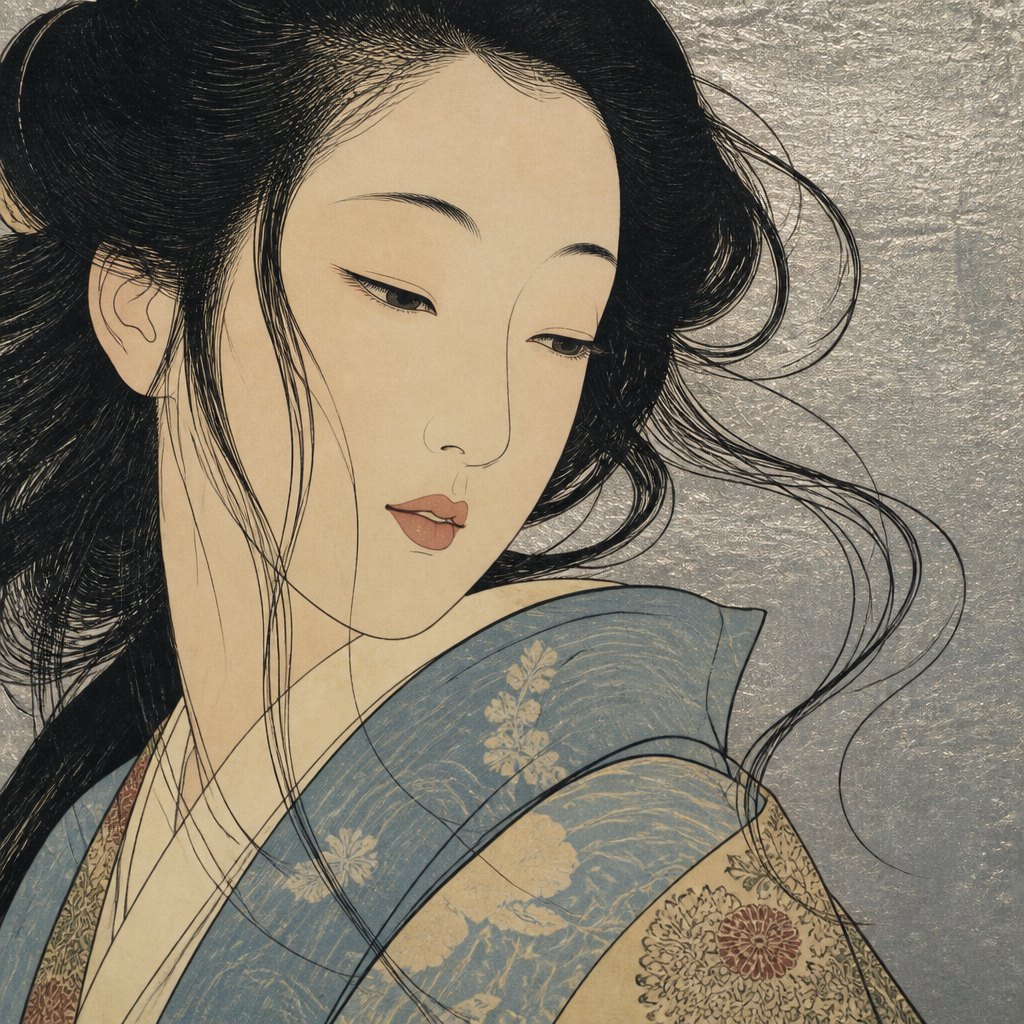 AI-generated
Create in the same spirit
Make Ukiyo E art of your own
This AI interpretation echoes the aesthetic world Kitagawa Utamaro worked in — it depicts no real artwork. Generate your own with the Ukiyo-e Art Style generator.
Open the Ukiyo-e Art Style generator →Legacy
Utamaro reshaped how ukiyo-e treated the human face, proving that a print could carry as much psychological nuance as a painted portrait. His large-head format and attention to individual expression influenced later print designers across the nineteenth century and, once Japanese prints reached Europe after 1860, fed directly into Impressionist and Post-Impressionist fascination with Japanese design — Degas, Toulouse-Lautrec, and others studied his cropped compositions and confident line. Museums worldwide now hold his prints as centerpieces of ukiyo-e collections, and his portraits remain the reference point for how the genre could turn courtesans and working women into individuals rather than types.
Frequently asked questions
What is Kitagawa Utamaro famous for?
Utamaro is famous for bijin-ga — prints of beautiful women — especially his close-cropped ōkubi-e portraits that gave courtesans and working women individualized expressions rather than generic beauty.
Where can you see Utamaro's prints today?
His prints are held by major museums including the British Museum, the Museum of Fine Arts Boston, and the Tokyo National Museum, along with many other ukiyo-e collections worldwide.
Why was Utamaro arrested?
In 1804 he was punished, including brief manacling, for prints depicting the sixteenth-century warlord Toyotomi Hideyoshi and his consorts, which violated shogunate restrictions on portraying historical rulers.
What art movement did Utamaro belong to?
He worked within ukiyo-e, the 'pictures of the floating world' tradition of Edo-period Japan, specializing in the bijin-ga (beautiful women) genre within it.