 Famous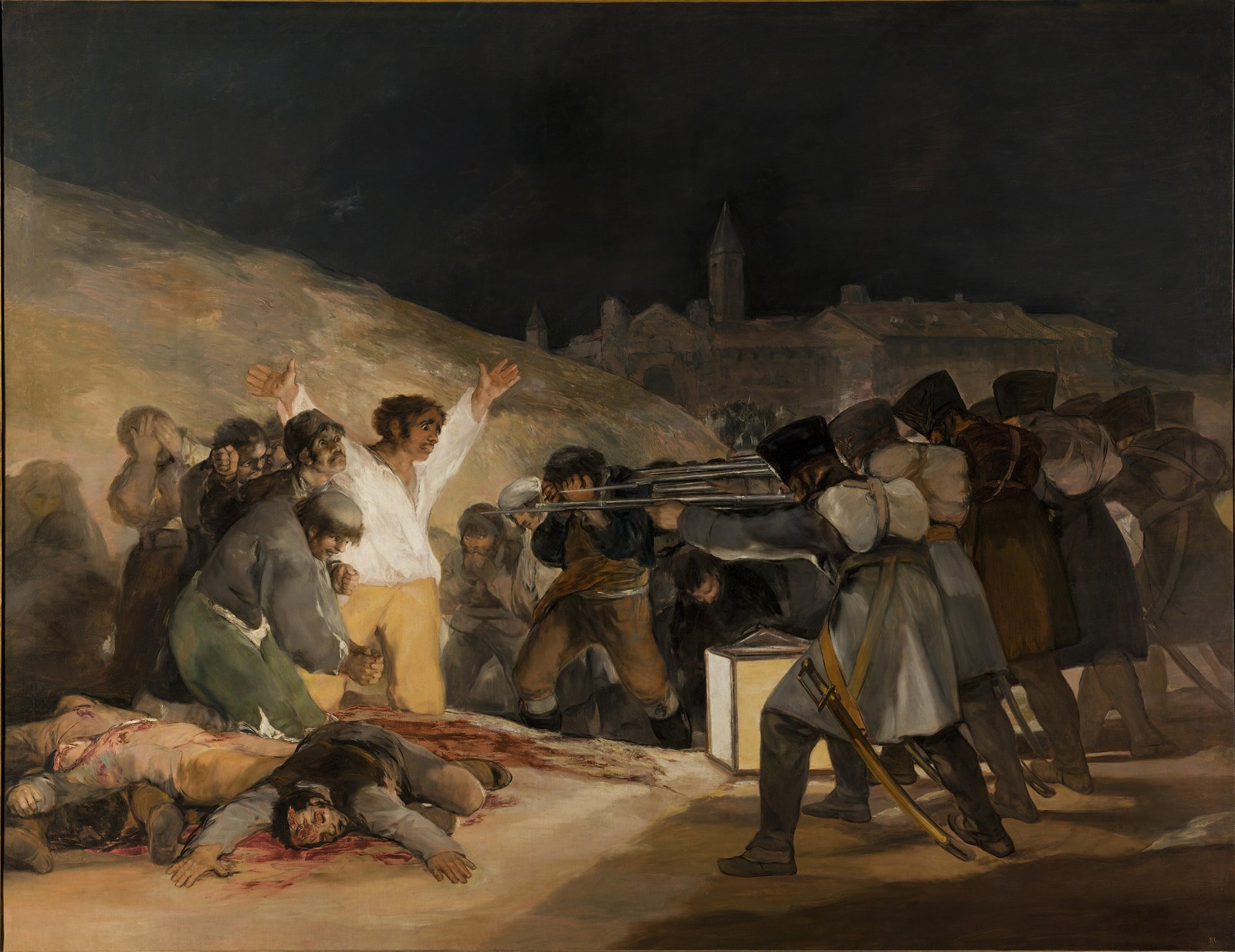
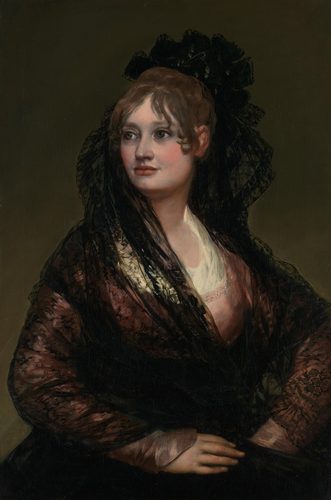
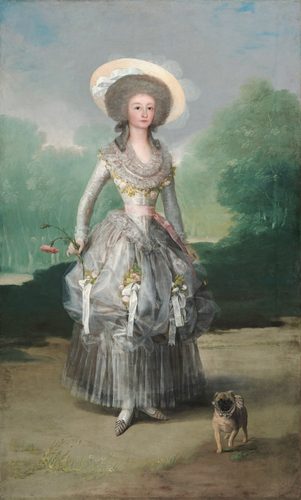
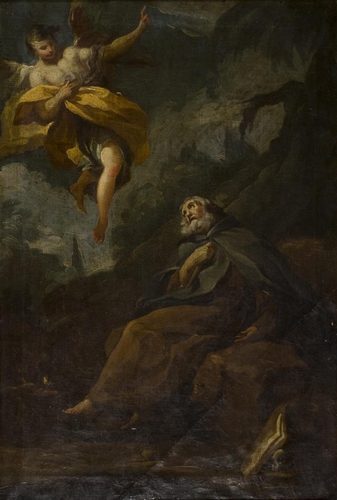
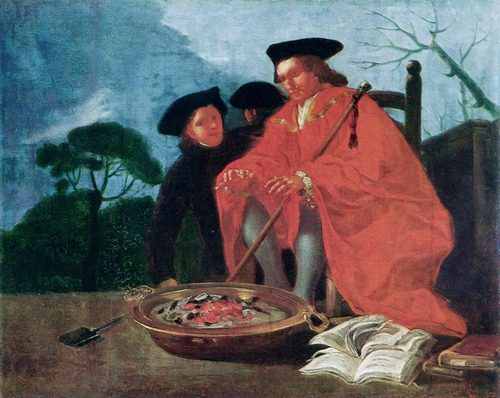
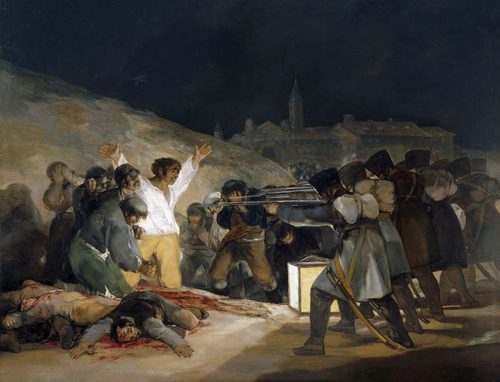
Francisco Goya (1746–1828) was a Spanish painter and printmaker whose long career carried him from lighthearted royal entertainments to some of the most unflinching images of war and human darkness ever made, marking him as a crucial bridge between old master tradition and modern art. Trained in Zaragoza and Madrid, he began by designing cheerful tapestry cartoons for the royal factory before rising to become court painter to Charles IV, producing portraits notable for their psychological honesty even when flattery was expected. A severe illness around 1793 left him permanently deaf and seems to have darkened his outlook; his etching series Los Caprichos, satirizing Spanish superstition and folly, followed soon after. The Napoleonic invasion of Spain and the brutal war that followed gave Goya his most searing subject matter: The Third of May 1808 memorialized the execution of Spanish civilians, while his print series The Disasters of War documented atrocity with unprecedented directness. Late in life, isolated and reportedly disillusioned, he covered the walls of his own house with the so-called Black Paintings, haunting works never meant for public view. Goya spent his final years in self-imposed exile in Bordeaux, France, still working almost to the end.
How to recognize a Goya
Loose, prophetic brushwork
Goya's late paintings use broad, rapid strokes and thick paint applied almost violently, anticipating the expressive brushwork of nineteenth-century painters decades before it became common practice, as if urgency itself had become part of the subject matter.
Unflinching depictions of violence
He painted and etched war, execution, and suffering directly, without heroic staging or distance, showing victims' terror and the mechanical cruelty of soldiers with documentary bluntness that shocked contemporaries and still unsettles viewers two centuries later.
Psychological royal portraits
Even in official commissions, Goya let vanity, weariness, or dullness show through royal and aristocratic faces, painting character honestly beneath ceremonial dress and finery, a candor that later viewers have read as quiet, careful critique of power.
Dark, somber palette
His later work is dominated by blacks, browns, and murky grays, occasionally broken by a single acid highlight, replacing the bright decorative colors of his early tapestry designs with a mood suited to nightmare, war, and private despair.
Nightmare and fantasy imagery
In prints and the Black Paintings, Goya filled scenes with witches, monsters, and irrational dread, using invented imagery to comment on superstition, war, and human folly rather than to illustrate any specific story, legend, or literary source.
Etching as social critique
Series like Los Caprichos and The Disasters of War used printmaking's wide reach to satirize institutions and record atrocity, blending caricature with documentary intent and proving that a cheap, reproducible medium could carry as much weight as any grand oil painting.
The life
Francisco Goya was born near Zaragoza, Spain, in 1746 and trained locally before working his way into royal favor, designing cartoons for the royal tapestry factory through the 1770s and early 1780s. His skill as a portraitist steadily advanced his career, and by 1786 he held an official position under Charles III, painting nobility and royalty with a directness that hinted at more than flattery.
Around 1792 a severe illness, never definitively diagnosed, left Goya permanently deaf and appears to have deepened both his introspection and his willingness to criticize Spanish society. His etching series Los Caprichos, published in 1799, satirized superstition and folly with startling frankness. The Napoleonic invasion of Spain in 1808 and the guerrilla war that followed gave him his defining subject: he painted The Third of May 1808 and created The Disasters of War prints, confronting atrocity without the usual heroic distance.
In his final years in Madrid, isolated and reportedly embittered by political repression, Goya covered the walls of his own house with the so-called Black Paintings, dark, ambiguous works never intended for public exhibition. In 1824 he left Spain for self-imposed exile in Bordeaux, France, where he continued to draw and paint almost until his death in 1828.
Timeline
- 1746Born near Zaragoza, Spain
- 1775Begins designing tapestry cartoons for the royal factory
- 1786Appointed painter to King Charles III
- 1792Falls seriously ill and becomes permanently deaf
- 1799Publishes the etching series Los Caprichos
- 1808Napoleon's forces invade Spain; war begins
- 1814Paints The Third of May 1808
- 1828Dies in exile in Bordeaux, France
Most famous works
| Work | Date | Why it matters |
|---|---|---|
| The Third of May 1808 | 1814 | Spanish civilians face a faceless firing squad, one of the first great anti-war paintings in Western art. |
| Los Caprichos | 1799 | A series of 80 etchings satirizing superstition, vanity, and folly in Spanish society. |
| Saturn Devouring His Son | c. 1820–1823 | One of the Black Paintings, a raw, private image of horror painted directly on the artist's dining room wall. |
| The Family of Charles IV | 1800–1801 | A royal group portrait so psychologically candid it borders on satire, despite pleasing its royal sitters. |
| The Clothed Maja | c. 1800–1807 | A reclining portrait paired with a franker companion piece, later investigated by the Spanish Inquisition. |
 AI-generated
Create in the same spirit
Make Romanticism art of your own
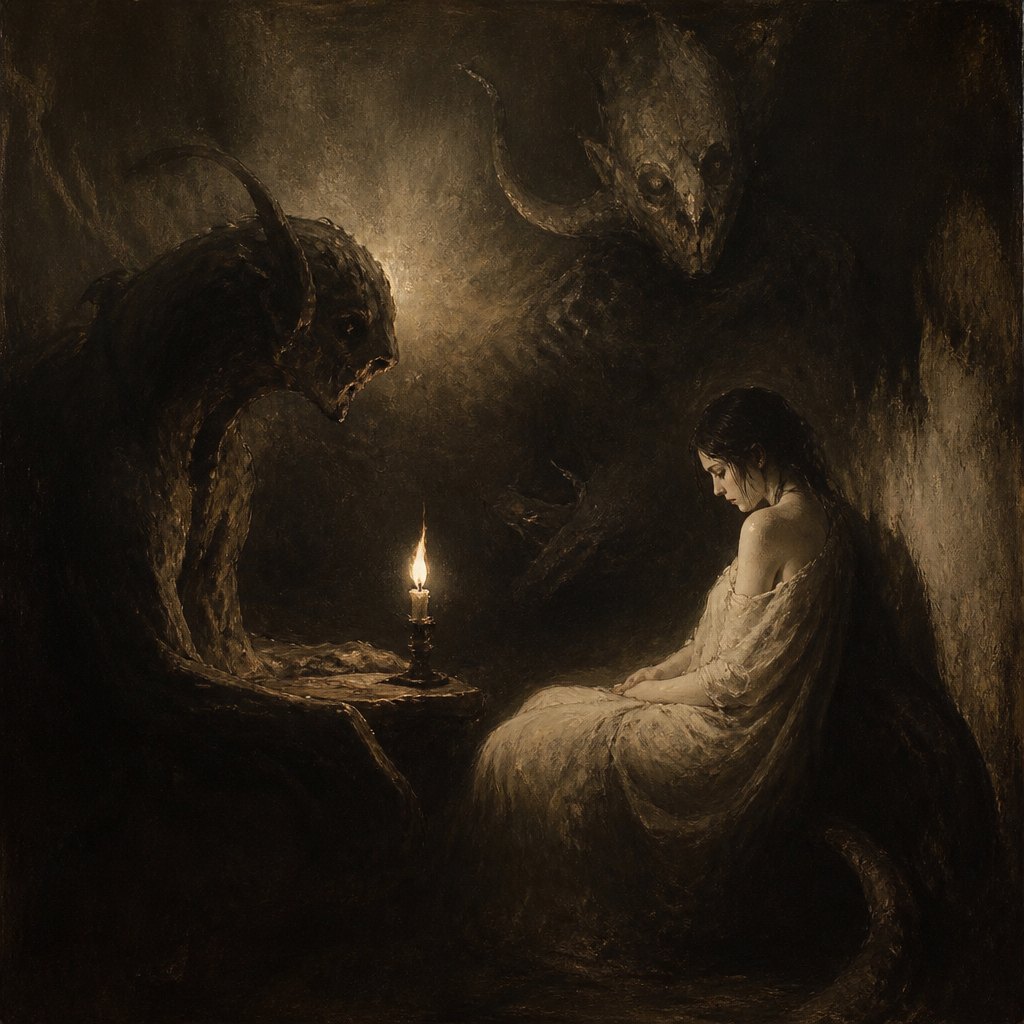
This AI interpretation echoes the aesthetic world Francisco Goya worked in — it depicts no real artwork. Generate your own with the Romanticism Art Style generator.
Open the Romanticism Art Style generator →Legacy
Goya's willingness to show royalty as flawed and war as horror rather than glory reshaped what painting was allowed to say. Édouard Manet, Pablo Picasso, and generations of Spanish and French artists studied his prints and late paintings directly, and his Third of May established a visual language for atrocity still used today. His etchings pioneered printmaking as a vehicle for pointed social and political commentary rather than reproduction. Standing before the Black Paintings in Madrid's Prado Museum, visitors still feel the unease of an artist working, in near-total isolation, purely for himself.
Frequently asked questions
What is Francisco Goya famous for?
Goya is famous for The Third of May 1808, his unflinching Disasters of War prints, and the haunting Black Paintings, which together mark him as a pioneer of modern, psychologically honest art.
Where can I see Goya's paintings?
The Prado Museum in Madrid holds the largest collection, including the Black Paintings and The Third of May 1808; other major works are in the Metropolitan Museum and the National Gallery.
What art movement is Goya associated with?
Goya is generally linked to Romanticism for his emotional intensity and dark subject matter, though his career spans court Rococo, biting satire, and a highly personal late style.
Why did Goya become deaf?
A severe, undiagnosed illness around 1792–1793 left Goya permanently deaf; the exact cause remains uncertain, but the episode is well documented as a turning point toward his darker, personal work.