 Famous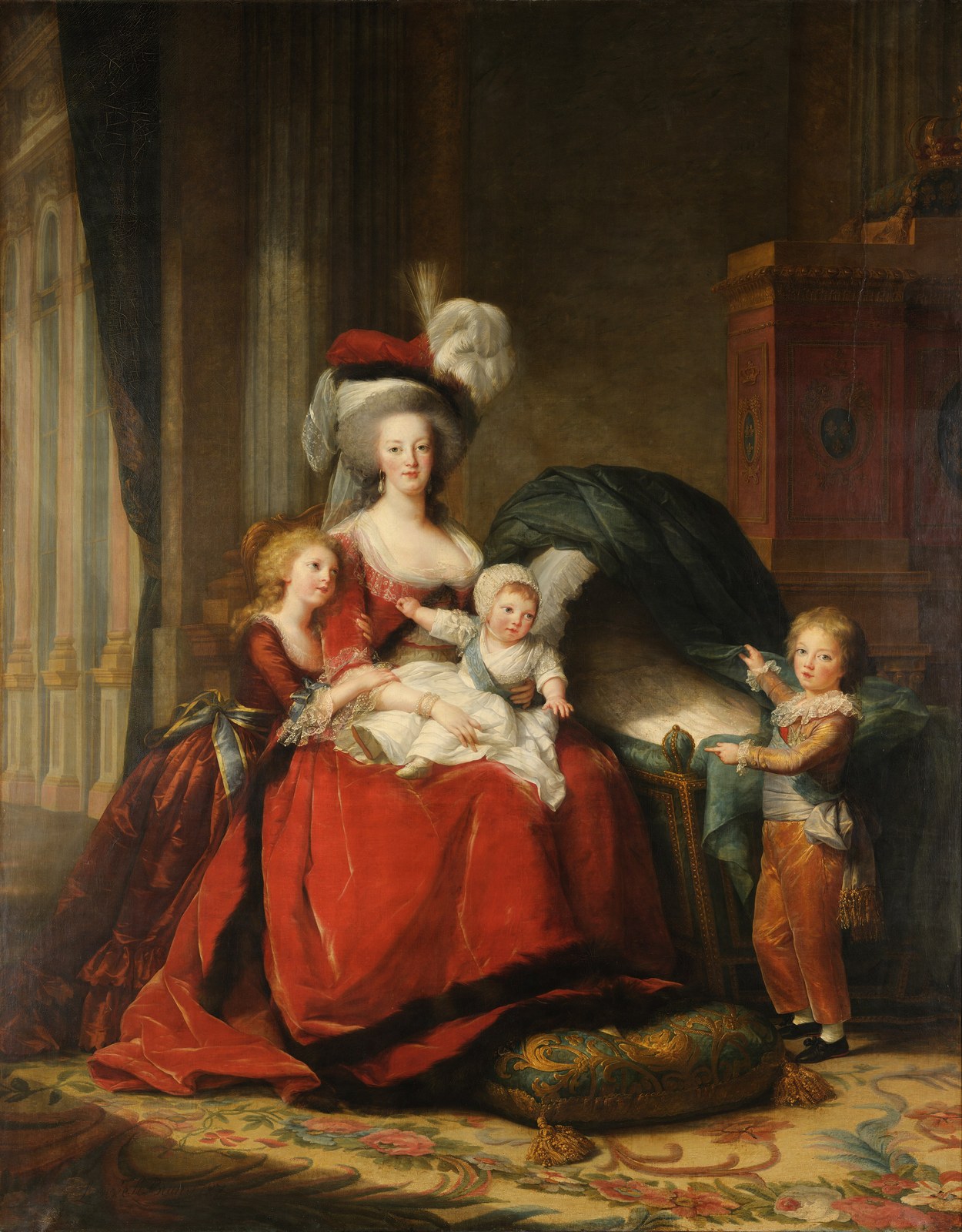
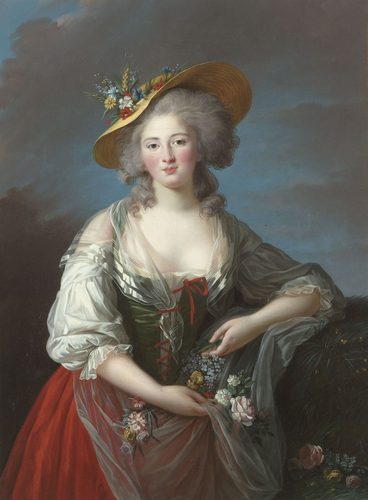
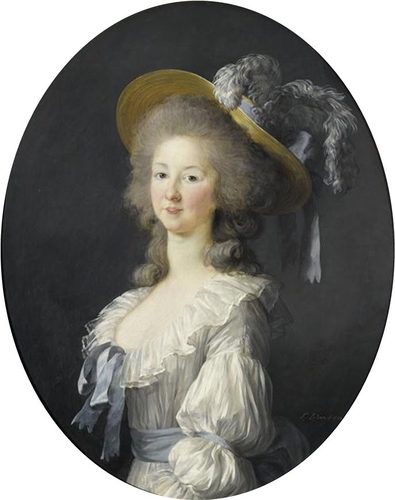
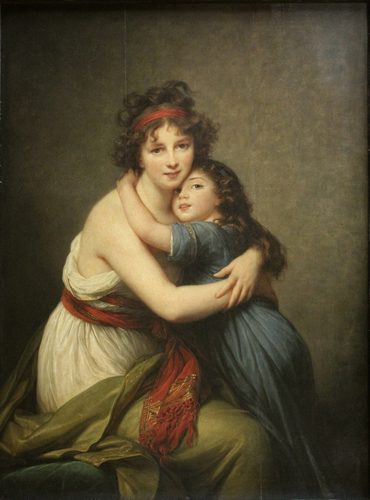
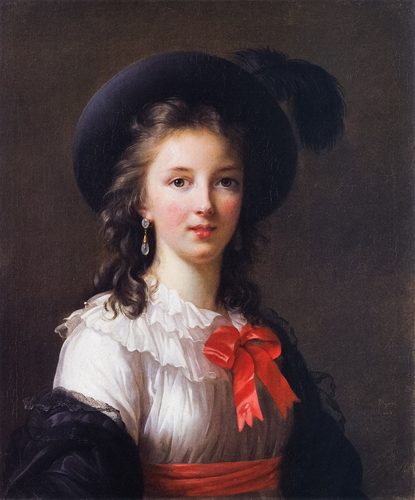
Élisabeth Vigée Le Brun (1755–1842) was a French portrait painter who became the favored artist of Queen Marie Antoinette and one of the most successful women painters in European history, working steadily through revolution and exile across four decades. Largely self-taught, guided by her portraitist father and her own study of old masters, she was earning a living from portraiture by her teens and married the art dealer Jean-Baptiste-Pierre Le Brun, which gave her access to important collections and clients. Her warm, flattering, and technically brilliant portraits of Marie Antoinette, over thirty in total, made her both famous and, later, dangerously associated with the monarchy. When the Revolution erupted in 1789, Vigée Le Brun fled France with her young daughter, beginning twelve years of exile during which she painted aristocracy and royalty in Italy, Austria, Russia, and Britain, sustaining her career even as her homeland turned against everything she represented. She was admitted to art academies in Rome, Parma, St. Petersburg, and elsewhere, an unusual honor for a woman. Allowed to return to France in 1802, she continued painting into old age and left vivid memoirs describing the courts and revolutions she had witnessed firsthand.
How to recognize a Brun
Warm, luminous skin tones
Vigée Le Brun rendered flesh with a soft glow, blending color so smoothly that faces seem lit from within, a technical hallmark that made her portraits especially flattering to sitters who wanted to look both elegant and alive.
Natural, relaxed poses
She favored looser, more informal poses than the stiff court portraiture of her time, often showing sitters mid-gesture or in intimate mother-and-child arrangements rather than rigid formality, a warmth that set her work apart from earlier court painters.
Rich, tactile fabrics
Silk, muslin, and fur are rendered with careful attention to texture and light, giving costume real physical presence without overwhelming the sitter's face and expression, a balance that took real technical patience and long hours of study.
Mother-and-child intimacy
Her many portraits of Marie Antoinette and other women with their children emphasize tenderness and touch, a departure from the formal distance typical of royal portraiture, and one she returned to often in images of herself with her own daughter.
Self-portraits as statement
Vigée Le Brun painted herself repeatedly, often with her daughter or a paintbrush in hand, asserting her identity and skill as a professional artist in a field dominated by men, images that doubled as advertisements for her own considerable talent.
Soft, atmospheric backgrounds
Her backdrops tend toward gentle skies, drapery, or soft-focus landscape rather than architectural detail, keeping full attention on the sitter's face and bearing, a choice that lends even her grandest royal portraits an air of ease and warmth.
The life
Élisabeth Vigée Le Brun was born in Paris in 1755, the daughter of a portraitist who died when she was twelve. Largely self-taught through copying old masters and study with family friends, she was supporting her mother and brother with portrait commissions before she turned twenty. Her 1776 marriage to the art dealer Jean-Baptiste-Pierre Le Brun gave her access to important private collections and an expanding aristocratic clientele.
By 1778 she was painting Queen Marie Antoinette, eventually producing over thirty portraits of her, and in 1783 was admitted to the Royal Academy despite resistance to women members. This royal association made her one of France's most sought-after portraitists, but it also endangered her when revolution broke out in 1789; she fled France that October with her young daughter, beginning twelve years of exile.
Across Italy, Austria, Russia, and Britain, Vigée Le Brun continued painting aristocracy and royalty, earning admission to art academies in Rome, Parma, and St. Petersburg among others. Allowed to return to France in 1802, she resumed her career, traveled to England and Switzerland, and continued painting into old age. She died in Paris in 1842, having also written vivid memoirs of the courts and revolutions she outlived.
Timeline
- 1755Born in Paris
- 1774Admitted to the Académie de Saint-Luc
- 1776Marries art dealer Jean-Baptiste-Pierre Le Brun
- 1778Begins painting portraits of Marie Antoinette
- 1783Elected to the Royal Academy in Paris
- 1789Flees France as the Revolution begins
- 1795Arrives in St. Petersburg to paint the Russian court
- 1802Returns to France
- 1842Dies in Paris
Most famous works
| Work | Date | Why it matters |
|---|---|---|
| Marie Antoinette in a Muslin Dress | 1783 | An informal portrait of the queen in simple white muslin that scandalized the court for its casualness. |
| Self-Portrait with Her Daughter Julie | 1789 | A tender embrace between mother and child, among her most celebrated self-portraits. |
| Marie Antoinette and Her Children | 1787 | A formal group portrait commissioned to soften the queen's public image shortly before the Revolution. |
| Self-Portrait in a Straw Hat | 1782 | A confident, sunlit self-portrait paying homage to Rubens, showcasing her technical skill and professional standing. |
| Portrait of Countess Golovine | c. 1797–1800 | A luminous portrait painted during her Russian exile, showing her continued success among European aristocracy. |
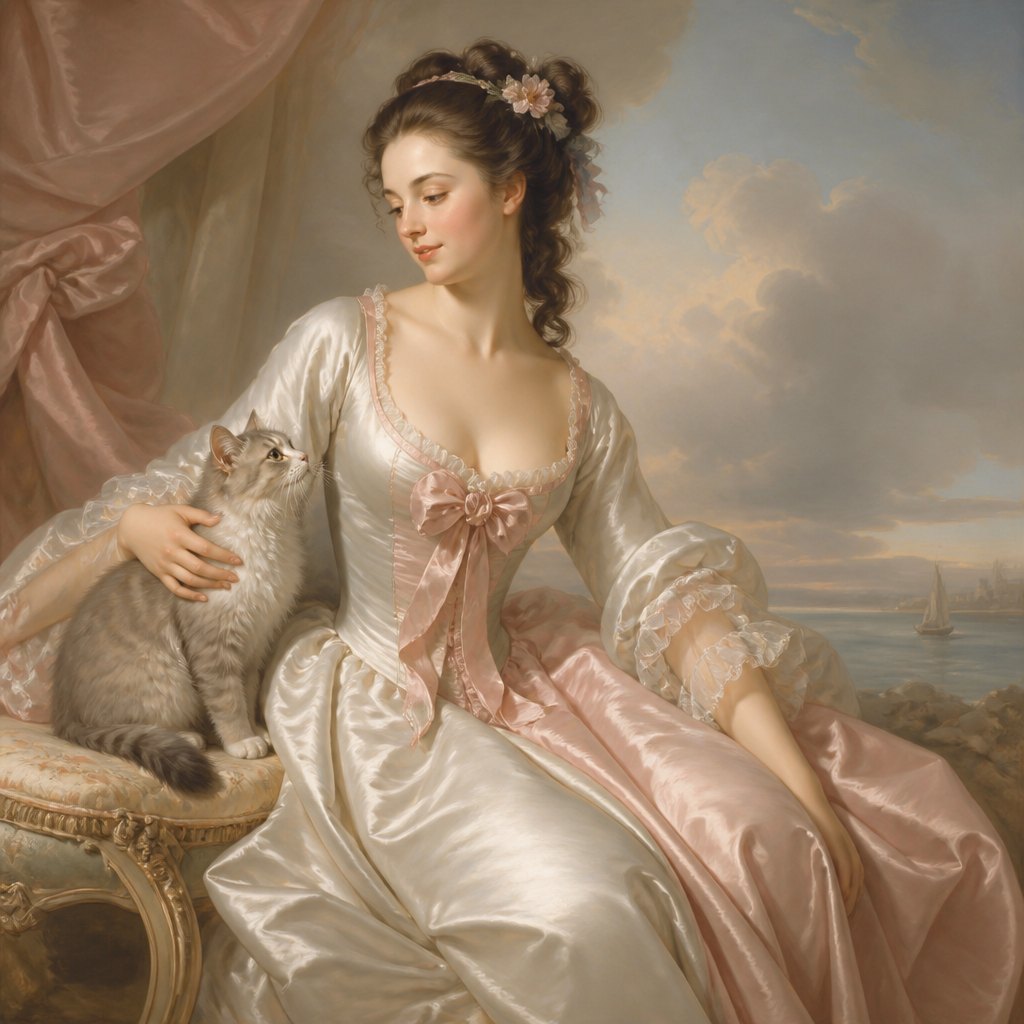 AI-generated
Create in the same spirit
Make Neoclassicism art of your own
This AI interpretation echoes the aesthetic world Élisabeth Vigée Le Brun worked in — it depicts no real artwork. Generate your own with the Neoclassicism Art Style generator.
Open the Neoclassicism Art Style generator →Legacy
Vigée Le Brun proved that a woman could sustain elite portrait commissions across multiple royal courts and survive the collapse of the world that made her famous. Her flattering yet technically assured style shaped how European aristocracy wanted to be seen for a generation, and her memoirs remain a vivid, firsthand account of court life before and after the Revolution. She stands alongside Angelica Kauffman as proof that eighteenth-century women could build major international art careers despite formal barriers to training. Her portraits still hang in the Louvre and Versailles, images of a vanished world painted by someone who watched it burn and kept working anyway.
Frequently asked questions
What is Élisabeth Vigée Le Brun famous for?
She is famous for her portraits of Marie Antoinette and for building an internationally successful career as a woman portrait painter across France, Italy, Austria, Russia, and Britain.
Where can I see Vigée Le Brun's paintings?
The Louvre and the Palace of Versailles in France hold major works, alongside the Metropolitan Museum of Art, the National Gallery in London, and the Hermitage in St. Petersburg.
What movement is Vigée Le Brun associated with?
Her elegant, naturalistic portraiture bridges late Rococo warmth and emerging Neoclassical restraint, though she is best understood as a court portraitist rather than a strict movement follower.
Did Vigée Le Brun really flee the French Revolution?
Yes. She left France in October 1789 with her daughter, fearing her close association with Marie Antoinette, and spent twelve years painting royalty in exile before returning in 1802.