 Famous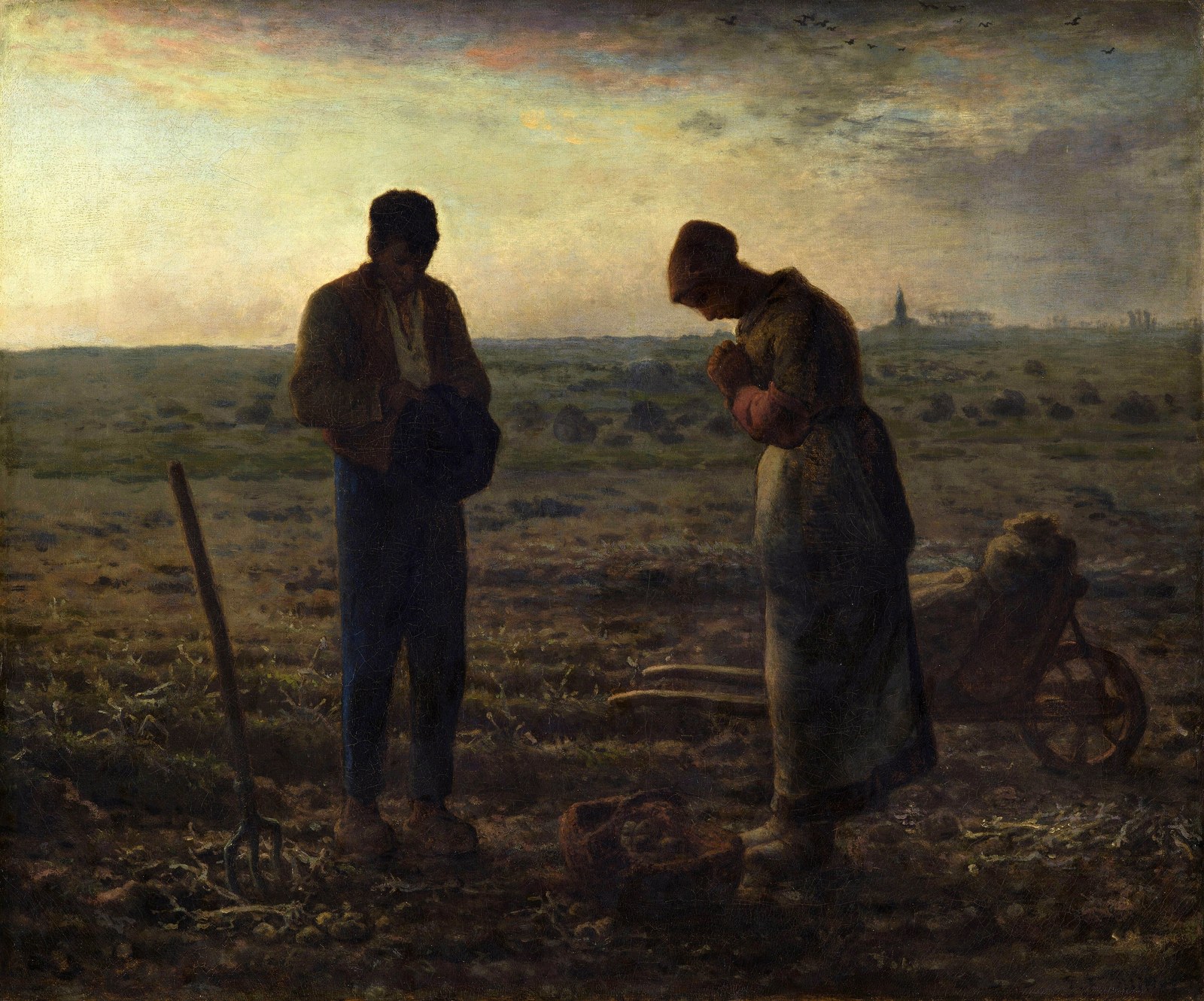
Jean-François Millet (1814–1875) was a French painter best known for The Gleaners and The Angelus, works that turned the daily labor of peasants into subjects worthy of a museum wall. Born to a farming family in Gruchy, Normandy, he trained in Cherbourg and then in Paris under the academic painter Paul Delaroche, initially supporting himself with portraits and mildly risqué mythological nudes before turning toward the rural subjects he knew from childhood.
In 1849, fleeing a cholera outbreak in Paris, Millet settled in the village of Barbizon, where he lived for the rest of his life among the loose circle of landscape painters now known as the Barbizon School. There he produced the peasant scenes that made his name: sowers, gleaners, and shepherds rendered with a monumental, unsentimental weight that some contemporaries read as noble and others, in the tense years after 1848, read as dangerously political.
The Angelus, showing two farmers pausing at dusk for prayer, became one of the most widely reproduced images in art history. Millet's work later shaped Vincent van Gogh, who copied several of his compositions directly. Millet died in Barbizon in 1875, having spent a career insisting that ordinary work deserved a painter's full attention.
How to recognize a Millet
monumental peasant figures
Millet paints field workers at a scale and with a solemnity once reserved for saints and generals, their bent backs and heavy hands filling the canvas with the weight of real physical labor.
earth-toned, restrained palette
Browns, ochres, and muted greens dominate his canvases, echoing the soil, stubble, and worn cloth of the fields themselves, with color deliberately kept subdued so that form, posture, and gesture carry the emotional weight instead of hue.
dusk and dawn light
Many scenes are set at the edges of the working day — a low, warm, leveling light that flattens class distinctions and lends even the humblest chore a quiet, almost devotional glow.
silhouette against open sky
Figures are frequently placed low against a wide, plain horizon, their outlines cut cleanly against the open sky, a recurring compositional habit that gives even the most ordinary bent-back gesture an unusual, monumental clarity and weight.
labor as subject, not backdrop
Sowing, gleaning, and resting are the entire content of the picture, not incidents within a larger landscape or genre scene — a deliberate elevation of rural work to history-painting status.
thick, deliberate brushwork
Paint is built up in solid, unfussy strokes that avoid decorative flourish or bravura display, giving surfaces a plain, almost sculptural density and weight that matches the unglamorous, quiet dignity of the working subjects he painted.
The life
Millet was born in 1814 in the Normandy hamlet of Gruchy to a farming family that recognized and supported his early talent for drawing. After training in nearby Cherbourg, he moved to Paris in 1837 to study under Paul Delaroche at the École des Beaux-Arts, but struggled for years to establish himself, painting portraits, signboards, and mythological nudes to pay the bills.
A turning point came in 1849, when a cholera epidemic drove Millet and his family out of Paris to the village of Barbizon on the edge of the Fontainebleau forest. He remained there for the rest of his life, part of the informal community of landscape and rural painters that became known as the Barbizon School. Freed from Salon expectations of prettiness, he began painting the peasant labor he had grown up around: sowers casting seed, gleaners gathering leftover grain, shepherds tending flocks at dusk.
These paintings, especially The Gleaners (1857) and The Angelus (1857–59), drew both admiration and suspicion; in the charged political atmosphere following the 1848 revolution, dignified images of the rural poor could read as social commentary. Recognition and modest prosperity came only in his final years. Millet died in Barbizon in January 1875, having permanently changed how art could treat ordinary work.
Timeline
- 1814Born in Gruchy, Normandy, to a farming family
- 1837Moves to Paris to study under Paul Delaroche
- 1840Makes his Salon debut with a portrait
- 1849Settles in Barbizon, fleeing a cholera outbreak
- 1850Exhibits The Sower, his first major peasant subject
- 1857Paints The Gleaners, his most debated work
- 1859Completes The Angelus, later his most reproduced image
- 1868Awarded the Legion of Honor for his life's work
- 1875Dies in Barbizon at age sixty
Most famous works
| Work | Date | Why it matters |
|---|---|---|
| The Sower | 1850 | A lone figure striding across a hillside casting seed, monumental and near-silhouetted against the sky. |
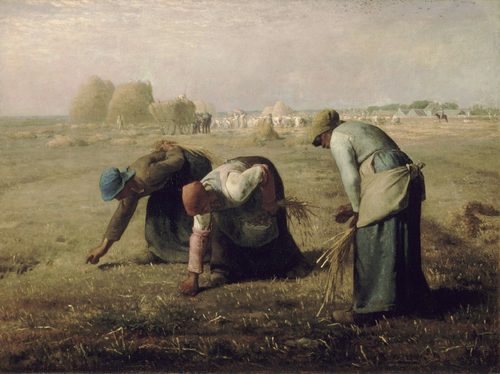
| The Gleaners | 1857 | Three stooped women gathering leftover grain, controversial in its day for dignifying rural poverty. |
| The Angelus | 1857–59 | Two farmers pausing at dusk to pray, later one of the most reproduced paintings in the world. |
| Man with a Hoe | 1860–62 | A worker resting mid-labor, its raw exhaustion read by some critics as a social protest. |
| The Winnower | 1848 | An early Salon success showing a peasant at work indoors, signaling his shift toward rural subjects. |
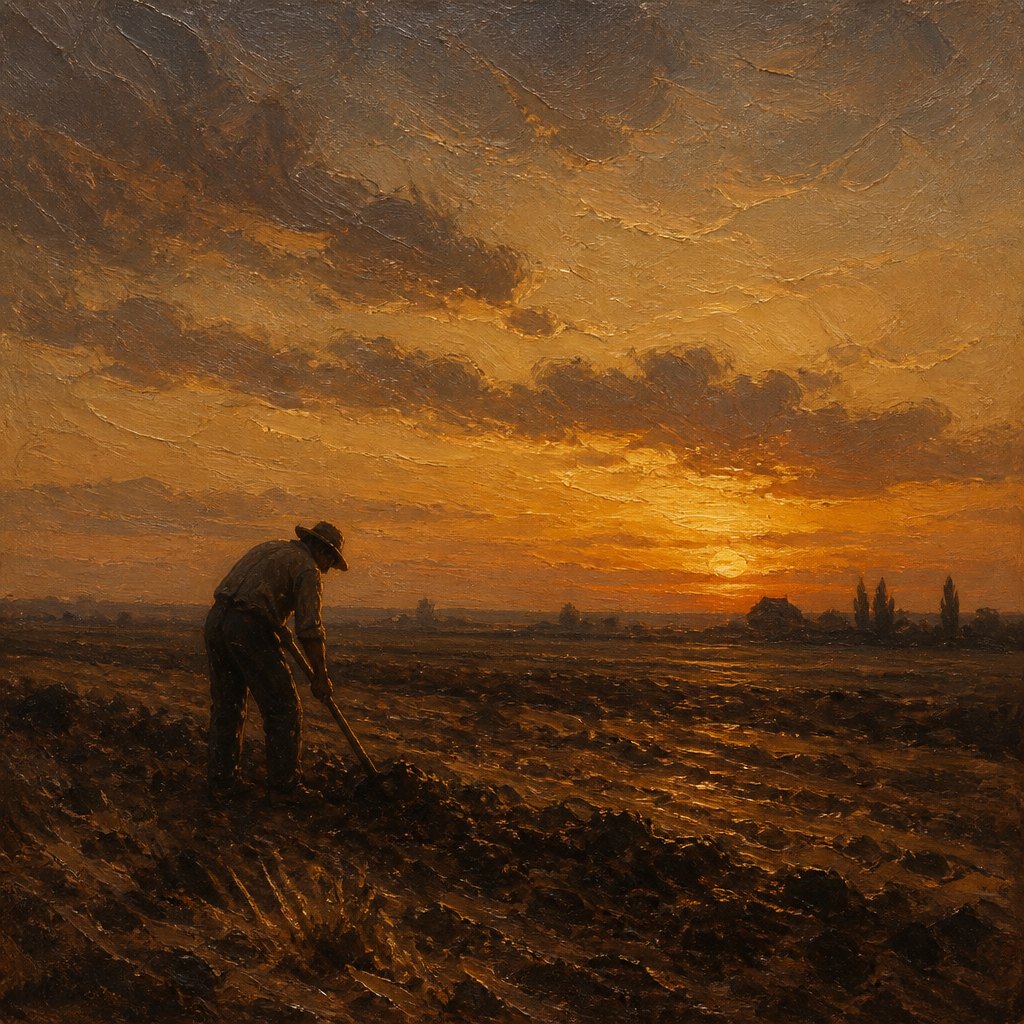 AI-generated
Create in the same spirit
Make Barbizon School art of your own
This AI interpretation echoes the aesthetic world Jean-François Millet worked in — it depicts no real artwork. Generate your own with the Barbizon School Art Style generator.
Open the Barbizon School Art Style generator →Legacy
Millet made peasant labor a legitimate subject for serious painting, a shift that reverberated well beyond his own century. Vincent van Gogh copied dozens of his compositions and called him a guide for painting rural life honestly; Salvador Dalí returned obsessively to The Angelus, devoting an entire book to his fixation on it. His insistence on the gravity of ordinary work also fed directly into the Realist and Social Realist traditions that followed. You feel him now in any image that treats manual labor not as background scenery but as a subject worth a painter's full seriousness and respect.
Frequently asked questions
What is Jean-François Millet famous for?
Millet is famous for paintings of French peasant labor, especially The Gleaners and The Angelus, which gave rural work a monumental dignity rarely granted it in art before him.
Where can I see Millet's paintings?
The Musée d'Orsay in Paris holds The Gleaners and The Angelus. The Museum of Fine Arts, Boston, and the Metropolitan Museum of Art also hold major works.
Did Millet influence Vincent van Gogh?
Yes, directly. Van Gogh made numerous copies of Millet's compositions, including The Sower, and repeatedly cited him as a model for painting rural labor with honesty and feeling.
What movement did Millet belong to?
Millet is associated with both the Barbizon School, for his rural subjects and outdoor study, and Realism, for his unsentimental, socially charged treatment of peasant life.