 Famous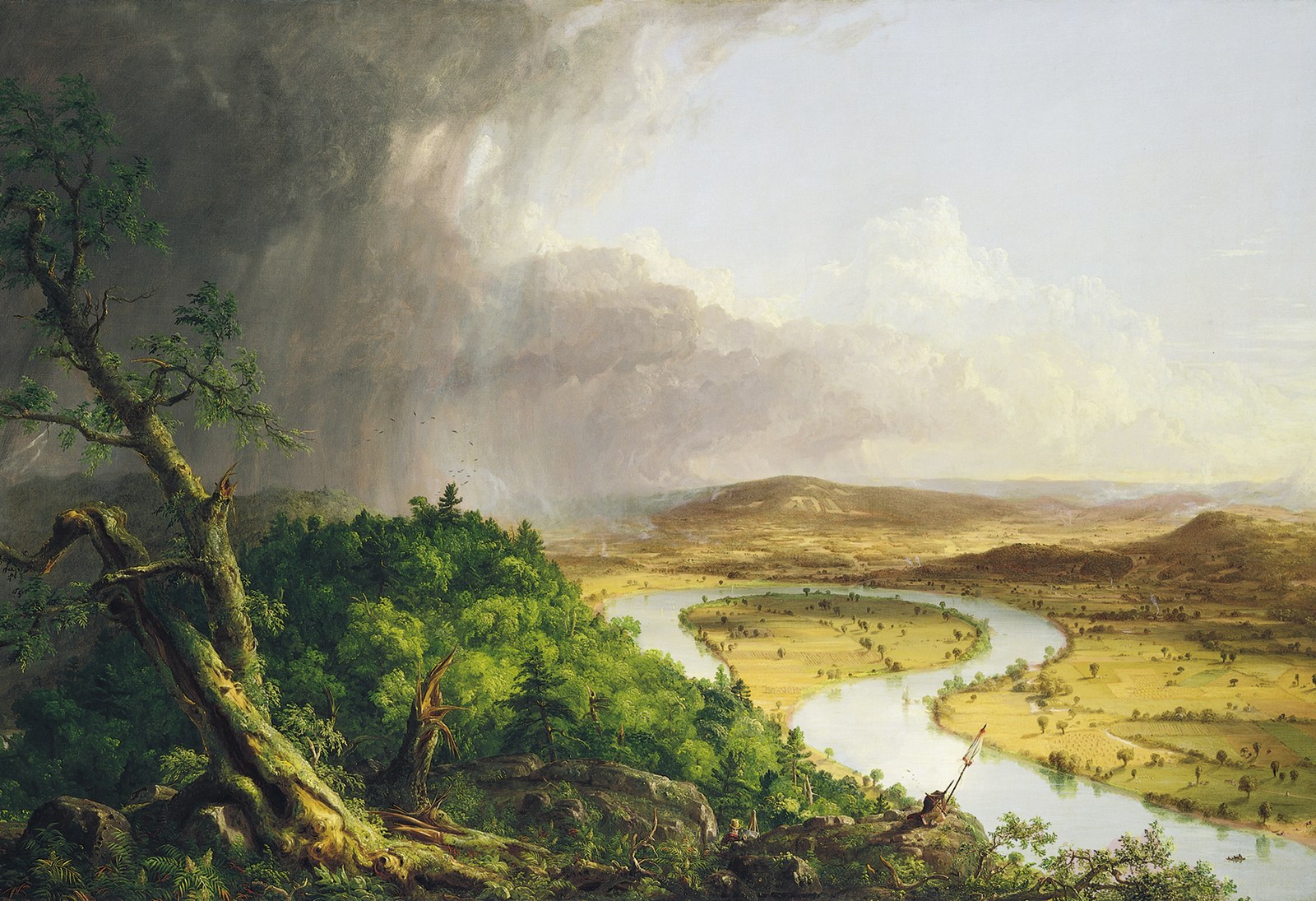
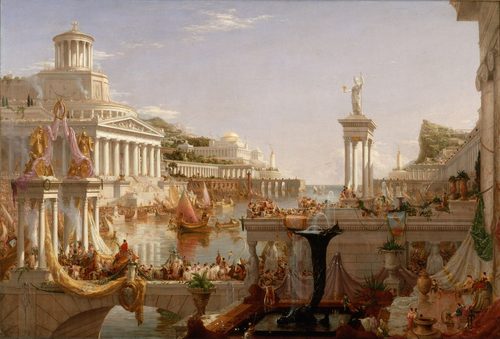
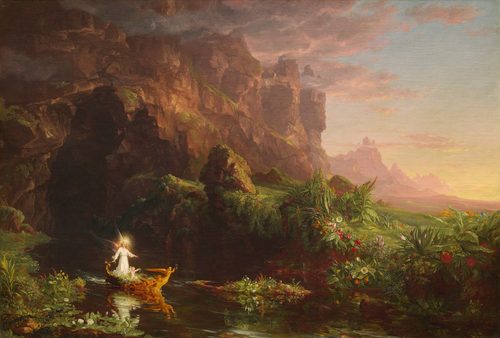
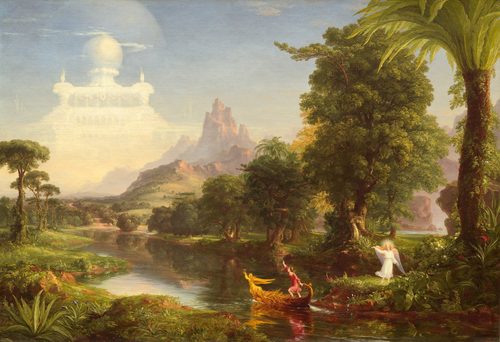
Thomas Cole (1801–1848) was an English-born American painter who founded the Hudson River School, the first cohesive movement in American landscape painting, treating the young country's wilderness as both subject and moral lesson. Born in Bolton, England, he emigrated with his family in 1818, working first as an engraver and itinerant portraitist across Ohio and Pennsylvania before settling near New York. In 1825 a New York dealer displayed several of his Hudson Valley landscapes; the painter John Trumbull and other established artists took notice, and Cole's career as a landscape specialist began almost overnight. He settled in Catskill, New York, painting the surrounding mountains and river valley with a mix of close observation and grand, sometimes invented composition. Beyond single views, he built ambitious allegorical series, The Course of Empire, tracing a civilization from wilderness through grandeur to ruin, and The Voyage of Life, following a single figure from infancy to old age, that used landscape to make explicitly moral arguments. He also wrote and lectured, warning that industrial development threatened the wild scenery he painted. He mentored the young Frederic Edwin Church, his only formal pupil, before dying in Catskill in 1848 at just forty-seven.
How to recognize a Cole
Wilderness as Subject
Cole painted the Catskills and Hudson Valley as untouched wilderness worth taking as seriously as European ruins or ancient temples, filling canvases with dense forest, jagged rock, storm light, and sudden dramatic weather.
Moral Allegory
Beyond single views he built ambitious multi-canvas cycles, a civilization's rise and fall, a single life from infancy to old age, using successive landscape stages to carry an explicit, sometimes stern moral argument.
Sweeping, Composed Vistas
Many paintings combine real, recognizable topography with invented, theatrical composition, arranging mountains, rivers, storms, and light for maximum dramatic effect, closer to stage design than to strict, surveyor's documentary accuracy.
Small Human Presence
Figures, when present, are tiny against the landscape's scale, sometimes just a hunter or a fallen log for reference, emphasizing the vastness and force of the American wilderness over any single human story.
Autumnal, Golden Color
He favored the deep reds, oranges, and golds of the American fall alongside cool blue distances and pale, luminous skies, a palette that became closely and lastingly associated with the Hudson River School.
Warning Against Progress
Smoke, tree stumps, or a distant settlement sometimes creep into otherwise pristine scenes, small but deliberate details, a quiet argument for the wilderness he feared industrial development would soon destroy.
The life
Cole was born in 1801 in Bolton, in industrial Lancashire, England, and emigrated with his family to the United States in 1818, settling eventually near Philadelphia after stints in Ohio. Largely self-taught, he worked first as an engraver and traveling portrait painter before turning seriously to landscape.
His breakthrough came in 1825, when a New York dealer displayed several of his Hudson Valley scenes in a shop window; established painters including John Trumbull sought him out, and within months he had a reputation as a landscape specialist. He settled in Catskill, New York, close to the mountains and river valley that would supply him with subjects for the rest of his life, and made an extended trip to England and Italy between 1829 and 1832 to study European landscape and history painting firsthand.
Back in America, he pursued increasingly ambitious projects: The Course of Empire, a five-canvas allegory of a civilization's rise and collapse, and The Voyage of Life, following a single figure through four stages of existence. He also wrote essays defending American wilderness against the industrial development he saw advancing around him. In 1844 he took on Frederic Edwin Church as his only formal student, passing the landscape tradition he had founded to the next generation. Cole died suddenly in Catskill in 1848, at forty-seven.
Timeline
- 1801Born in Bolton, Lancashire, England.
- 1818Emigrates with his family to the United States.
- 1825Hudson Valley paintings launch his career in New York.
- 1829Travels to England and Italy to study European painting.
- 1836Paints The Oxbow and completes The Course of Empire.
- 1840Paints The Voyage of Life series.
- 1844Takes on Frederic Edwin Church as his only student.
- 1848Dies suddenly in Catskill, New York.
Most famous works
| Work | Date | Why it matters |
|---|---|---|
| The Oxbow | 1836 | A sweeping view of the Connecticut River contrasting wilderness with cultivated land. |
| The Course of Empire | 1833–36 | A five-canvas allegory tracing a civilization from wilderness through glory to ruin. |
| The Voyage of Life | 1840 | A four-part allegory following one figure from infancy through old age. |
| Kaaterskill Falls | 1826 | An early Catskills landscape that helped establish his reputation for wilderness subjects. |
| View of the Round-Top in the Catskill Mountains | 1827 | A grand mountain vista blending observed detail with idealized composition. |
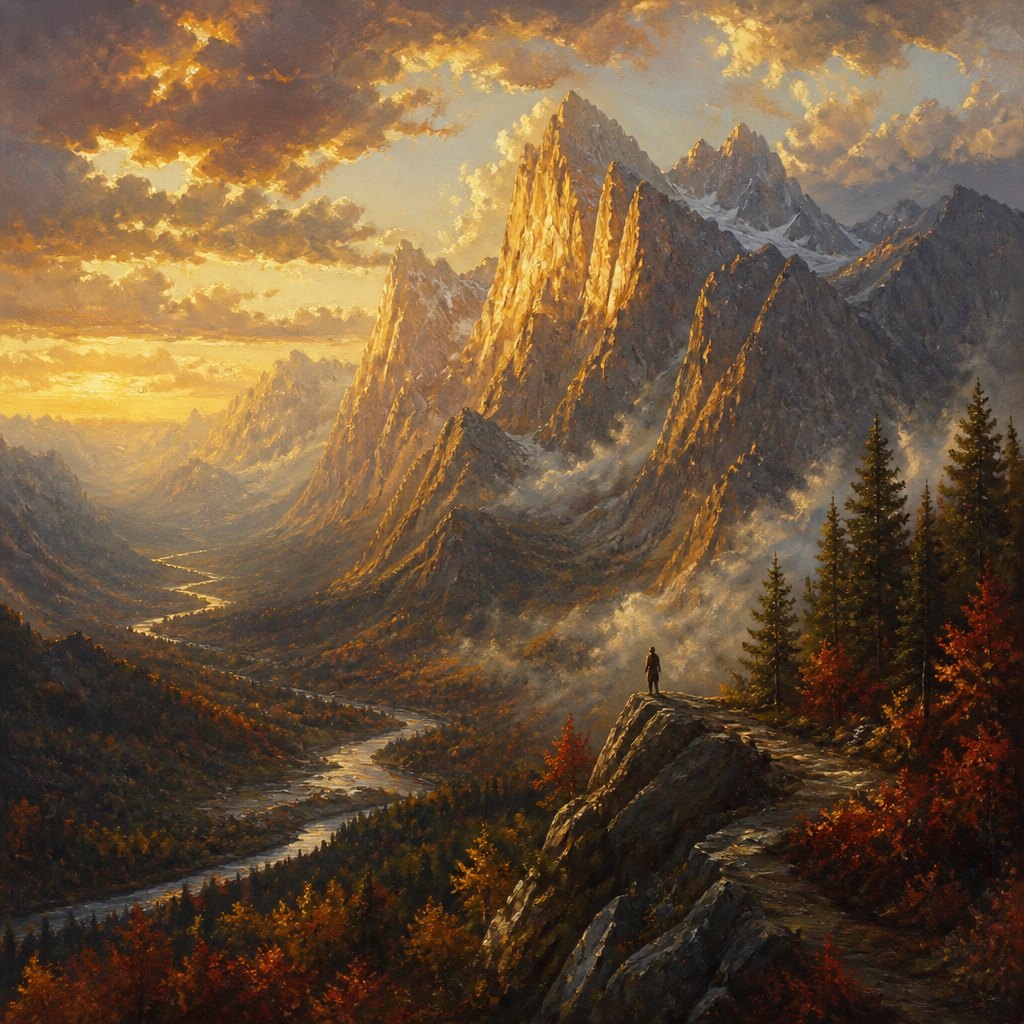 AI-generated
Create in the same spirit
Make Hudson River School art of your own
This AI interpretation echoes the aesthetic world Thomas Cole worked in — it depicts no real artwork. Generate your own with the Hudson River School Art Style generator.
Open the Hudson River School Art Style generator →Legacy
Cole gave American painting its first real school: the Hudson River School painters who followed him, Frederic Edwin Church chief among them, as his direct student, inherited both his subject, the American wilderness, and his belief that landscape could carry moral and national meaning. His warnings about industrial encroachment on wild scenery anticipated later conservation movements by decades. The Course of Empire and The Voyage of Life set a template for the ambitious, multi-canvas allegorical series that other American painters would attempt again. Visit the Catskills today, or any museum gallery devoted to nineteenth-century American landscape, and Cole's basic conviction, that this scenery deserved paintings as serious as European history painting, is still the premise everyone is working from.
Frequently asked questions
What is Thomas Cole famous for?
Cole is famous for founding the Hudson River School and for ambitious allegorical landscape series like The Course of Empire and The Voyage of Life.
Where can I see Thomas Cole's paintings?
The Metropolitan Museum of Art and the New-York Historical Society hold major works including The Oxbow and The Course of Empire; his home and studio in Catskill, New York, is preserved as a historic site.
What art movement did Thomas Cole start?
Cole founded the Hudson River School, the first cohesive American landscape painting movement, which treated the nation's wilderness as a subject worthy of serious, large-scale art.
Who did Thomas Cole teach?
His only formal student was Frederic Edwin Church, who became one of the Hudson River School's most celebrated painters after studying with Cole starting in 1844.