 Famous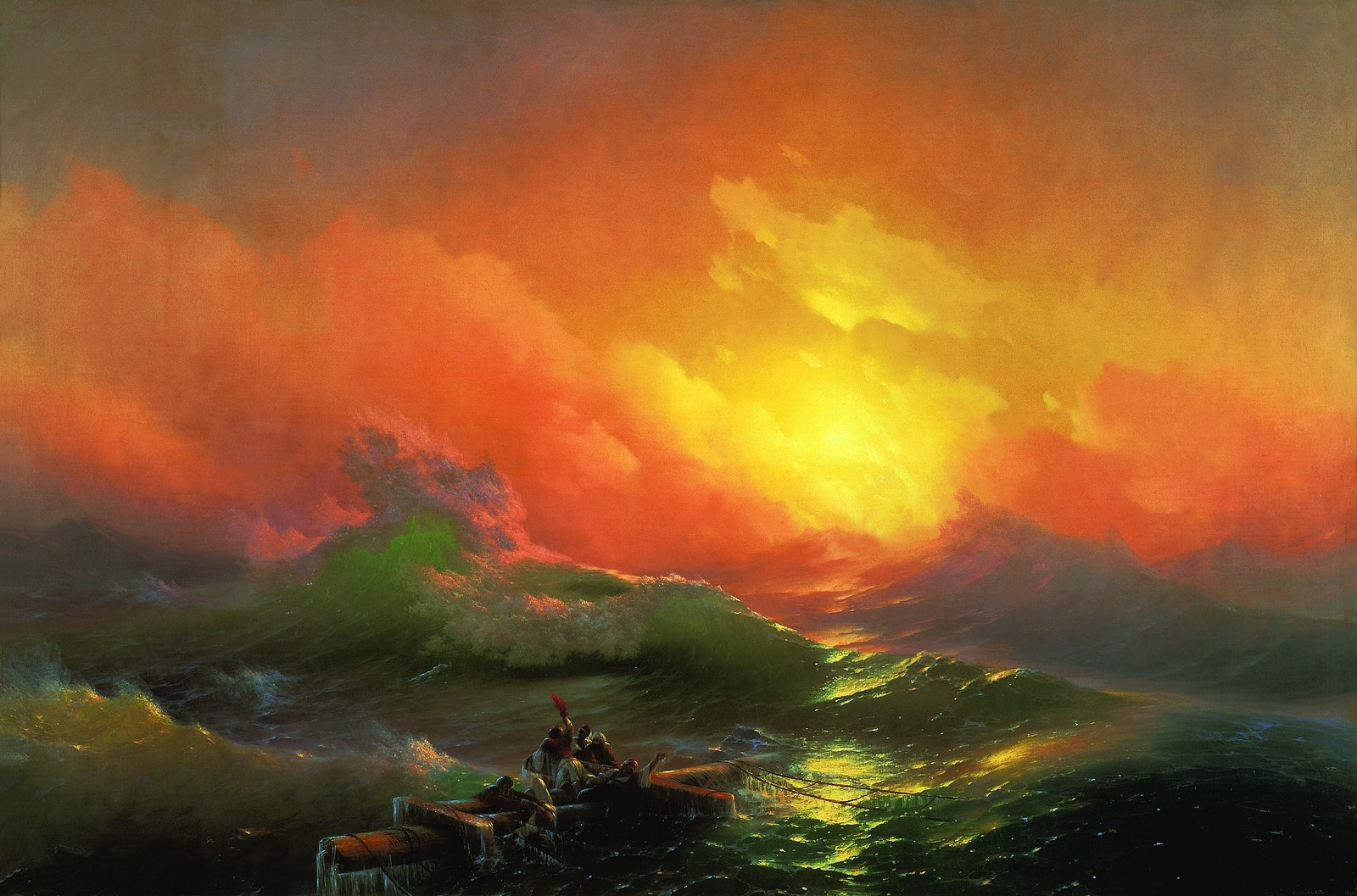
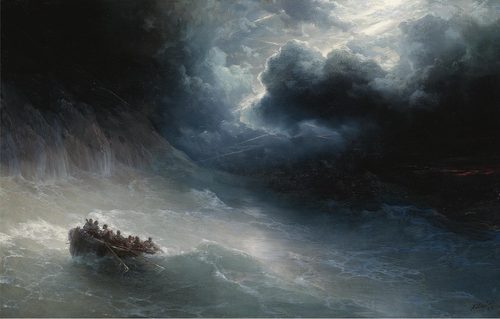
Ivan Aivazovsky (1817–1900) was a Russian-Armenian painter who devoted an extraordinarily prolific career to the sea, producing an estimated six thousand paintings of waves, storms, moonlit harbors, and naval battles. Born Hovhannes Aivazian in the Crimean port city of Feodosia to an Armenian family, he showed early talent that won him a place at the Imperial Academy of Arts in St. Petersburg, where he studied marine and landscape painting.
His skill at capturing water in motion, often worked up rapidly from memory rather than direct observation, earned him the official title of chief painter of the Russian Navy, a role that gave him access to fleets and naval campaigns as subject matter. He traveled widely across Europe early in his career, exhibiting to acclaim in Italy and elsewhere, before returning permanently to his native Feodosia, where he built a house and studio overlooking the Black Sea.
Aivazovsky's most famous painting, The Ninth Wave (1850), shows shipwreck survivors clinging to wreckage as a massive wave looms at dawn, a synthesis of the drama and luminous light typical of his work. He remained deeply attached to Feodosia, funding a museum, a library, and civic infrastructure. He died in the city in 1900, and the gallery he founded still bears his name.
How to recognize a Aivazovsky
seascapes as sole subject
Aivazovsky painted the sea almost exclusively, across thousands of canvases exploring calm harbors, violent storms, moonlit water, and open ocean horizons, treating the sea itself as an endlessly variable, ever-changing protagonist rather than mere backdrop.
dramatic luminous light
Moonlight and sunlight are rendered with an almost theatrical glow, breaking through storm clouds or scattering in fragments across waves, often serving as the true emotional and structural center of the entire composition.
painted from memory
Rather than working from direct observation, Aivazovsky composed most seascapes from memory in the studio, relying on an exceptional visual recall of light, weather, and wave motion built and sharpened over many decades of practice.
shipwreck and survival scenes
Storm-tossed vessels and desperate survivors clinging to wreckage recur throughout his work, staged with theatrical intensity and a bright, unexpected glow of light that emphasizes both nature's power and quiet human endurance against it.
naval battle commissions
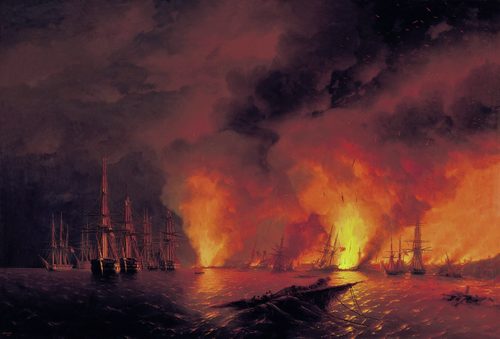
As official painter to the Russian Navy, he documented historical sea battles with careful technical accuracy alongside dramatic atmosphere and heightened emotion, blending precise naval reportage with a distinctly Romantic sensibility throughout.
rapid, fluid brushwork
Known for painting with remarkable speed, sometimes completing a large canvas in a single sitting, he used fluid, thinly layered, transparent paint to suggest water's constant motion, depth, and translucency under changing light.
The life
Aivazovsky was born Hovhannes Aivazian in 1817 in Feodosia, a port city on the Crimean coast, to a merchant family of Armenian descent. His talent for drawing was noticed early by a local official who helped arrange his education, and by 1833 he had entered the Imperial Academy of Arts in St. Petersburg, training under landscape and marine specialists.
He developed a reputation for extraordinary technical fluency with water and light, and traveled through Europe in the late 1830s and early 1840s, exhibiting to strong acclaim in Italy and elsewhere and absorbing Romantic currents in European painting. Russia's naval command took notice of his skill in depicting ships and sea conditions, and he was appointed official painter of the Russian Navy, a title that granted him access to fleets, campaigns, and historical naval subjects for the rest of his career.
Rather than settle in St. Petersburg or abroad, Aivazovsky returned to his native Feodosia, building a house and studio there that became the center of his working life. He remained civically devoted to the city, funding an art school, a library, and infrastructure projects including a water supply system. Extraordinarily prolific and technically fast, he continued painting into his final year, dying in Feodosia in 1900 at age eighty-two, still working at his easel.
Timeline
- 1817Born Hovhannes Aivazian in Feodosia, Crimea
- 1833Enters the Imperial Academy of Arts in St. Petersburg
- 1840Travels through Europe, exhibiting widely in Italy
- 1844Appointed official painter of the Russian Navy
- 1845Returns to settle permanently in Feodosia
- 1850Paints The Ninth Wave, his most celebrated work
- 1865Founds an art school in Feodosia
- 1880Opens his own gallery to the public in Feodosia
- 1900Dies in Feodosia, still working at age eighty-two
Most famous works
| Work | Date | Why it matters |
|---|---|---|
| The Ninth Wave | 1850 | Shipwreck survivors face a towering dawn wave, his most famous synthesis of drama and luminous light. |
| The Black Sea | 1881 | A brooding, near-monochrome view of open water under stormy sky, admired for its restraint. |
| Chaos: The Creation | 1841 | A swirling, luminous vision of primordial waters reportedly admired by Pope Gregory XVI in Rome. |
| Moonlit Night on the Bosphorus | 1894 | A serene nocturnal harbor scene showing his mastery of moonlight over water. |
| The Battle of Chesme | 1848 | A dramatic naval battle commission reflecting his role as official painter of the Russian fleet. |
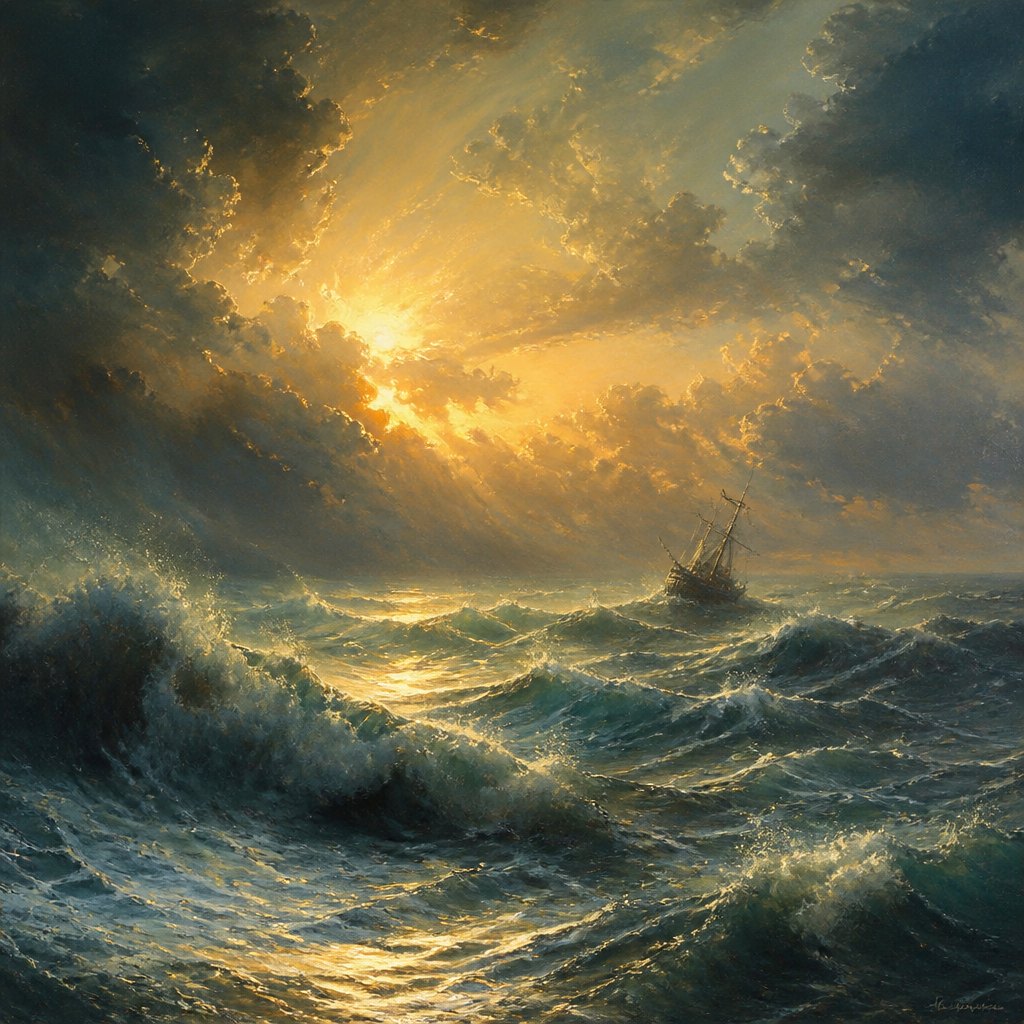 AI-generated
Create in the same spirit
Make Romanticism art of your own
This AI interpretation echoes the aesthetic world Ivan Aivazovsky worked in — it depicts no real artwork. Generate your own with the Romanticism Art Style generator.
Open the Romanticism Art Style generator →Legacy
Aivazovsky elevated marine painting to a major genre in Russian art and remains its most celebrated practitioner, admired for a technical command of water and light that few painters before or since have matched. His enormous output and civic devotion to Feodosia, including the gallery he founded that still bears his name, tied his legacy directly to his home region. Later Russian and Armenian painters looked to him as a model of national artistic achievement. You feel him now in any painting that treats the sea itself, rather than the ships or figures upon it, as the true and endlessly changing subject.
Frequently asked questions
What is Ivan Aivazovsky famous for?
Aivazovsky is famous for prolific, luminous seascapes, especially The Ninth Wave, and for serving as official painter of the Russian Navy across a career of roughly six thousand paintings.
Where can I see Aivazovsky's paintings?
The Aivazovsky National Art Gallery in Feodosia holds the largest collection. The State Tretyakov Gallery and State Russian Museum also hold major works, alongside museums worldwide.
How many paintings did Aivazovsky make?
He is estimated to have produced around six thousand paintings over his career, an extraordinary output made possible by his habit of painting seascapes rapidly from memory.
What movement did Aivazovsky belong to?
Aivazovsky worked in the Romantic tradition, prizing dramatic light, emotional atmosphere, and the sublime power of nature, especially the sea, over precise documentary observation.