 Famous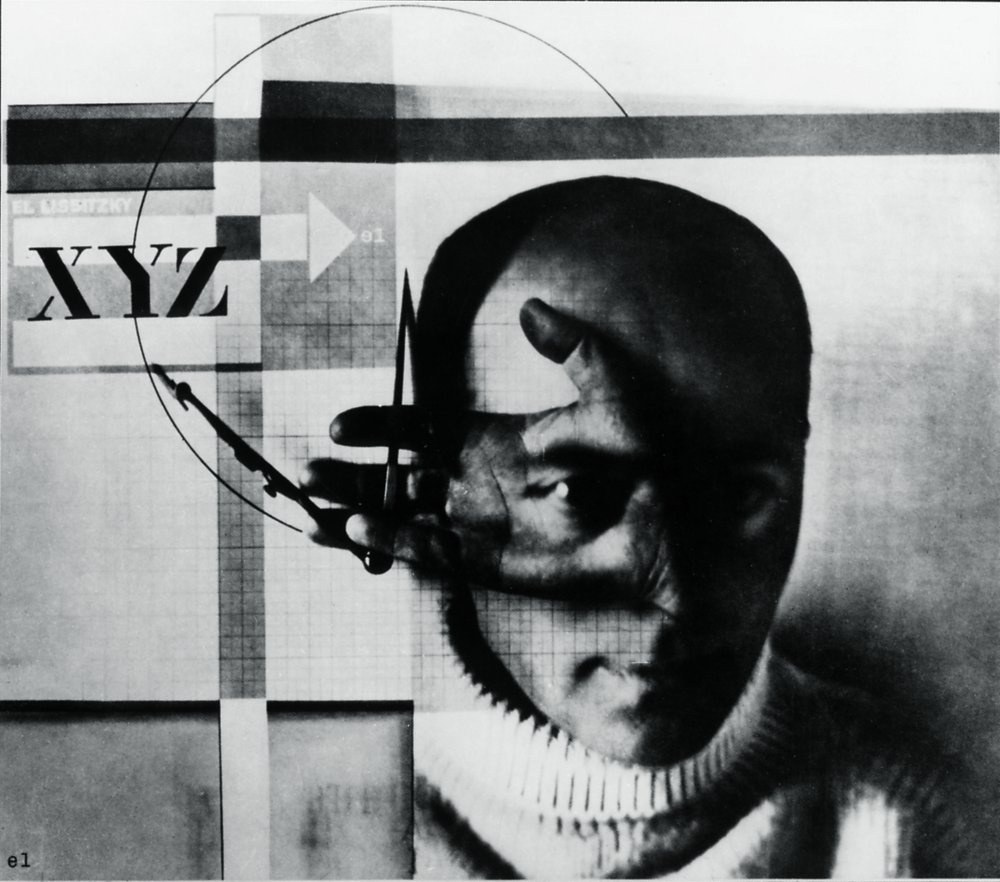
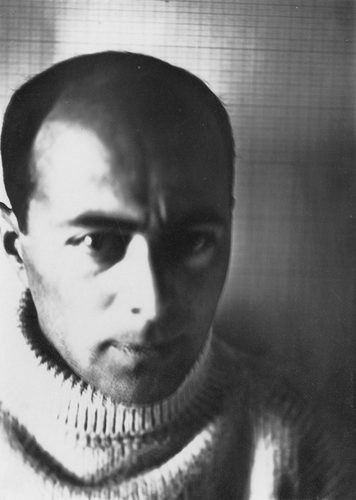
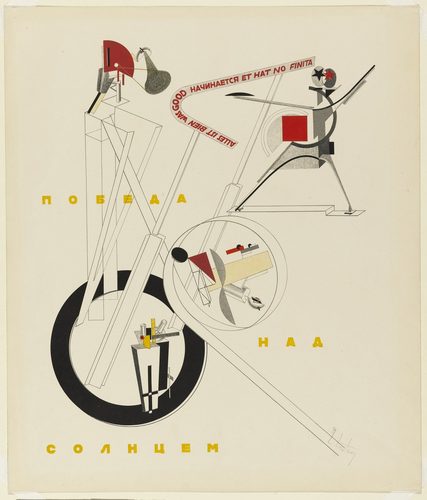
El Lissitzky (1890–1941) was a Russian artist, designer, and architect who fused Kazimir Malevich's Suprematist abstraction with engineering precision to become one of the twentieth century's most influential figures in graphic design, exhibition architecture, and utopian visual propaganda.
Born Lazar Lissitzky in Pochinok, he trained as an engineer in Germany before returning to Russia, where the 1917 Revolution redirected him toward radical art. Teaching alongside Malevich at the Vitebsk art school, Lissitzky developed the Proun — his term for an "interchange station between painting and architecture" — a series of geometric compositions that gave Suprematist shapes a sense of three-dimensional structure and spatial logic.
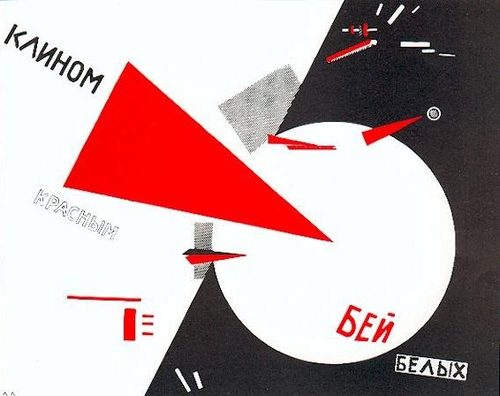
Through the 1920s Lissitzky moved fluidly between painting, typography, photomontage, and exhibition design, producing the 1919 propaganda poster Beat the Whites with the Red Wedge and pioneering dynamic, diagonal layouts that reshaped Soviet and European book and poster design. He worked in Germany and Switzerland from 1921 until 1925, then returned to the Soviet Union while continuing to design landmark exhibition spaces abroad, and spent his later career on state propaganda and design projects. Lissitzky died of tuberculosis in Moscow in 1941.
How to recognize a Lissitzky
The Proun system
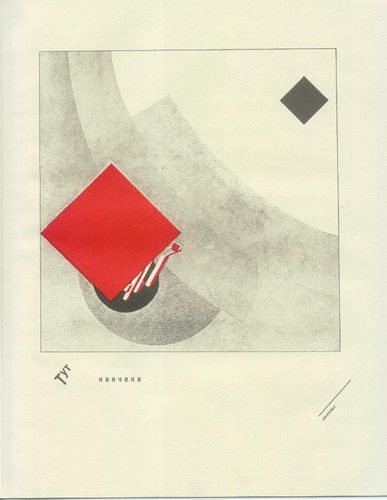
Lissitzky's Prouns arrange geometric shapes — bars, wedges, circles — in ambiguous, tilted perspective, suggesting structures that exist somewhere between a flat diagram and a three-dimensional architectural model.
Diagonal, dynamic layout
He favored sharp diagonals and asymmetric arrangement over static, centered composition, a device carried from painting into his posters and books to inject motion and urgency.
Photomontage and typography fused
Lissitzky combined photographic imagery with bold, geometric type into single compositions, treating letters as visual shapes with the same weight as painted or photographed elements.
Engineering precision
His training as an engineer shows in exact geometric construction and implied structural logic, giving even abstract compositions a sense of load, angle, and architectural stability.
Revolutionary red and black
A restrained palette of red, black, and white, drawn from Suprematism and Soviet visual culture, dominates his propaganda and design work, giving it stark, poster-ready urgency.
Exhibition as artwork
Lissitzky treated gallery rooms themselves as compositions, designing angled walls, shifting viewpoints, and moving parts so viewers physically moved through an artwork rather than standing before one.
The life
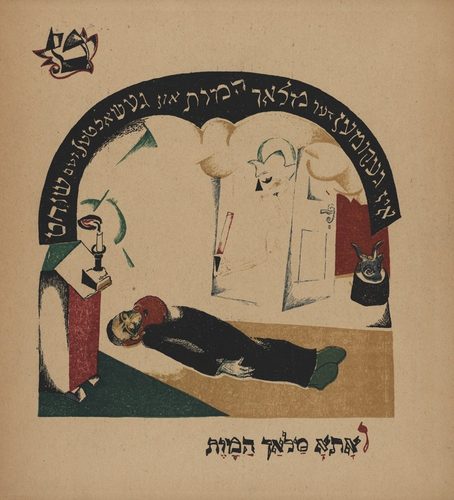
El Lissitzky was born Lazar Markovich Lissitzky in 1890 in Pochinok, in the Russian Empire. Barred by antisemitic quotas from Russian universities, he studied engineering and architecture in Darmstadt, Germany, returning home shortly before the First World War. After the 1917 Revolution, Lissitzky worked on Jewish cultural and book projects before Marc Chagall invited him to teach at the Vitebsk art school, where he came under Kazimir Malevich's influence and adopted Suprematist abstraction.
At Vitebsk, Lissitzky developed his signature Proun compositions and, in 1919, designed the poster Beat the Whites with the Red Wedge, a geometric call to arms for the Bolshevik cause that became one of the era's most recognized images. Through the 1920s he worked across Germany, Switzerland, and the Netherlands, absorbing and shaping international Constructivist and De Stijl circles while designing books, exhibitions, and typography that treated the printed page as a dynamic, engineered space.
Back in the Soviet Union from 1925, Lissitzky increasingly devoted his design skills to state propaganda, including photomontage magazine spreads celebrating Soviet industry. Chronic tuberculosis, contracted years earlier, worsened through the following decade. He continued working on propaganda posters even after Germany's 1941 invasion of the Soviet Union, and died in Moscow that December.
Timeline
- 1890Born in Pochinok, Russian Empire
- 1909Begins engineering and architecture studies in Darmstadt, Germany
- 1919Joins Vitebsk art school; begins developing the Proun series
- 1919Designs the poster Beat the Whites with the Red Wedge
- 1921Moves to Germany, connecting with European avant-garde circles
- 1927Designs the influential Abstract Cabinet exhibition room in Hanover
- 1930Publishes his book on new Soviet architecture in Vienna
- 1941Dies of tuberculosis in Moscow
Most famous works
| Work | Date | Why it matters |
|---|---|---|
| Beat the Whites with the Red Wedge | 1919 | A geometric propaganda poster whose stark red wedge became an enduring symbol of revolutionary design. |
| Proun 99 | c. 1924–25 | A late Proun composition showing his mature fusion of painterly abstraction and structural, architectural form. |
| Abstract Cabinet | 1927–28 | An installation room in Hanover using shifting wall panels to make viewers active participants in the artwork. |
| The Constructor (Self-Portrait) | 1924 | A photomontage self-portrait fusing his own hand and eye with drafting tools, a manifesto of designer-as-engineer. |
| USSR in Construction spreads | 1930s | Photomontage magazine layouts celebrating Soviet industry, among his most technically influential design work. |
 AI-generated
Create in the same spirit
Make Constructivism art of your own
This AI interpretation echoes the aesthetic world El Lissitzky worked in — it depicts no real artwork. Generate your own with the Constructivism Art Style generator.
Open the Constructivism Art Style generator →Legacy
Lissitzky's Proun compositions and exhibition designs gave Suprematist abstraction a practical, spatial language, directly shaping Constructivism, the Bauhaus, and later movements in graphic design, architecture, and installation art. His dynamic typography and photomontage techniques remain foundational to modern graphic design, still visible in poster and book layouts today. As a bridge figure between Malevich's Russian avant-garde and Western European Constructivism and De Stijl, he helped internationalize radical Soviet art at a pivotal moment. Museums including the Van Abbemuseum, MoMA, and the State Tretyakov Gallery preserve his Prouns and designs, and design schools still teach his exhibition and typographic principles.
Frequently asked questions
What is El Lissitzky famous for?
Lissitzky is famous for the Proun, a geometric bridge between painting and architecture, and for revolutionary graphic design including the poster *Beat the Whites with the Red Wedge* (1919).
Where can I see El Lissitzky's work?
Key collections are held by the Van Abbemuseum in Eindhoven, the State Tretyakov Gallery in Moscow, the Museum of Modern Art in New York, and the Sprengel Museum in Hannover.
What art movement did El Lissitzky belong to?
Lissitzky worked between Suprematism, which he learned from Kazimir Malevich, and Constructivism, becoming a central link between Russian abstraction and European avant-garde design movements.
How did El Lissitzky die?
Lissitzky suffered from tuberculosis for much of his adult life and died from the disease in Moscow in December 1941, shortly after Germany invaded the Soviet Union.