 Famous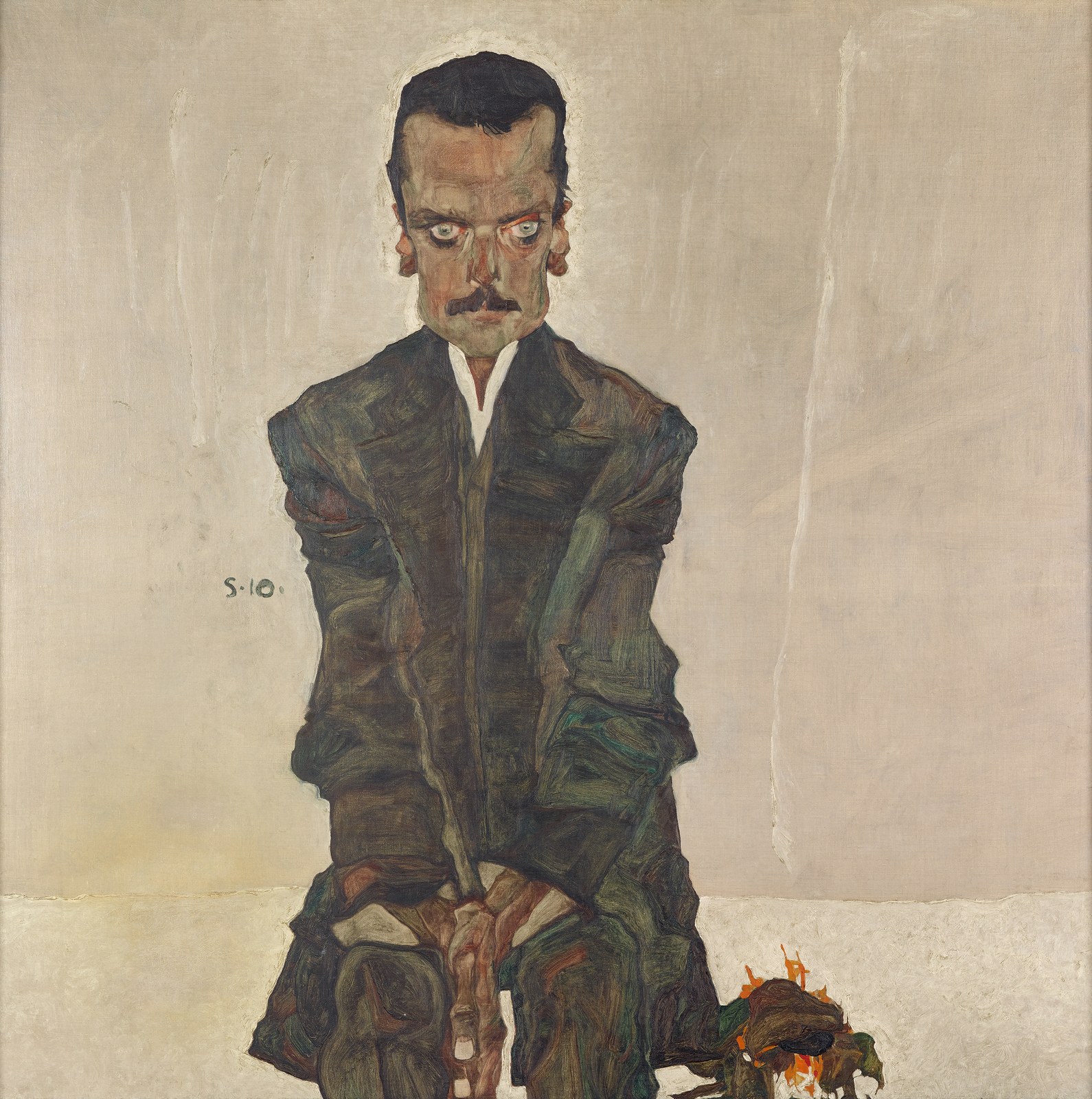
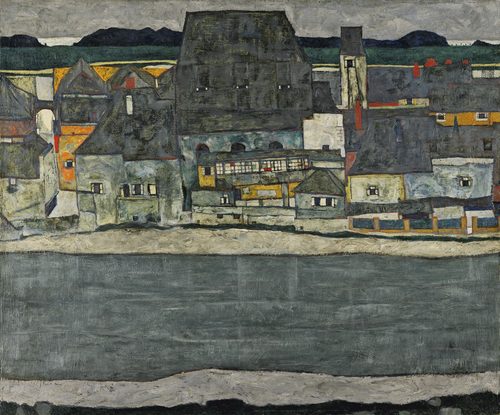
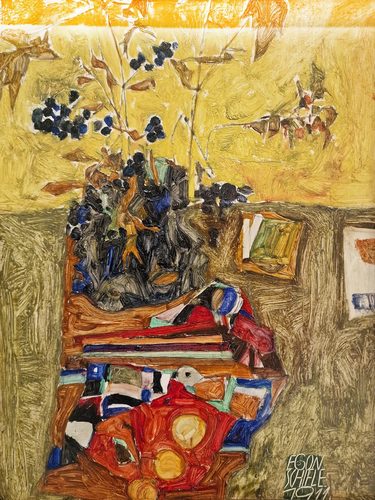
Egon Schiele (1890–1918) was an Austrian painter and draftsman whose raw, angular figures made him one of the most unsettling and original voices of early twentieth-century Expressionism. A student and protégé of Gustav Klimt in Vienna, he broke quickly from Klimt's decorative gold toward something starker: bony, twisted bodies, harsh outlines, and a psychological intensity that could feel like an act of exposure rather than observation. His subjects, including himself, stare out with a directness contemporaries found shocking, and in 1912 he was briefly jailed on charges related to his explicit drawings, an episode that scarred but did not stop him. He worked obsessively in watercolor and gouache as well as oil, producing self-portraits, nudes, and landscapes that share the same nervous, wiry contour line. By his mid-twenties he had begun to win real recognition, showing with the Vienna Secession and gaining serious collectors. In October 1918, the influenza pandemic killed his pregnant wife Edith and, three days later, Schiele himself, cutting short a career of barely a decade.
How to recognize a Schiele
Angular, bony contour
Schiele's figures are built from sharp, broken outlines rather than smooth curves — elbows, knees, and shoulder blades jut at uncomfortable angles, giving even a seated pose a sense of nervous tension held in the body.
Raw, direct self-portraiture
He painted and drew himself obsessively, often twisted or grimacing, treating self-portraiture as psychological exposure rather than flattery, with a directness that still reads as startlingly confrontational a century later.
Isolated figures on bare ground
Subjects are usually set against blank or minimally described backgrounds, floating in white or muted space with no room setting, so nothing distracts from the body and its tense, twisted posture.
Harsh, saturated color patches
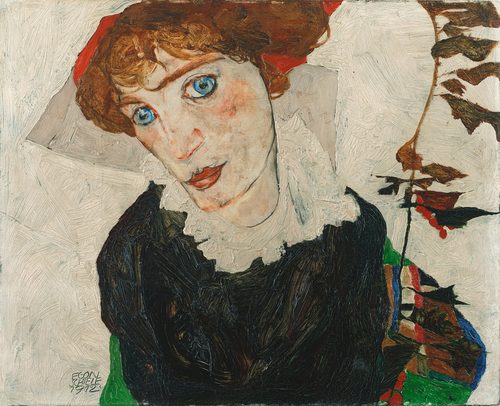
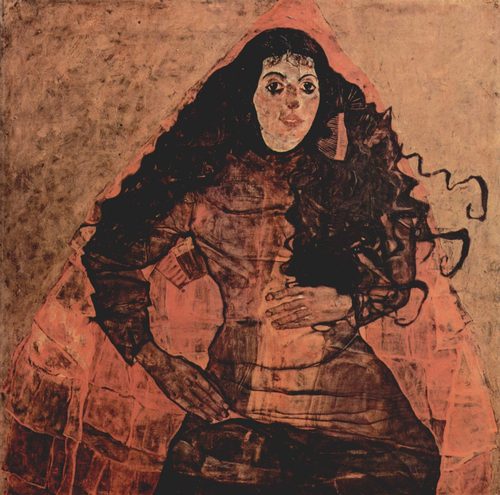
Skin is rendered in mottled oranges, greens, and grays rather than smooth flesh tones, applied in raw patches that read almost like bruising, giving his figures an exposed, vulnerable quality under gallery light.
Expressive, splayed hands
Hands and fingers recur as an expressive focus, spread, clawed, or clasped at odd angles, doing as much emotional work in a picture as the face itself, often bent back at the wrist.
Wiry, unbroken line
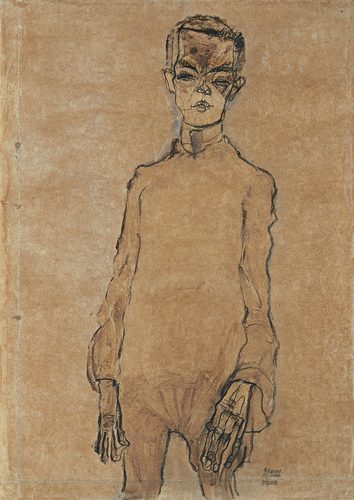
A single continuous contour often defines a whole figure, drawn quickly with visible nervous energy rather than smoothed over, so the line itself seems to carry the sitter's tension, restless and alive on the page.
The life
Schiele was born in Tulln, Austria, the son of a stationmaster, and showed precocious drawing talent that took him to Vienna's Academy of Fine Arts at sixteen. There he met Gustav Klimt, who mentored him, bought his drawings, and introduced him to models and patrons; Schiele absorbed Klimt's line before pushing it into something harder and less decorative.
By his early twenties he had left the Academy to found the short-lived Neukunstgruppe with other young dissenters, developing the angular, psychologically charged style that became his signature. In 1912 he was arrested in the small town of Neulengbach on charges connected to his explicit drawings and his contact with young models; he spent about three weeks in jail, an episode that left him more guarded but did not change his subject matter.
His work matured through the mid-1910s into a slightly calmer, more monumental style, and he began exhibiting internationally and gaining serious collectors. In 1915 he married Edith Harms; in 1918 a large Vienna Secession show made him genuinely famous. That same autumn, the influenza pandemic sweeping Europe killed the pregnant Edith, and three days later killed Schiele too, at twenty-eight.
Timeline
- 1890Born in Tulln an der Donau, Austria
- 1906Enters the Vienna Academy of Fine Arts at sixteen
- 1907Meets and is mentored by Gustav Klimt
- 1909Leaves the Academy, co-founds the Neukunstgruppe
- 1912Jailed briefly in Neulengbach over explicit drawings
- 1915Marries Edith Harms
- 1918Major Vienna Secession exhibition brings wide acclaim
- 1918Dies in Vienna during the influenza pandemic
Most famous works
| Work | Date | Why it matters |
|---|---|---|
| Self-Portrait with Physalis | 1912 | One of his best-known self-images, ringed by a papery orange husk plant, combining decorative color with raw psychological presence. |
| The Family | 1918 | A late, more tender group portrait of a man, woman, and child, painted shortly before his death and often read as elegiac. |
| Portrait of Wally | 1912 | An intense image of his companion Wally Neuzil, later the subject of a well-known restitution dispute over its wartime ownership. |
| Death and the Maiden | 1915 | A tangled embrace of two figures on rumpled sheets, widely read as a farewell to Wally around the time of his marriage. |
| Seated Woman with Bent Knee | 1917 | A gouache and crayon study of a clothed seated figure, showing the mature confidence of his angular late line. |
 AI-generated
Create in the same spirit
Make Expressionism art of your own
This AI interpretation echoes the aesthetic world Egon Schiele worked in — it depicts no real artwork. Generate your own with the Expressionism Art Style generator.
Open the Expressionism Art Style generator →Legacy
Schiele's unsparing honesty about the body reshaped what portraiture could admit — vulnerability, illness, desire, discomfort — and later confessional figurative painters, from Francis Bacon to Lucian Freud, work in territory he helped open. His line, nervous and exact at once, remains a touchstone for illustrators and figure painters chasing psychological rawness over prettiness. Vienna's Leopold Museum built a core of its identity around his work, and his brief, intense career, cut off by the same pandemic that swept Europe in 1918, only sharpened his legend. You feel him now whenever a portrait chooses to expose rather than flatter its sitter.
Frequently asked questions
What is Egon Schiele famous for?
Schiele is famous for raw, angular figure paintings and self-portraits with a nervous, exposed quality, developed as a protégé of Gustav Klimt before he pushed Expressionism toward harder psychological territory.
Where can I see Egon Schiele's paintings?
Vienna's Leopold Museum and Belvedere hold the largest Schiele collections, with further works at New York's Museum of Modern Art and Neue Galerie.
How did Egon Schiele die?
Schiele died in Vienna in October 1918 during the influenza pandemic, three days after it killed his pregnant wife, Edith, at just twenty-eight years old.
What art movement was Egon Schiele part of?
Schiele belonged to Austrian Expressionism, emerging from Vienna's Secession circle around Gustav Klimt before developing his own starker, more angular style.