 Famous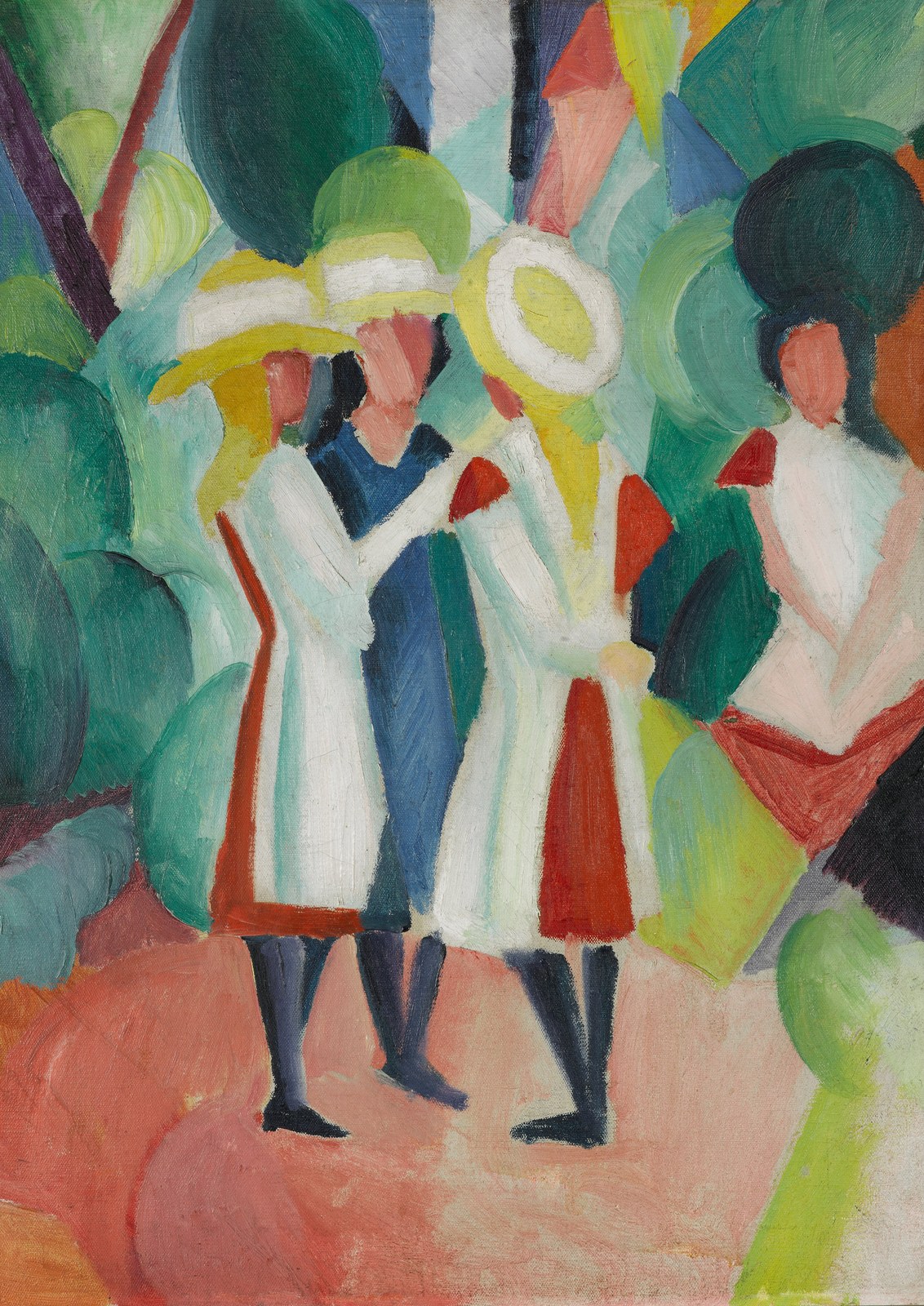
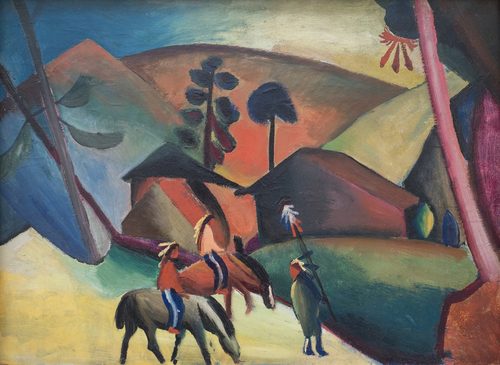
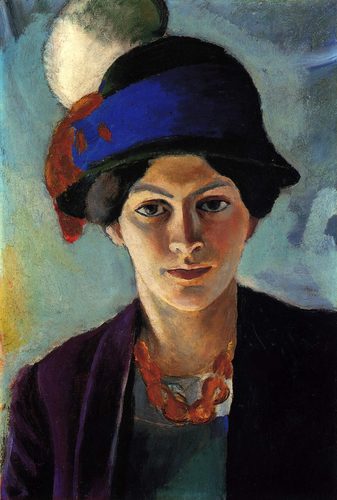
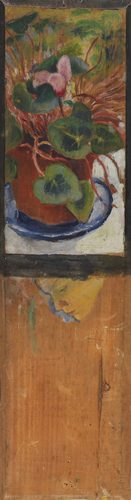
August Macke (1887–1914) was a German Expressionist painter celebrated for luminous, color-drenched scenes of park walks, lakeside promenades, and shop windows, and for a career of extraordinary promise ended by the First World War before he turned twenty-eight.
Born in Meschede and raised in Cologne and Bonn, Macke trained at the Düsseldorf Academy and made repeated trips to Paris, where the color of the Impressionists, Neo-Impressionists, and Henri Matisse's Fauvism reshaped his eye. In 1910, living at Tegernsee in Bavaria, he grew close to Franz Marc, becoming a founding contributor to the almanac Der Blaue Reiter in Munich. Unlike Marc's mysticism or Kandinsky's abstraction, Macke stayed devoted to the visible world, distilling figures and foliage into flat, harmonious color shapes touched by Cubist structure.
A 1914 journey to Tunisia with Paul Klee and Louis Moilliet produced watercolors of extraordinary clarity and light, often called the high point of his short career. Months later Macke was called up; he died at Perthes-lès-Hurlus in September 1914, one of Expressionism's most mourned losses.
How to recognize a Macke
Flattened, glowing color
Macke built figures and foliage from simplified, saturated color shapes rather than modeled light and shadow, giving even ordinary park scenes a stained-glass warmth. Outlines soften into color itself, so a stroller's coat or a lake's surface reads as pure hue before it reads as form.
Parks and promenades
His favorite stage was leisure itself — women strolling under trees, children by lakeshores, couples pausing at shop windows — rendered with an affection for everyday middle-class pleasure rare among his more anguished Expressionist peers.
Shop-window reflections
Macke returned often to the motif of glass storefronts, layering reflected street life over displayed goods to fracture a single scene into overlapping planes, a quietly Cubist device wrapped in cheerful color.
Tunisia's clarified light
The 1914 Tunisia watercolors stripped his palette to sunbaked ochres, whites, and blues, using thin washes and bare paper to capture desert light with a directness that still feels startlingly modern.
Rhythmic, simplified figures
People appear as economical silhouettes — a curved back, a parasol's arc, a hat's brim — repeated across a canvas like notes in a visual melody rather than individually characterized portraits.
Calm over anguish
Where fellow Expressionists reached for distortion and dread, Macke pursued harmony and delight, believing color and form alone could carry feeling without turning to grotesque exaggeration or overt symbolism.
The life
August Macke was born in 1887 in Meschede, Westphalia, and grew up in Cologne and then Bonn, where his family recognized his talent early. He studied at the Düsseldorf Academy of Art and its applied-arts school, but it was repeated travel — to Paris in 1907, 1908, and 1912 — that shaped him most, exposing him to Impressionism, Neo-Impressionist color theory, and the Fauvist canvases of Matisse.
In 1909 Macke married Elisabeth Gerhardt and the couple settled at Tegernsee in Bavaria, where his circle of friends came to include Franz Marc. The two painters bonded over a shared conviction that color could express inner life, and in 1911 Macke became a founding member of Der Blaue Reiter, exhibiting and contributing to its almanac alongside Kandinsky and Marc, even as his own work stayed rooted in observed, everyday subjects.
The spring of 1914 brought his celebrated journey to Tunisia with Paul Klee and Louis Moilliet, a brief trip whose watercolors are now considered among the finest of his career. Months later, Germany went to war. Macke was called up and killed in combat at Perthes-lès-Hurlus in the Champagne region on 26 September 1914, at twenty-seven, his development permanently arrested at its most confident point.
Timeline
- 1887Born in Meschede, Westphalia, Germany
- 1904Begins study at the Düsseldorf Academy of Art
- 1907First trip to Paris; discovers Impressionist and Fauvist color
- 1909Marries Elisabeth Gerhardt; settles at Tegernsee
- 1911Co-founds Der Blaue Reiter with Kandinsky and Marc
- 1912Contributes to the Blaue Reiter almanac
- 1914Travels to Tunisia with Paul Klee and Louis Moilliet
- 1914Killed in action at Perthes-lès-Hurlus, aged twenty-seven
Most famous works
| Work | Date | Why it matters |
|---|---|---|
| Great Zoological Garden | 1912 | A triptych-like scan of zoo visitors and animals that fuses Cubist facets with Macke's signature warm color harmony. |
| Woman in a Green Jacket | 1913 | A poised single figure that shows his gift for reducing form to elegant, glowing color shapes. |
| Shop Window | 1913 | One of several storefront scenes layering reflection and display into a fractured, luminous surface. |
| Lady in a Park | 1914 | A quintessential promenade scene distilling figures and foliage into rhythmic color patches. |
| Kairouan III | 1914 | A Tunisia watercolor prized for its clarity of light, painted weeks before his death. |
| Farewell | 1914 | An elegiac canvas painted at the outbreak of war, its crowd of parting figures among his final works. |
 AI-generated
Create in the same spirit
Make der Blaue Reiter art of your own
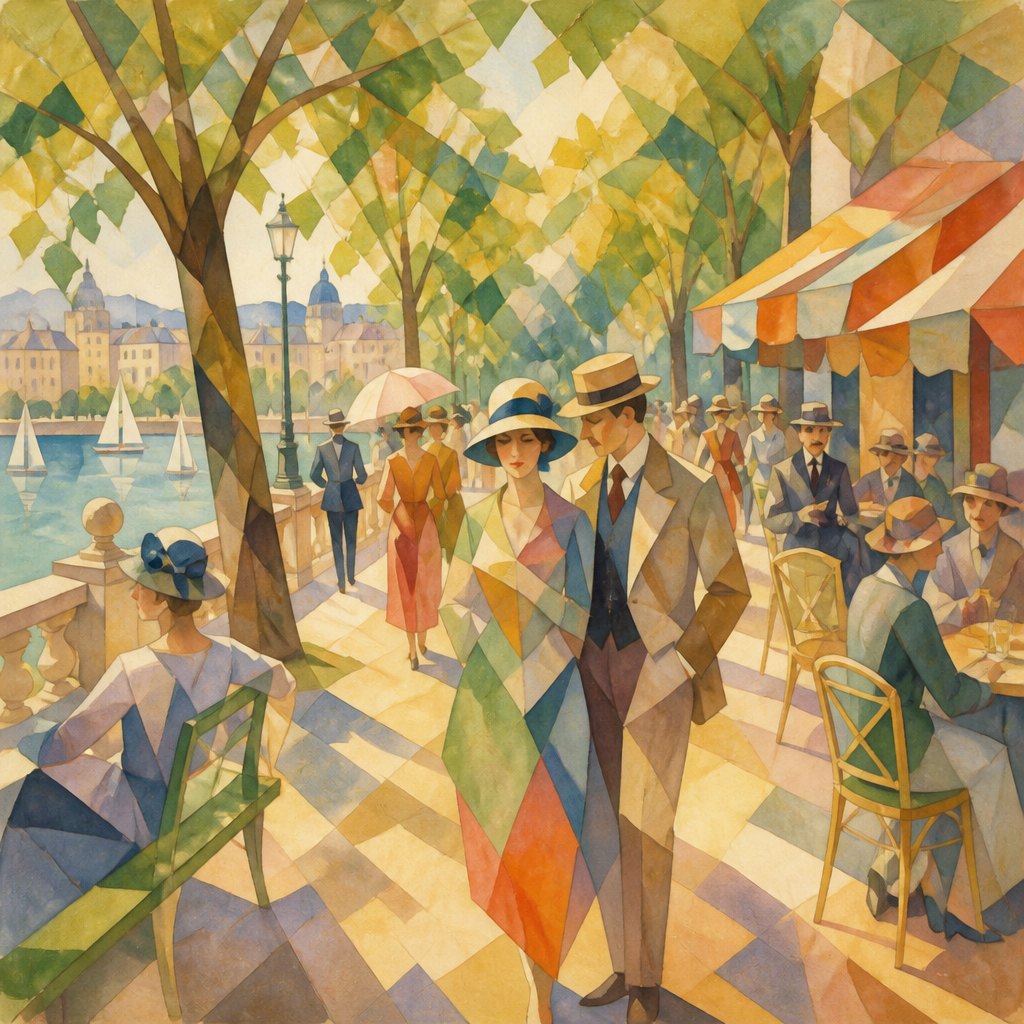
This AI interpretation echoes the aesthetic world August Macke worked in — it depicts no real artwork. Generate your own with the Expressionism Art Style generator.
Open the Expressionism Art Style generator →Legacy
Macke's death at twenty-seven made him a symbol of a generation of European artists lost to the First World War, his unfinished promise mourned alongside Franz Marc's. Yet the body of work he left behind, compact as it is, secured him a lasting place as Der Blaue Reiter's most purely optimistic painter, one who proved Expressionist color could serve delight as readily as anguish. His Tunisia watercolors influenced later generations' understanding of light and abstraction, and remain touchstones for painters exploring color as structure. Museums across Germany, from Bonn's Kunstmuseum to Munich's Lenbachhaus, hold major Macke collections, keeping his sunlit vision of prewar European life visible to new audiences.
Frequently asked questions
What is August Macke famous for?
Macke is famous for luminous, color-saturated paintings of parks, streets, and shop windows, made as a founding member of the German Expressionist group Der Blaue Reiter before his death in the First World War.
Where can I see August Macke's paintings?
Major holdings are in Germany, notably the August Macke Haus and Kunstmuseum Bonn, the Lenbachhaus in Munich, and the Museum Ludwig in Cologne, with further works in international modern-art collections.
What art movement did August Macke belong to?
Macke was a founding member of Der Blaue Reiter (The Blue Rider), a Munich-based Expressionist group formed in 1911 with Wassily Kandinsky and Franz Marc, emphasizing color's expressive power.
How did August Macke die?
Macke was drafted into the German army at the outbreak of the First World War and was killed in action at Perthes-lès-Hurlus, France, on 26 September 1914, at age twenty-seven.