 Famous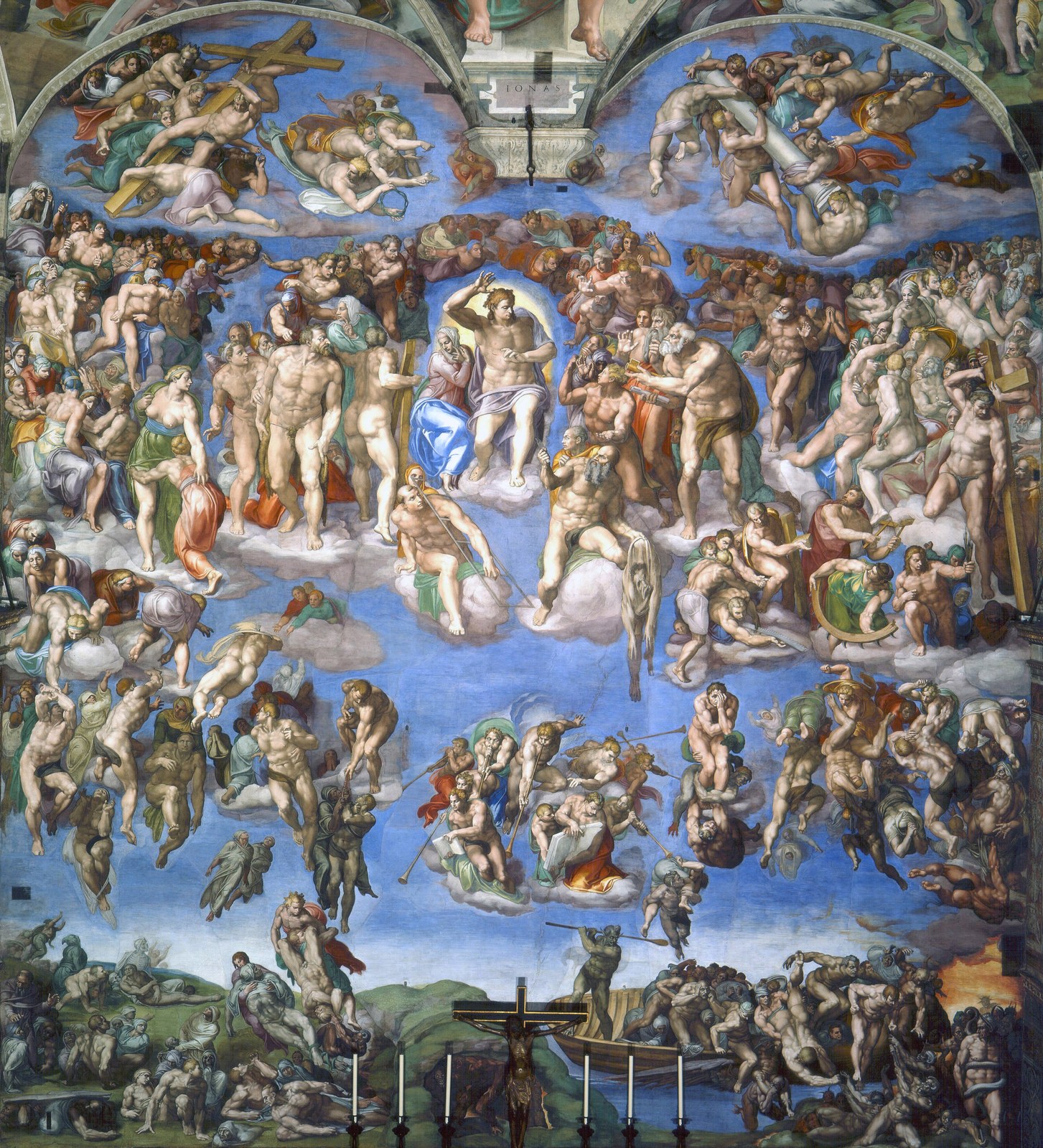
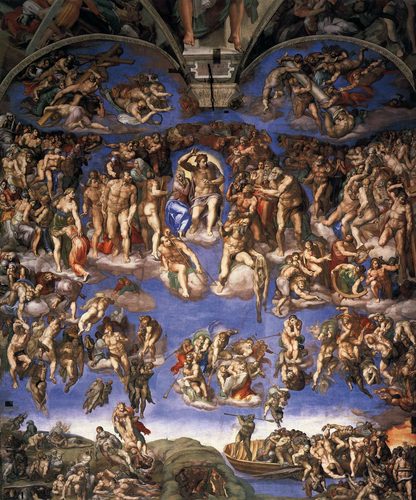
Michelangelo Buonarroti (1475–1564) was a Florentine sculptor, painter, and architect who considered himself first a sculptor even while producing some of the most celebrated paintings in Western art, including the ceiling of the Sistine Chapel. Trained briefly under the painter Domenico Ghirlandaio before joining the Medici household to study classical sculpture, he developed an approach centered on the human body, muscular, twisting, often emotionally strained, as the vehicle for religious and humanist meaning. His marble David, carved from a single block others had abandoned as flawed, became a civic symbol for Florence. Summoned to Rome, he spent four years painting the Sistine ceiling largely by himself, a physically punishing project that reimagined how narrative could unfold across an architectural space. Michelangelo worked into old age, later serving as chief architect of St. Peter's Basilica, where he designed the dome that still defines Rome's skyline. Famously difficult, secretive about his methods, and driven by his own religious intensity, he outlived most of his patrons and contemporaries, dying in Rome in 1564 at eighty-eight, having redefined what sculpture, painting, and architecture could each demand of an artist.
How to recognize a Michelangelo
Muscular twisting figures
Michelangelo's bodies strain and coil in contrapposto, muscles rendered with anatomical exaggeration that conveys inner emotional or spiritual tension rather than calm repose. Even resting figures look coiled with latent energy.
Marble carved for emotion
He treated marble as something to be freed rather than shaped, leaving some works deliberately unfinished, with figures seeming to emerge from raw, unworked stone, a technique later called non-finito that heightens their sense of struggle.
Vast fresco narrative cycles
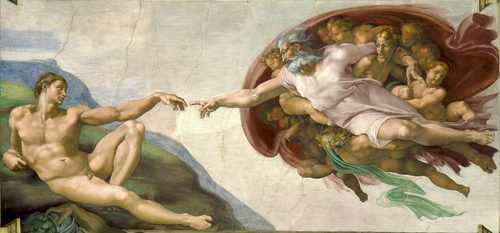
The Sistine ceiling arranges hundreds of figures across biblical scenes, ignudi, and prophets in a continuous architectural framework, treating an entire ceiling as one unified narrative rather than isolated panels.
Idealized, heroic anatomy
Drawing on classical sculpture, Michelangelo idealized the human form into heroic, almost superhuman proportions, using rigorous anatomical study to exaggerate strength, grace, and physical scale well beyond ordinary human bodies at rest.
Terribilità and intensity
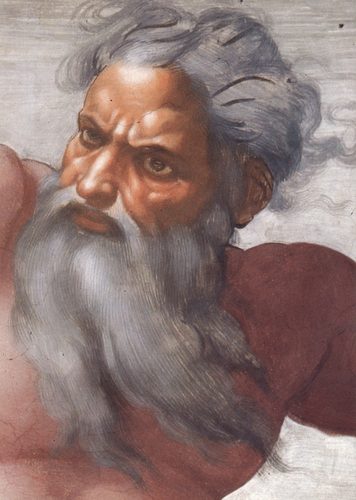
Contemporaries described a quality called terribilità in his work, an overwhelming, almost frightening intensity of expression and physical power, evident in figures like Moses and the brooding Sistine ceiling prophets.
Architectural sculptural integration
Late in life Michelangelo folded sculptural drama into architecture itself, at St. Peter's Basilica and the Medici Chapel, treating walls, tombs, and domes as extensions of the same muscular, dynamic sensibility.
The life
Michelangelo was born in 1475 in Caprese, near Florence, to a family of minor Florentine officials. As a teenager he apprenticed briefly with the painter Domenico Ghirlandaio before Lorenzo de' Medici brought him into the Medici household, where he studied ancient sculpture and absorbed the humanist culture of Florence's ruling family.
In the 1490s and early 1500s he moved between Florence and Rome, carving the Vatican Pietà before returning to Florence to complete David from a huge, previously abandoned block of marble, a work that quickly became a symbol of the city itself. Pope Julius II then summoned him to Rome, first for an ambitious tomb project he would never finish, and then for the Sistine Chapel ceiling, which he painted between 1508 and 1512 under grueling physical conditions.
Michelangelo continued working for successive popes for the rest of his life, painting The Last Judgment on the Sistine altar wall decades later and eventually taking over as chief architect of St. Peter's Basilica, where he designed its dome. He remained active into his eighties, sculpting and revising architectural designs almost until his death in Rome in 1564.
Timeline
- 1475Born in Caprese, near Florence
- 1488Apprenticed to painter Domenico Ghirlandaio
- 1498Carves the Vatican Pietà
- 1501Begins carving David in Florence
- 1508Begins painting the Sistine Chapel ceiling
- 1512Completes the Sistine ceiling
- 1546Appointed chief architect of St. Peter's Basilica
- 1564Dies in Rome
Most famous works
| Work | Date | Why it matters |
|---|---|---|
| David | 1501–1504 | A colossal marble figure carved from a flawed block, standing as a symbol of Florentine civic pride. |
| Sistine Chapel Ceiling | 1508–1512 | A vast fresco cycle of Genesis scenes and prophets that reimagined narrative painting on an architectural scale. |
| Pietà | 1498–1499 | A marble sculpture of Mary cradling the dead Christ, prized for its serene, technically flawless carving. |
| The Last Judgment | 1536–1541 | A monumental fresco on the Sistine altar wall depicting Christ's second coming in swirling, muscular detail. |
| Moses | c. 1513–1515 | A commanding marble figure carved for Pope Julius II's tomb, radiating the tension Michelangelo called terribilità. |
| St. Peter's Basilica Dome | designed c. 1547–1564 | His architectural masterwork, a dome that still dominates the skyline of Rome. |
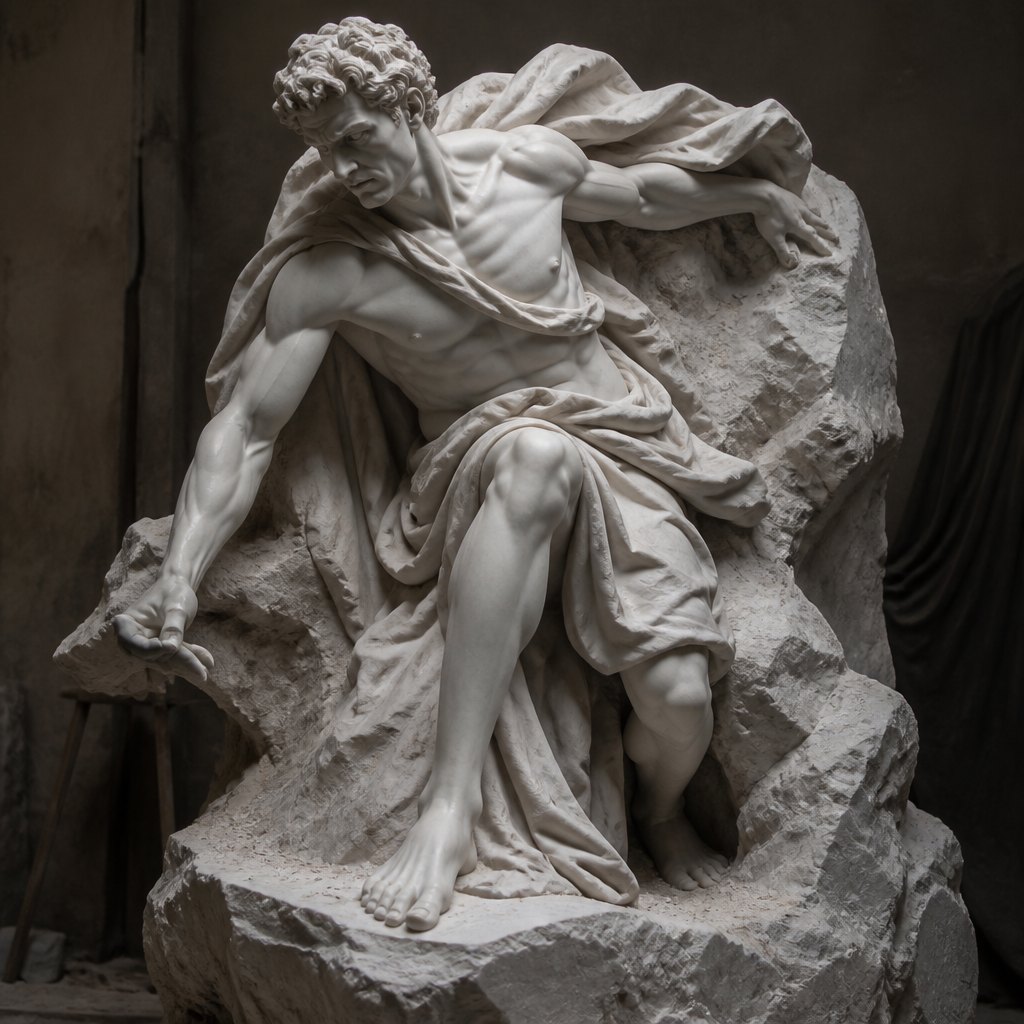 AI-generated
Create in the same spirit
Make High Renaissance art of your own
This AI interpretation echoes the aesthetic world Michelangelo worked in — it depicts no real artwork. Generate your own with the Renaissance Art Style generator.
Open the Renaissance Art Style generator →Legacy
Michelangelo's David and Sistine ceiling set a standard for ambition that later sculptors and painters measured themselves against for centuries. His muscular, emotionally charged treatment of the body shaped Mannerist painters who followed him and remained a touchstone for academic art training well into the modern era. As an architect, his design for the dome of St. Peter's influenced church domes across Europe, including St. Paul's Cathedral in London. He helped cement the Renaissance idea of the artist as a singular creative genius rather than an anonymous craftsman, a self-conception he cultivated deliberately in his own lifetime through his difficult, fiercely independent reputation.
Frequently asked questions
What is Michelangelo famous for?
Michelangelo is famous for carving the marble David and painting the ceiling of the Sistine Chapel, two of the most celebrated works in Western art, produced within a decade of each other.
Where can you see Michelangelo's work?
David is displayed at the Galleria dell'Accademia in Florence. The Sistine Chapel ceiling remains in the Vatican, and the Pietà is in St. Peter's Basilica in Rome.
How many works did Michelangelo complete?
Michelangelo completed a relatively small number of finished sculptures and paintings, since he left many marbles unfinished, but his major works, David, the Sistine ceiling, the Pietà, remain landmark achievements.
What art movement was Michelangelo part of?
Michelangelo was a central figure of the Italian High Renaissance, and his later, more emotionally charged work is often seen as a bridge toward the Mannerist style that followed.