 Famous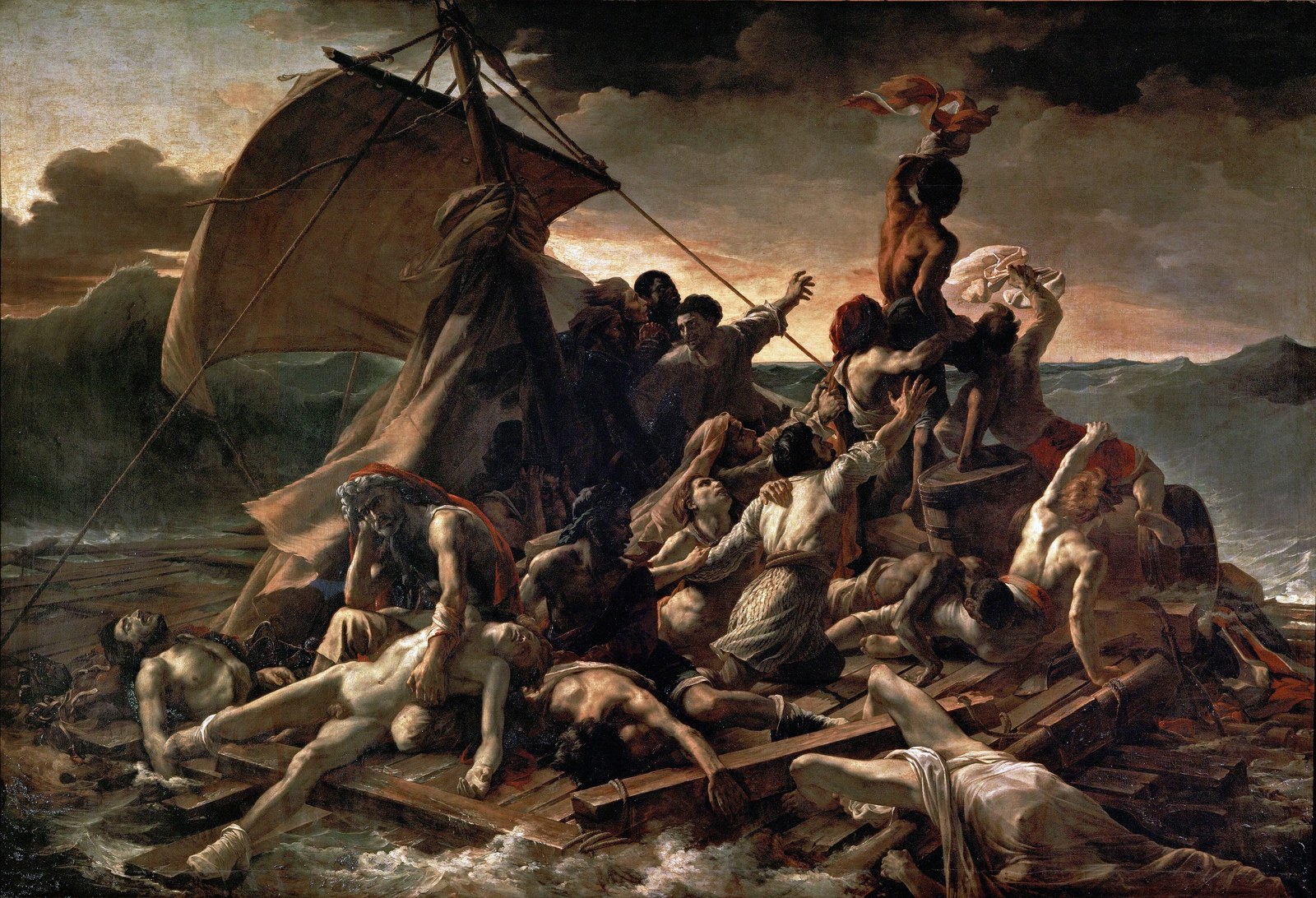



Théodore Géricault (1791–1824) was a French Romantic painter whose brief eleven-year career produced The Raft of the Medusa, one of the most confrontational history paintings of the nineteenth century, built from a real government scandal rather than myth or ancient history. Born in Rouen to a wealthy family, he trained under Carle Vernet and Pierre-Narcisse Guérin, but learned as much by copying Rubens and Michelangelo at the Louvre as in any studio. He first drew attention with dramatic paintings of cavalry and horses, a lifelong passion reflecting his own devotion to riding. In 1816 the wreck of the French frigate Méduse, whose officers abandoned ordinary passengers to drift on a makeshift raft, gave him a subject that let him fuse anatomical study, current events, and moral outrage; he interviewed survivors and studied cadavers while preparing the enormous canvas. Exhibited in 1819, it scandalized the French government by implicating an incompetent, politically appointed captain. Géricault later traveled to England, then spent his final years painting a remarkable series of portraits of psychiatric patients for a Paris doctor. Weakened by riding injuries and tuberculosis, he died in Paris in 1824 at just thirty-two.
How to recognize a Géricault
Contemporary Scandal as History
Géricault treated a real, still-controversial shipwreck with the scale and seriousness usually reserved for mythology or scripture, interviewing survivors and building a model raft so the current event carried the weight of ancient tragedy rather than distant legend.
Horses in Motion
Cavalry officers and rearing, galloping horses recur throughout his work, their necks straining and nostrils flared, studied with a precision that came from his own lifelong devotion to riding, horsemanship, and the racecourse.
Morgue-Study Realism
For his most ambitious paintings he studied real cadavers, limbs, and the faces of shipwreck survivors, giving flesh, wounds, and exhaustion an unflinching physical accuracy that was genuinely rare in painting of the period.
Sculptural Chiaroscuro
Strong, raking light carves bodies out of deep shadow, a debt to Rubens and Michelangelo studied closely at the Louvre, giving even ordinary figures a monumental, sculptural weight that borders on the theatrical.
Restrained, Somber Palette
His major works favor deep browns, grays, and muted flesh tones over bright color, a palette closer to a morgue or a storm than a salon, reinforcing a mood of gravity and dread rather than decoration.
Compassionate Portraiture
In his final years he painted psychiatric patients as specific, dignified individuals rather than types, each face rendered with the same care he gave aristocrats, a rare sympathy for subjects usually excluded from serious portraiture.
The life
Géricault was born in 1791 in Rouen to a family made wealthy by the tobacco trade, and grew up mostly in Paris. He trained first under Carle Vernet, a fashionable painter of horses, then under the more classically minded Pierre-Narcisse Guérin, but he learned as much from copying Rubens, Titian, and Michelangelo at the Louvre as from either teacher.
His early Salon successes, The Charging Chasseur and The Wounded Cuirassier, drew on his own passion for horses and riding, painted with a raw energy that unsettled more academic critics. In 1816 the wreck of the frigate Méduse off West Africa, in which the ship's officers abandoned over a hundred ordinary passengers on a makeshift raft, gave him a subject equal to his ambitions. He interviewed survivors, built a scale model of the raft, and studied corpses and severed limbs in a Paris hospital to get the physical facts of suffering right. The resulting canvas, The Raft of the Medusa, shown at the 1819 Salon, was as much a political indictment as a painting.
He traveled to England in 1820, exhibiting the Raft and producing lithographs of English life, then returned to Paris to paint a series of unflinching portraits of psychiatric patients. Already weakened by riding injuries, he died of complications related to tuberculosis in 1824, at thirty-two.
Timeline
- 1791Born in Rouen, France.
- 1808Begins training under the painter Carle Vernet.
- 1812Exhibits The Charging Chasseur to Salon acclaim.
- 1816Travels to Italy to study Renaissance masters.
- 1819Exhibits The Raft of the Medusa at the Paris Salon.
- 1820Travels to England, exhibiting the Raft in London.
- 1822Paints portraits of psychiatric patients for Dr. Georget.
- 1824Dies in Paris at thirty-two.
Most famous works
| Work | Date | Why it matters |
|---|---|---|
| The Charging Chasseur | 1812 | A galloping cavalry officer that announced his Salon debut with raw, urgent energy. |
| The Wounded Cuirassier | 1814 | A retreating soldier that reads as a quiet comment on Napoleon's collapsing fortunes. |
| The Raft of the Medusa | 1818–19 | A monumental, politically charged history painting built from a real shipwreck scandal. |
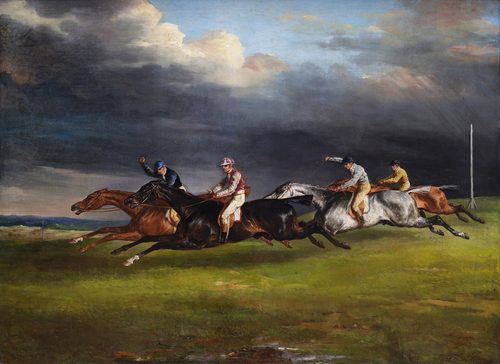
| The Epsom Derby | 1821 | A galloping horse race painted during his stay in England, full of stretched, flying motion. |
| Portrait of a Kleptomaniac | c. 1822 | One of a small surviving series of clinical, sympathetic portraits of psychiatric patients. |
 AI-generated
Create in the same spirit
Make Romanticism art of your own
This AI interpretation echoes the aesthetic world Théodore Géricault worked in — it depicts no real artwork. Generate your own with the Romanticism Art Style generator.
Open the Romanticism Art Style generator →Legacy
Géricault's Raft of the Medusa set a new standard for history painting: a contemporary scandal, painted with the scale and gravity once reserved for classical or biblical subjects, and charged with an emotional rawness that unsettled the French establishment. Eugène Delacroix, who posed for one of the raft's figures, carried that intensity directly into his own work and the wider Romantic movement. His late portraits of psychiatric patients, painted with clinical honesty rather than caricature, are now seen as remarkably humane for their era and are studied as much by historians of medicine as of art. Dying at thirty-two, he left a small body of work that still reads as urgent.
Frequently asked questions
What is Théodore Géricault famous for?
Géricault is famous for The Raft of the Medusa, a monumental and politically charged history painting based on a real 1816 shipwreck, and for his dramatic paintings of horses.
Where can I see Géricault's paintings?
The Raft of the Medusa hangs in the Louvre in Paris; his portraits of psychiatric patients are scattered across museums in France, Switzerland, and the United States.
What art movement was Géricault part of?
Géricault is considered a founding figure of French Romanticism, prized for emotional intensity and dramatic subject matter over the calm order of Neoclassicism.
How did Géricault die?
He died in Paris in 1824 at thirty-two, weakened by riding injuries and tuberculosis, cutting short a career that had lasted barely a decade.